

Full steam ahead from Hangzhou to Boston as young generation stake the helm of sister-city relations
Every spring, a dragon boat from China's Hangzhou appears on Boston's Charles River.
It is not an ordinary dragon boat. Made in Hangzhou, the capital of Zhejiang province, and presented to Boston, its hull is painted in the blue-green color of West Lake, with the emblem of Hangzhou and the Three Pools Mirroring the Moon, one of the lake's best-known landmarks.
Every year around the Dragon Boat Festival, it returns to the river, propelled by the beat of drums and the pull of paddles.
What it carries is a relationship that has endured across the Pacific: the sister-city ties between Hangzhou and Boston.
The bond can be traced back to Leslie Swartz, co-founder of Boston's Dragon Boat Festival, who helped bring dragon boat racing — a traditional cultural gala event in Hangzhou — to Boston in the late 1970s.
Swartz, who was then an adviser to Boston Children's Museum and interested in Chinese culture, traveled to Hangzhou in 1982 and took part in efforts that led the two cities to establish a sister-city relationship, one of the earliest United States-China sister-city ties.
For Swartz, who was also co-founder of the Boston-Hangzhou Sister City Association, the relationship has never been simply a diplomatic agreement. She sees a natural affinity between the two cities. Both have deep connections to water — Hangzhou with the West Lake at the heart of the city, and Boston with the Charles River and its harbor shaping its landscape and identity.
Both also have long traditions of education, literature and intellectual life. For Swartz, these shared traditions are part of what makes the two cities feel naturally connected.
"Educational exchanges are always the heart of things," she said.
Those shared traditions have also created common ground for a new generation, bringing young people from the two cities together in classrooms, laboratories and everyday life.
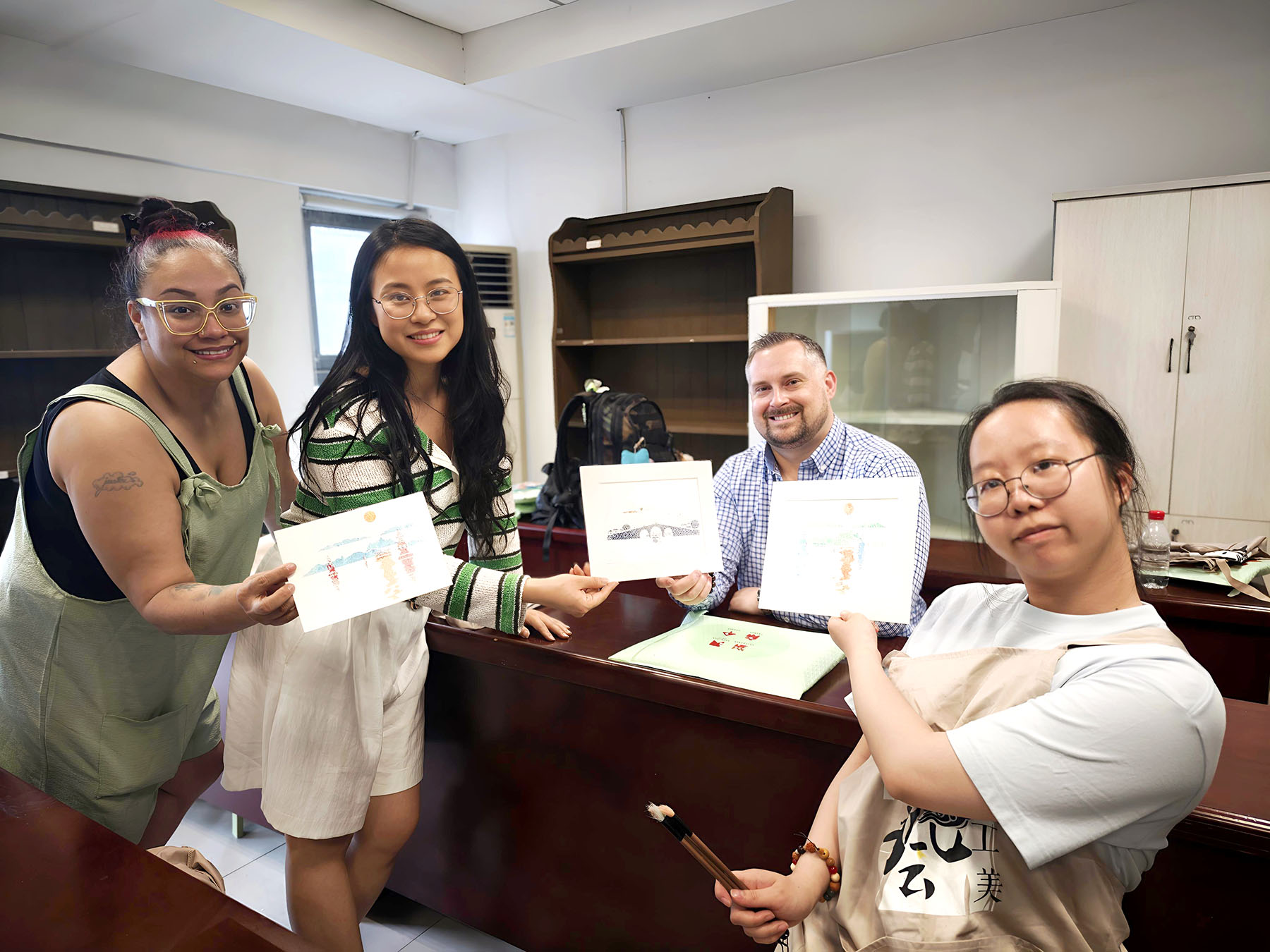
Richard Chang, principal at Josiah Quincy Upper School in Boston, has worked at the school for 21 years. In May, Chang took 18 students to Hangzhou.
"I asked the students, 'What surprised you?'" Chang recalled.
Several students said that before the trip, they had formed an image of China shaped in part by one-sided portrayals in the media. In Hangzhou, however, they encountered something very different: a prosperous, modern city, where they visited Zhejiang University and robotics laboratories, and learned about technology companies including the world-leading AI firm DeepSeek.
For Chang, the change was not simply that his students came away with a different impression of a city.
"I can see that the in-person experience amplified our shared humanity," he said.
He recalled a moment when students encountered actors dressed as ancient Chinese scholars. One of them introduced himself as Su Dongpo, the Song Dynasty (960-1279) poet who lived in Hangzhou.
The students immediately recognized him. "Oh, Dongpo rou!" they shouted, referring to Dongpo pork, a famous Hangzhou dish created and named after the poet.
"If students simply watched a documentary in a classroom, they might not feel much," Chang said. "But when they actually traveled to Hangzhou and found themselves inside the scene, a culture that had once seemed abstract became part of their own experience."
In Hangzhou, the Quincy students also met Tong Yuqi, a student at Hangzhou No 14 High School.
Tong quickly found common ground with the visiting peers. They talked about school and exams, academic pressure and what was happening in their lives. "Once you really spend time together, you realize that the distance between us isn't as great as you might have imagined," Tong said. "We're also all very interested in what our cities will become in the future. We can share what we see and discover new possibilities through each other's cities."
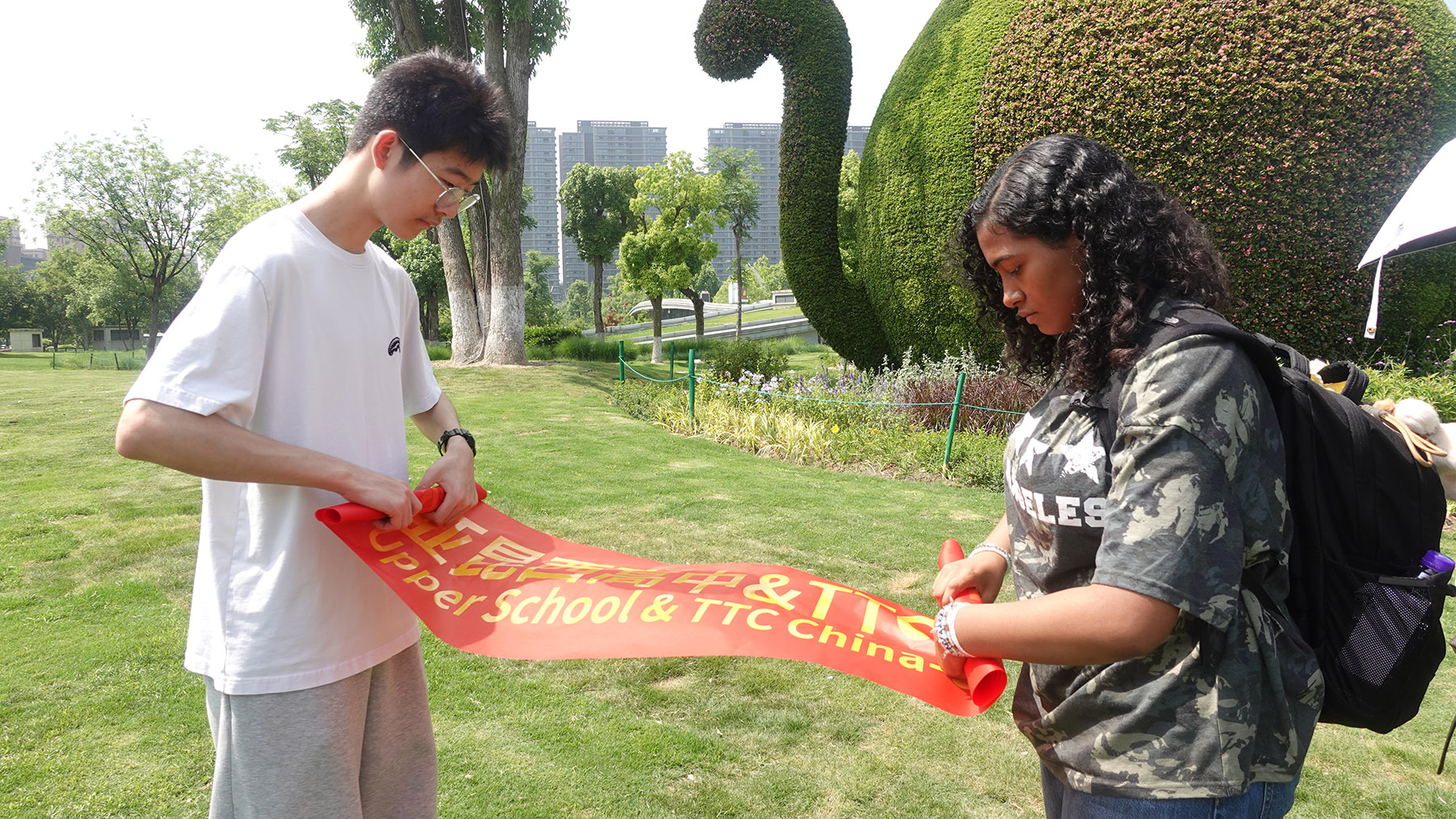
The exchange also works in the other direction. This summer, Wu Shuangyang, a student at Zhejiang University visiting Boston University, noticed that reminders of Hangzhou were not hard to find in Boston.
"On the Charles River, you can see all kinds of dragon boat races at certain times of the year," Wu said. "It's a very visible part of Chinese culture."
In classrooms at Boston University, he also heard fellow students discussing technology companies such as DeepSeek and Alibaba, names closely associated with Hangzhou.
Peng Yuxi, another Zhejiang University student, entered a laboratory for the first time during her studies at Boston University.
"US peers are very willing to discuss things with others, share their opinions and inspire one another through constant discussion or come up with new ideas."
Liu Xiaoxue, meanwhile, said one of the most memorable parts of her time in Boston was a professor who made her feel at home and treated her like a friend.
Those personal connections can eventually move beyond schools and universities into broader forms of shared experiences.
Today, Boston-based financial services company State Street has an important operations hub in Hangzhou. The story began not with a business deal, but with personal friendship and academic exchange.
In the 1980s, Zhejiang University faculty members formed a friendship with Jerry Cristoforo, then a Boston-based technology executive. Cristoforo later joined State Street, bringing those long-standing ties into a new chapter of cooperation between the university and the company.
In 2001, building on those earlier ties, State Street and Zhejiang University jointly established an office in Hangzhou with four professors and 15 students.
Over the following two decades, the collaboration expanded beyond software development to include talent cultivation and community engagement.
The partnership demonstrates how universities, businesses and communities can work together to create lasting value across cultures and generations.
Liu Guozhu, director of the Center for American Studies at the School of History of Zhejiang University, said that people-to-people contact has played an important role in the development of China-US relations.
He pointed to a history that includes US journalist Edgar Snow's engagement with China, Ping-Pong Diplomacy, and the North American redwood brought to Hangzhou during former president Richard Nixon's 1972 visit.
For Liu, the value of people-to-people ties lies partly in its resilience. Such relationships can endure even during periods of tension.
"The motivation comes from the need for exchange," he said.
That need can take many forms, including curiosity about another society and culture. It also has a human dimension — the goodwill, trust and emotional connections that develop when people meet one another directly, he said.
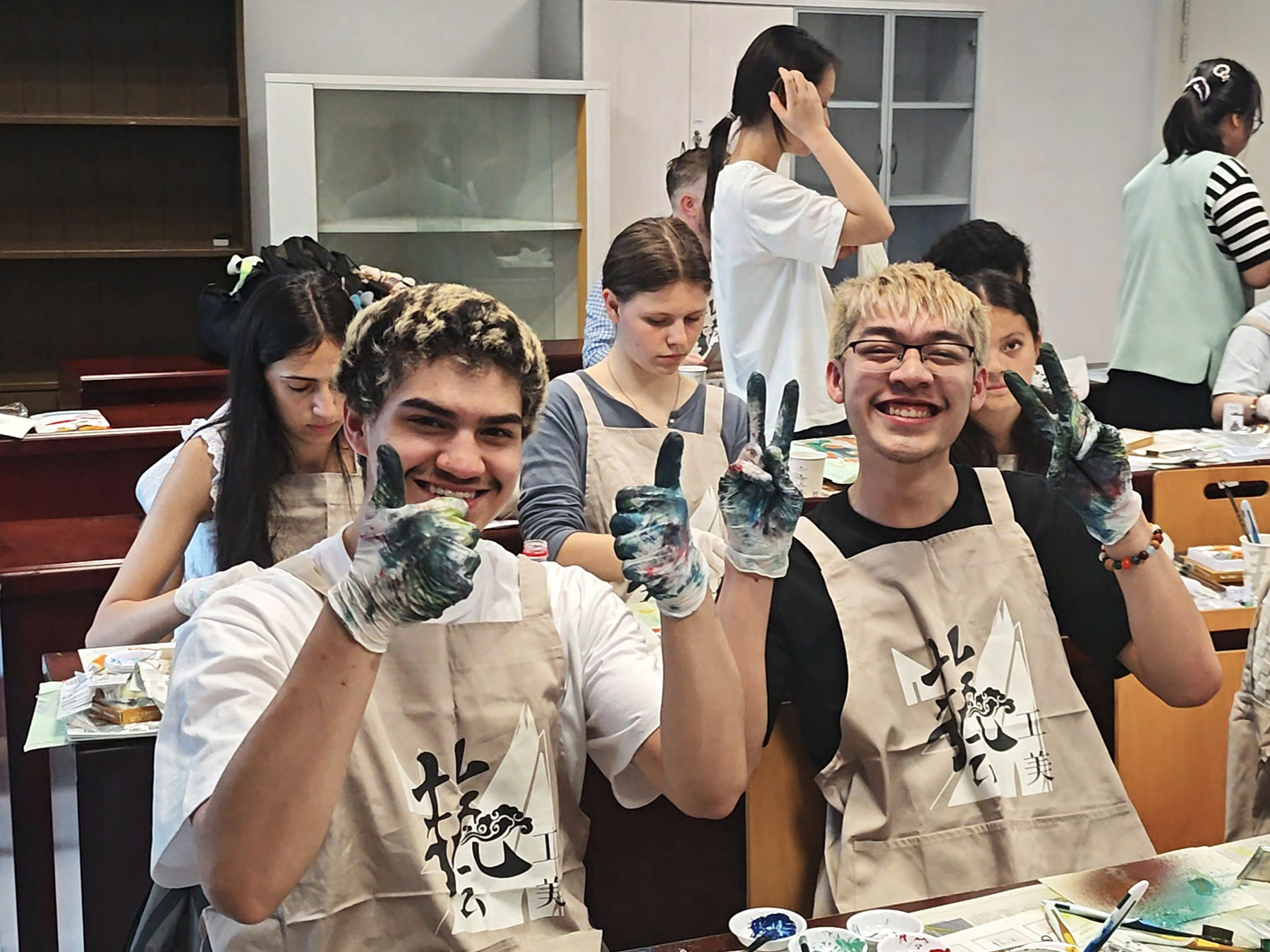
That is also why Liu places particular importance on exchanges among young people, as they often share a wide range of common interests.
"Unlike formal diplomatic or policy discussions, their interactions often begin with everyday subjects, and can therefore create personal experiences that endure," he said.
That next chapter is already taking shape, with 138 sister-school partnerships established between Hangzhou and US schools, creating opportunities for young people on both sides of the Pacific to learn from one another.
For students from Josiah Quincy Upper School, the May trip to Hangzhou did not end when they returned home. Chang said he had reached a verbal agreement with his counterparts in Hangzhou to send another delegation next spring.
2029 marks the 50th anniversary of the establishment of diplomatic relations between China and the US, and the Boston Dragon Boat Festival will also mark its 50th anniversary.
"I want to see that," Swartz said. "I just want to see the 50th anniversary of the dragon boat festival because it was the first in the US."
For Swartz, the anniversary offers a chance to look back at how far the tradition has traveled — from Hangzhou to Boston, and from one generation to the next. On the Charles River, where the first dragon boat festival in the US began, a new generation may be ready to take up the paddles.
Dong Hao in Boston contributed to this story.
Contact the writers at houchenchen@chinadaily.com.cn
