

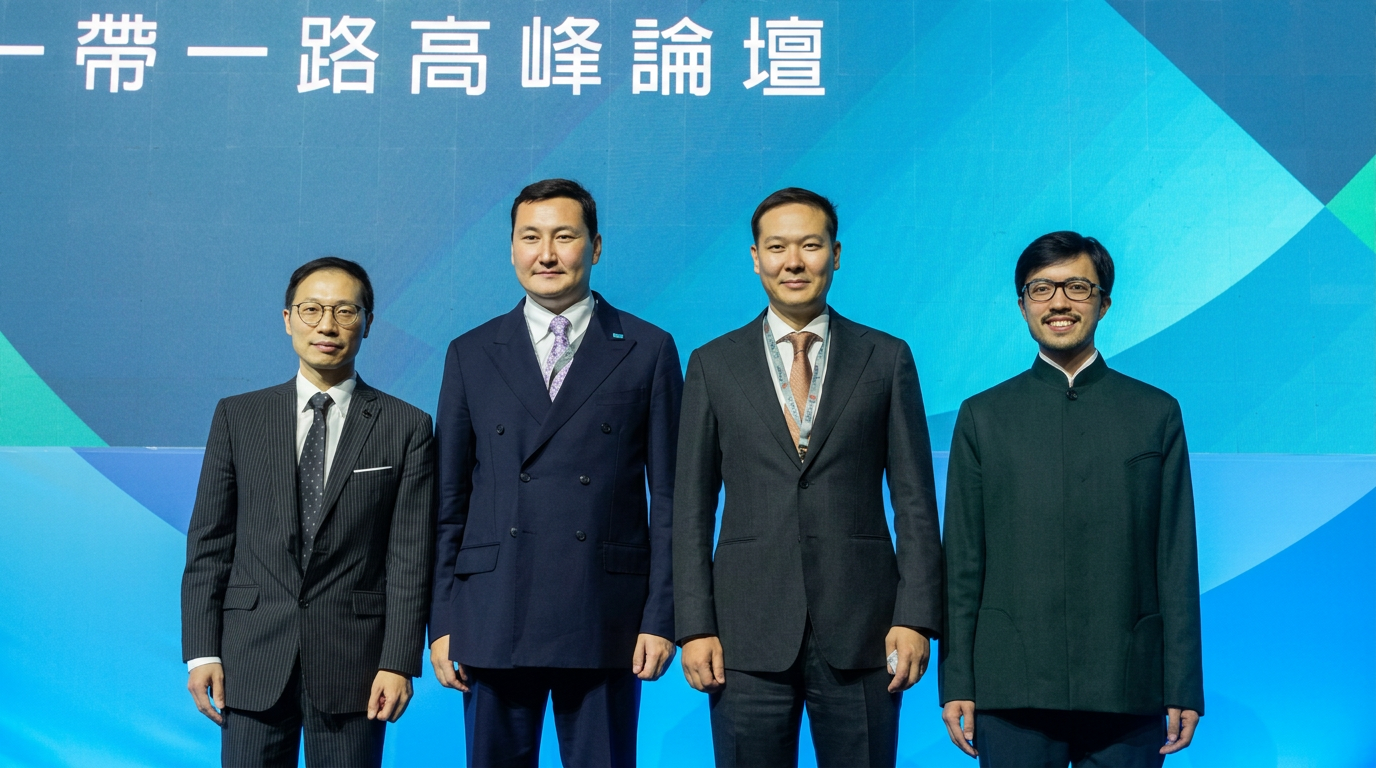
For Bakhtiyar Mukhametkaliyev, Kazakhstan’s vice-minister of artificial intelligence and digital development, a brief meeting with representatives of Shanghai-based robotics company AgiBot in Hong Kong in June delivered a pleasantly swift result: a cooperation project has taken shape in Kazakhstan within just three months.
“It was only a 20-minute meeting,” Mukhametkaliyev said, describing the Hong Kong Special Administrative Region as an ideal platform for communication, coordination and collaboration during a session at the 11th Belt and Road Summit on Wednesday.
The 36-year-old vice-minister promoted two of Kazakhstan’s flagship mega projects — Data Center Valley and Alatau City — to global investors, technology companies and professional-service providers. He said Kazakhstan’s priority is to develop an AI-driven new economy backed by smart technology, seeking Belt and Road cooperation to support its growth.
READ MORE: Belt and Road Summit to see over 60 pacts sealed
Data Center Valley, Kazakhstan’s planned digital-infrastructure project designed to support AI, cloud computing and advanced digital services, is expected to boast a computing capacity of up to 1 gigawatt.
The event, which brought together project owners, financiers and businesses from more than 70 countries and regions, offered Kazakhstan a platform to advance its ambition of becoming a regional digital and technology hub.
Hong Kong’s commissioner for Belt and Road Nicholas Ho Lik-chi said that beyond serving as a convening platform, the HKSAR can provide the financing, expertise and institutional support needed to “turn major development concepts into investable projects”.
He added that the city can serve as a “resource allocation hub and orchestration hub” for Belt and Road projects, connecting international capital, talent, professional expertise and commercial opportunities.
For Kazakhstan, cooperation with the Hong Kong SAR also involves drawing on the city’s institutional experience and its development model alongside Shenzhen, said Bayan Konirbayev, chief digital and AI officer of the Alatau City Authority.
ALSO READ: Lee: Broad prospects for further cooperation between HK, Kazakhstan
For example, Kazakhstan aims to accelerate the coordinated development of Almaty, its commercial hub, and Alatau, a nearby special economic zone. “We are using an approach that has proved effective in China,” Konirbayev said. “Hong Kong’s regulatory framework, with the balanced development of the sister city of Shenzhen, offers a very good model.”
“Hong Kong is strong in the rule of law, professional engineering and financing,” Billy Tam, managing director of TPMA Consulting Ltd and a public-private-partnership project specialist, told China Daily, adding that major projects may take years, or even decades, to mature, but they must begin with concrete action.
Contact the writer at jessicachen@chinadailyhk.com
