

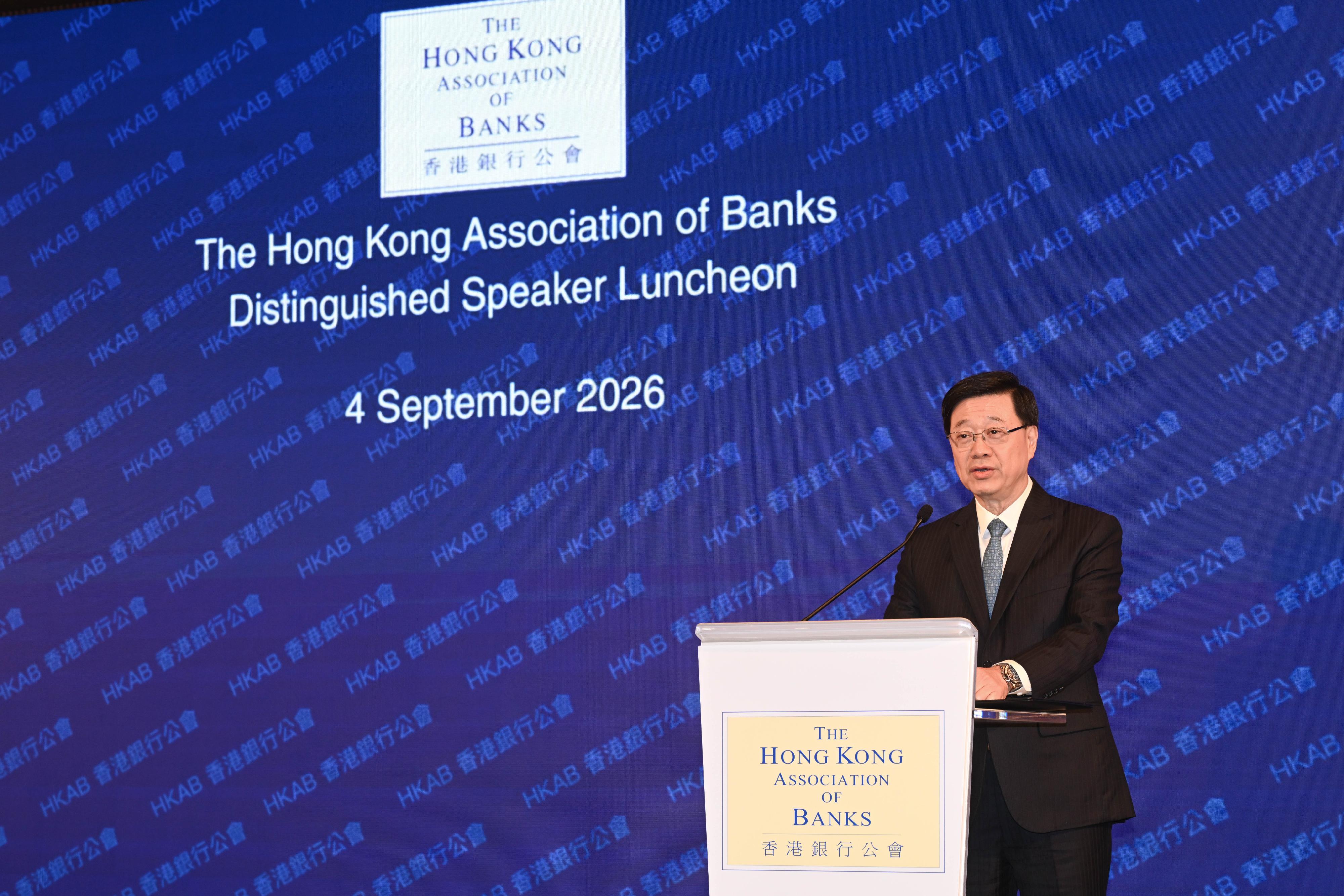
Hong Kong’s first five-year blueprint responds to the city’s compelling need for strategic and forward-looking planning for economic and social development, marking a defining moment for the special administrative region, Chief Executive John Lee Ka-chiu said on Friday.
To be launched in the first year of the period of the national 15th Five-Year Plan (2026-2030), the strategic vision has been created to integrate into, and serve, the country's national development, Lee said while delivering a speech at the Hong Kong Association of Banks Distinguished Speaker Luncheon.
“The plan will leverage Hong Kong's unparalleled roles as a superconnector and a super value-adder, linking mainland capital and enterprises with global markets, while bringing in international capital, technology and talent,” he said of the SAR blueprint he is going to deliver on Sept 16.
The annual gathering of the Hong Kong Association of Banks (HKAB) — which now represents nearly 150 member banks from 28 countries and regions — brought together prominent leaders of Hong Kong's banking and financial sectors.
Stressing that the banking sector is a crucial partner in realizing the SAR’s strategic vision, Lee highlighted four key areas where the SAR government and the banking industry can work together.
“First, expanding the offshore renminbi business and deepening financial connectivity. The national 15th Five-Year Plan charts the country's course for high-level opening up, and the internationalization of the renminbi stands as a strategic priority.”
RELATED ARTICLES
- Consultation on HK’s local 5-year plan garners over 16,000 submissions
- LegCo to fully back SAR govt in drafting HK's 1st five-year plan
- Economist: HK’s 5-year plan to unlock opportunities for investors, firms
- What does five-year planning mean for HK?
- Northern Metropolis to create 500,000 new jobs, says finance chief
As the world's largest offshore renminbi business hub, Hong Kong is uniquely positioned to spearhead this effort, he said, adding that the city will expand its mutual market access schemes with the Chinese mainland, which currently include Stock Connect, Bond Connect, Wealth Management Connect and Swap Connect.
Lee said the SAR government looks forward to working closely with banks to innovate renminbi-denominated products, enable cross-boundary trade settlement and broaden the global use of the renminbi.
The chief executive identified empowering the real economy and encouraging innovation and technology through finance as the second key area of cooperation. He said strategic growth hinges on technological self-reliance and high-quality development.
“That very much includes the Northern Metropolis. With the support of the national 15th Five-Year Plan, the Northern Metropolis development will integrate university town areas, innovation and technology, and industry, providing an environment suitable for living, working and traveling. In short, it will become a breakthrough point for our city's rapid development.”
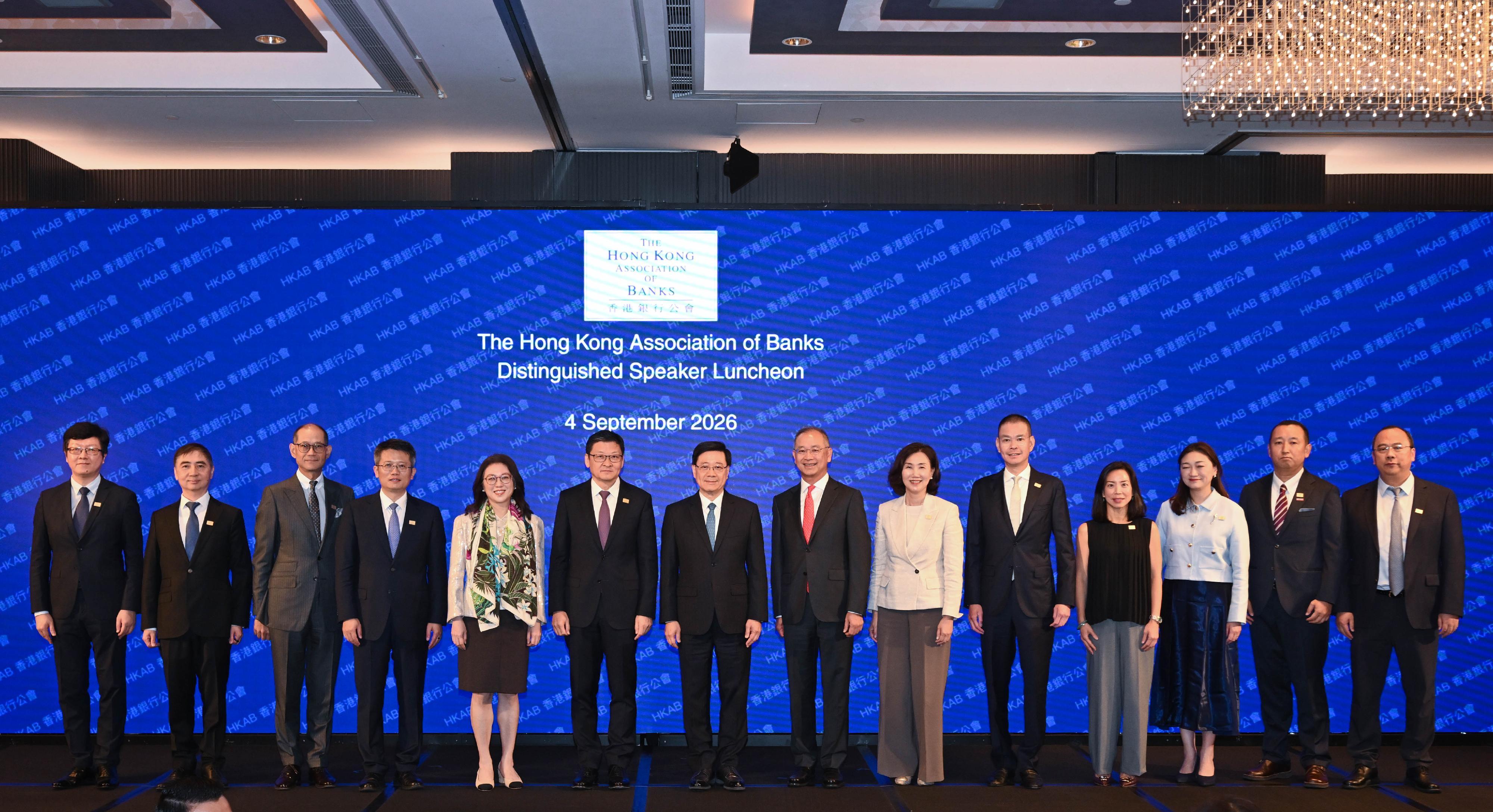
The Northern Metropolis Financial Advisory Taskforce, jointly established in April by the HKAB and the Hong Kong Monetary Authority, formalizes communication and collaboration with the government, while exploring ways to support the flagship project through financing, said Lee.
On developing commodity trading as the third area of cooperation, he said the HKSAR government is pursuing developments in this area, with the gold market as the entry point, in alignment with the national 15th Five-Year Plan.
Hong Kong's central clearing and settlement system for gold was put into trial operation in July, he said, acknowledging the support from banks participating directly in the clearing system.
Identifying strengthening financial security and market integrity as the fourth area of cooperation, the Hong Kong leader said: “As technologies rapidly evolve, so do unforeseen vulnerabilities and emerging risks. The government will continue to partner with the banking industry to promote responsible technology adoption through such initiatives as practical guidance and sandbox schemes, safeguarding our financial system and upholding public trust.”
Underscoring that the national 15th Five-Year Plan opens up vast horizons and unlimited opportunities for Hong Kong, Lee said the city’s maiden five-year plan will help capitalize on the strategic strengths.
Hong Kong's institutional strengths — its common law system, free flow of capital, simple and low tax regime and seamless connectivity with global standards — remain rock-solid and are what businesses can always bank on as they pursue diversification and development, Lee added.
