

No longer just about leasing space, properties must create distinctive offline experiences
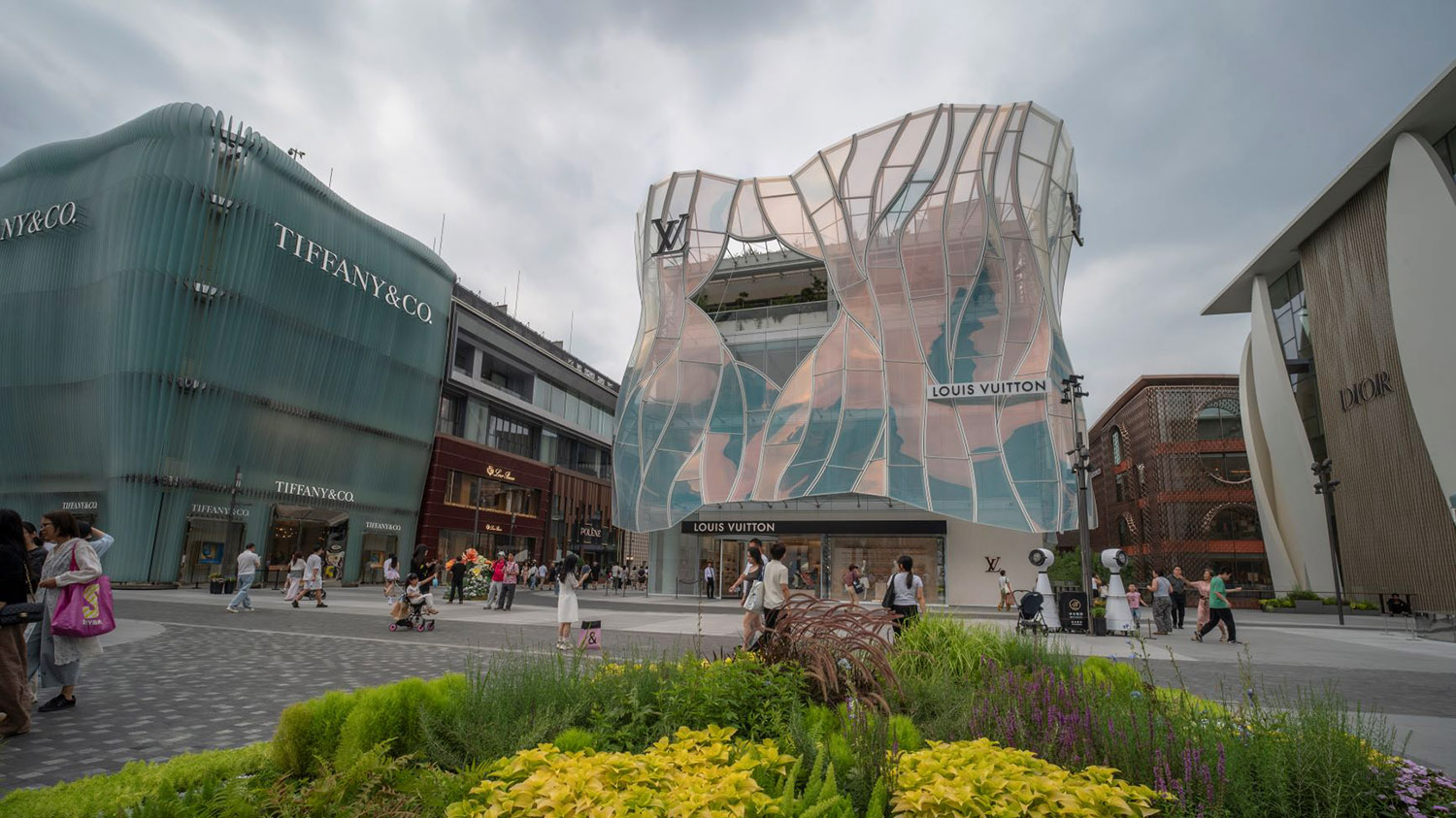
On a summer afternoon at Taikoo Li Sanlitun in Beijing, people are doing far more than just shopping. Young consumers queue outside Pop Mart stores, photographers capture street-style looks, international visitors browse Chinese designer brands, and cafes fill with customers seeking experiences that cannot be replicated online.
For Swire Properties, those scenes reflect a broader shift reshaping the country's premium retail market: success is increasingly determined not by how much space developers own, but by whether they can create destinations that consumers want to visit.
David Poraj-Wilczynski, who recently became the company's CEO for the Chinese mainland, said: "We want to create places where brands can tell their stories, communities come together and developments become part of the fabric of the city."
READ MORE: Foreign luxury firms see China sales surge
The strategy underpins Swire Properties' HK$50 billion ($6.38 billion) investment program on the Chinese mainland, with seven projects under development as part of this broader pipeline. The company is expanding its retail portfolio in the belief that premium consumers will continue to prioritize distinctive offline experiences despite a challenging consumption environment.
Early results suggest the approach is gaining traction.
Retail rental income from the Chinese mainland rose 13 percent in the first half to HK$2.57 billion. Beijing's Taikoo Li Sanlitun recorded a 63 percent increase in retail sales following a major repositioning and the opening of Hermes' global flagship store. Retail sales at HKRI Taikoo Hui jumped 82 percent, helped by Louis Vuitton's landmark "The Louis" concept and the Rolex Prestige store.
Other projects, including Taikoo Li Chengdu and Taikoo Li Qiantan in Shanghai, also delivered double-digit growth while maintaining near-full occupancy.
The performance reflects a broader transformation underway in China's premium retail sector. Leading mall operators are increasingly competing through brand mix, cultural experiences and destination appeal rather than simply expanding retail space.
China Resources Land Ltd, the property arm of State-owned China Resources Group, has adopted a similar strategy. Its shopping mall business recorded revenue of 12.44 billion yuan ($1.85 billion) in the first half, up 19.4 percent year-on-year, while operating profit rose 19.7 percent to 8.2 billion yuan.
Its self-owned shopping malls generated retail sales of 128.19 billion yuan, up 16.4 percent, significantly outperforming overall growth in China's consumer retail market. Luxury retail remained an important growth driver, with sales rising 13.1 percent year-on-year and accounting for 37 percent of total mall sales.
During the period, China Resources Land expanded its footprint by acquiring five new commercial projects and opening the second phase of MixC in Xiamen, Fujian province, continuing its strategy of building large-scale lifestyle destinations across major cities.
Hang Lung Properties, another major owner of luxury shopping centers, has also strengthened its premium retail portfolio by introducing a broader mix of international luxury, lifestyle and Chinese designer brands. The company reported that tenant sales at its malls on the Chinese mainland rose 17 percent in the first half after increasing 24 percent in the first quarter, the strongest quarterly growth in two years. For example, at Plaza 66 in Shanghai, tenant sales climbed 24 percent while rental revenue increased 8 percent, with occupancy holding at 98 percent. The company's 4,300-square-meter Phase III expansion is scheduled for completion in the second half. Nearby, Grand Gateway 66 also recorded a 24 percent increase in tenant sales, although rental revenue rose by a more modest 1 percent.
Outside Shanghai, Wuxi Center 66 achieved full occupancy as rental revenue increased 10 percent, while Dalian Olympia 66 and Kunming Spring City 66 reported double-digit tenant sales growth following tenant mix upgrades.
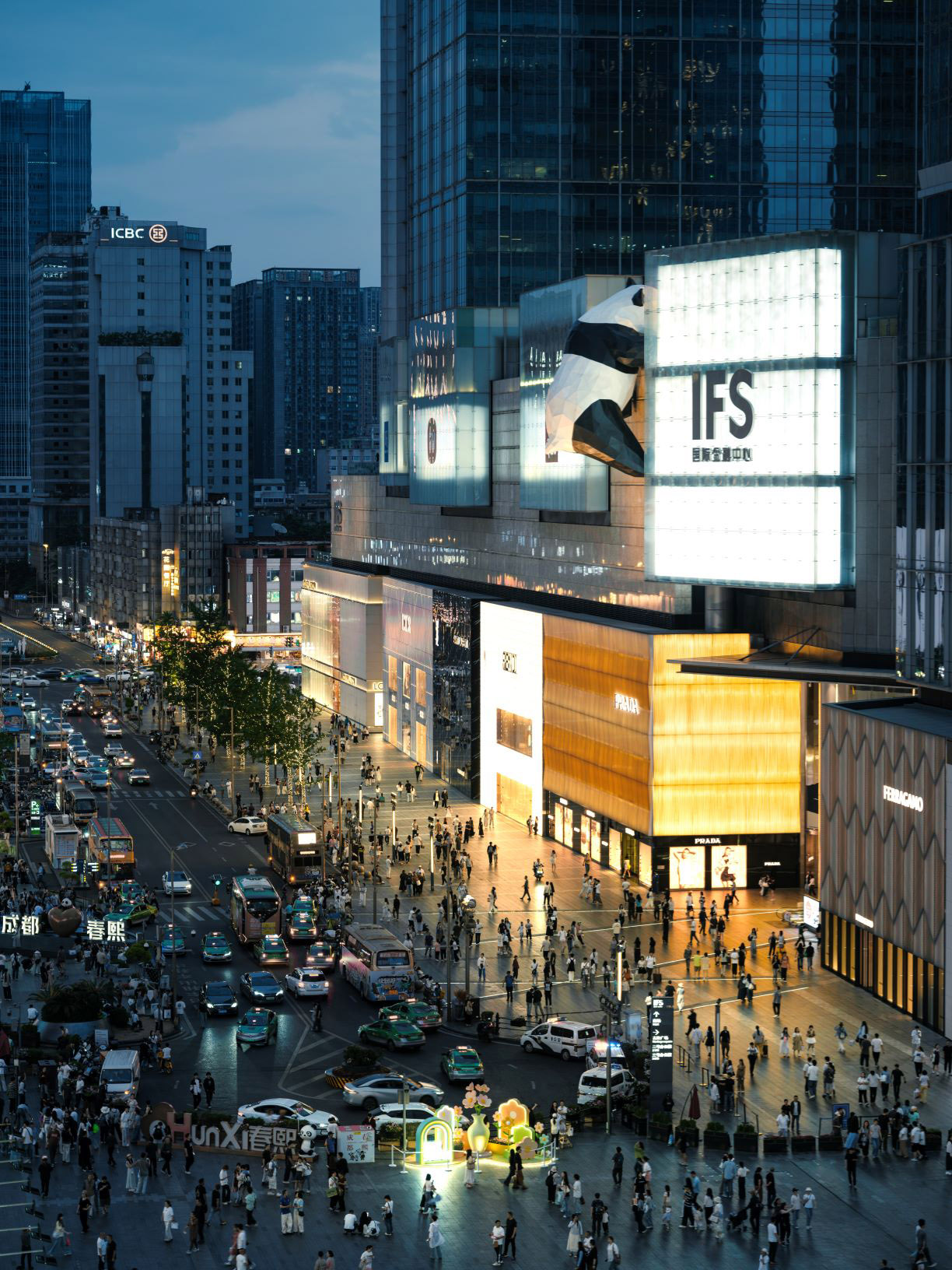
Meanwhile, Nanjing Deji, one of China's strongest-performing luxury malls, attracted more than 66 million visits in 2025 and generated annual revenue of 26.3 billion yuan, highlighting the potential of experience-led retail destinations.
For Swire, the challenge is turning that market shift into a long-term competitive advantage.
Poraj-Wilczynski's immediate priority is delivering the company's pipeline on the Chinese mainland, including Taikoo Place Beijing, Taikoo Li Xi'an in Shaanxi province, and Taikoo Li in Sanya, Hainan province.
The expansion of Qiantan Taikoo Li in Shanghai alone will more than double its retail space to about 259,000 sq m by the end of this year.
But Poraj-Wilczynski said scale alone is no longer enough. "Customers are demanding much more from physical retail," he said. "Brands want places where they can tell their stories."
That philosophy has shaped Swire's approach of tailoring each development to its surrounding community rather than replicating a standard mall format.
Chengdu Taikoo Li is one example. Built around traditional architecture and public spaces, the development has become part of the city's lifestyle landscape, with cafes, restaurants and independent retailers benefiting from the traffic it generates.
"If the city feels it cannot live without your development," Poraj-Wilczynski said, "then you're doing a good job."
The tenant mix is also changing.
Luxury retail landlords, who have long valued European fashion houses, are now also embracing Chinese brands with strong brand identities and distinctive retail concepts.
Poraj-Wilczynski cited Songmont, Icicle, Laopu Gold and Pop Mart as examples of domestic brands creating experiences that attract consumers beyond their products.
Sportswear, outdoor lifestyles, wellness and premium dining are also becoming increasingly important traffic drivers, particularly among younger consumers who grew up with e-commerce but continue to seek social experiences offline.
Sanlitun reflects that evolution. Areas once dominated by luxury fashion now feature sportswear and outdoor brands, while international visitors increasingly view Chinese labels as destinations themselves.
Food and beverages have also become a key attraction.
"When people go out for a meal now, they want the highest quality, they want something new," Poraj-Wilczynski said. "It is that really premium physical experience that gets people into the malls."
Swire's largest mainland investment, Taikoo Place Beijing, scheduled to open in phases from late 2026, reflects a broader redefinition of commercial real estate. The project combines offices with retail, restaurants, green spaces and cultural venues.
"The office isn't just where people work anymore," Poraj-Wilczynski said. "People want somewhere they can meet clients, experience culture, exercise and then return to work."
ALSO READ: Leading luxury goods group sees signs of recovery in China
Future investments in the Chinese mainland market will continue to focus on distinctive locations where developments can become integrated into the surrounding city, Poraj-Wilczynski said.
He pointed to Taikoo Li Xi'an, located opposite the Small Wild Goose Pagoda, as an example of how the company seeks to incorporate local heritage into modern retail.
"There is a huge amount of consideration for that local heritage and culture," he said. "It is something that we have the skill set to create something very unique."
For Swire, the future of China's retail market will not be measured simply by the amount of space developers build. It will depend on whether those spaces become places consumers choose to spend time — and return to.
Contact the writers at wangzhuoqiong@chinadaily.com.cn
