

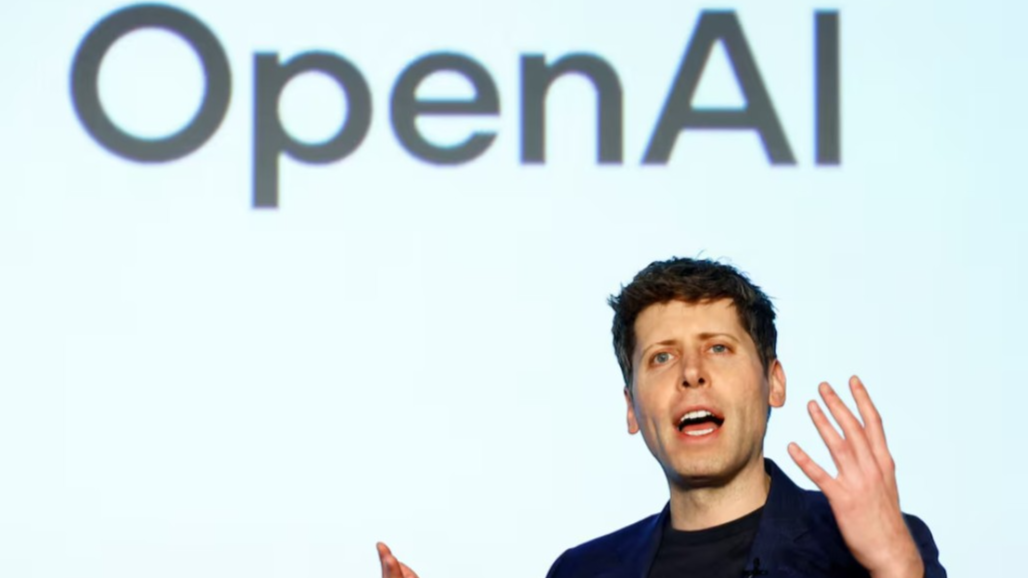
OpenAI Chief Executive Officer Sam Altman says top artificial intelligence developers have fumbled at communicating the benefits of the technology, leaving the industry vulnerable to growing backlash from communities around the world.
“I think the industry has done a terrible job of this on the whole,” Altman said in an interview with Bloomberg Television on Thursday. “I think we have done a bad job ourselves, maybe better than some others, worse than some others.”
Silicon Valley has confronted growing opposition to its plans for massive data centers to support AI. At least 75 data center projects, worth about $130 billion combined, were blocked or delayed by local opposition during the first three months of this year, according to research group Data Center Watch. That amount is near the total value of projects stalled by local resistance in all of 2025.
Altman added that he thinks the AI industry has not “done a great job” talking about how the technology that companies are building could enable creativity and entrepreneurship.
RELATED ARTICLES
- OpenAI files confidentially for IPO as rivals race to market
- OpenAI amending deal with Pentagon, CEO Altman says
- Report: OpenAI, Microsoft agree to cap revenue-sharing at $38b
- OpenAI discontinues support for Sora, winds down Disney deal
“It is very, very important to us that this technology is something where people get more power and more autonomy, not less,” he said. “I think people rightly get afraid when they feel like AI leaders may not quite want that for them.”
At the same time, concerns have mounted around the cybersecurity abilities of OpenAI and other AI developers’ most advanced models.
An inadvertent hack carried out by OpenAI models on Hugging Face in July ignited concerns about AI agents running amok and prompted some technology and government leaders to renew calls for curbs on the technology.
OpenAI said on Thursday that it has rolled out a new generation of its technology called GPT-6 Astra to business users that are in its Daybreak program, which lets approved testers use its most capable models.
The company also plans to release a version of the AI model with added cybersecurity guardrails to its paid ChatGPT users. Both versions have safeguards to prevent users from accessing its most cutting-edge cybersecurity capabilities.
OpenAI President Greg Brockman said in a briefing that he thinks the new model will one day be seen as the early stages of artificial general intelligence, referring to software that outperforms humans at a wide range of tasks. The concept has emerged as a central ambition for much of the AI industry, though there is no generally agreed-upon definition for AGI and many remain skeptical of it.
