

Chinese companies tap expertise, R&D to open new growth avenues
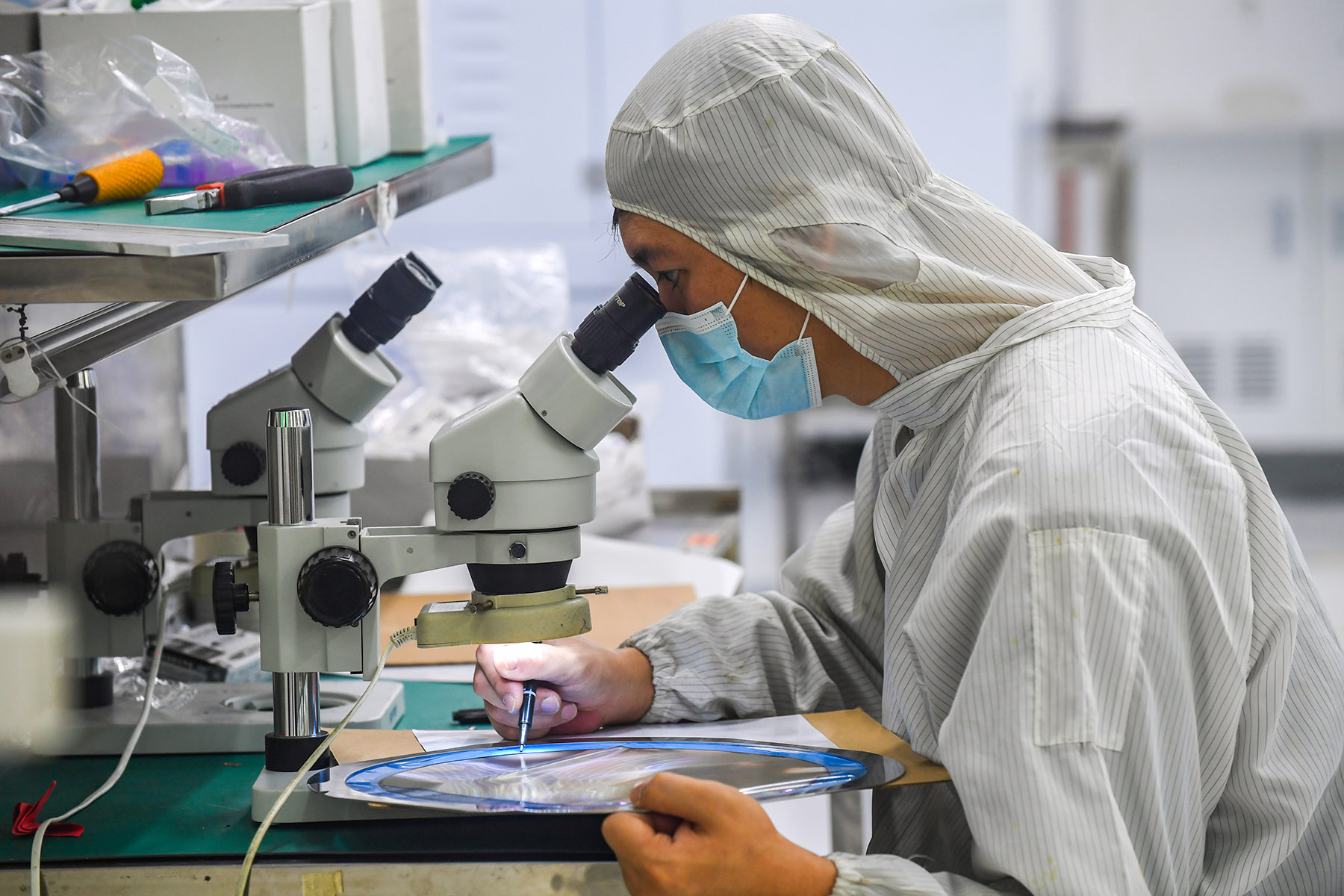
For Hubei Dinglong, a business built on printer toner is increasingly being reshaped by materials that polish and pattern silicon wafers.
The Wuhan-based company reported 3.66 billion yuan ($544 million) in revenue in 2025, with semiconductor material and chip business contributing 57 percent of the total, after growing 37.3 percent year-on-year. Revenue from printing consumables, once its defining business, fell 13 percent to 1.56 billion yuan, according to its annual report.
Dinglong's shift began with an internal question: Could the chemistry used to make printer toner particles be redirected toward chipmaking?
"The opportunity came when our toner team found that previous experience in high-purity inorganic synthesis, surface modification and colloid chemistry could be applied to CMP (chemical mechanical planarization) slurry's nanoscale abrasive particles," said Zhu Shunquan, general manager of the company.
CMP materials have long been a weak link constraining China's advanced chip manufacturing. Zhu said the main bottleneck in developing domestically produced CMP slurries lies in the supply of abrasive particles, a key upstream raw material that accounts for as much as 70 percent of total slurry costs.
READ MORE: Suzhou forging photonics powerhouse amid AI uptrend
The global supply of such materials, however, has long been dominated by a handful of international companies, which have erected formidable market barriers and created closed supply-chain ecosystems through close joint-development arrangements and exclusive agreements, he noted.
"This structural imbalance has long left domestic CMP slurry producers with formulas but without the essential abrasive particles needed to put them into production, making it difficult to achieve stable mass production and independently improve high-performance products," Zhu added.
Against this backdrop, Dinglong moved into the CMP slurry business in 2021, targeting research and development toward four core abrasives: high-purity silica, ultra-pure silica, alumina and ceria.
Zhu said producing these abrasive particles in-house could give researchers more control over particle size and surface properties, allowing materials to be adjusted for a customer's process.
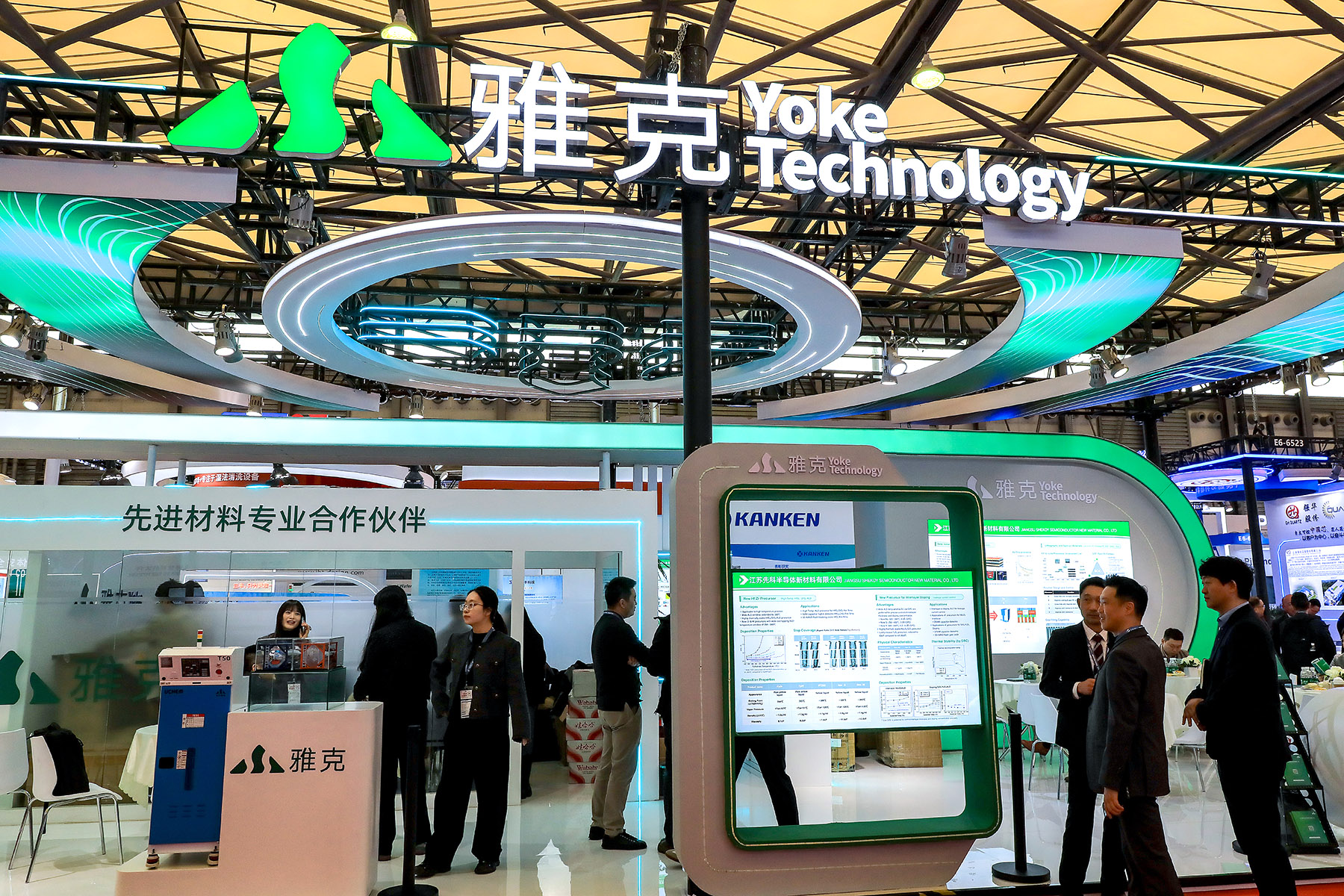
To date, the company has overcome technical barriers in alumina abrasive particles, a field previously dominated by a single global supplier. Its product has entered mass production at a major domestic manufacturer, with monthly deliveries now running into hundreds of drums, the company said. It has also completed the development of a ceria-based CMP slurry for more advanced memory chips, which is undergoing a key qualification process before being introduced into mass production.
Notably, one of the company's proprietary CMP slurries had even outperformed an incumbent supplier's product in a key defect-control metric. "It delivered better scratch control than the incumbent product, helping us secure repeat orders from customers," Zhu said.
Dinglong said it has invested more than 1.4 billion yuan in slurry and abrasive-particle operations. In Xiantao, Hubei province, it built annual capacity for 10,000 metric tons of particles and 20,000 tons of slurry.
Dinglong's transformation story is part of a wider change in China's traditional manufacturing sector. As artificial intelligence development lifts demand for chips, fine-chemical producers, equipment makers and even a consumer outdoor brand are using old skills or acquired technology to find a place in the semiconductor supply chain.
No crossover appears more unlikely than Toread's, a Beijing-based consumer brand well known for its outdoor apparel and equipment. Since 2021, however, the company has positioned itself as an "outdoor plus chips" player.
Since adopting such a dual-track strategy, Toread has built a broad semiconductor portfolio through acquisitions, business integration and continued in-house R&D.
Its four principal product lines now cover touch-control integrated circuits through South Korean electronics manufacturer G2 Touch, Mini and Micro LED display-driver ICs through Beijing Xinneng, fingerprint-recognition chips through Shenzhen-based Betterlife, and intellectual property for AI model compression through Shanghai-based Tongtu Semiconductor.
The company said the strengths of the individual businesses were becoming increasingly visible. G2 Touch's single-layer On-Cell touch-control chips have entered the supply chains of major global brands, including Samsung and Ferrari, giving the business a presence in automotive displays and high-end consumer electronics. Betterlife's fingerprint-recognition chips, used in smart locks, have long ranked among the global market leaders and serve major device makers including Huawei and Xiaomi.
Tongtu Semiconductor, meanwhile, has developed a full-stack AI data-compression technology that the company said can reduce video data to one-fifth of its original size, cut intermediate data generated by large models by 50 percent, and compress model parameters by 30 percent.
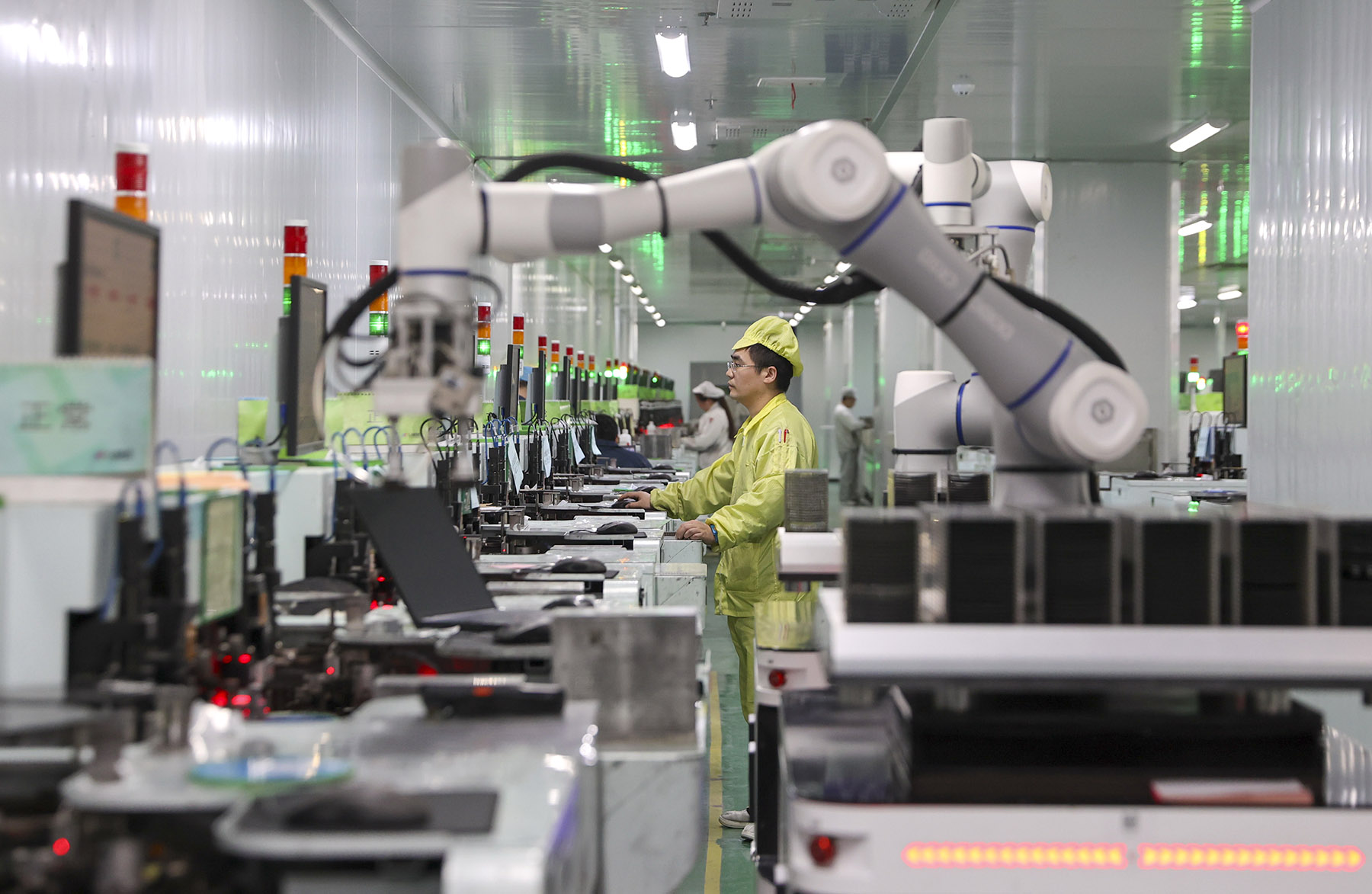
During the first half of this year, Toread's chip business generated 359 million yuan in revenue, up 212.83 percent year-on-year and accounting for 38.6 percent of its total revenue. The increase was driven in large part by the consolidation of Betterlife and Tongtu, which were added to Toread's financial statements in January.
Toread is also exploring ways to build links between its established outdoor business and its newer chip operations. In March, the company unveiled a second-generation powered exoskeleton weighing 1.8 kilograms and capable of recognizing more than 10 movement modes, alongside a smart hiking shoe equipped with sensors, gait-analysis algorithms and an AI agent that provides personalized guidance.
The group said its outdoor business could provide product settings and sales channels for such smart hardware products, while its semiconductor businesses could contribute capabilities in sensing, visual interaction and edge AI.
Elsewhere, two other traditional manufacturers took a more industrial route into the semiconductor supply chain: they acquired specialized overseas businesses, retained their engineering expertise and gradually connected those capabilities with production and customers in China.
Beginning as a producer of flame retardants, Jiangsu Yoke Technology moved into semiconductors in 2016, when it completed the acquisition of a 96.28 percent stake in South Korea's UP Chemical, gaining access to semiconductor precursor technology and establishing customer relationships.
Precursors are high-purity chemicals used to deposit thin films on wafers. Building on the acquisition, Yoke became one of China's leading suppliers to have achieved domestic substitution of semiconductor precursor materials, while also expanding into other segments including photoresists and related reagents, electronic specialty gases and spherical silica powder used in chip packaging.
The electronic material sector generated 5.08 billion yuan in revenue for Yoke in 2025, accounting for nearly 59 percent of its total and increasing 12.7 percent year-on-year. Semiconductor chemical materials contributed 2.11 billion yuan, while photoresists and related reagents generated 1.96 billion yuan, according to its annual report.
ALSO READ: Supply disruption fails to chip away at Nexperia China's resilience
Some of those products have begun reaching advanced memory applications. "We have products in stable supply for customers' HBM production," Shen Qi, chairman and general manager of Yoke, said at the company's annual results briefing in May. HBM, or high-bandwidth memory, is a type of computer memory designed to provide both high-bandwidth and low power consumption.
Zhengzhou, Henan province-based GL Tech has applied a similar approach to the equipment used in semiconductor packaging and testing.
Founded in 1994, GL Tech initially made monitoring systems for coal mines and other industrial facilities. It entered semiconductor equipment through a series of overseas transactions, acquiring the UK's Loadpoint Ltd in 2016 and Israel-based Advanced Dicing Technologies afterwards.
The deals gave GL Tech technologies covering precision dicing machines, air-bearing spindles and cutting blades. The company then set up a subsidiary in Zhengzhou, sent Chinese engineers to work with teams at Loadpoint and ADT, and adapted the acquired technologies for domestic production.
Contact the writers at lijiaying@chinadaily.com.cn
