

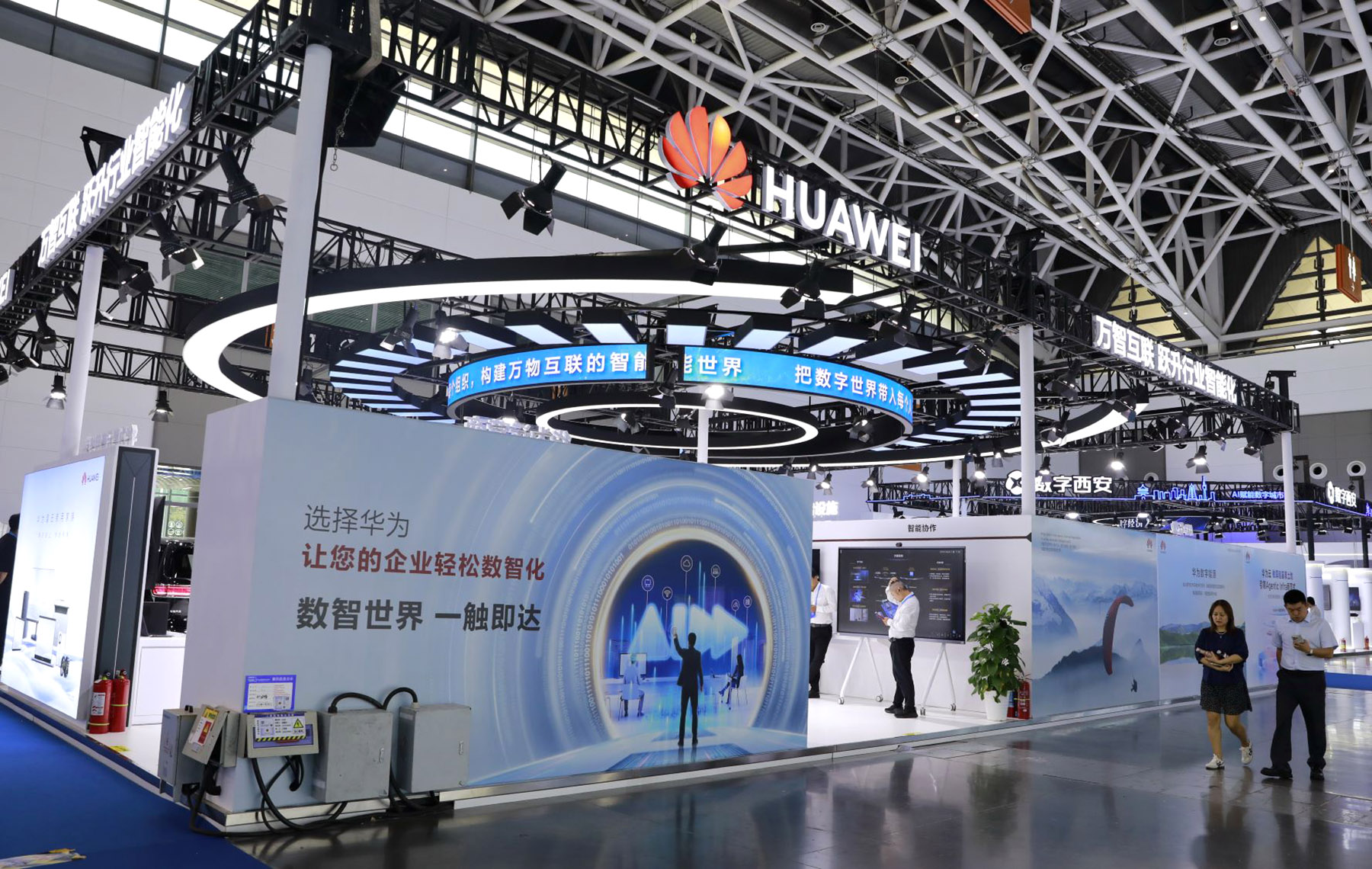
Huawei Technologies signed a multiyear global patent cross-licensing agreement with United States' computer maker HP Inc on Wednesday, highlighting a broader shift as foreign companies increasingly pay for access to Chinese technologies even as Washington maintains restrictions on some of China's biggest tech firms.
The agreement — including a license for HP to use certain Huawei Wi-Fi patents — is a strong testament to the Chinese firm's persistent independent innovation in cutting-edge fields in information and communications technology, said Alan Fan, Huawei's chief intellectual property officer.
"Through patent licensing, Huawei shares its innovation with the industry, particularly in the area of standardized technologies, which brings leading technological experiences to consumers worldwide," Fan said.
In fact, Huawei has emerged as a major holder of standard-essential patents, or SEPs — patents covering tech that manufacturers must use to make products compliant with widely adopted technical standards. The company is one of the world's largest holders of declared SEPs for Wi-Fi 7.
By end-2025, Huawei held about 165,000 active granted patents globally and had signed more than 260 patent licensing and cross-licensing agreements with major patent holders.
Companies including Amazon, Ericsson, Nokia, Samsung Electronics, Oppo, Xiaomi as well as major European automakers including Mercedes-Benz, Audi, BMW and Porsche, have inked patent agreements with Huawei.
Wang Peng, a researcher at the Beijing Academy of Social Sciences, said: "The shift is beginning to rewrite a decades-old narrative around China's role in global industry. US companies are finding it increasingly difficult to bypass Huawei's own technology while the US government is still trying to restrict Huawei's access to US technology. Washington can restrict the physical flow of certain US chips and equipment, but it cannot reverse the broader trend of global technological cooperation."
Across industries, Chinese companies are moving beyond exporting finished goods and increasingly supplying the technology, engineering and intellectual property.
Ford Motor's lithium iron phosphate battery plant in Michigan, for example, uses technology licensed from Chinese battery giant Contemporary Amperex Technology Co Ltd.
CATL has in recent years promoted its license royalty service (LRS) model, under which it provides overseas partners with battery manufacturing technology, production processes and operational expertise in return for licensing royalties and service fees.
Volkswagen has also worked with Chinese electric vehicle maker Xpeng on a China Electronic Architecture for locally produced vehicles. Volkswagen said the architecture could cut development time by as much as 30 percent and costs by up to 40 percent compared with its older platform, and it plans to use the architecture in the majority of its made-in-China vehicles by 2030.
ALSO READ: Huawei-proposed new theory promises to transform chipmaking
The China National Intellectual Property Administration said China's imports and exports of IP royalties reached 425.35 billion yuan ($63.29 billion) in 2025, up 6.7 percent year-on-year, with exports rising 26.3 percent.
Li Huiying, director of the intellectual property institute at the National Industrial Information Security Development Research Center, said: "Chinese companies are increasingly shifting from treating overseas intellectual property protection as a defensive necessity to using it as a competitive tool. More and more companies are leveraging their IP portfolios to build global technological advantages and move from followers to industry leaders."
Contact the writers at chengyu@chinadaily.com.cn
