

Efforts intensified to steer economy to more consumption-led growth model
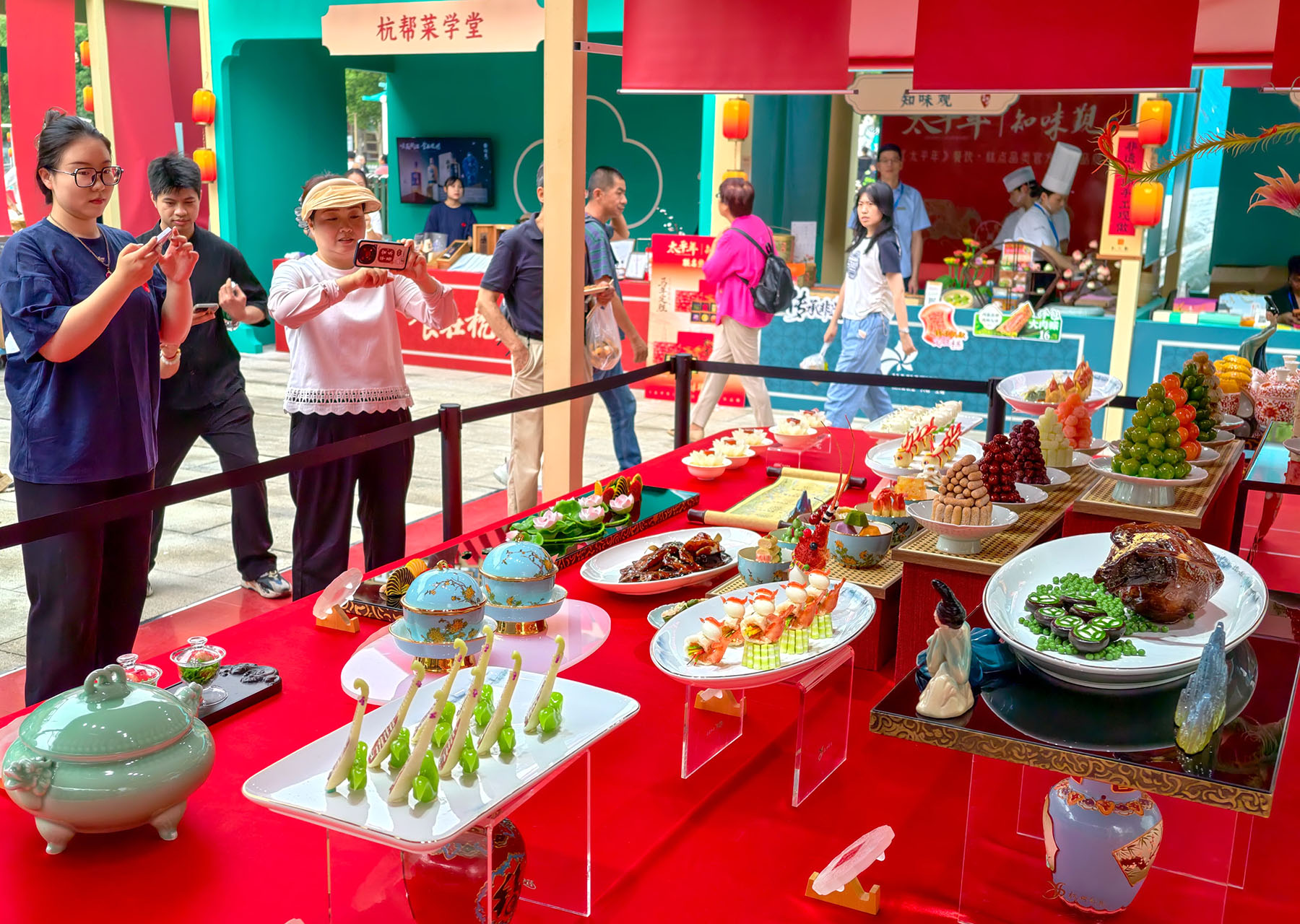
Services consumption is poised to assume a more important role in driving China's economic growth this year, officials and experts said, pointing to a structural shift in domestic demand, with services accounting for a growing share of household spending.
As external uncertainties continue to escalate, policymakers are doubling down on efforts to build on the shift and steer the economy toward a more consumption-led growth model, they added.
"Consumers tend to spend more frequently on services, and such spending generates strong spillover effects. Expanding services consumption will therefore remain a major engine of overall consumption growth," Wang Guanhua, spokesperson for the National Bureau of Statistics, said at a news conference earlier this month.
READ MORE: Personalized services see demand jump
Service retail sales rose 5 percent year-on-year in the first seven months, 3.9 percentage points faster than retail sales of goods, NBS data showed.
Luo Zhiheng, chief economist at Yuekai Securities, said the figures point to a continued upgrade in China's consumption mix, with services becoming an increasingly important source of growth.
Unlike goods, services are less constrained by diminishing marginal utility and therefore offer greater room for spending growth, Luo said.
Tourism has stood out, with retail sales of tourism-related consulting and rental services rising 11 percent year-on-year in the first seven months, the NBS said.
Morgan Stanley expects China's tourism revenue to reach 12 trillion yuan ($1.78 trillion) by 2030. Tourism's share of GDP is projected to rise to about 6.7 percent by then, from 4.8 percent in 2024.
Yuan Haixia, dean of the research institute at China Chengxin International Credit Rating, said the experience of developed economies shows that consumption typically becomes the main engine of growth once a country enters the ranks of high-income economies.
Echoing this view, Xiong Yuan, chief economist at Guosheng Securities, said the shift toward services still had considerable growth potential, with the share of per capita spending on services in total consumption expenditure rising 0.2 percentage point year-on-year in the first half.
A high-level meeting convened by China's top leadership in late July placed a high premium on efforts to expand the supply of quality goods and services, and tap the potential of services consumption. The meeting held by the Political Bureau of the Communist Party of China Central Committee also called for improving fiscal-financial coordination to bolster domestic demand.
Further measures are in the pipeline. "We are working on additional fiscal-financial coordination measures, which will be rolled out in the second half," Liao Min, vice-minister of finance, said at a separate news conference on Friday.
Alongside efforts to improve the supply of services, faster growth in household disposable incomes will be key to sustaining the expansion in services consumption, experts said.
ALSO READ: Services consumption to underpin economic growth
"Income elasticity for many services exceeds one, meaning spending on services tends to rise more than proportionately as household incomes grow," Luo said.
On July 13, the State Council approved the plan for expanding consumption during the 15th Five-Year Plan (2026-30) period, which calls for "steadily raising minimum wages".
Guangdong province will raise the monthly minimum wage to 2,680 yuan in Guangzhou and 2,700 yuan in Shenzhen, effective Sept 1, up 7.2 percent and 7.1 percent, respectively, according to the provincial government. Shanxi province and the Xinjiang Uygur autonomous region will follow suit on Oct 1, raising their monthly minimum wage rates to 2,350 yuan and 2,270 yuan, respectively, according to separate official notices.
Contact the writers at zhangchenxu@chinadaily.com.cn
