

Highly-prized forest delicacy links mountain communities to tourism opportunities, Asian market
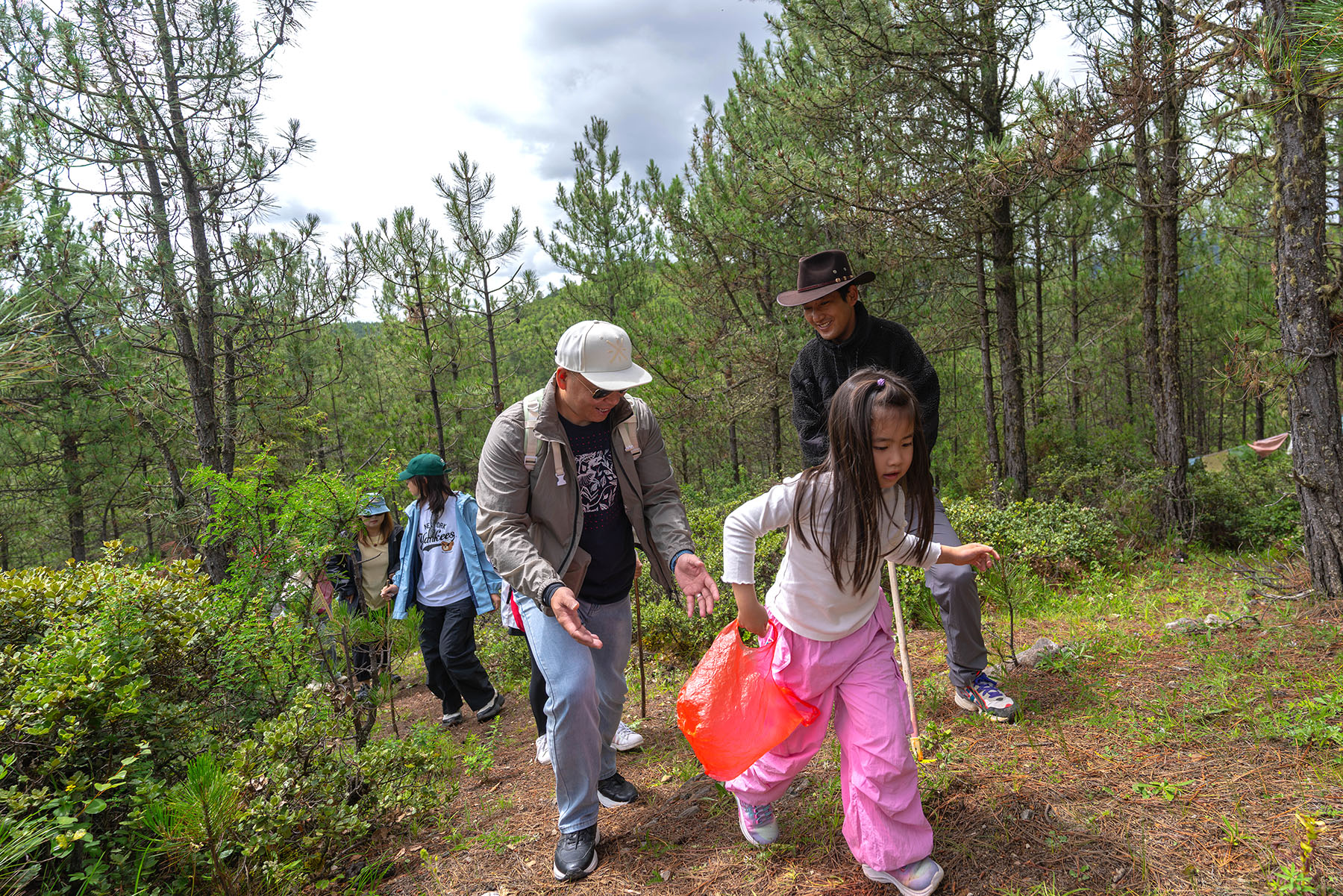
Ngawang Duchin moved slowly through the forest in Shangri-La, Yunnan province, scanning the ground beneath towering pine trees.
In Jidi village, Diqing Tibetan autonomous prefecture, pine needles carpeted the forest floor and chestnut trees lined the mountain slopes at an altitude of 3,300 meters. Summer mist drifted across the ridges.
To an untrained eye, there was little difference between one patch of forest floor and another. But since July, 38-year-old Ngawang has been searching for signs of what was hidden beneath it. The Tibetan villager suddenly stopped, crouched down and brushed away a thin layer of pine needles.
READ MORE: Simply a matter of good taste
"The ground is slightly raised here. When it bulges like this, there is usually something underneath," he said.
He carefully loosened the soil and a small brown mushroom slowly emerged, its cap still partly closed and covered with traces of forest earth.
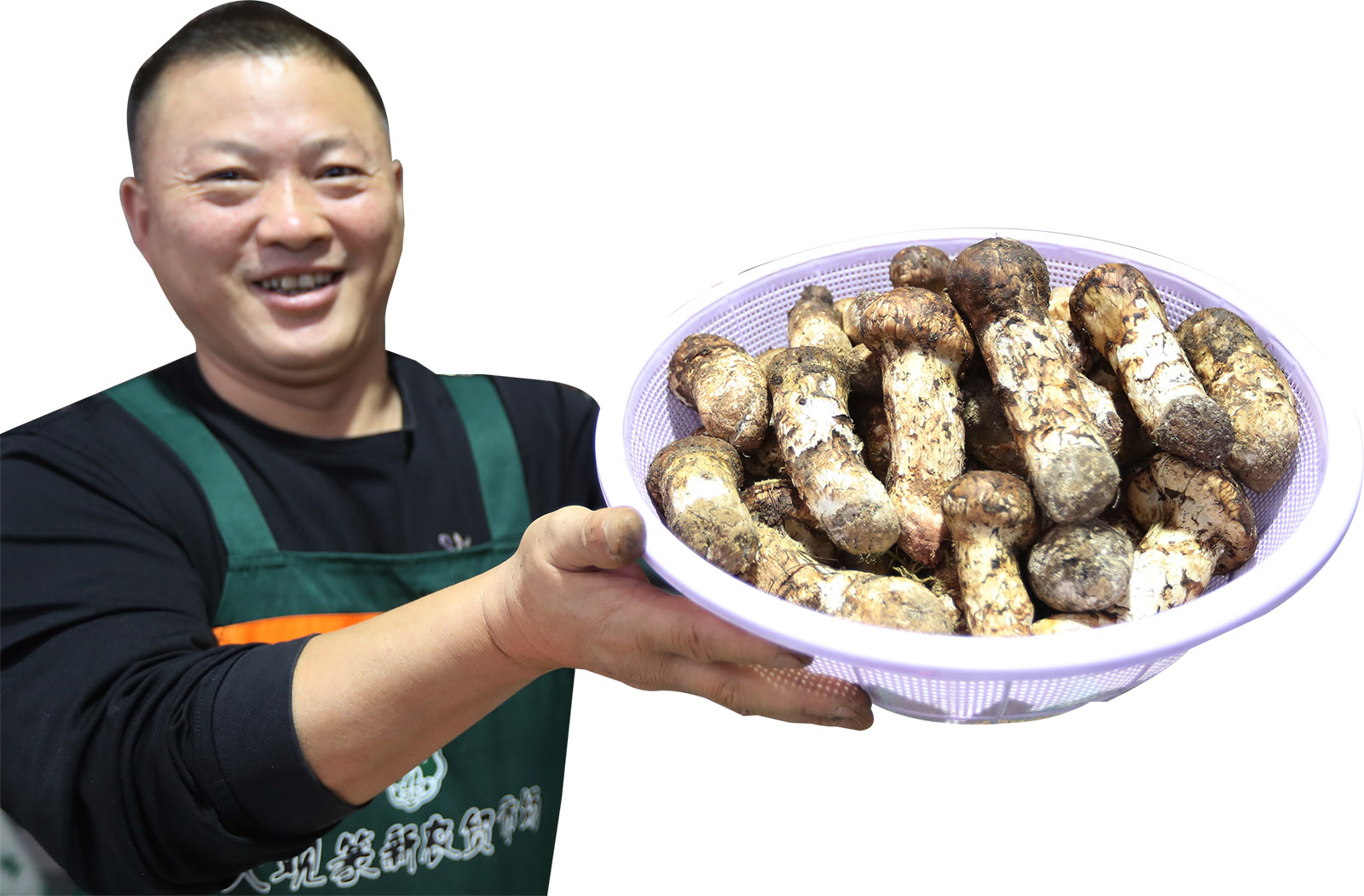
The fungus was matsutake, known in China as songrong — a delicacy grown in the mountain forests of Yunnan and popular in high-end restaurants across Asia.
For visitors accompanying Ngawang, seeing one of the world's most-prized mushrooms being foraged in the wild was a magical experience.
Seasonal treat
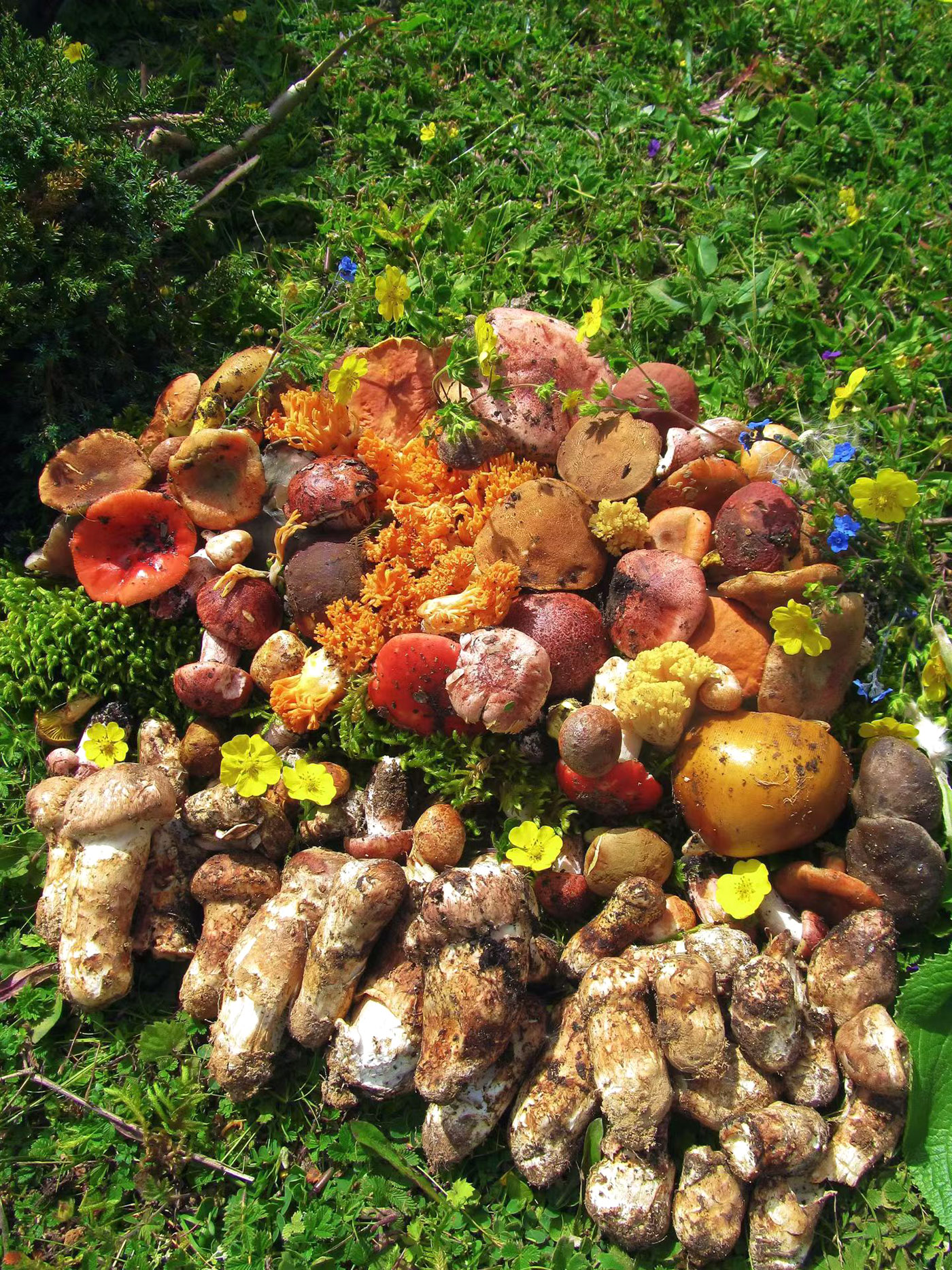
This summer, similar scenes played out across countless mountain slopes in Yunnan, a province known as the kingdom of wild mushrooms. With the rainy season arriving between June and September, forests across the region have been yielding their underground treasures. More than 900 species of wild edible mushrooms grow here — accounting for about 36 percent of the world's known varieties and more than 90 percent of China's total, according to the Kunming Institute of Botany of the Chinese Academy of Sciences.
The secret lies in Yunnan's dramatic geographical variance. Altitudes range from just 76 meters to nearly 6,740 meters, creating a vertical climate where temperatures, humidity and sunlight vary sharply from valleys to ridges. This remarkable diversity of habitats gives mushrooms their own corners of the forest to grow, but matsutake stands above the rest.
Diqing prefecture — home to Shangri-La — produces more than 65 percent of the province's matsutake, according to the Fourth Shangri-La Matsutake Forum held in July, making it the undisputed heart of China's matsutake industry. Here, wild mushrooms have supported mountain communities for generations.
Unlike ordinary agricultural products, matsutake cannot simply be planted and harvested. It depends on a delicate relationship with its natural environment.
The fungus grows together with certain trees, forming underground networks around their roots. Through this partnership, the mushroom helps trees absorb water and nutrients, while receiving energy produced by the trees through photosynthesis.
It can take five or six years before a matsutake fruiting body — the part people eat — appears above ground.
And once it emerges, the clock begins ticking. Within about 48 hours, its freshness starts to decline.
This combination of rarity, seasonality and dependence on the forest has made matsutake one of nature's most sought-after delicacies.
The mushroom has been appreciated in China for centuries. Its name, literally meaning "pine deer-antler mushroom", refers to the way young mushrooms resemble antlers and the fact that they often grow in pine forests. References to matsutake appeared in ancient Chinese texts, and the Ming Dynasty (1368-1644) pharmacologist Li Shizhen included it in his Compendium of Materia Medica.
In Japan, where matsutake has been treasured for more than 1,300 years, it remains closely associated with autumn and the aroma of forests. Honcho Shokkan, a book of Japanese food published in the 1690s, described it as "the foremost mushroom" and it has continued to influence Japanese cuisine.
Ngawang said good matsutake usually grows where small chestnut trees and pine trees meet. "When the mushroom is still young, you cannot see it. You have to understand the forest," he said.
For many tourists this summer, entering Jidi's forests provided a major insight. Ngawang taught them to look for subtle changes such as disturbed pine needles, tiny cracks in the soil and slight differences in the landscape.
"It is not always covered by moss. Sometimes it is just bare earth opening slightly," he told one group.
The visitors followed his instructions carefully. After successfully foraging for a while, the visitors sat down to taste the morning's discovery.
Ngawang took out traditional Tibetan butter, or suyou, and melted it on a heated stone. He placed thin slices of fresh matsutake on top. "Just fry it like this. Two minutes," he said. "Or you can eat it raw with wasabi."
Return of the Jidi
Ngawang was born in Jidi, and like many young people from mountain villages, he left home in search of a better life.
At 18, he joined the army and served for eight years. After returning to civilian life, he moved to Lijiang, another popular tourism destination in Yunnan, where he ran businesses including a homestay, hiking club, restaurant and tea house, and gained experience in tourism.
But after the COVID-19 pandemic, he began thinking more seriously about returning to his hometown. By then, Jidi had already developed a reputation for matsutake.
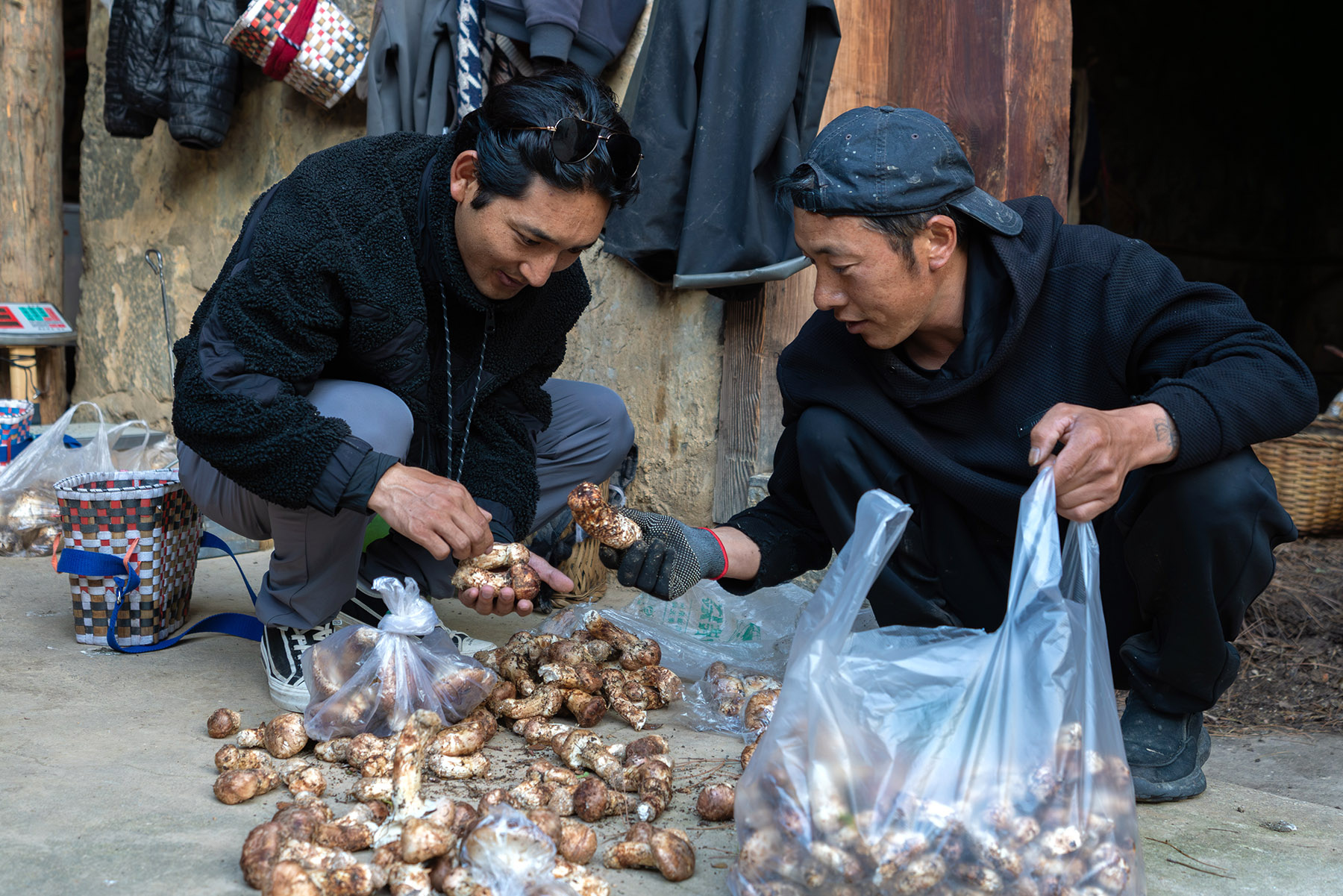
Every summer, when the rainy season arrived, villagers entered the mountains to collect the mushrooms. The harvest lasted only two to three months, but the income from this short period supported families throughout the year.
Ngawang wondered whether the forest could offer visitors something beyond a scenic view.
"People come to Shangri-La to see mountains and nature. But they do not always know the stories behind them," he said.
After spending several years exploring different opportunities, he leased one of the village's four designated mushroom-picking areas, paying 5,000 yuan ($690) a month during the three-month harvest season.
His idea was to cooperate with hotels in downtown Shangri-La, bring visitors into the mountains and allow them to witness how the mushrooms are harvested and sent to dining tables.
"I know the mountain and can at least make sure people are safe," he added.
For visitors, his greatest asset was knowing where mushrooms were likely to appear, when they should be picked, and which ones should be left behind. "Do not pick mushrooms smaller than 3 centimeters," he told one group.
The advice was not merely traditional wisdom. It reflected scientific understanding of the mushroom's life cycle.
Sun Dafeng, director of the Kunming edible fungi research institute under the All China Federation of Supply and Marketing Cooperatives, explained that immature matsutake does not have fully developed reproductive structures.
"If they are picked too early, they cannot release spores effectively," Sun said. "That affects future growth."
In Diqing, regulations prohibit harvesting immature mushrooms and encourage practices that allow the fungal root network to recover.
Tsering Norbu, director of the Jidi village committee, said the mushroom industry accounts for a major share of the local economy.
"Seventy to 80 percent of the village's GDP comes from matsutake," he said.
For more than 300 households, the summer harvest season influences almost every aspect of their life. "When the mushrooms grow well, villagers have more confidence about the future," Tsering said.
Jidi has established four designated mushroom-picking areas with clear rules on harvesting hours and seasonal protections. Villagers adopt a "harvest and fallow" approach, part of what experts call a joint conservation and breeding expansion model.
Sun compares this approach to rehabilitating farmland.
"The forest also needs recovery time," he said. "The underground fungal system is living. If the environment is damaged, production will eventually decline."
In Jidi, more than 267 hectares of matsutake-producing forest have been protected and expanded through measures including designated harvesting zones and seasonal restrictions.
This approach has helped stabilize annual output at around 300 metric tons.
Preparing for sales
The mushrooms' commercial value must be hastily maximized when villagers lift them from the soil. From the moment they are picked, the clock starts ticking to get them to dining tables in time.
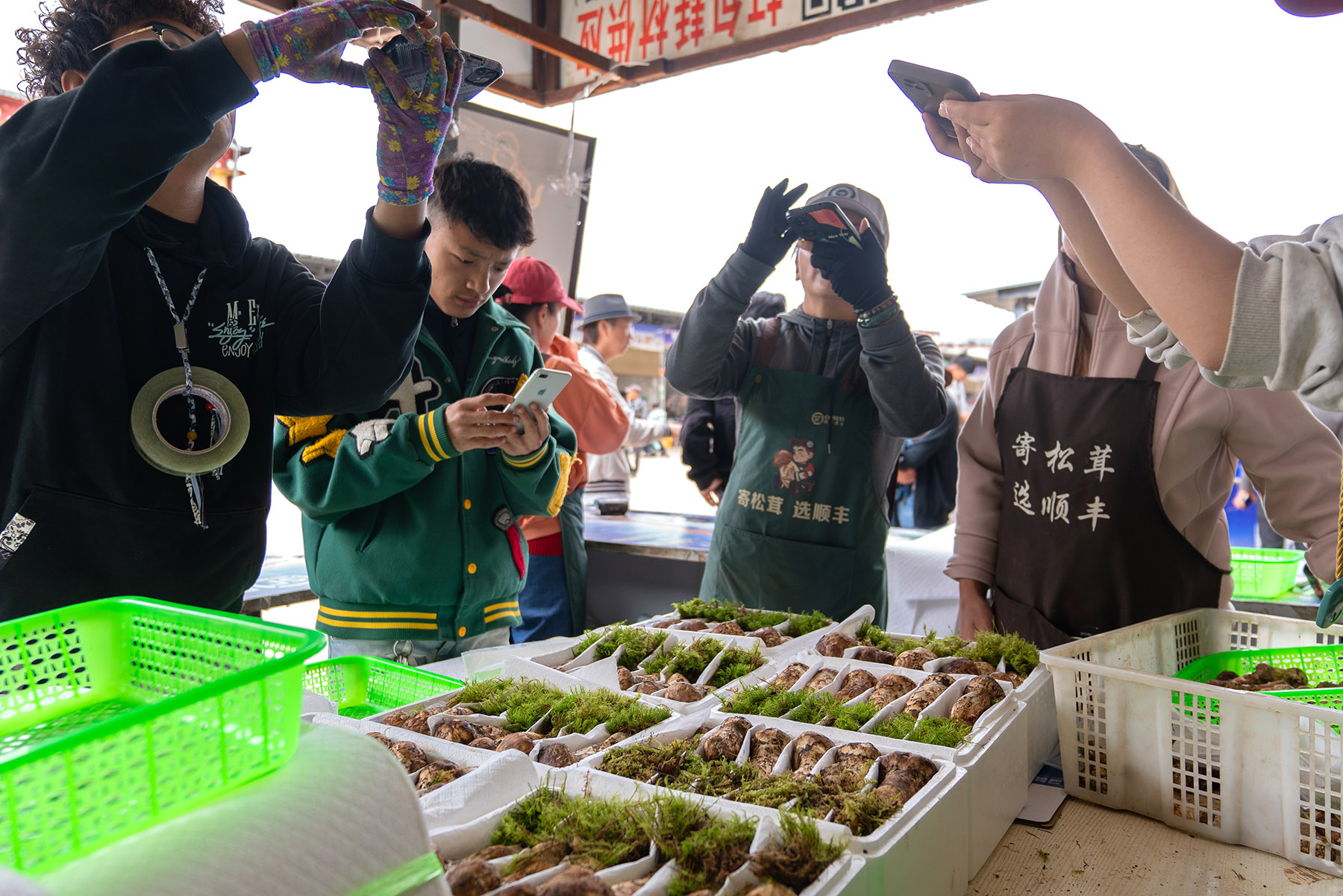
At the Shangri-La matsutake trading center, about 30 kilometers from Jidi village, workers sort, pack and dispatch the fragile harvest.
Inside the market, the atmosphere is frantic. Phones ring constantly and buyers inspect the quality of the mushrooms under bright lights. The fungi are separated by hand, according to size, appearance and freshness before being sent to destinations hundreds or even thousands of kilometers away.
At the center of the trading hall stands a large model airplane — a reminder that these mushrooms, once collected mainly for local consumption, have become part of a global food network.
Fresh matsutake is highly perishable, making transportation a challenge.
During the peak harvest season in July and August, dealers handle dozens of kilograms each day. Mushrooms are packed with ice and moved quickly through cold-chain logistics to preserve their texture and aroma.
Some major buyers travel to Shangri-La in search of the highest-quality mushrooms.
Trucks transport matsutake to Kunming, the provincial capital, in the morning to larger distribution networks and for export. Flights from Diqing Shangri-La Airport connect with major domestic markets, including Beijing, Shanghai, Guangzhou, Guangdong province and Chongqing.
But expansion of the market has brought new challenges.
For generations, matsutake buyers relied on experience to judge quality and developed their own standards based on size, appearance and aroma. As demand increased, however, the industry needed clearer standards.
"Matsutake is different from ordinary agricultural products," said Jia Xiao, a researcher at the Research Center for Rural Economy of the Ministry of Agriculture and Rural Affairs. "Because it cannot be cultivated on a large scale, protecting the natural environment where it grows is the foundation of the industry."
A global appetite
At the forum, local officials and experts highlighted the growing recognition of Shangri-La matsutake as a regional agricultural brand.
According to data released at the forum, its brand value had reached 4.41 billion yuan, but experts said its reputation could not be measured by numbers alone.
Earlier this year, Shangri-La introduced new grading standards for matsutake, classifying mushrooms on a five-level scale.
The grading system considers factors including length, integrity, maturity, color, cleanliness and aroma. Among them, aroma remains the most difficult to measure.
"Matsutake's fragrance comes from a combination of volatile compounds," Sun Dafeng explained. "Technology can detect these compounds, but it cannot fully describe the human experience of smelling something fresh, earthy and connected to the forest."
Experts believe standardized grading and traceability systems can help consumers better understand the mushrooms they purchase. Each batch of matsutake can now be tracked through digital records showing its origin and processing information.
The international market for Shangri-La matsutake has continued to grow.
According to Diqing prefecture authorities, the region exported 55 metric tons of matsutake in 2025, generating 15.66 million yuan in foreign exchange.
The 2026 export season began on July 4, when a 14-kilogram shipment cleared customs at Kunming Changshui International Airport and was transported overseas within 24 hours of being picked, according to Kunming Customs.
ALSO READ: Wild mushroom season in Yunnan has visitors heading for the hills
Logistics companies have also expanded services to meet international demand.
At the forum, SF Express introduced new delivery solutions connecting matsutake-producing areas in Shangri-La, Kunming and Lijiang with overseas markets including Osaka in Japan, Seoul in South Korea and Singapore.
The company said its services could shorten door-to-port delivery time to about 28 hours and support exports via more than 50 international routes.
"To succeed in high-end global markets, Shangri-La matsutake needs more than quality and logistics," Sun said. "It needs sustainable harvesting, reliable standards, traceability and a story that reflects where it comes from."
For Ngawang, the future of matsutake is about helping more people understand the mushroom's history and essence.
"I hope the whole village can do this together," he said. "I bring the guests, and they experience it themselves. There is no need for a big investment."
Contact the writers at yangfeiyue@chinadaily.com.cn
