

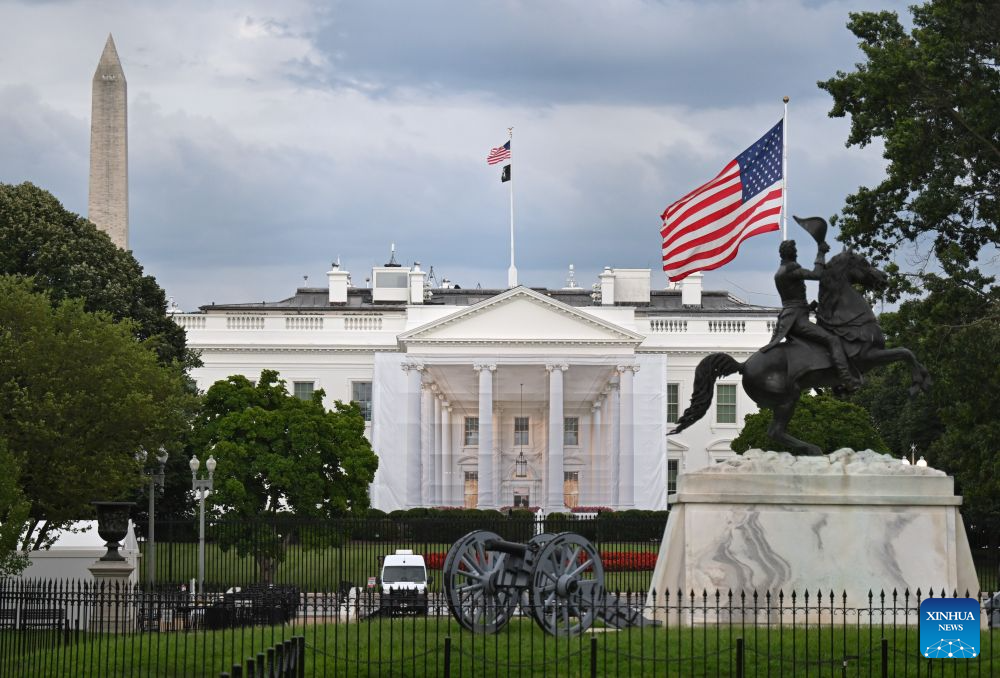
WASHINGTON/TEHRAN/UNITED NATIONS – US President Donald Trump said on Monday that Tehran wants to reach an agreement with Washington but is unwilling to accept the kind of deal he considers necessary, as a 60-day negotiating period between the two sides came to an end.
"They want to make a deal, but they're not going to make the kind of a deal that I feel is necessary," Trump told reporters at the White House.
Trump offered no details on the state of the negotiations, reiterating that preventing Iran from obtaining a nuclear weapon remained Washington's objective.
"You understand that Iran cannot have a nuclear weapon, and they won't have a nuclear weapon," Trump said. "It's very simple. They can't have a nuclear war."
Trump also claimed that the United States had "total control" over the Strait of Hormuz through its naval blockade against all Iranian ports, repeatedly musing about making it a territory of the US.
"We control it (the strait) with the blockade. And I like the idea of declaring it a territory," Trump said. "We have total control over the Strait now."
As for his earlier warning against Oman, which is reported to be working with Iran on a plan to open the strait and keep the waterway under the control of the two nations, Trump said: "I don't think they behaved very well, but we'd handle them very easily, just like we do others."
Trump's remarks came as a 60-day ceasefire between the US and Iran ended Monday with both sides standing firm on their positions over Iran's nuclear program and the Strait of Hormuz.
ALSO READ: Iran's president: Peace MoU with US advanced with dignity, power
Backchannel talks
In an interview with the semi-official Tasnim news agency on Monday, spokesperson for Iran's Islamic Revolution Guard Corps (IRGC) Hossein Mohebbi rejected Trump's claim that there is a backchannel for talks between Washington and the IRGC.
In a phone interview with Fox News chief foreign correspondent Trey Yingst, Trump on Monday confirmed that his administration maintains a direct backchannel with the IRGC officials.
"They're good poker players, but they're dying," Trump said, claiming that Iran should "put up the white flag of surrender."
"I have no time schedule," Trump said. "I'm not in a hurry ... The midterms have nothing to do with my thinking."
Mohebbi called Trump's claim a "delusion," saying no dialogue is going on between the IRGC officials and the Americans.
Even Iran's diplomatic apparatus is not currently negotiating with the US owing to Washington's "breach of promises", Mohebbi added.
Guterres urges resumption of talks
UN Secretary-General Antonio Guterres calls on Iran and the US to resume negotiations toward a durable settlement to the conflict, his spokesman said.
Asked at a briefing about the UN chief's message as the 60-day deadline for a negotiated final deal under the June 17 Iran-US memorandum of understanding expires on Monday, Stephane Dujarric said Guterres wants negotiations to resume.
"His message is the same, which he's been delivering since the start, which is there is no military solution to this conflict," said Dujarric. "He urges the Islamic Republic of Iran and the United States to resume negotiations toward a peaceful and durable settlement as soon as possible, to avoid military action and as well to lower the rhetoric that we've been hearing in recent days."
Map of new route in Strait of Hormuz
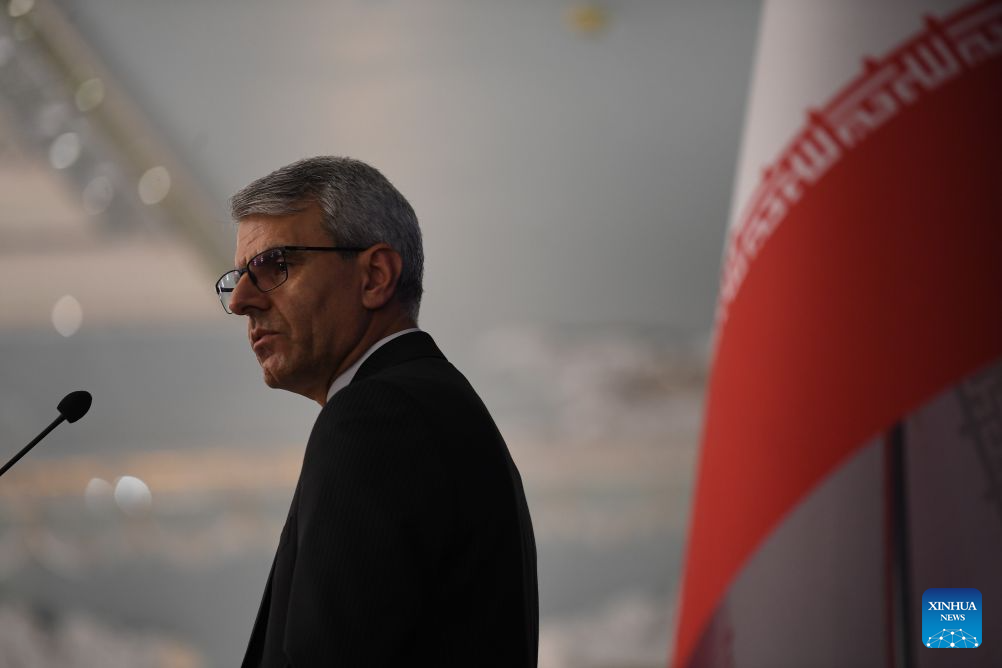
At a weekly press conference in Tehran, Iranian Foreign Ministry spokesman Esmaeil Baghaei said Iran and Oman have agreed on the map of the new route for maritime traffic in the Strait of Hormuz.
Elaborating on the latest progress of negotiations between Iran and Oman on the designation of a safe route for passage through the strait, Baghaei said the two countries are supposed to finalize the agreement in the form of a package comprising the map and a joint statement.
He attributed the protraction of the process to the issue's complexity, "the number of the players" seeking to influence the process, and "attempts by certain malicious parties".
Baghaei said Tehran and Muscat are continuing the talks with seriousness, and exchanging their views on the joint statement's text, adding that both sides want to develop a mechanism capable of safeguarding their interests, addressing their concerns and taking into account considerations regarding international shipping.
Pilots assumed to be jailed in Qatar
Meanwhile, Baghaei said Iran will use all its bilateral, multilateral and legal capacities to clarify the situation of three Iranian pilots believed to have been held captive by Qatar since March.
Two Iranian Su-24 fighter jets, with four pilots onboard, were hit by the "enemy's" air defense while returning from a military mission on March 2, with three pilots captured by Qatar and the fourth killed, Commander of the Missing Persons Search Committee of the General Staff of Iran's Armed Forces Mohammad Bagherzadeh said on Saturday.
ALSO READ: Commander: 3 Iranian pilots captured alive by Qatar in March
Baghaei noted that clarifying the pilots' situation is Iran's "serious demand" to Qatar, stressing that the Iranian Foreign Ministry has been following up on the pilots' fate since being informed of the issue.
Baghaei said that in mid-March, the ministry sent its first correspondence to the International Committee of the Red Cross on the issue and began following up through the Iranian embassy in Doha and the Qatari embassy in Tehran, adding, "We have highlighted the issue in every meeting (with the Qatari side)."
He underlined that Iran's follow-ups on the issue are not in conflict with its relations with Qatar, noting that "while we have regular exchanges (with Qatar) and the Qataris play a role in discussions pertaining to the (diplomatic) process that has started between Iran and the United States, we must also express our concerns and considerations."
