

As Hormuz standoff persists, Tehran reshuffles high-ranking security posts
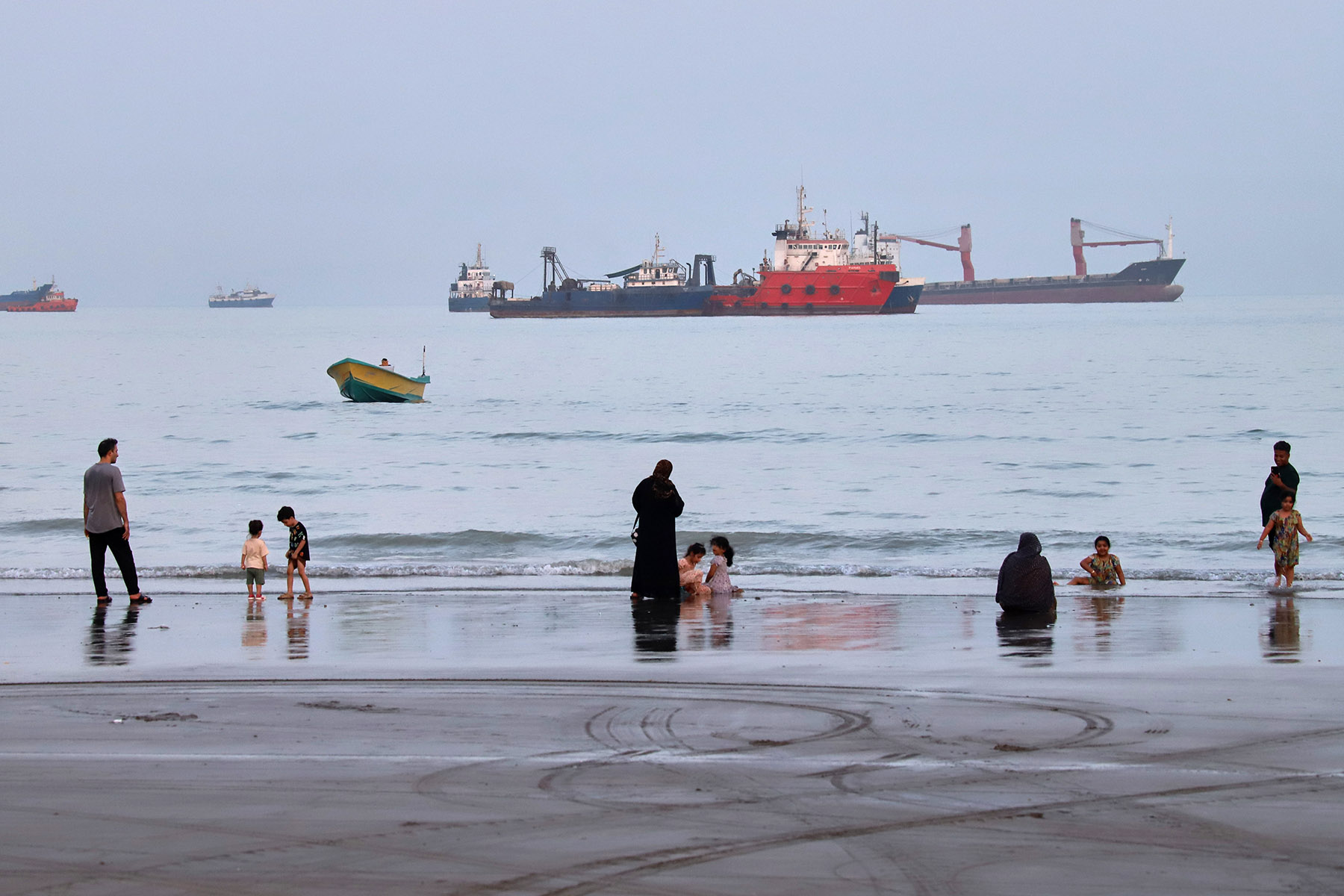
United States President Donald Trump has clapped back at Iran in a counter-demand seeking financial compensation for all of Tehran's alleged damage over the last 50 years, in a fresh war of words as Washington struggles to maintain leverage over the Strait of Hormuz.
Trump told reporters at the Oval Office on Monday that the strait was "open" and that the US was the only one that had control over the strategic waterway.
On his social media account the same day, Trump noted that Iran was asking for compensation "for the damage done to them during the last five-month military conflict even though it was never mentioned in any of our negotiations or meetings".
READ MORE: Washington pivots to pressuring Iran's economy
Trump's remarks came a couple of days after Iran's Supreme National Security Council outlined six conditions for reopening the Strait of Hormuz on what it said would constitute "a correction of US behavior", including paying in full the damages caused to Tehran by the wars of aggression, lifting the US naval blockade and withdrawing US forces around Iran.
Iran also demanded the lifting of "unjust and illegal sanctions" and the unconditional release of "the blocked and stolen assets of the Iranian people".
Iran and Oman have been in talks about the future management of the strait and have signaled that discussions were progressing. Tehran has insisted that the meetings were bilateral or between littoral states and that it was not directly negotiating with Washington.
Iranian Foreign Ministry spokesman Esmaeil Baghaei noted in a post late on Monday that US Treasury Secretary Scott Bessent had boasted of "suffocating" Iran through economic sanctions.
"This is no longer 'policy' — it is 'habit'; and more dangerously still, it is an addiction that has displaced thought itself," he said.
Baghaei said Iran has demonstrated over decades that it "will not be strangled by these exhausted refrains".
On Monday, Pakistani Deputy Prime Minister and Foreign Minister Mohammad Ishaq Dar held a phone call with Iranian Foreign Minister Abbas Araghchi.
Araghchi explained the latest status of Iran's bilateral talks with Oman on determining an appropriate route for the safe passage of vessels through the Strait of Hormuz, Iran's Tasnim News Agency said in a report on the phone call, adding that Araghchi stressed Iran's determination "to continue the process".
Meanwhile, Anwar Mohammed Gargash, diplomatic adviser to the president of the United Arab Emirates, said in a post on X on Tuesday that the region "cannot remain indefinitely in a state of neither war nor peace".
New appointments
Amid tensions with the US, Iran has carried out a reshuffle at the top of its political and national-security establishment.
Iran's Supreme Leader Mojtaba Khamenei has made six new appointments to the Islamic Revolutionary Guard Corps and armed forces, including Major General Pilot Ali Abdollahi as chief of staff of the armed forces and Brigadier General Ahmad Vahidi as commander-in-chief of the IRGC, according to a written message carried on Mojtaba's social media accounts.
Abdollahi had previously led the Khatam al-Anbiya, Iran's interbranch central military command tasked with coordinating operations.
The two represent Khamenei's first senior military appointments since being named supreme leader early in the Middle East conflict after the death of his father in US-Israeli strikes.
ALSO READ: Report: Pakistan says Iran, US close to some arrangement on peace
The announcement came one day after Iran appointed Mohsen Rezaei, a military adviser to its new supreme leader, to head its powerful Supreme National Security Council.
Rezaei replaces Mohammad Bagher Zolghadr, who will become a political adviser to Khamenei.
Rezaei joined the IRGC shortly after the 1979 Islamic Revolution and became its commander in 1981 at the age of 27. He led the IRGC for 16 years, including for most of the 1980-88 Iran-Iraq war, and oversaw the expansion of its ground, naval and air capabilities.
He is part of a generation of IRGC commanders who emerged from the revolutionary underground and later became senior figures in Iran's security apparatus.
The 71-year-old hard-liner last week threatened US forces with "serious risks and casualties" if the US did not lift its blockade of Iranian ports.
Xinhua, agencies and Cui Haipei in Dubai, UAE, contributed to this story.
Contact the writers at jan@chinadailyapac.com
