

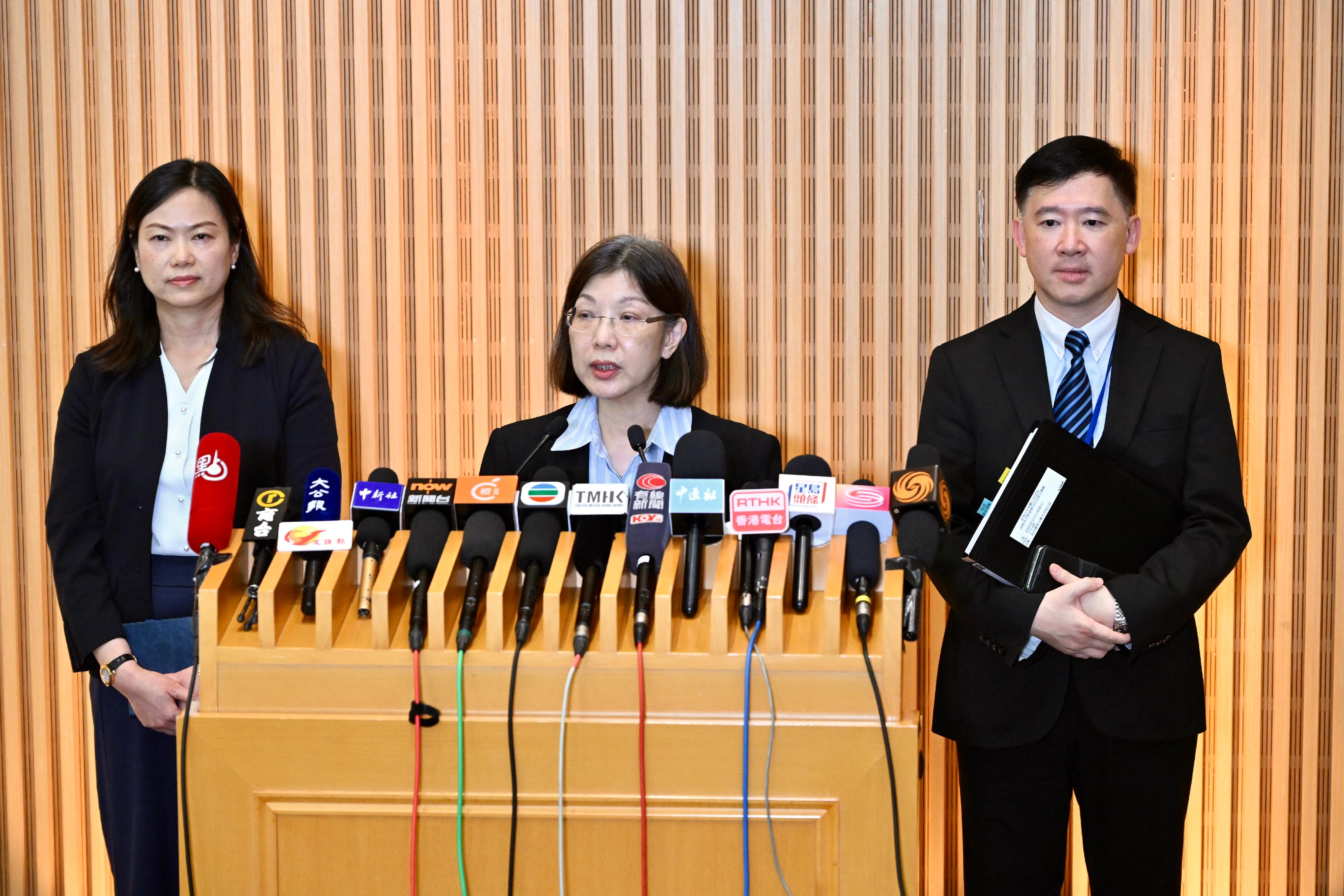
The two-month public consultation on the Hong Kong Special Administrative Region’s first-ever five-year plan concluded on Friday, with the city receiving over 16,000 submissions from various sectors, Secretary for Constitutional and Mainland Affairs Janice Tse Siu-wa said.
Speaking to the media on Friday, Tse said the SAR government has been using artificial intelligence technology to collate and analyze the feedback collected. After consolidating and reviewing the views, the government aims to publish the plan by September, she said.
The consultation, which started on June 15, featured over 100 sessions, about 30 of which were hosted by Chief Executive John Lee Ka-chiu.
“The public response to the five-year plan has been very enthusiastic,” Tse said, adding that 80 percent of the submissions came from individual residents, and the remaining from various organizations, political groups, and chambers of commerce.
Some submissions support Hong Kong in building a commodity trading ecosystem and strengthening its roles as a global offshore renminbi hub and international financial center, she said.
RELATED ARTICLES
- September set as target for HK's inaugural 5-year plan release date
- Economist: HK’s five-year plan to unlock opportunities for investors, firms
- HK’s first five-year plan signals a new era of development
- Starry Lee: LegCo to fully back SAR govt in drafting HK's 1st five-year plan
On regional development, many submissions advocated for the accelerated construction of the Northern Metropolis and urged closer integration of industry, academia and research. Some residents also called for deeper collaboration on talent, education and logistics within the Guangdong-Hong Kong-Macao Greater Bay Area.
Alongside economic and tech development, the public cares most about concrete improvements to people’s well-being, offering numerous practical suggestions related to housing, healthcare, education and social welfare, Tse added.
Tse said members of the public generally believe the strategic document will help Hong Kong seize emerging opportunities and navigate prevailing circumstances.
On the final day of the consultation, submissions from the Hong Kong Institute of Architects, covering 10 areas, urged the SAR government to actively align with the country’s target of peaking carbon dioxide emissions by 2030 and achieving carbon neutrality by 2060. They also proposed optimizing public housing resource allocation using AI, and establishing a dedicated building-maintenance bureau to strengthen regulatory oversight.
The Hong Kong Institute of Certified Public Accountants, which submitted suggestions on Thursday, recommended fostering the professional development of sustainability assurance businesses, and accelerating the development of carbon credit trading and accreditation mechanisms.
The institute also proposed that the government nurture multidisciplinary professionals for the digital economy.
After attending a district session on Sunday, Lee said in a social media post that feedback from residents reflected their confidence in Hong Kong’s future and recognition of the current administration’s governance outcomes.
He said his team will spare no effort in preparing Hong Kong’s first five-year plan.
The city’s first five-year plan aims to align local priorities with the national 15th Five-Year Plan (2026-30) and promote longterm, high-quality development.
According to the consultation document, the plan outlines goals across six key sectors: the Northern Metropolis; economy, finance and trade; innovation, technology and industry; people’s livelihoods and social services; regional cooperation; and culture, sports, tourism, and green living.
Contact the writer at stacyshi@chinadailyhk.com
