

New excavations reveal how ancient communities built settlements and developed agriculture, report Shi Baoyin and Qi Xin in Xinzheng, Henan.
Lying at the eastern foot of Songshan Mountain along the Shuangji River, part of the Huaihe River system, the Peiligang site in Xinzheng, Henan province, was named one of China's top 10 archaeological discoveries of 2025.
"Holding more than 30,000 years of uninterrupted cultural deposits in a single location, Peiligang vividly documents how prehistoric people evolved from nomadic hunter-gatherers into settled farming communities," says Li Yongqiang, head of the Peiligang site excavation project and a researcher at the Institute of Archaeology, Chinese Academy of Social Sciences. "Its landmark discoveries fill major gaps in our understanding of China's prehistoric past."
READ MORE: Archaeologists unearth 7,000-year-old bottle
As the type site of Peiligang culture, the ancient settlement offers vital clues to the emergence of early farming civilizations in China's Central Plains.
Paleolithic craftsmanship
Although many Paleolithic and Neolithic sites are scattered across the Central Plains, Peiligang's uninterrupted stratigraphy and complete cultural sequence make it an invaluable reference for studying the transition between the two Stone Ages, according to Li.
Large-scale excavations resumed at Peiligang in 2018. Led jointly by the Institute of Archaeology, CASS, and Zhengzhou Institute of Cultural Relics and Archaeology, the project investigates prehistoric settlement patterns and cultural development across the region. In the western section of the site, archaeologists have uncovered a late Paleolithic deposit spanning more than 50,000 square meters and dating from 36,000 to 14,000 years ago. The cultural layer exceeds 8 meters in thickness.
"It marks the first discovery of such a thick late Paleolithic cultural layer in an open-air, non-cave setting on China's plains," says Zhang Jian, deputy director of the Zhengzhou Institute of Cultural Relics and Archaeology.
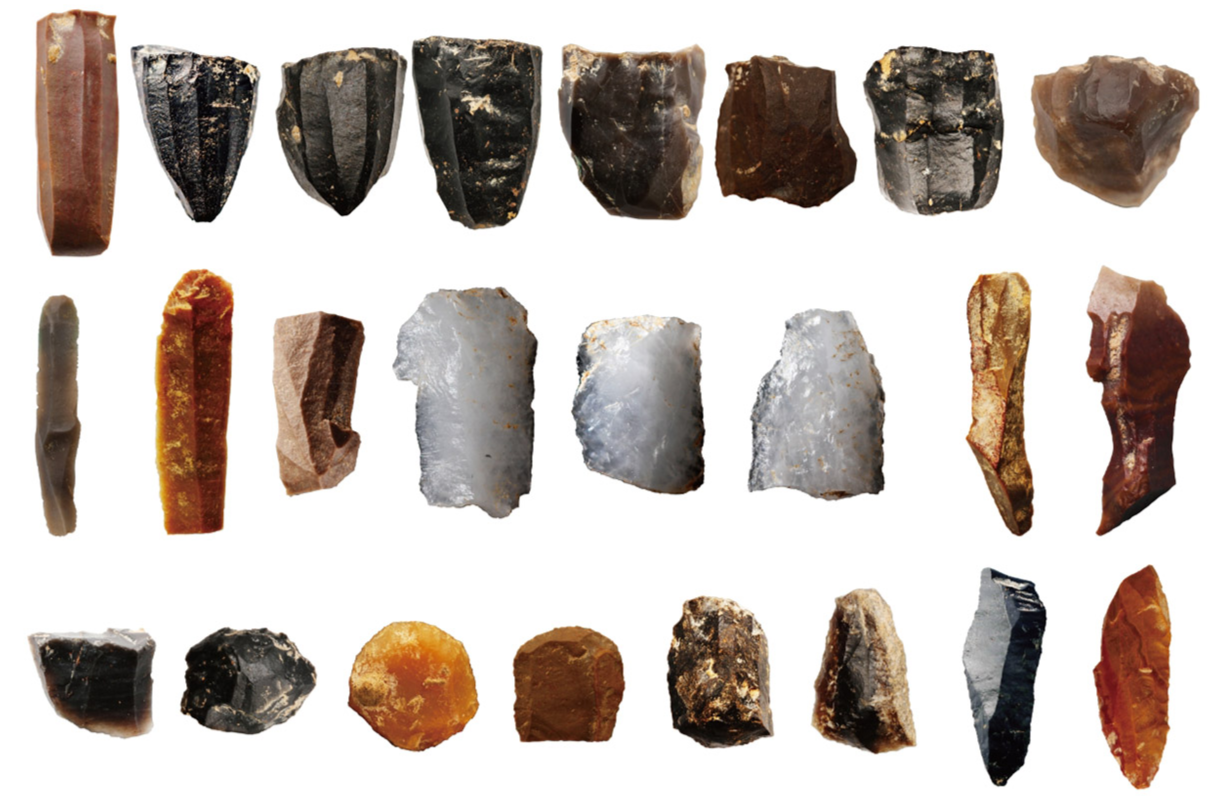
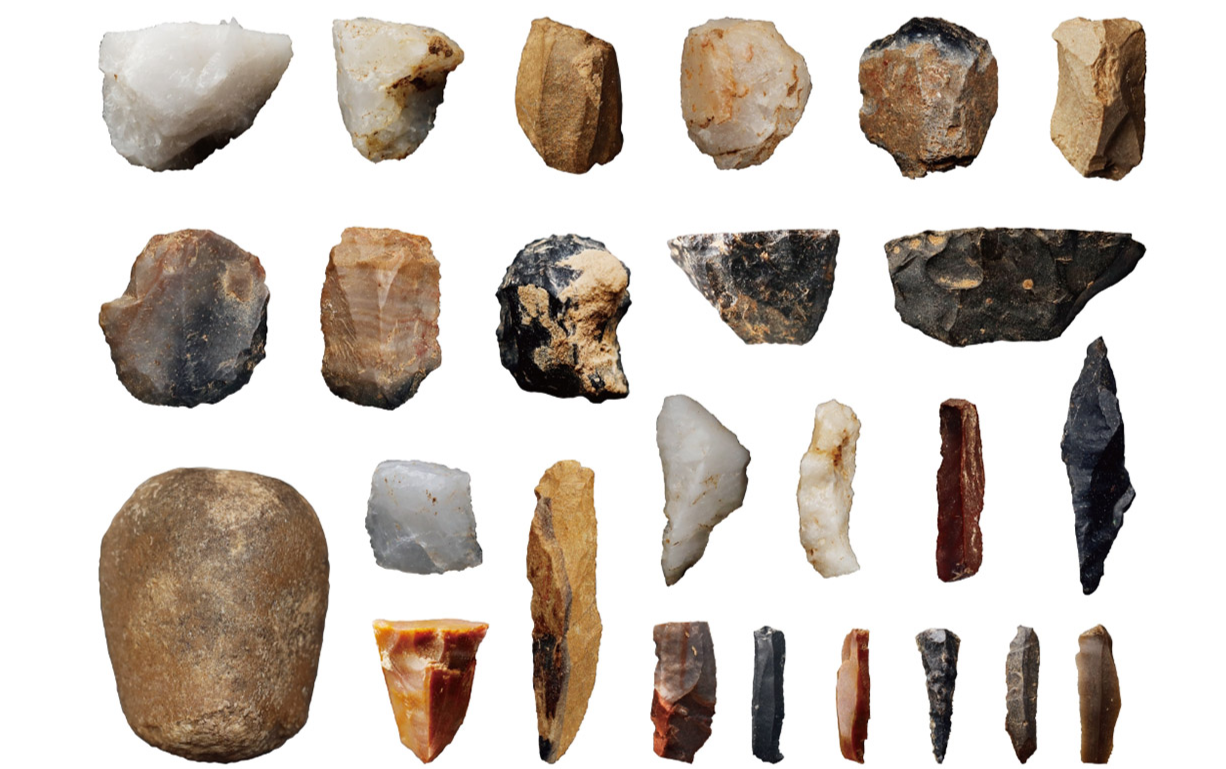
The earliest phase, dating from 36,000 to 29,000 years ago, featured simple flake stone tools. Between 29,000 and 22,000 years ago, micro-tool technology emerged, marking a major advance in prehistoric toolmaking. These finely crafted tools were used for hunting, cutting, and other daily tasks. From 22,000 to 14,000 years ago, wedge-shaped micro-cores became dominant, representing the mature stage of local stone-tool production, Zhang says.
The discoveries provide clear evidence of the evolution of prehistoric stone-tool technology. A wide range of artifacts documents the emergence and development of toolmaking, establishing a chronological framework for late Paleolithic remains in the Central Plains.
"Archaeologists also uncovered a complete production chain for ostrich eggshell ornaments, including raw materials, semi-finished artifacts and production waste," Zhang says. "Unlike other sites that yielded only scattered decorative objects, Peiligang has been confirmed as a dedicated workshop for producing ostrich eggshell accessories."
The discovery shows that specialized handicrafts existed in the Central Plains more than 20,000 years ago, he adds. "Ancient artisans had mastered sophisticated processing skills and displayed a clear appreciation for aesthetics."
Neolithic life
"The discovery of the Peiligang culture reveals a mixed farming system combining dryland crops with rice cultivation, proving that more than 8,000 years ago, millet, broomcorn millet and rice — the three staple grains of ancient China — were already being cultivated simultaneously," says Li. "This provides concrete evidence of the origins of the three-grain farming system that later matured during the Yangshao period (5000 to 2900 BC)."
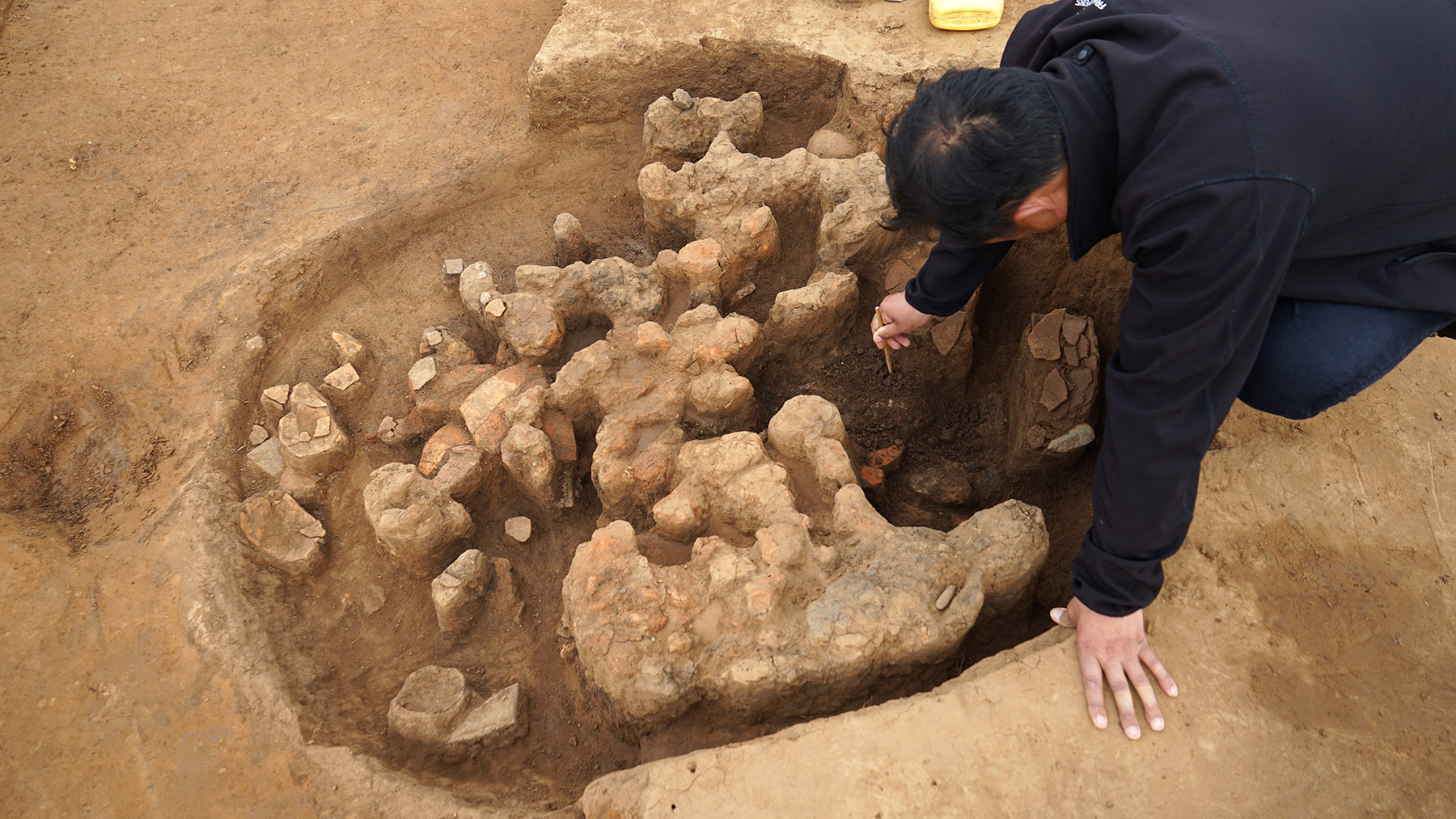
Architecture also advanced significantly during this period. Excavations have uncovered red baked-earth structures, widely regarded as the earliest known examples of this type of architecture in northern China, Li says. "These structures demonstrate that ancient people had mastered fire control and moved beyond temporary shelters for permanent dwellings."
Winemaking is another key discovery. "Wine played an important role in daily life, social exchanges, rituals and funerals," Li says.
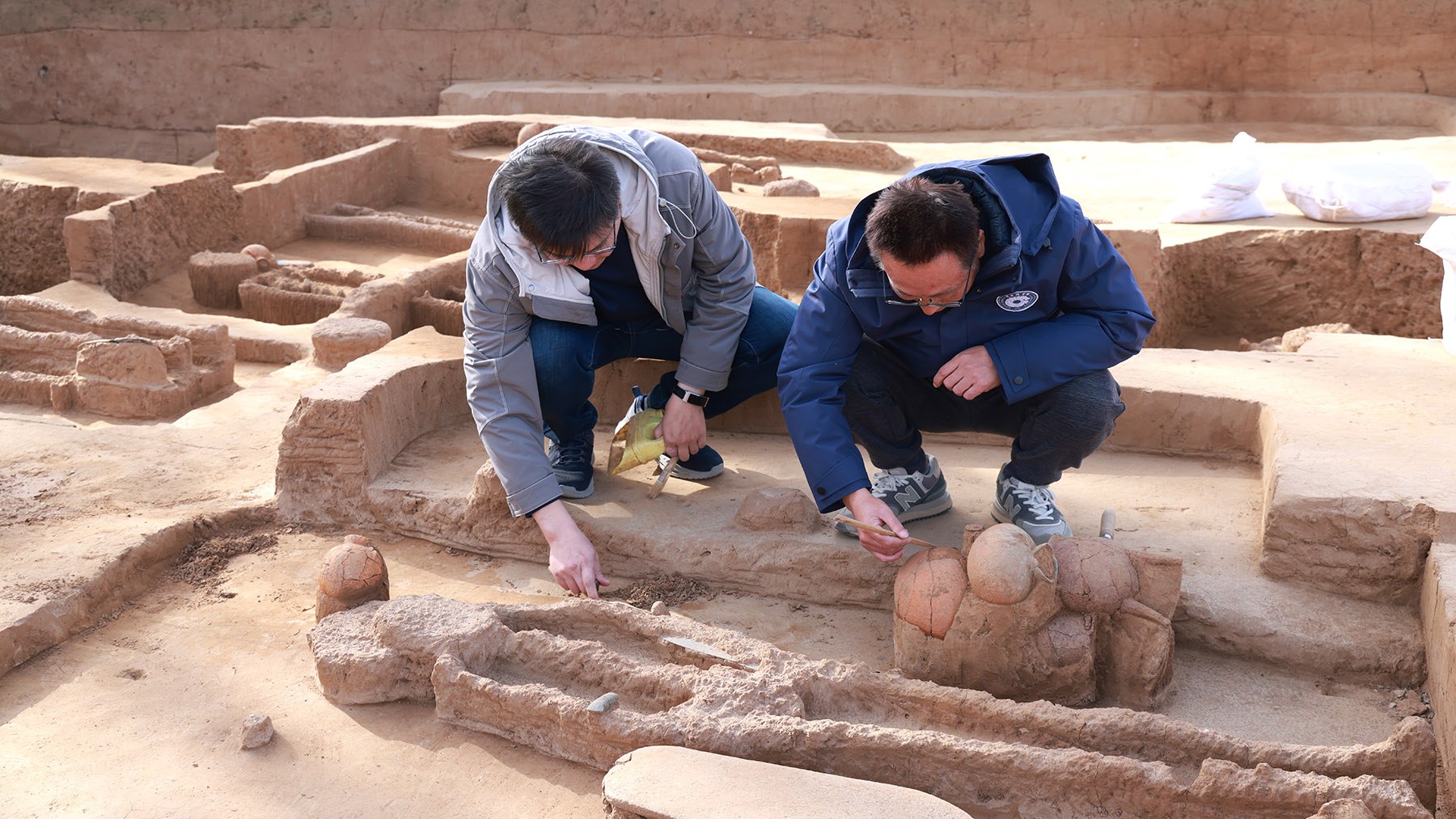
Wang Kai, curator at the Zhengzhou Institute of Cultural Relics and Archaeology, says the site comprises interconnected residential areas, cemeteries and handicraft workshops.
"Standardized burial customs had already taken shape. A wine vessel was placed on the right side of the deceased in nearly every tomb, while burial goods reflected different occupations," Wang says.
"Stone grinding slabs were also unearthed, signifying the advent of grinding technology. These implements were employed to process plant seeds, laying the foundation for early agriculture," he adds.
Researchers have also mapped the settlement's overall layout. The evidence suggests that Peiligang had a clear division of labor, social hierarchy and early forms of social stratification 8,000 years ago, according to Li.
Continuous roots
A pottery figurine featuring a human face, fangs and a unique "jie-shaped" crown is among the site's most significant discoveries, according to Li.
Gu Wanfa, executive president of the Henan Provincial Institute of Cultural Heritage and Archaeology, says: "The fangs symbolize bravery and strength, reflecting ancient people's admiration for wild animals. The distinctive crown is related to prehistoric astronomical beliefs.
"This view of the universe embodies the ancient philosophy of harmony between humanity and nature, a worldview that shaped China's traditional culture of unity and solidarity," Gu adds.
"Peiligang is an important direct cultural predecessor of the Central Plains' Yangshao culture. Its farming system, baked-earth architecture, settlement planning, burial customs, winemaking traditions, and pottery styles were inherited and further developed by later civilizations," Li says.
Wang, the curator, says, "The complete relics and ruins vividly present early people's production methods, daily customs, spiritual beliefs, and social structures."
ALSO READ: Excavations highlight ethnic diversity
Archaeologists have already drawn up detailed plans for future research. A modern greenhouse now covers the excavation area, allowing year-round work regardless of weather conditions. Excavation teams also follow strict procedures, including fine soil screening in key areas.
"No Paleolithic human bones have been found to date, but the continuous cultural layers indicate long-term human occupation," Li says. "Perhaps human bones will be discovered one day. Archaeology is not merely about studying the past; it also cares for the present and connects us with the future."
Ongoing discoveries at Peiligang continue to demonstrate that Chinese civilization possesses deep, continuous roots stretching back thousands of years.
"Growing public interest — especially among young people — is encouraging more people to learn about cultural origins, protect heritage sites, and share archaeological stories. This helps strengthen cultural inheritance and enrich our shared spiritual legacy," Li adds.
"Major finds like those at Peiligang help more people realize that our civilization is ancient, deeply rooted, and continuous. That is archaeology's greatest value today."
Contact the writers at qixin@chinadaily.com.cn
