

Chinese archaeologists spent 2025 combing through excavation sites across the country, piecing together clues to long-standing historical mysteries. Their findings were recognized at an annual forum organized by the Chinese Academy of Social Sciences in Beijing on Wednesday.
Among the wide range of discoveries, six projects stood out for their significance in filling gaps in academic research. The findings shed light on China's governance as a unified country with multiple ethnic groups and offer vivid glimpses of Paleolithic and Neolithic societies that once flourished before fading over time.
Several discoveries underscore China's long history as a united country marked by ethnic diversity.
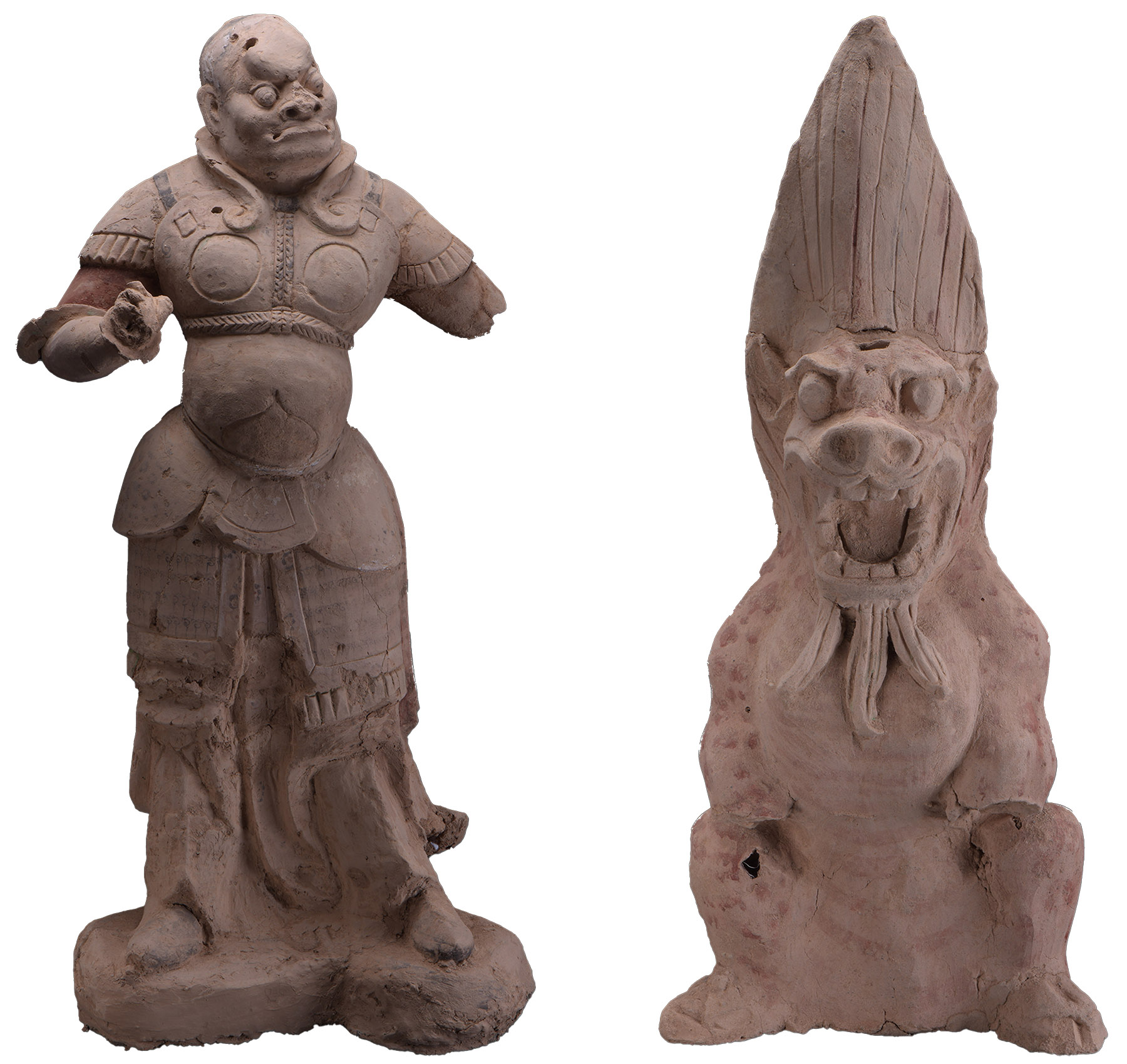
One example is the Badam east cemetery in Turpan, Xinjiang Uygur autonomous region, dating from the Jin (265–420) to Tang (618–907) dynasties. Archaeologists described the site as a miniature "Silk Road expo", with dozens of tombs yielding artifacts and burial customs from diverse cultural backgrounds, including bronze mirrors typical of China's Central Plains, Persian silver coins and Central Asia-style jars.
More notably, two Tang Dynasty senior officials' tombs bearing epitaphs were uncovered at the site. The inscriptions show both officials served in Xiyu, or the western regions — a historical term referring to today's Xinjiang and parts of Central Asia — even after the An-Shi Rebellion (755–763), an event traditionally linked to the dynasty's decline. The discovery provides rare evidence of the Tang government's continued administrative presence in the region during a period with limited historical records.
"It's a very profound discovery with many new surprises," said Guo Wu, a researcher at the Chinese Academy of Social Sciences' Institute of Archaeology. "Each tomb reflects the blending of diverse cultures and offers physical evidence of cultural exchange at that time."
In eastern China's Shandong province, archaeologists excavated the Langyatai site in Qingdao, upholding historical records that Emperor Qinshihuang of the Qin Dynasty (221–206 BC) built the complex and that Emperor Wu of the Han Dynasty (206 BC–AD 220) later continued to use. The conclusion was supported by unearthed architectural components characteristic of high-level construction of the Qin and Han dynasties.
Bai Yunxiang, a researcher at the Institute of Archaeology, said the emperors' decision to build such a monumental complex in what was then a remote coastal area was not merely for leisure. It served as a political statement asserting central authority over the frontier and highlighting the emergence of China as a unified, multi-ethnic state.
Other projects reach further back in time, addressing gaps in knowledge about early human activity.
In Yangyuan county, Hebei province, archaeologists identified six phases of remains spanning the Late Pleistocene, forming a Paleolithic cultural sequence in North China from about 120,000 to 13,000 years ago. The finds shed light on a poorly understood yet crucial period that may be linked to the origin and evolution of Homo sapiens.
At the Peiligang site in Xinzheng, Henan province — first excavated in the 1970s — archaeologists made new discoveries beyond the known early Neolithic Peiligang cultural remains dating back 8,000 to 7,000 years ago. The newly identified remains from the late Paleolithic period provide rare material documenting the transition from the late Paleolithic to the early Neolithic, a key phase long studied but sparsely documented.
ALSO READ: Million-year-old skull from central China rewrites human evolution timeline
Excavations at the Husta Bronze Age site in Wenquan county, Xinjiang, revealed one of the region's earliest Bronze Age remains, a large mound dated from about 4,800 to 4,600 years ago. Archaeologists found 12 tombs above the mound and, beneath it, a much larger tomb containing layered remains of at least dozens of individuals.
According to Wang Peng, a member of the excavation team, the well-preserved human remains could provide valuable material for future DNA analysis.
Meanwhile, studies of the Zhengjiagou site in Zhangjiakou, Hebei, dating to about 5,300 to 4,800 years ago, show that the influence of the Neolithic Hongshan culture — which goes back about 6,500 to 4,800 years ago — likely extended into the area during its later stages, expanding the known scope of the culture's distribution.
Contact the writers at wangru1@chinadaily.com.cn
