

Judicial system gives prosecutors power to ensure authorities act responsibly

For years, a 3,000-square-meter plot along the Mangdao River in Yangzhou, Jiangsu province, sat choked beneath 3,000 metric tons of garbage and concrete rubble. As a key tributary of the Yangtze River and vital source area for the South-to-North Water Diversion Project, the site along the Mangdao River was more than a local eyesore. Despite the obvious threat to a crucial national water supply, local authorities allowed the dump to fester.
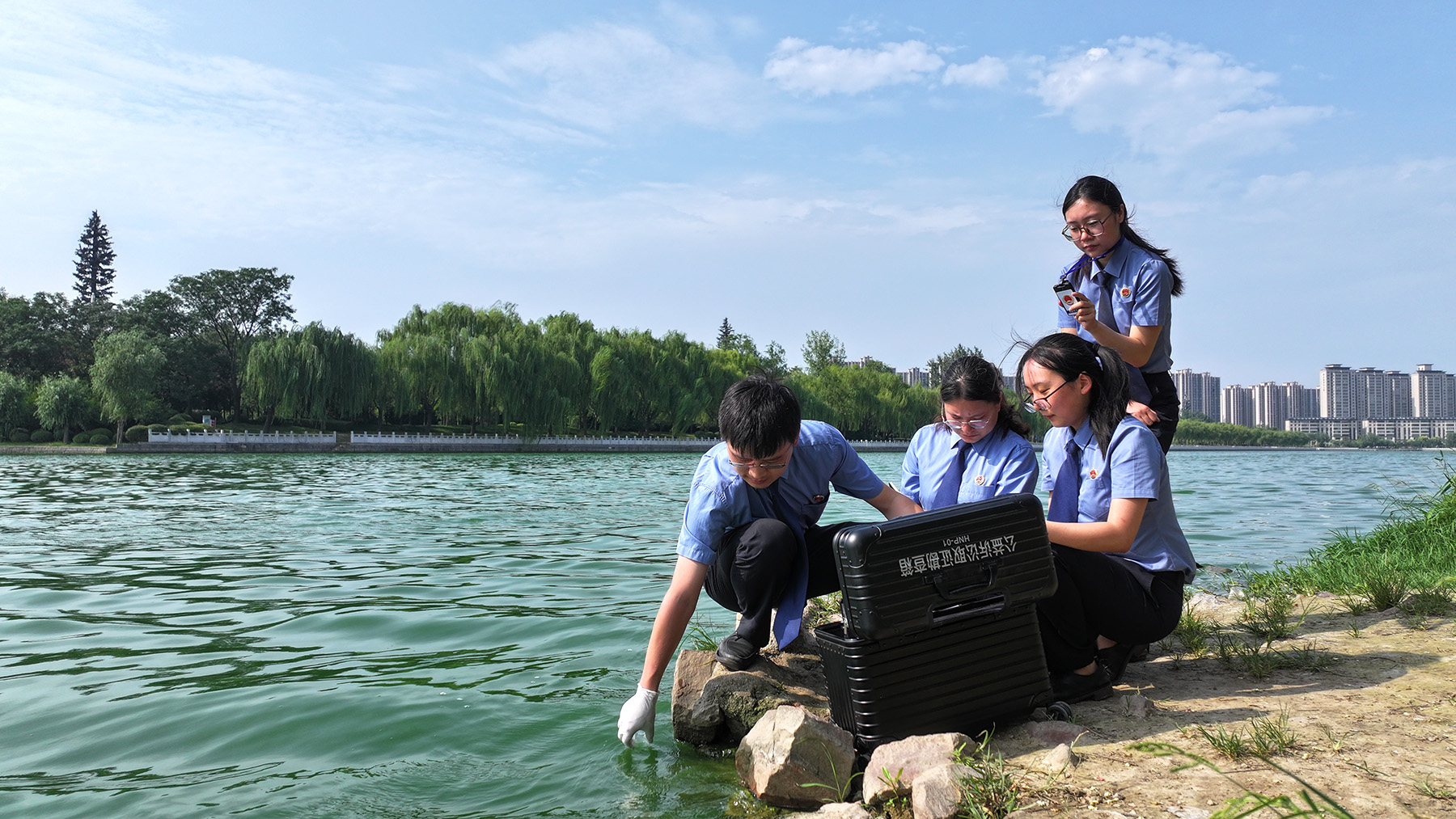
Today, the contaminated lot has been transformed into a lush ecological park, thanks to a growing mechanism in China's judicial system known as procuratorial public interest litigation. This institutional framework empowers prosecutors to haul negligent government agencies into court when shared public resources are left unprotected.
READ MORE: Administrative public interest litigation boosts eco-governance
Unlike ordinary litigation, which usually resolves disputes between specific parties, procuratorial public interest litigation focuses on interests shared by society as a whole, including environmental protection, food and drug safety, cultural heritage, data security, workplace safety, accessibility, and the rights of minors, women and people with disabilities.
The system does not allow prosecutors to replace administrative agencies. Its core is legal supervision. Prosecutors identify harm to public interests, urge responsible authorities or infringers to act, and, when necessary, bring cases before courts to clarify responsibility and push rectification.
From waste to court
A turning point came in December 2024, when prosecutors in Yangzhou's Jiangdu district received a tip-off from local water conservancy officials. Because the original illegal dumpers could not be identified, prosecutors turned their attention to the administrative bodies duty-bound to keep the area safe: the Jiangdu district urban management bureau and the Xiannyu township government.
After informal consultation yielded no results, prosecutors issued formal legal notices to the two bodies demanding action. But when investigators returned to inspect the site after the deadline, they uncovered a classic superficial fix. Rather than removing the hazards, officials had simply buried the 3,000 tons of waste beneath a thin layer of topsoil.
The procuratorate then filed an administrative public interest lawsuit against the two bodies. During court proceedings, the urban management bureau commissioned a third party to dispose of the waste, while the township government helped coordinate the work. Environmental testing later showed that the soil met national standards.
Yet, even after the trash was gone, prosecutors refused to drop the case. Rather than accepting the belated cleanup as a resolution, they asked the judge to issue a formal ruling declaring that both government bodies had acted unlawfully by failing to perform their duties in time. The township argued it lacked administrative penalty powers over illegal dumpers, while both agencies insisted that the completed cleanup made the lawsuit moot.
The move by the prosecutors reflected a key point: restoring damage is necessary, but clarifying responsibility is also important. If delayed or superficial rectification can erase earlier inaction, similar problems may return.
In January, the court rejected the arguments and confirmed that both bodies had failed to perform their duties in accordance with the law.
The court held that the township government had direct environmental protection responsibilities in its jurisdiction, and that later rectification during litigation could not offset earlier inaction.
For Xu Xiangchun, head of the public interest litigation department of the Supreme People's Procuratorate at the time, such cases show why the system must be precise and restrained.
In administrative public interest litigation, the key is to clarify the boundary of administrative duties and responsibilities, Xu said. In civil public interest litigation, the focus is on identifying infringers and the form of liability they should bear. In environmental cases, this also reflects restorative justice. The goal is not simply to win a case, but to stop damage, repair the environment, prevent recurrence and improve governance at the source.
China's procuratorial public interest litigation system has developed rapidly since it was rolled out in 2017. Since July that year, procuratorial organs have handled more than 608,000 public interest litigation cases involving ecological environment and resource protection, accounting for about 47 percent of all such cases.
In 2025, procuratorial organs handled 133,194 public interest litigation cases across 14 statutory fields, with 47,228 involving ecological and resource protection. Administrative public interest litigation accounted for 91.5 percent of filed cases.
The predominance of administrative cases reflects a key feature of the system. In many public interest problems, harm continues not only because of an individual violation, but also because responsible departments fail to act in time, lack coordination or misunderstand the scope of their duties.
More than 90 percent of administrative public interest litigation cases are resolved before trial through procuratorial suggestions and other pre-litigation procedures. This allows many problems to be addressed at lower judicial cost, while litigation remains available when supervision does not lead to effective action.
The system has expanded beyond environmental protection to fields such as food and drug safety, personal data security, cultural relics protection, workplace safety, accessibility, anti-monopoly issues, telecom fraud, and the protection of specific groups.
A draft procuratorial public interest litigation law has been reviewed by the Standing Committee of the National People's Congress, marking a step toward dedicated legislation. Technology is also changing case handling. By the end of 2025, procuratorial organs had built 291 big data legal supervision models related to public interest litigation. In 2025, these models screened more than 51,800 clues and supported over 30,000 cases.
For Qin Qianhong, a professor at Wuhan University Law School, procuratorial public interest litigation has a distinctive Chinese character. He said the system goes beyond confrontation and pursues coordination.
Its institutional logic, Qin said, is not to replace administrative power, but to provide legal supervision that helps responsible bodies correct mistakes and improve governance.
Qin said a combination of force and restraint is central to the system. It helps prevent public interest protection from falling through the gaps, while respecting the lawful space of administrative agencies to perform their duties.

Global relevance
This model is also drawing international attention. The Supreme People's Procuratorate has shared its experience in Vietnam, Brazil and France. China's river basin cases have become part of these exchanges, with the Nansi Lake case included in the United Nations Environment Programme database.
Elizabeth Maruma Mrema, assistant secretary-general of the United Nations, said that China has made inspiring progress in environmental legislation and enforcement. Environmental public interest litigation, she said, helps translate environmental laws into strong enforcement, promotes accountability and closes the implementation gap between law and practice.
She added that prosecutors are essential actors in the environmental rule of law because environmental challenges are complex, interdisciplinary and often cross borders, requiring cooperation among judges, lawyers, prosecutors, law enforcement agencies and the public.
China's Ecological Environment Code, adopted earlier this year, has further strengthened the legal foundation for environmental governance. The code requires people's procuratorates to strengthen ecological and environmental procuratorial work and legal supervision, giving prosecutors greater responsibility in ecological protection under the rule of law.
ALSO READ: Top court guidelines aid biodiversity preservation
As environmental damage, data risks, food safety and rights protection issues become more complex, public interest litigation is expected to play a larger role. The next challenge is not simply to handle more cases, but to handle better ones — cases that are necessary, precise, legally sound and capable of guiding future governance, according to prosecutor Xu.
The Mangdao River case shows how the mechanism works at ground level. A polluted plot that had remained unresolved for years was cleaned, administrative duties were clarified, and a court confirmed that later rectification could not erase earlier failure to act.
"Public interest litigation must ensure that prosecutors neither fail to act nor overstep. That balance is what allows the system to protect public interests through the rule of law," Xu said.
Contact the writers at yangzekun@chinadaily.com.cn
