

With 356 courts and a strong culture in the sport, Jingshan draws millions and hosts international tournaments, as well as fostering passion in its residents, Xing Wen and Liu Kun report.
Shanghai resident Zhang Mengting has just returned from a two-and-a-half-month stay in Jingshan, Hubei province. She's already counting down the days until she can go back.
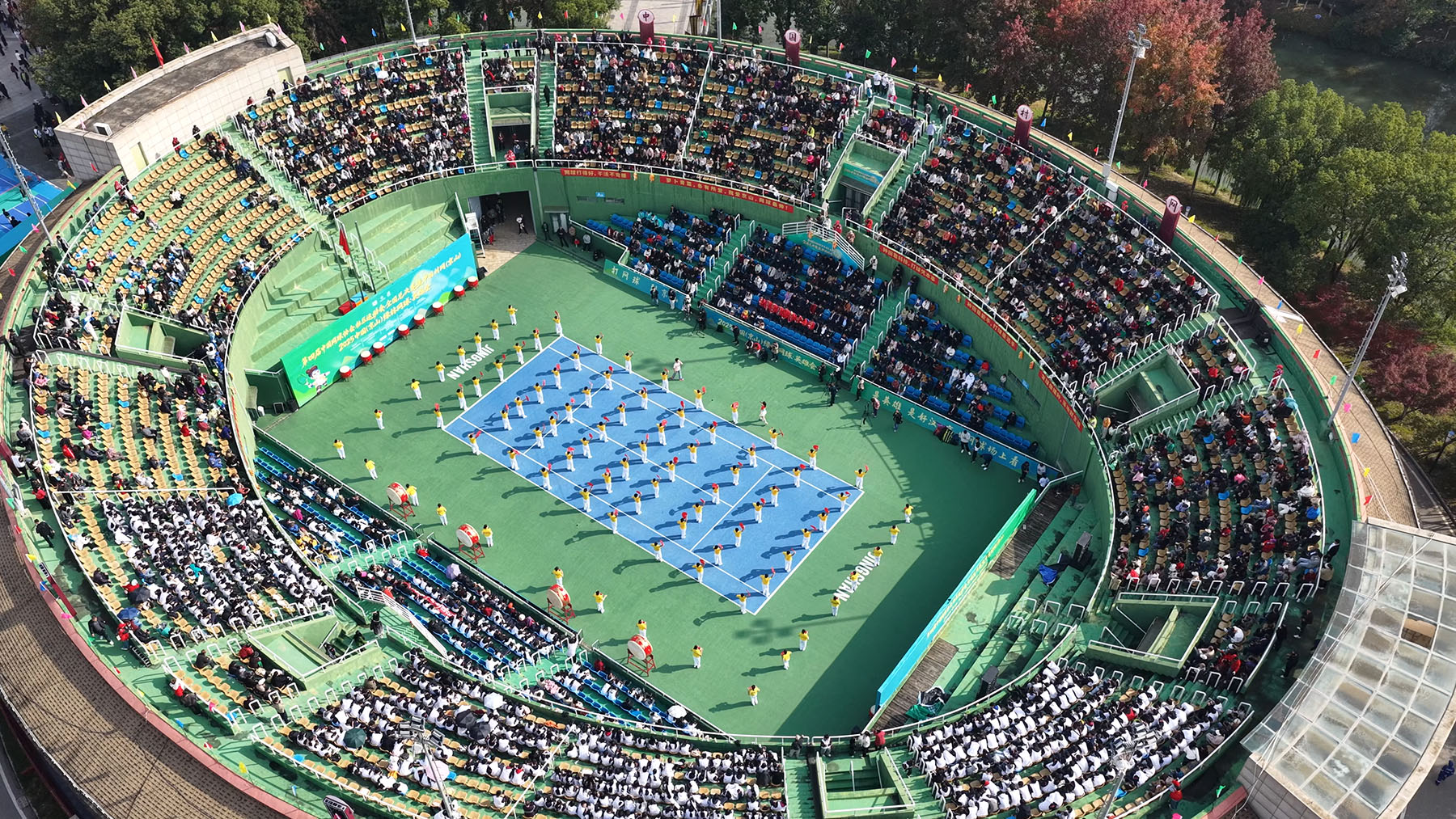
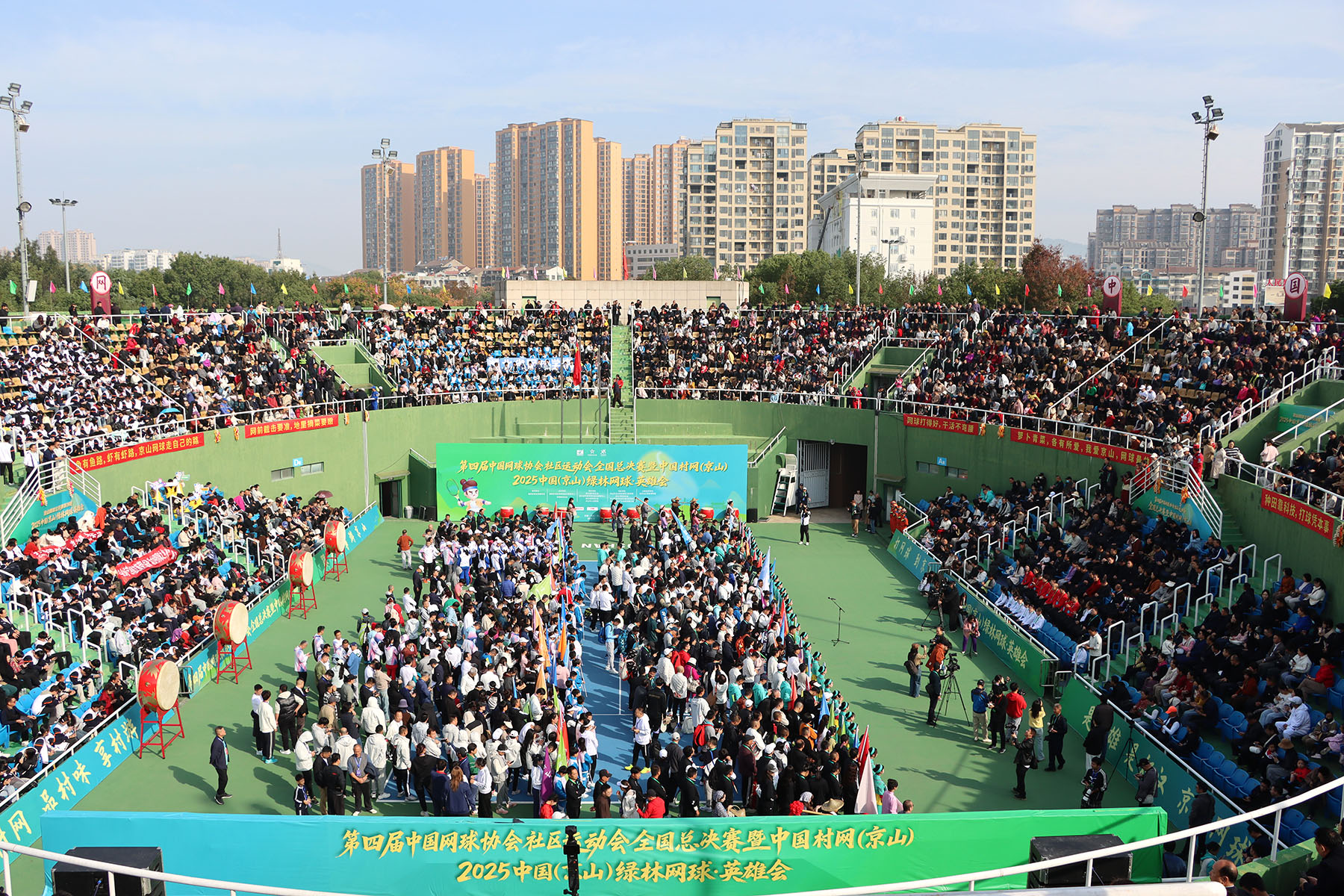
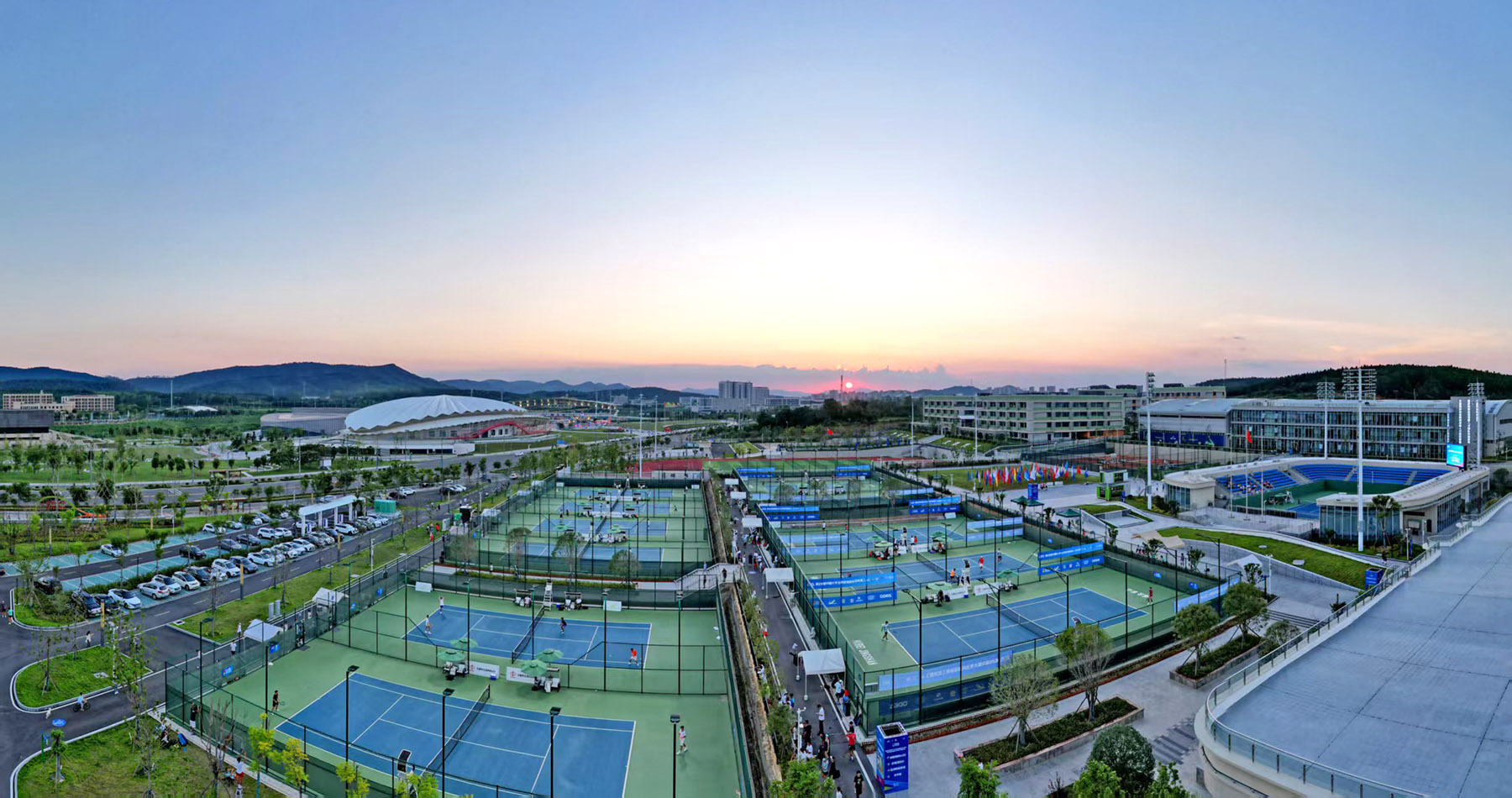
This county-level city of fewer than 600,000 people has built 356 tennis courts, turned the sport into a civic religion, and drew 3.5 million visitors in 2025 alone.
In May, fresh from resigning from her job to take a gap year, and armed with only a handful of beginner tennis lessons from Shanghai, Zhang packed her bags and headed for Jingshan on a friend's advice that two months of intensive training in this tennis-obsessed city would outperform two years of weekly lessons in Shanghai.
During her stay, she would rise at 8 am and join a group class for three hours of training. Afterward, she'd find a local restaurant for lunch and order the regional specialty, Songziji, the local free-range chicken stir-fry.
READ MORE: Foreign coaches help 'Tennis City of China' dream big
After a midday nap, she'd return for another three-hour session in the afternoon.
Evenings were reserved for playing with friends at Wenfeng Park, where a prime-time court costs just 30 yuan ($4.4) an hour, and daytime slots are completely free.
"After playing, I'd take a walk in the park, sample snacks in the nearby night market, and enjoy the evening breeze. It was so relaxing," she recalls, adding that she is planning to go back to Jingshan with her husband during the National Day holiday in October.
She says that unlike Shanghai, where arranging a practice session requires greater time and financial commitment, in Jingshan it is very accessible and affordable.
"Almost every government department has its own tennis court, and they are open to the public for free," she explains.
"The city is small, and the courts are concentrated. It takes no more than 10 minutes to get to any of them. The locals are incredibly warm. It's common for strangers to share courts and invite each other to play."
She adds that at some local tennis clubs, members treat the venue as a full-fledged social hub, complete with tea, billiards, and lively conversation between sets.
Peng Jufang, 64, runs such a club. He was among the first generation in the city to pick up a tennis racket.
"In 1985, Hubei province required each county to select one sport for elderly residents to develop as a priority. Jingshan chose tennis," he recalls.
At the time, there was an open plot behind the urban power supply office where Peng worked.
He and a few colleagues first leveled the ground with a plow, then compacted it with a stone roller to create a simple clay court.
On that very court, a group of senior tennis enthusiasts practiced and trained together daily, eventually winning the amateur group championship at a provincial senior tennis open. That victory introduced tennis to a wider population across Jingshan.
With a wooden racket in hand, Peng began a 38-year commitment to the sport.
His career path shifted over the decades, from the power supply office to fertilizer distribution, and later to beef cattle farming.
Yet through every change, his racket stayed with him.
The same decades witnessed Jingshan's tennis evolution toward scale and systematization.
In the 1990s, the city's amateur sports school introduced tennis programs to cultivate young talent. After 2008, Jingshan made a concerted push to bring tennis into government offices, communities, businesses, schools and villages, spurring court construction and drawing large numbers of residents into the sport. Today, more than 100,000 people in Jingshan play tennis on a regular basis, according to Luo Nian, deputy director of the Jingshan culture and tourism bureau.
Luo adds that Jingshan has also built an industrial park to house smart production lines for tennis balls and rackets, continuously expanding the industry chain across equipment manufacturing, tournament operations, and wellness tourism.
The 2025 Jingshan Open, held from Sept 20 to 28 last year, attracted over 130 players from more than 20 countries and regions, including the United States, Canada and the Philippines.
With this event, Jingshan became China's first county-level city to host an international professional tennis tournament.
"With robust industry infrastructure, warm and genuine local players, and a tennis culture that permeates the entire city, we've seen many players from northern China travel here in autumn and winter. They play on the courts by day and soak in the hot springs by night, some even stay for weeks at a time," Luo says.
Qi Chengmei, a native of Wenfeng village, which boasts more than 80 tennis courts and over 800 tennis enthusiasts, spotted the boom in tennis tourism and decided to start a business.
"The courts in our village were packed every day, but there wasn't a single decent themed restaurant where players could come eat after a match," she recalls, sensing an opportunity.
She converted her family farmhouse into a tennis-themed restaurant. The dining hall is decorated with tennis-ball motifs, and the private dining rooms are named after such tournaments as the Australian Open, Wimbledon and the China Open.
The business has created jobs for more than a dozen local villagers. The restaurant now generates annual revenue exceeding 600,000 yuan.
ALSO READ: Wuhan plays its aces to cash in on tennis fever
Zuo Meng, a local crochet artist, has also found her niche in the tennis boom.
Every day after dropping her children off at school, she heads to her studio to craft tennis-themed handicrafts such as hair clips, plush keychains, handbags and necklaces.
"Jingshan has tennis tournaments almost every week now, so I follow the events with my stall. A single tournament can sometimes bring in 6,000 to 7,000 yuan," she says.
Currently, some 3,000 people in Jingshan are directly employed in tennis and related industries, while another 10,000 earn their livelihoods indirectly through the sport's ripple effect.
Contact the writers at xingwen@chinadaily.com.cn
