

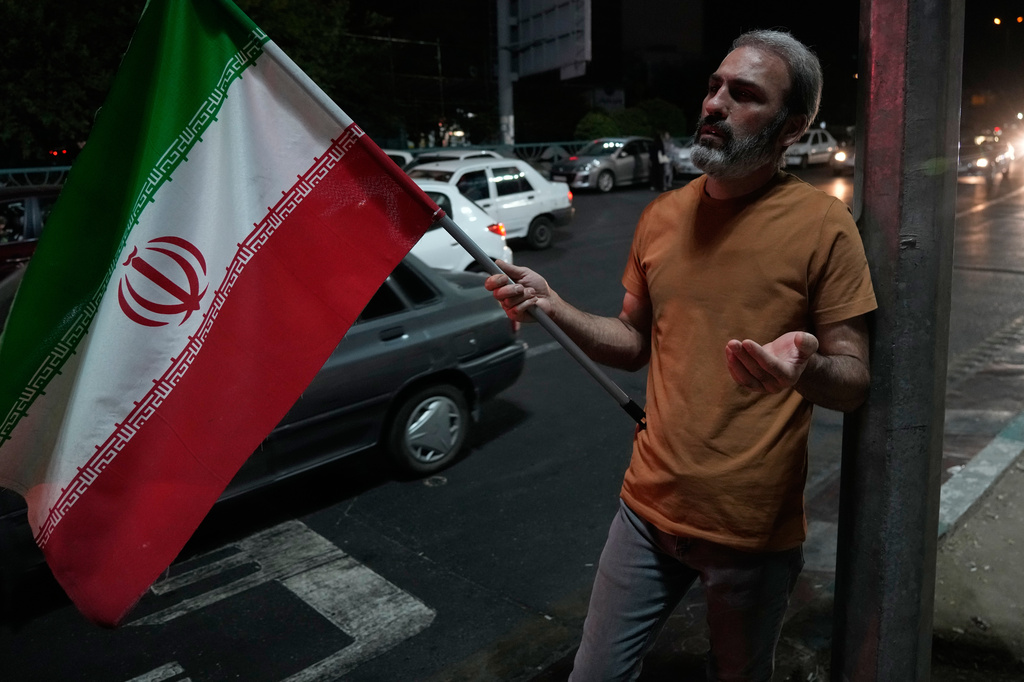
TEHRAN/UNITED NATIONS/KUWAIT CITY/SANAA – Iran has prepared an "extensive" plan for responding to potential attacks on Iranian infrastructure, the semi-official Tasnim news agency reported early Saturday.
Tasnim cited a senior security official as saying that Iran has prepared an "extensive" plan in response to US media's recent claims about possible US and Israeli strikes against its infrastructure. The plan involves targeting vital Israeli infrastructure and US energy infrastructure in the West Asia region.
The Wall Street Journal on Friday cited US officials as saying that US President Donald Trump "has ordered the military to launch a fresh attack on Iran that could begin as soon as this weekend and last a few days".
Also, CBS News reported on Friday that the United States and Israel are preparing for intense strikes against Iranian energy infrastructure, which could begin during the weekend.
Secretary of Iran's Supreme National Security Council Mohammad Baqer Zolqadr warned early Saturday in a message carried by Iranian media that the US continuation of its naval blockade and warmongering against Iran will only "further tighten the lock on the Strait of Hormuz" and lead to the closure of other straits.
He added that the global economy and energy market, as well as American voters, will be the ones to pay the price.
Britain warned against cooperation with US
During a phone call with British Foreign Secretary Ed Miliband on Friday, Iranian Foreign Minister Seyed Abbas Araghchi warned Britain against any military cooperation with the United States in carrying out strikes on Iran.
Araghchi stressed any cooperation with "aggressors", including under the pretext of existing defense agreements, would be "unacceptable", according to a statement issued by the Iranian Foreign Ministry on Saturday.
Araghchi criticized what he described as the British government's "unjustified and inappropriate" policies toward Iran, citing London's recent designation of Iran's Islamic Revolution Guard Corps as a national security threat and its "complicity" in two wars imposed by the United States and Israel against Iran in recent months. He called on Britain to reconsider its approach toward Tehran.
He said that under international law and the Convention for the Definition of Aggression, allowing a country's territory and facilities to be used for illegal attacks against another state constitutes an act of aggression and gives the attacked country the right to self-defense.
End of all fighting in Mideast
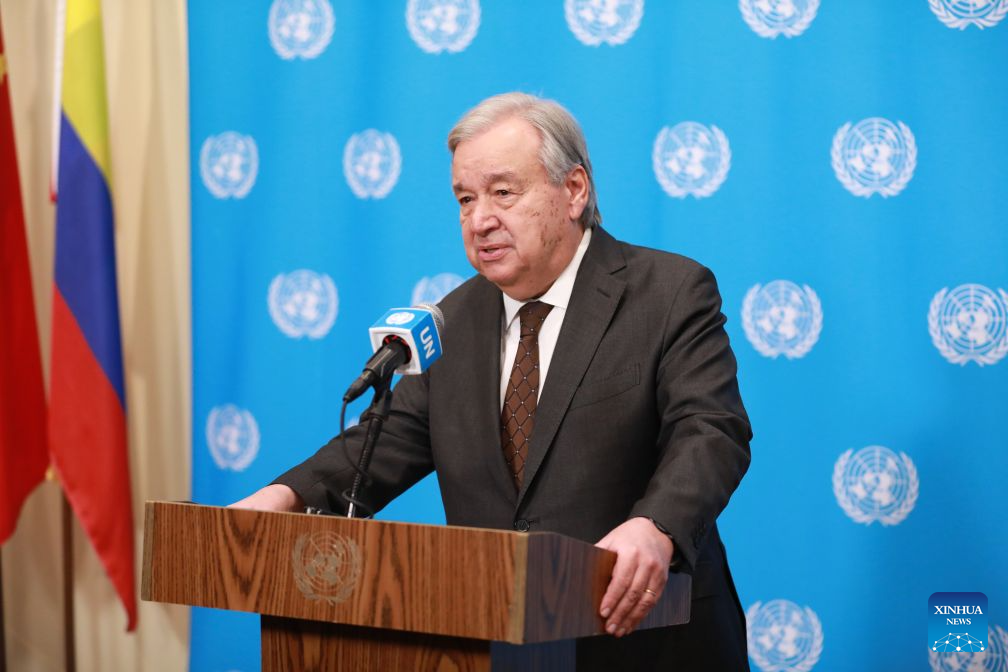
On Friday, UN Secretary-General Antonio Guterres said fighting must stop on all fronts in the Middle East.
"The fighting must stop on all fronts in the region. International navigation rights and freedoms in and around the Strait of Hormuz and Bab al-Mandab must be fully restored. And diplomacy must prevail," Guterres told reporters.
Six months into the military escalation in the Gulf, what began as a regional conflict is increasingly becoming a driver of global instability, he warned.
The UN chief noted that trade through the Strait of Hormuz has collapsed, energy markets have been upended, prices of food and key fertilizers have surged, and supply chains are buckling.
"Around the world we see families struggling to put food on the table, farmers unable to afford basic inputs, and vulnerable countries pushed closer to the edge," said Guterres.
The World Food Programme warned that as many as 45 million people could face acute food insecurity as a result, while rising prices and slowing growth threaten to push millions more back into poverty, he noted.
ALSO READ: Mideast conflict widens amid tit-for-tat strikes
He called the US announcement of an agreement for Hamas to relinquish its weapons and for Israel to withdraw its forces from Gaza "good news".
"It was announced already that there is a roadmap to implement these objectives. That roadmap must be followed without any questions, skepticism, or determination to undermine it. Now is the time for both sides to implement what was agreed," said Guterres.
'Hostile drones' entering Kuwaiti airspace
Separately, the Kuwait Army said Friday on social media platform X that "hostile drones" entering Kuwaiti airspace since dawn, which targeted several vital and military facilities, have been detected and destroyed.
The falling debris caused material damage, with no casualties reported, it said, attributing the attacks to Iran.
It did not specify the number of drones destroyed, the targeted sites, or the extent of the damage.
Houthi group: Eight Saudi oil tankers changed course
Also on Friday, Yemen's Houthi group claimed that eight Saudi oil tankers had been forced to change course under its maritime ban targeting Saudi-linked shipping in the Red Sea.
In a statement posted on X, Houthi military spokesperson Yahya Sarea said the tankers had been rerouted toward the Cape of Good Hope "as part of the 'blockade for blockade' strategy", which he attributed to the group's intensified enforcement of its naval blockade on Saudi oil tankers in the Red Sea.
Sarea said the group's forces would continue enforcing the blockade against Saudi Arabia and warned that Saudi-linked vessels would remain subject to attack "wherever possible".
READ MORE: US forces launch new strikes on Iran as conflict widens
The latest claim comes amid rapidly escalating tensions between Yemen's Houthi group and Saudi Arabia. On July 20, the Houthis announced what they described as a maritime ban on Saudi-linked shipping in the Red Sea, saying the move was in response to an alleged Saudi blockade on areas under their control.
