

Experts urge Japanese govt to uphold postwar principles following remarks
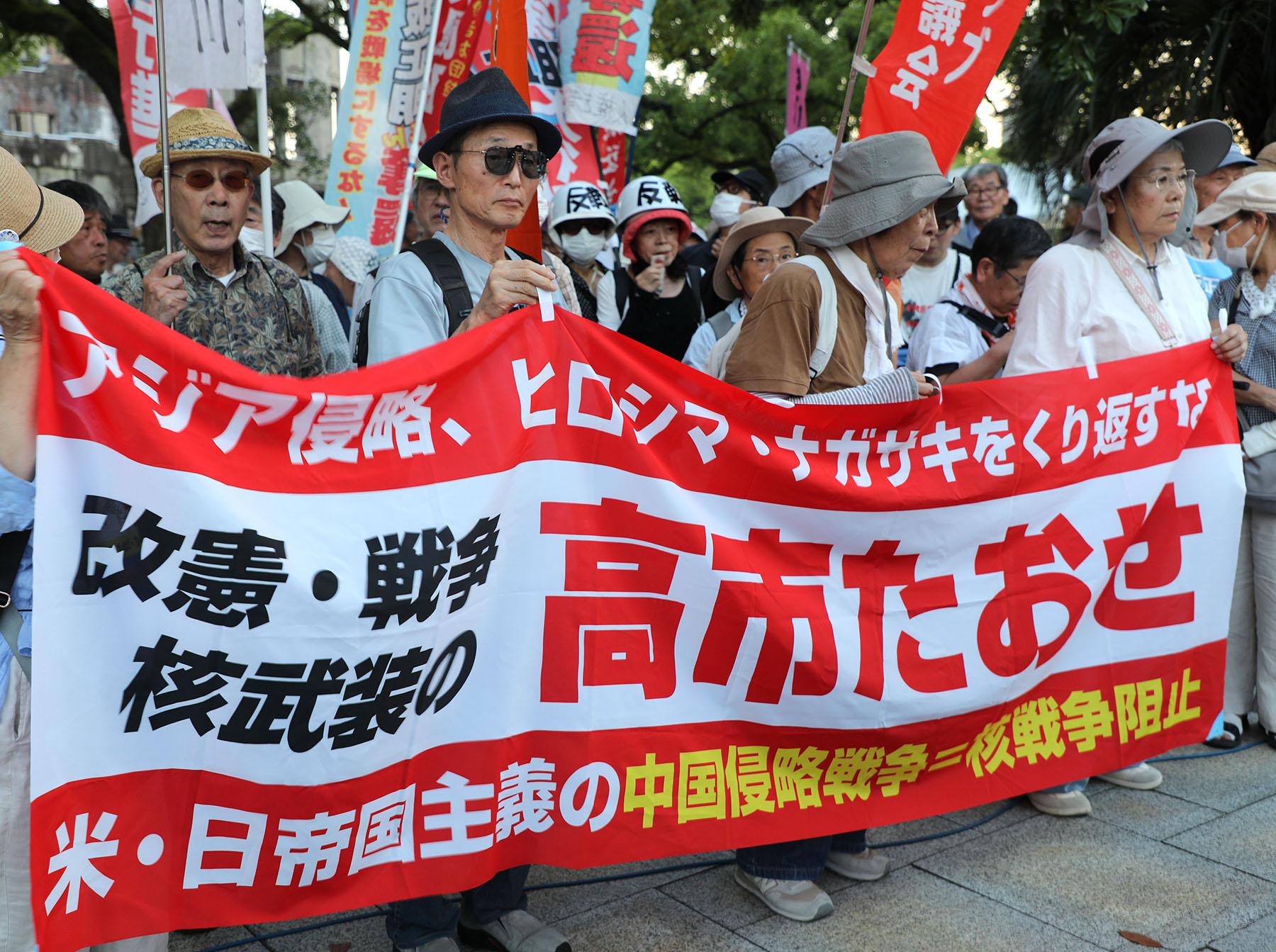
Hiroshima marked the 81st anniversary of the atomic bombing by the United States with a memorial ceremony on Thursday, amid mounting domestic opposition to recent pro-nuclear remarks by senior Japanese officials.
Experts said that Japan's increasingly open discussion of once-taboo nuclear issues appears aimed at gauging public opinion and paving the way for reconsidering postwar security principles, including the country's long-standing Three Non-Nuclear Principles. They urged Tokyo to uphold these principles and abandon cooperation with other countries under the so-called nuclear "extended deterrence".
Meanwhile, Beijing slammed Japanese right-wing forces on Thursday for politically exploiting the nation's identity as a nuclear bombing victim for sympathy and seeking possession of nuclear weapons, while urging Tokyo to earnestly fulfill its nuclear nonproliferation obligations under international law.
READ MORE: China: Lessons of Japanese militarism's aggression must forever serve as alarm
Foreign Ministry spokesman Lin Jian said in an online statement that the Japanese authorities have recently been beefing up military buildup, seeking enhanced nuclear protection from the US and attempting to break free from the three non-nuclear principles.
Right-wing forces in Japan have long been distorting historical facts and deliberately downplaying Japan's invasion, which killed and wounded tens of millions of people in neighboring countries, in an attempt to escape accountability for the war, he said.
Attending the commemoration ceremony in Hiroshima's Peace Memorial Park, Japanese Prime Minister Sanae Takaichi said that Japan, as the only country to have suffered atomic bombings in wartime, has a mission to continue working toward a world without nuclear weapons.
However, when asked after the memorial ceremony whether the non-nuclear principles would be reviewed during the revision of the government's three key national security documents this year, Takaichi declined to answer directly, The Asahi Shimbun reported.
"It would not be appropriate for me to prejudge how the documents will be worded," said Takaichi.
Hiroshima Mayor Kazumi Matsui emphasized the catastrophic consequences of nuclear weapons, urging nuclear nonproliferation and disarmament through multilateral efforts.
However, neither Takaichi nor Matsui mentioned the historical context behind the bombing of Hiroshima.
On Aug 6 and 9, 1945, the US dropped atomic bombs on Hiroshima and Nagasaki, respectively, to hasten Japan's surrender in World War II.
Testing public opinion
Hiroshi Shiratori, a professor of political science at Hosei University in Tokyo, said that Japan has long regarded the fact that Hiroshima was the first city in the world to suffer a nuclear attack and Nagasaki the last as a central part of its national historical narrative.
Shiratori said he believes that the recent nuclear-related remarks made by Japanese government officials are, to some extent, aimed at testing public opinion.
In July, Japanese Defense Minister Shinjiro Koizumi said that Japan should discuss its nuclear policy "without taboos", including whether to revise the Three Non-Nuclear Principles which Japan has adhered to for decades.
In December, a senior Japanese official responsible for security and defense at the Prime Minister's Office of Japan told reporters that Japan should possess nuclear weapons.
Shiratori said that the government is gradually reshaping Japan's long-held anti-nuclear sentiment through incremental remarks on nuclear policy. He added that easing restrictions under the Three Principles on Transfer of Defense Equipment and Technology and expanding arms exports suggest that the Takaichi administration does not necessarily place sufficient importance on Japan's long-standing pacifist principles.
ALSO READ: Japan launches new intelligence bureau amid counter-espionage push
Since taking office in October, Takaichi's administration has advanced revisions to Japan's three key national security documents, repeatedly raising the prospect of reviewing the "no introduction" principle under the Three Non-Nuclear Principles, arguing that such a move would strengthen the credibility of the US' extended nuclear deterrence. Under deterrence arrangements, Washington pledges to defend Japan with the full range of its military capabilities, including nuclear weapons.
Adopted by the Japanese parliament in 1971, the principles prohibit Japan from possessing, producing or permitting the introduction of nuclear weapons into its territory and have since become the cornerstone of the country's nuclear policy.
The strong anti-nuclear and anti-war sentiment among the Japanese public stands in sharp contrast to the Takaichi administration's increasingly assertive security agenda.
Contact the writers at houjunjie@chinadaily.com.cn
