

Record AUM and ETF growth highlight city’s role as a global tech capital hub
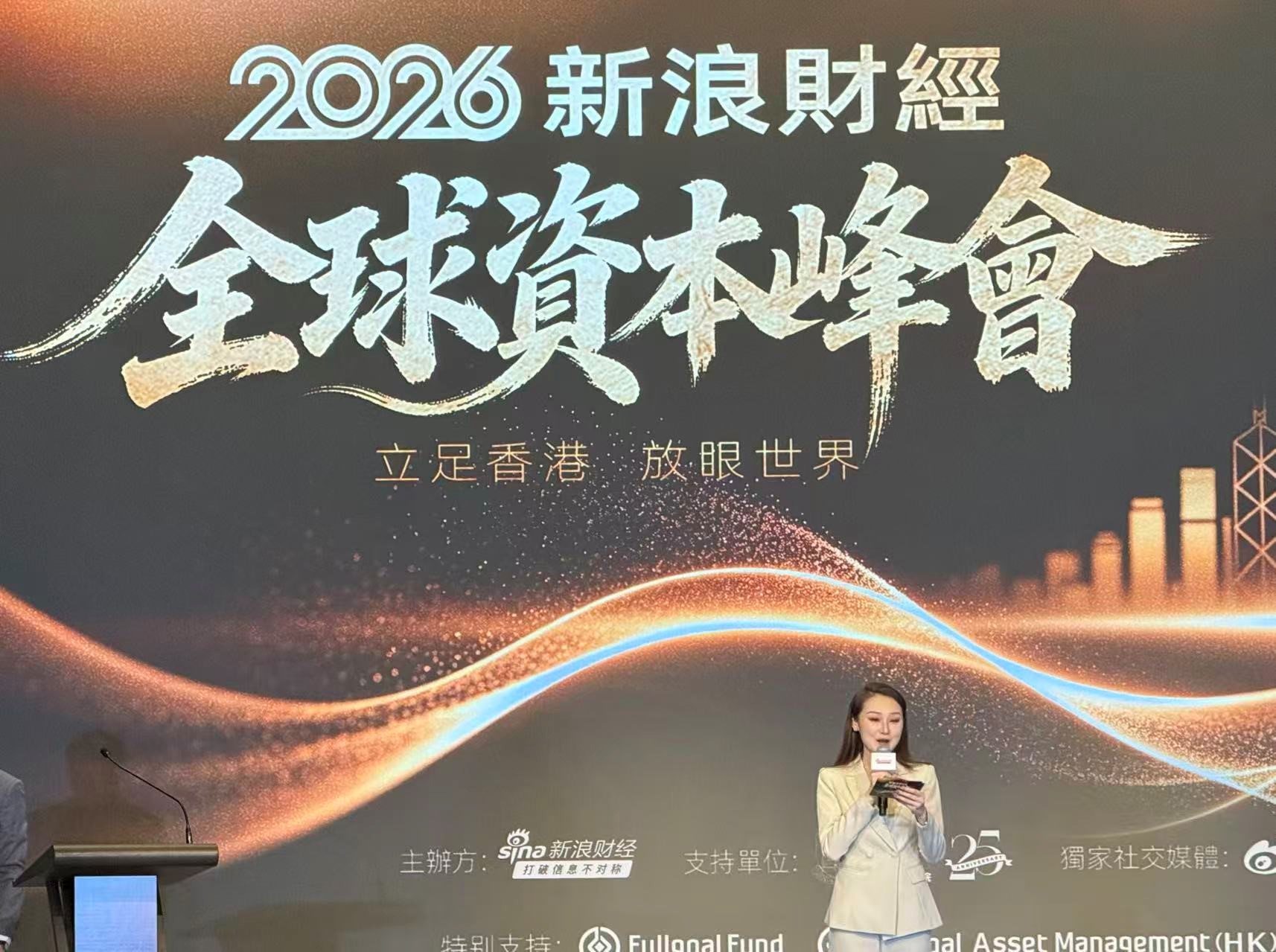
With global capital lifting Hong Kong’s total assets under management (AUM) to a record HK$42.2 trillion ($5.36 trillion), the city is rapidly positioning itself as the ultimate gateway for cutting-edge technology investments.
Investors and financial market participants made the remarks on Thursday at the 2026 Sina Finance Global Capital Summit.
Average daily turnover of Hong Kong’s exchange-traded fund (ETF) market saw a significant increase in the first quarter of 2026, hitting a record HK$45.1 billion with 14 percent year-on-year growth, according to Hong Kong Exchanges and Clearing Ltd.
The city’s AUM saw a 20 percent year-on-year increase in 2025, with over half of asset inflows attributed to global capital.
Hong Kong is becoming a premier product hub and investment destination for global investors amid the surge in demand driven by artificial intelligence semiconductors for memory products across Asia, according to Ding Chen, CEO of CSOP Asset Management Ltd.
ALSO READ: Experts see Hong Kong IPO market ranking among global top3
ETFs have been the fastest-growing segment over the past decade. Up from representing 6.2 percent of total annual turnover on HKEX in 2016, ETFs now account for 17 percent of the exchange’s total trading volume over the first half of this year.
The SK Hynix Daily (2x) Leveraged Product, an ETF launched by CSOP in November to provide twice the daily performance of SK Hynix common stock, has become the largest single-stock leveraged product globally. Its AUM reached HK$130 billion in June, the first time an ETF in Hong Kong claimed the global top spot. However, momentum wasn’t sustained because of a cooling of investment enthusiasm in the global memory sector.
“Looking ahead to the second half of the year, with AI as a major trend, sectors such as semiconductors and advanced manufacturing will remain key areas of focus for global investors,” Ding said. “Structural opportunities in these fields across South Korea, Japan, and China are waiting to be captured, and the Hong Kong SAR serves as the ideal gateway to access them.”
He added, “For major cutting-edge global themes — such as AI storage and AI-powered robotics — Hong Kong offers the most diverse and highly liquid investment tools.”
Ding also highlighted Hong Kong’s growing role as a superconnector and super value-adder bridging the Middle East and the Asia-Pacific region with global capital, providing greater strategic room for growth for asset management firms.
READ MORE: Chan urges HK youth to embrace AI while pursuing future paths
With AI emerging as a core economic driver, Robin Xing, chief China economist at Morgan Stanley, said China is uniquely positioned to leverage its record of translating technological innovation into macroeconomic growth.
China’s green energy transition enables the country to navigate energy crises smoothly and has yielded valuable experience in innovating production relations.
Xing noted that from AI competition to energy transition, China is one of the key economies alongside the United States in driving global innovation across virtually every dimension.
In contrast to developed nations like the United States — where around 40 percent of the workforce is employed in professional services that are highly susceptible to AI displacement — most employment in China is concentrated in blue-collar roles and labor-intensive service sectors, making it less vulnerable to AI-driven disruption, Xing added.
Xing said he expects that the SAR’s role as a financial hub will strengthen during the next phase of the technological revolution, driven by China’s ability to attract further foreign capital inflows.
Contact the writer at rayjia@chinadailyhk.com
