

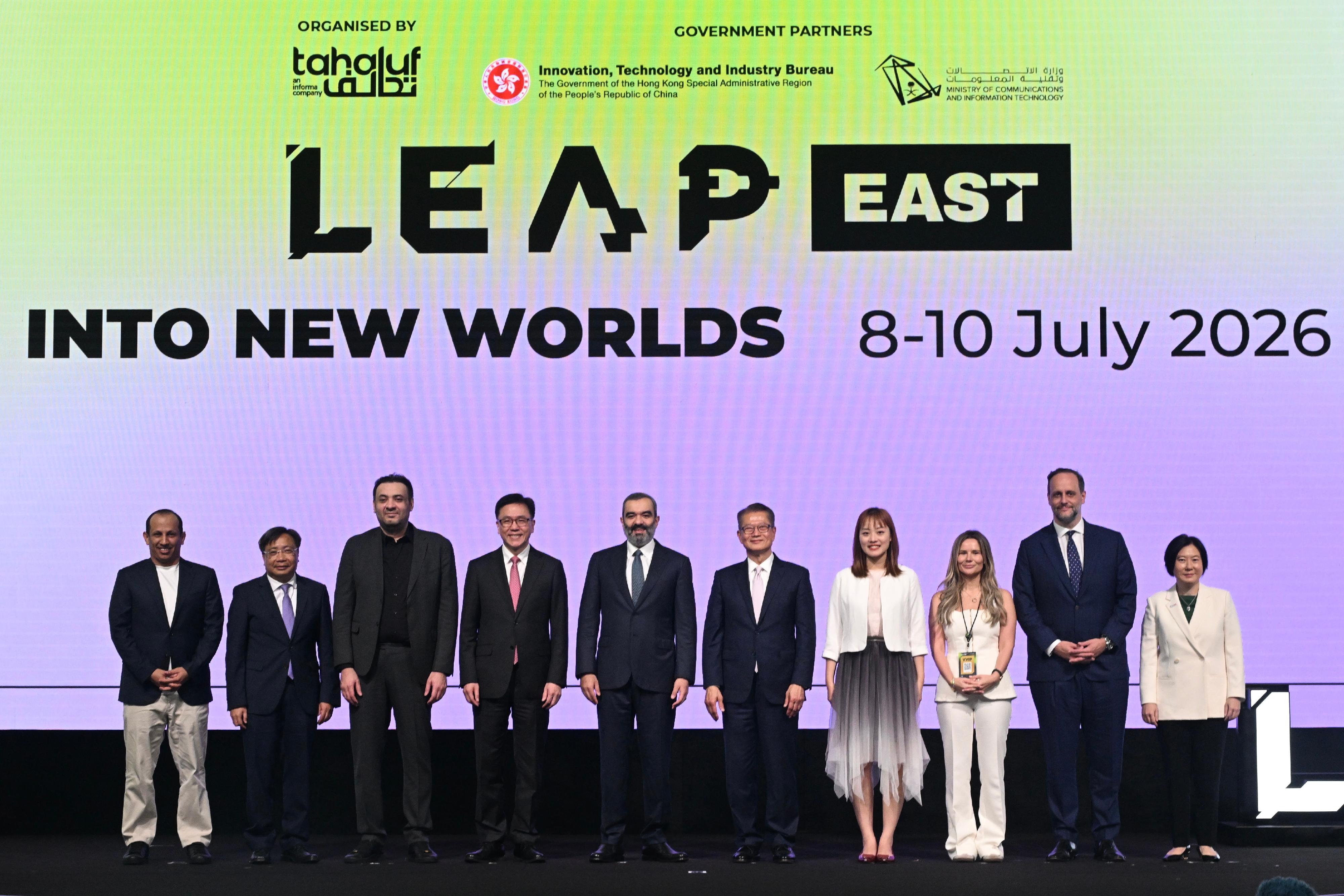
Authorities from Saudi Arabia and the Hong Kong Special Administrative Region jointly launched LEAP East 2026 on Wednesday, aiming to take a leading role in the age of intelligence as their ties deepen.
The three-day event, held at the Hong Kong Convention and Exhibition Centre, brought together more than 340 speakers, 450 exhibitors, and 35,000 visitors. It marks the first time the globally recognized LEAP technology platform has expanded beyond Saudi Arabia into the Asia-Pacific region, creating a new investment corridor between the Middle East and East Asia.
Abdullah Alswaha, Saudi Arabia’s minister of communications and information technology, said that the Hong Kong SAR is “the largest financial center in Asia” while Saudi Arabia is “the largest economy in the Middle East”. The two sides aim to establish a partnership “to drive collective action on closing down the global divides” in artificial intelligence technology, he added.
Alswaha highlighted Asia’s growing influence in the global technology economy, with its $34 trillion economy that accounts for about a third of the world’s GDP, and a $10 trillion digital and AI economy.
“If you look at AI patents, 82 percent come from the East. If you look at semiconductor tape-out and fabrication, most of it comes from the Middle East,” he said.
IN PICTURES: LEAP summit debuts in HK
Citing Nvidia CEO Jensen Huang, Alswaha said that energy is the foundation of the AI industry, adding that the compute divide is “really an energy divide challenge”. He also stressed the importance of mastering hardware, software, services and applications.
He pledged partnership in compute, capital, and customers, saying “the world needs us to work collectively to close down the global AI divides”.
In his welcome remarks, Hong Kong Financial Secretary Paul Chan Mo-po said that as a connector between the Chinese mainland and the rest of the world, the city is an ideal base for global innovation. The SAR government also supports innovation through initiatives such as Finance Plus and a vibrant capital market, “using finance as a powerful enabler to drive the real economy”.
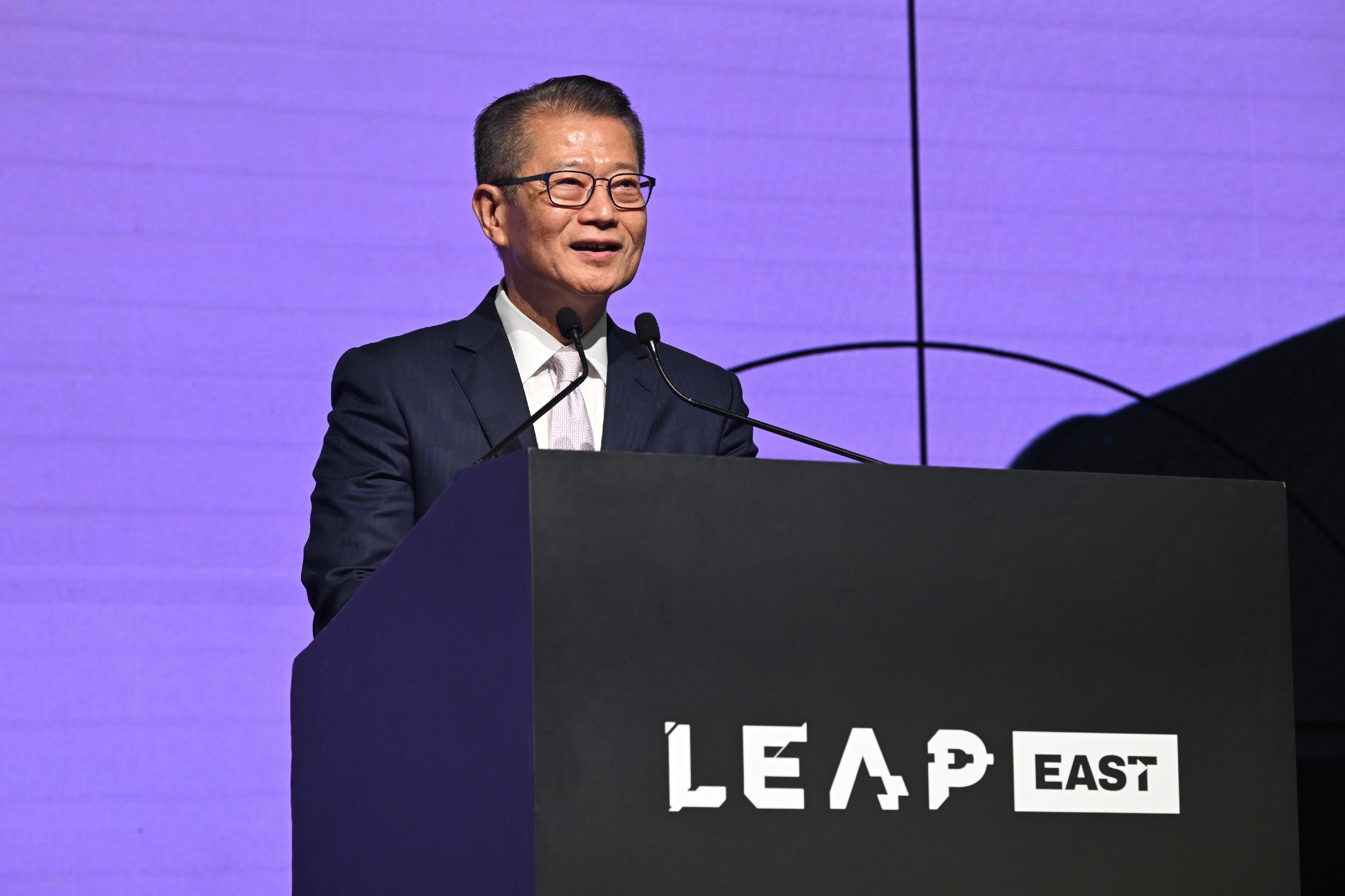
Chan said that Hong Kong topped the world in IPOs in 2025 with 119 listings, raising more than $35 billion, including for many leading tech firms. “We are a destination of choice for emerging Chinese and international technology companies to raise funds for global expansion. This is a genuine win-win,” he said.
Companies can leverage Hong Kong to conduct R&D and scale-up at home and abroad, while investors gain direct access to the Chinese mainland’s innovation-led growth opportunities. “This is aided by our various Connect programs where international investors can access high-quality mainland enterprises, while mainland investors can invest in companies listed in Hong Kong,” he added.
For frontier technologies requiring patient capital, the Hong Kong Investment Corp, a government-owned institution managing HK$62 billion ($7.9 billion) in designated funds, has invested in more than 200 projects.
READ MORE: Chan: HK an export gateway for mainland tech enterprises
Hong Kong is also embracing digital assets to make transactions more efficient, inclusive and cost-effective, while balancing pro-innovation policies with regulation to ensure sector growth with credibility and protecting investors and the public, he added.

Chan said Hong Kong has “everything it takes” to build AI into a powerful industry — including computing power, algorithms, data, application scenarios, talent and capital.
“Across every sector from finance and industry to healthcare and education, AI is already being put to work,” he said.
Chan said Hong Kong is committed to nurturing talent and raising digital literacy through training initiatives. “Our strategy is to bring technology, education, talent and industry closely together, fostering a virtuous cycle in which one reinforces another,” he said.
Contact the writer at jan@chinadailyapac.com
