

A massive Shaanxi discovery reveals the hidden noble network that protected a 3,000-year-old capital city, Wang Ru reports.
In the Western Zhou Dynasty (c.11th century-771 BC), the dynasty's strength relied not only on its grand capitals — Fenghao, in present-day Xi'an, Shaanxi province, and Luoyi in today's Luoyang, Henan province — but also on an invisible network of fiefdoms, known as caiyi, scattered across the royal domain.
These were fiefs granted by Zhou kings to members of the royal family and trusted officials. Largely self-sufficient, tightly administered and generally loyal to the throne, they collected taxes and helped maintain the vital corridor linking the two capitals.
Now, archaeologists have uncovered another complete caiyi from the middle-to-late Western Zhou period, offering a rare opportunity to test historical records against physical evidence.
READ MORE: List honors top 10 archaeological finds
After four years of work, archaeologists have identified a Western Zhou fiefdom at the Changchun site in Fuping county, Shaanxi. The discovery was listed as one of China's top 10 archaeological discoveries of 2025, a selection organized by the National Cultural Heritage Administration.
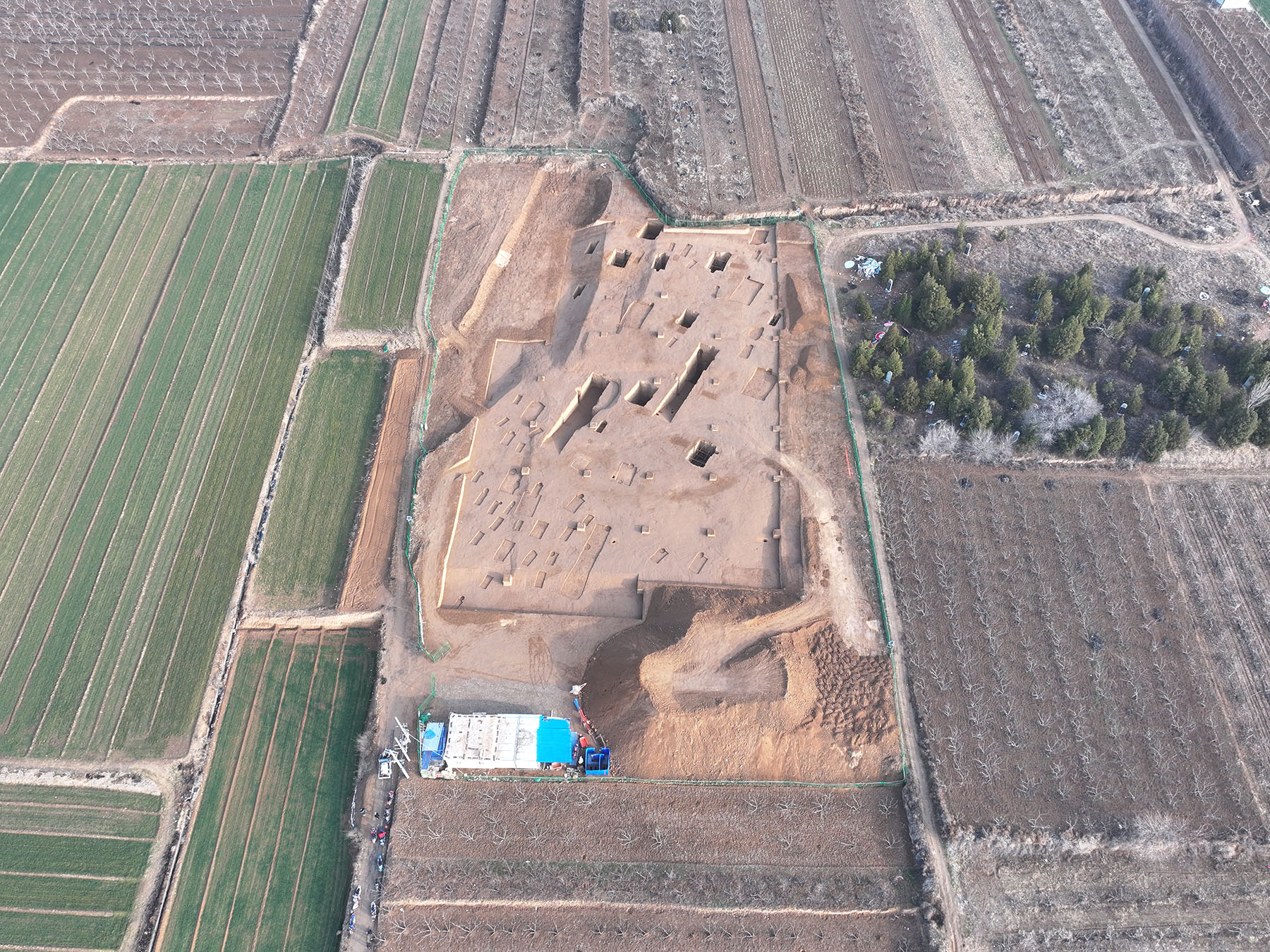
Excavations began in 2022 as a rescue effort targeting looted tombs. Unexpectedly, archaeologists uncovered an entire Western Zhou fief in the eastern part of the Guanzhong region — one of the most prosperous areas of present-day central Shaanxi and the northern frontier of the royal domain. The site covers an impressive 2.2 million square meters and includes both a vast cemetery and a large settlement.
Li Yanfeng, the lead archaeologist, says the Guanzhong region lies at the heart of the royal domain and has long been a focus of Western Zhou research. Yet, most previous work concentrated on western Guanzhong, leaving major gaps in understanding the east. The Changchun site helps fill that void.
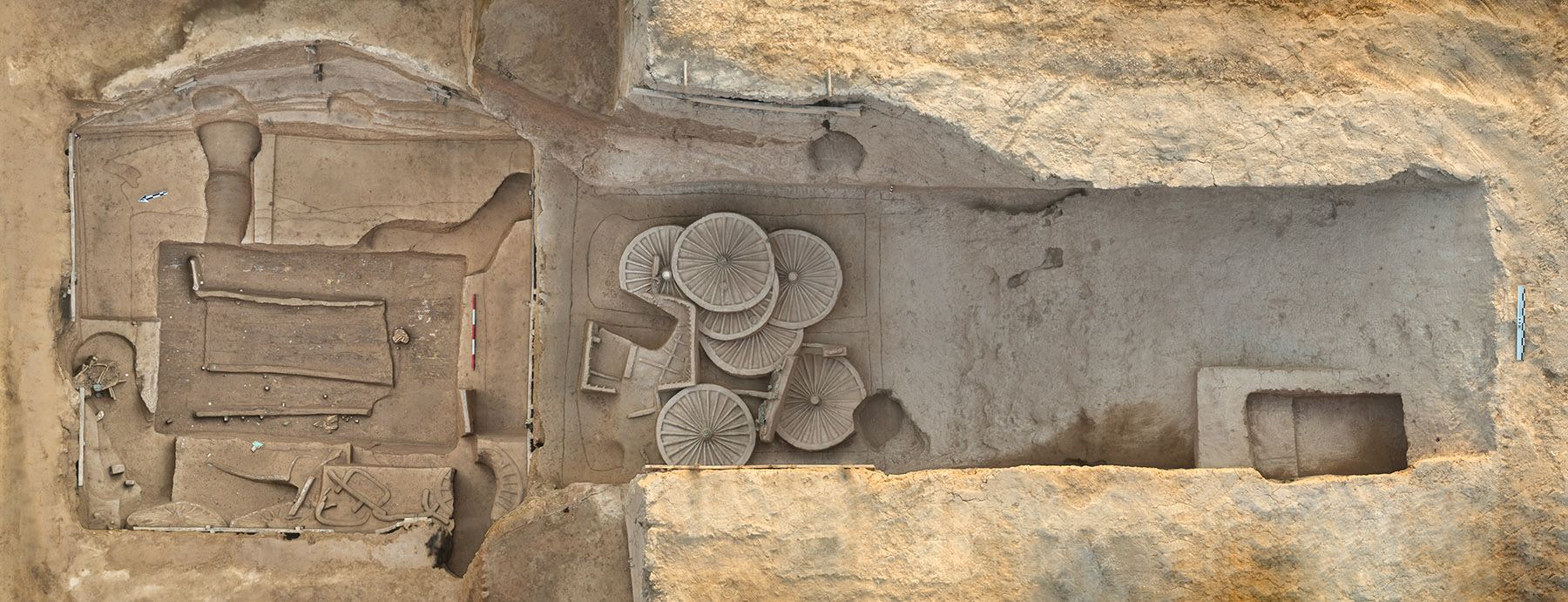
Research first focused on the cemetery, which spans 200,000 sq m and contains more than 3,150 tombs and chariot pits. Among them are 12 large tombs, each featuring a tomb passage — a characteristic often associated with high social status.
"Such a large cemetery, together with so many large tombs with passages, has never before been found in eastern Guanzhong and remains rare in Western Zhou archaeology," says Li.
The cemetery was used exclusively for burials, with no residential remains within its boundaries. It features a clearly organized layout and distinct boundaries, although no surrounding ditches have been found. All tombs face northeast. Large, medium and small tombs are distributed in an orderly pattern. A vacant strip divides the cemetery into two sections: the elevated northern area contains large and medium-sized tombs, while the southern section is occupied by smaller graves.
"These features closely resemble those of other cemeteries at the sites identified as Western Zhou fiefdoms, such as the Kongtougou site in Baoji, Shaanxi, as well as the dynasty's vassal states like the Liulihe site in Beijing," says Li.
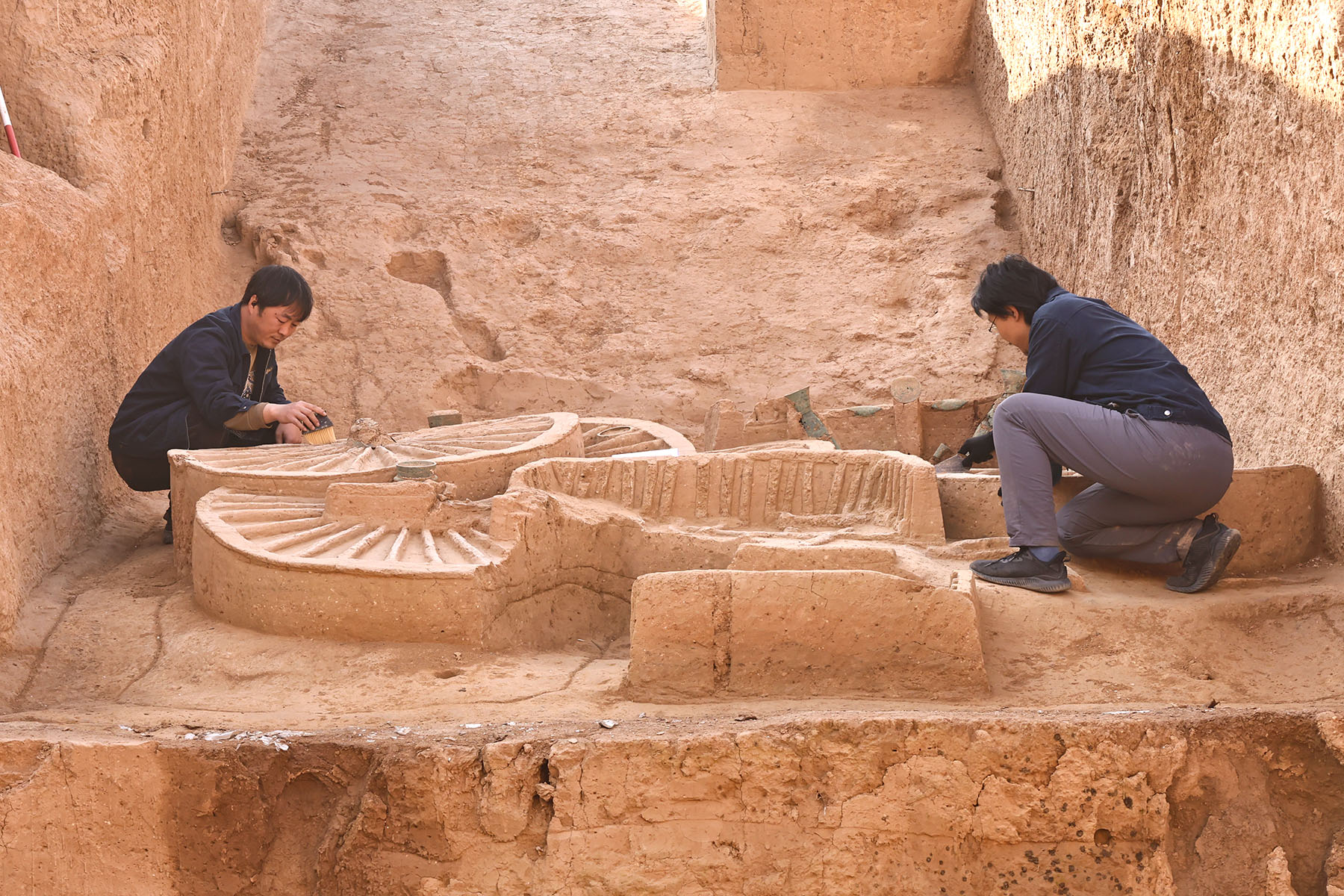
Excavations of selected tombs have provided further clues. High-ranking burials feature three layers of coffins — one outer coffin and two inner coffins. Many also contain dismantled chariots among the grave goods, practices widely recognized as characteristic of Zhou burial traditions.
Many tombs were looted long ago, resulting in the loss of numerous valuable artifacts. Although no inscriptions have been discovered that directly identify the tomb occupants, surviving objects still point to their elevated status.
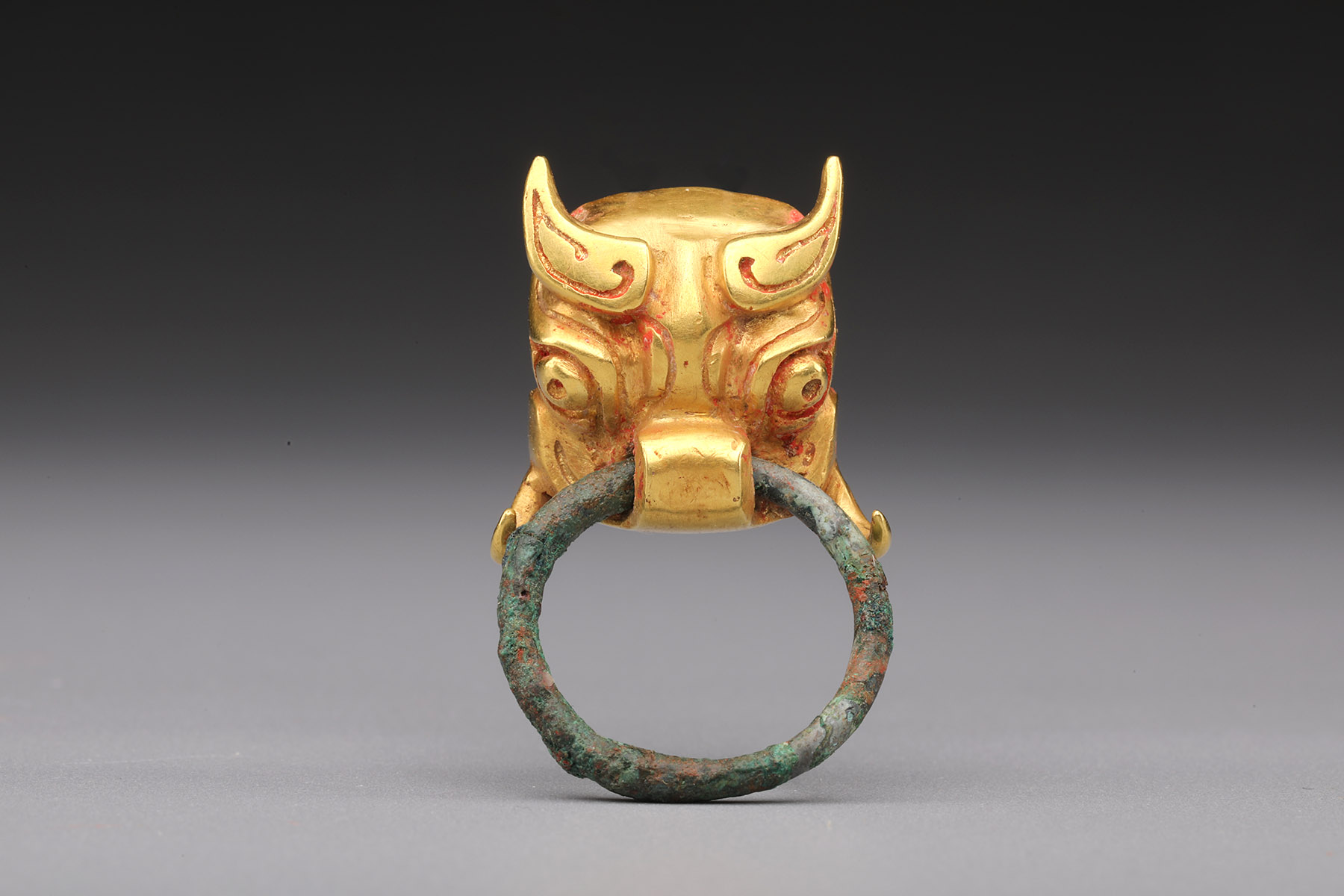
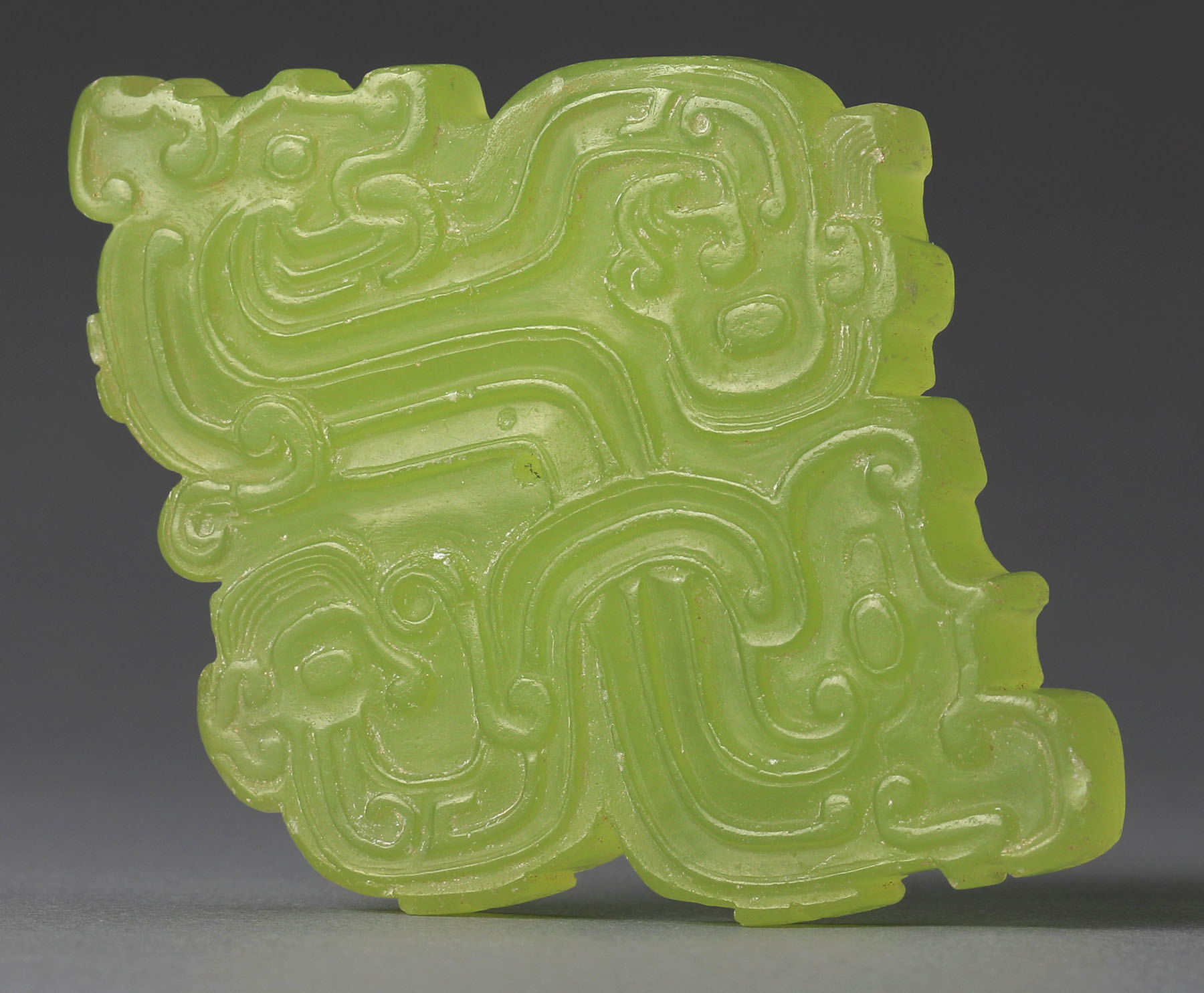
Among the finds are a gold ornament shaped like a beast mask, a jade plaque decorated with dragon motifs, and artifacts made from fossilized coral, all exceptionally refined compared with similar objects previously unearthed from the same period, Li says.
"Taken together, the evidence indicates that the cemetery was used from the middle to late Western Zhou period," Li says. "It served as a public cemetery primarily for Zhou people and is one of the largest Western Zhou cemeteries ever discovered within the vast royal domain between Fenghao and Luoyi."
After uncovering the cemetery, archaeologists began asking where so many people had lived. Extensive surveys of the surrounding area eventually led them to a settlement south of the cemetery that was occupied during the same period.
"We found that the settlement was an enclosed area covering 2 million sq m, bounded by the Shichuan River, one of its tributaries and two man-made ditches. One of the ditches even separated the settlement from the cemetery," says Li.
To better understand the settlement's layout, archaeologists searched for traces of roads, waterways and defensive structures. They identified a series of artificial horizontal and vertical ditches that divided the site into a grid-like pattern.
"This resembles the layouts of capitals from the Xia (c.21st century-16th century BC) and Shang (c.16th century-11th century BC) dynasties, particularly the crisscrossing road network at the Erlitou site in Luoyang. But there is a difference: the multi-grid system at Changchun was built around a water network," says Li.
Wang Wei, a veteran archaeologist at the Chinese Academy of Social Sciences, notes that such a layout is the first of its kind discovered at a Western Zhou site.
After establishing the site's overall layout, archaeologists excavated part of the settlement and uncovered extensive remains of handicraft production, including bronze casting, pottery making and antlertool manufacturing, suggesting the area functioned as a state-run specialized workshop district.
Within an area of 50,000 sq m, archaeologists discovered 30 pottery kilns, a concentration and scale comparable to ceramic workshops in the ancient capital of Fenghao.
In a pit near a workshop that produced antler arrowheads, archaeologists found the remains of four individuals. DNA analysis identified a mother-son relationship between two of them, suggesting they may have belonged to the same family.
"Studies on the skeletal remains indicate they were involved with repetitive upper body labor over long periods and suffered from poor health. These findings match the physical profile of professional craftspeople," says Li.
"Taken together, the evidence suggests a household-based production model operating within a state-run handicraft system," he adds.
Comparisons with other Western Zhou sites show that the scale and layout of the settlement, together with the size, organization and population composition of the cemetery, closely follow the pattern seen at other aristocratic fiefdoms within the royal domain, Li says.
"Therefore, we believe the Changchun site was another large aristocratic fiefdom, although somewhat smaller than sites such as Zhougongmiao in Baoji and Kongtougou in the Guanzhong region," he says.
The caiyi system emerged in the early Western Zhou period as an important tool for governing the royal domain and rewarding members of the royal family and meritorious officials. Unlike vassal states, which were often located on the dynasty's frontiers, caiyi fiefdoms were concentrated within the royal domain. Their rulers could collect revenues and administer local affairs, but they lacked the political, military and diplomatic powers enjoyed by the rulers of vassal states, Li explains.
ALSO READ: Buried mine rewrites the past
As the dynasty declined, the caiyi system gradually disappeared. Why, then, did such a large fiefdom emerge during the middle and late Western Zhou period?
"By tracing the evolution of settlements in this region, we can see that the influence of the Zhou rulers appears to have weakened over time," Li says. "In response, a buffer zone was needed on the periphery of the royal domain to protect the capital, Fenghao. We believe this was the context in which the Changchun site emerged."
"Such a well-planned and fully functional aristocratic fiefdom, as the social center of the Shichuan River Basin, provides a valuable case study for understanding the political structure and state organization of the Western Zhou Dynasty," says Wang.
Contact the writer at wangru1@chinadaily.com.cn
