

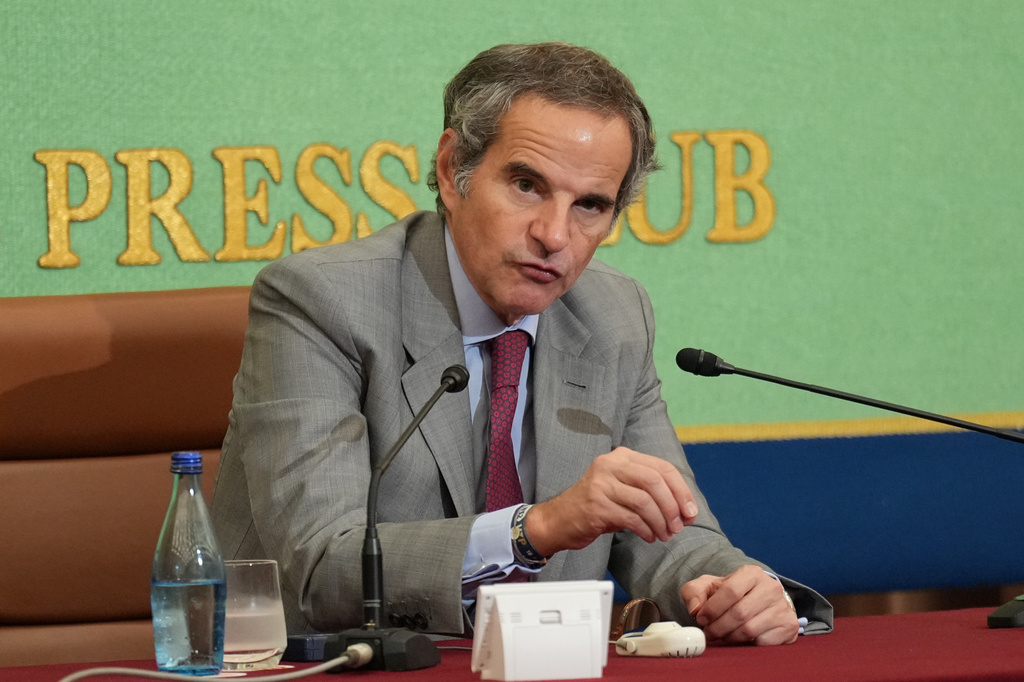
TEHRAN/MUSCAT/MANAMA/TOKYO – International Atomic Energy Agency (IAEA) Director-General Rafael Grossi said Friday that the nuclear watchdog has had "an initial exchange" with Iranian officials over nuclear inspections, Kyodo News reported.
"We had an initial exchange with the Iranian side at the technical level," Grossi told a press conference in Tokyo.
He said the exchange took place last weekend in Burgenstock, central Switzerland.
Grossi said earlier this week that the IAEA would carry out inspections in Iran in view of the recently signed US-Iran peace memorandum of understanding.
A senior Iranian diplomat said Wednesday that Iran has no plan to provide the IAEA with access to its nuclear facilities bombed by the United States and Israel, noting that such issues will be resolved solely within the framework of a potential final agreement with Washington and as a result of the other party's practical action to terminate all sanctions.
Use of unfrozen assets
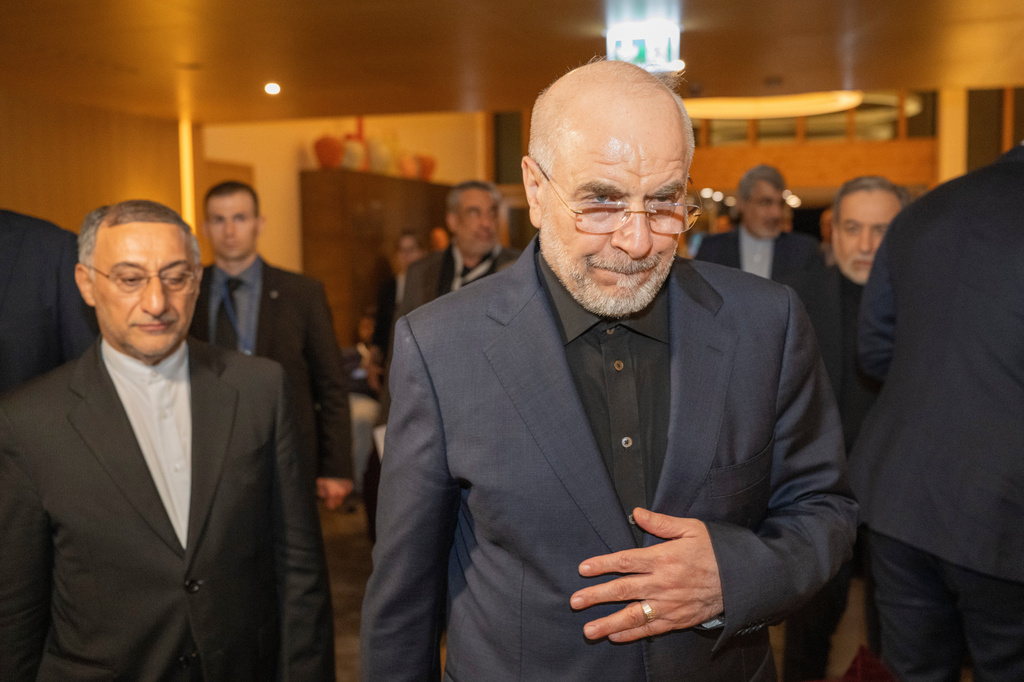
In a post on social media platform X on Thursday, Iranian Parliament Speaker Mohammad Bagher Ghalibaf rejected US claims that Iran's unfrozen assets would be spent on US agricultural products, the latest sign of discord between the two sides over how the released funds should be spent.
Ghalibaf, also a top Iranian negotiator, wrote that "America falsely claims our unfrozen assets will buy their agriculture. Interesting. The only crop we're harvesting is what you planted: decades of mistrust."
Ghalibaf's post echoed previous remarks by other Iranian officials. On Tuesday, Iranian Foreign Ministry spokesperson Esmaeil Baghaei said Iran would use the unfrozen assets entirely according to its national interests and without restrictions, adding that purchasing decisions would be based on price and quality.
Meanwhile, Iran's Central Bank Governor Abdolnaser Hemmati said Iran has no obligation to buy US agricultural products, though it would not rule out purchases if US goods are competitively priced.
The Iranian pushback came in response to US Vice-President JD Vance's claim on Monday that the unfrozen Iranian assets could be used to buy US soybeans, corn and wheat, and to US President Donald Trump's statement on Tuesday that the funds would go into a US-controlled escrow account and used exclusively to purchase US food and medical supplies, including corn, wheat, and soybeans.
The divide over the use of unfrozen assets highlights lingering tensions between Tehran and Washington, even as both sides pursue negotiations under a recently signed peace memorandum of understanding.
The MoU, signed on June 18, provides for 60 days of talks toward a final agreement on Iran's nuclear program and sanctions removal. The latest round of negotiations was held in Switzerland on Sunday and Monday.
Hormuz Strait traffic management
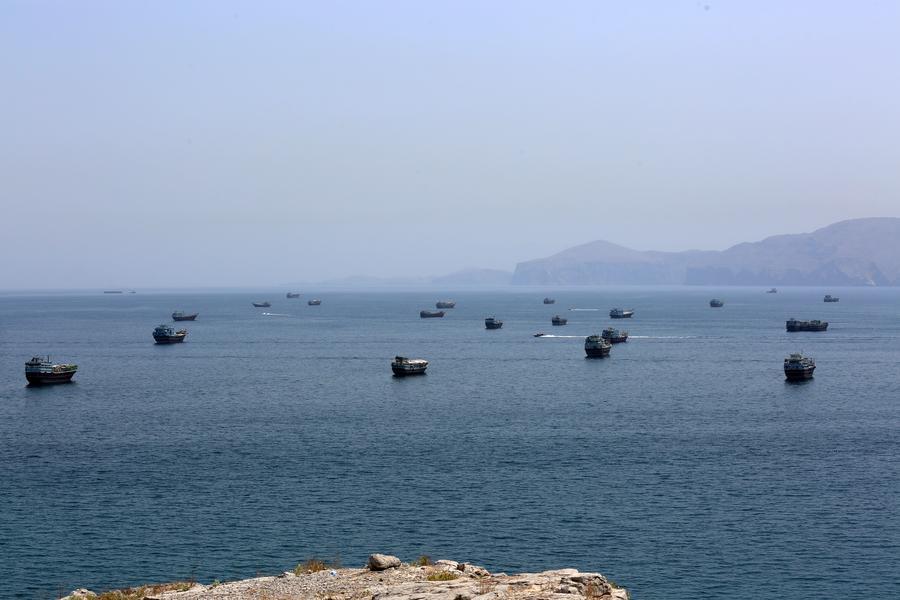
In a phone call on Thursday, Iranian Foreign Minister Seyed Abbas Araghchi and his Omani counterpart Sayyid Badr bin Hamad bin Hamood Albusaidi discussed the administration of maritime traffic in the Strait of Hormuz.
The phone call came after Oman and Iran issued a joint statement on Tuesday agreeing to establish a joint working group to negotiate the future administration of navigation in the strait.
The two ministers reviewed the latest developments regarding navigation through the strategic waterway and temporary arrangements for vessels' passage within a 60-day period set in a recently signed US-Iran peace MoU, read statements from both countries' foreign ministries.
They highlighted the importance of continuing technical and expert interactions on the matter, according to the Iranian Foreign Ministry.
The two diplomats discussed a mechanism for joint cooperation to achieve the MoU's objectives regarding freedom of navigation in a manner consistent with international law and respect for state sovereignty, according to Oman's Foreign Ministry.
ALSO READ: Shipping rules emerge as next flashpoint in US-Iran friction
During a joint ministerial meeting held in Bahrain between the Gulf Cooperation Council countries and the United States, the Omani foreign minister said future arrangements related to the strait would not involve the imposition of transit fees, reaffirming its commitment to ensuring free and secure navigation through the strategic waterway.
Albusaidi said Oman, as a littoral state of the Strait of Hormuz, bears a special responsibility in supporting international efforts to secure maritime navigation, in line with its obligations under international law and the United Nations Convention on the Law of the Sea.
Uncoordinated shipping through strait
Also on Thurday, the Navy of Iran's Islamic Revolution Guard Corps (IRGC) once again stressed that the only authorized routes for vessels' passage through the Strait of Hormuz are the ones announced by Iranian authorities.
In a statement published on the IRGC's official news outlet Sepah News, the IRGC's Navy warned that ships' movement through other routes is dangerous and prohibited.
The IRGC's Navy made the announcement after the Oman Maritime Security Center released guidelines for outbound ships' passage through the strait under an arrangement with the International Maritime Organization.
The IRGC's Navy added that everyone must know that the only routes for passage through the strait are those announced by Iran, and traffic outside those routes is very dangerous and prohibited, and must be strictly avoided.
Rubio: US seeks constructive talks with Iran
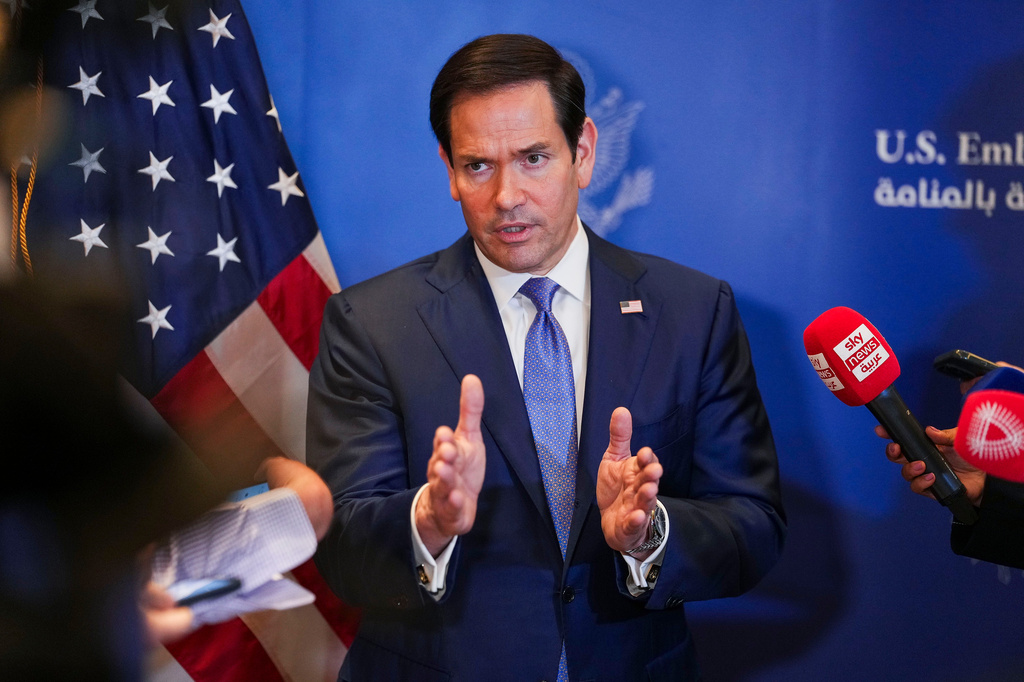
During the joint ministerial meeting in Bahrain, US Secretary of State Marco Rubio said the United States intends to build constructive dialogue and seek new agreements with Iran.
Rubio stressed that Washington wants to ensure that any decision under an agreement with Iran will take into account the interests of its allies and partners in the Gulf.
He also rejected the idea that the Strait of Hormuz belongs to any country, saying that imposing tolls in Hormuz would be unacceptable.
The US will establish a communication system to keep Gulf countries informed of all steps in its negotiations with Iran, the US secretary of state told the media.
"We will not be making any decisions or commitments that in any way undermine the prosperity, stability, or security of our Gulf partners, so every step of the way we will create a system where we are always in communication with them," Rubio stressed.
READ MORE: Pakistan: Iran-US technical talks to resume next Tuesday
Rubio also said the two sides did not discuss at the meeting the issue of funds for Iran's reconstruction and economic development.
