

For Hong Kong’s collateral event at the Venice Biennale, Kingsley Ng and Angel Hui created an immersive, visually relaxing and sonically resonant experience that invites visitors to take a pause and engage in deep listening. Chitralekha Basu reports.
Campo della Tana, which has traditionally served as the venue of Hong Kong’s collateral event at the Venice Biennale, is nothing like a regular exhibition space. Its unroofed courtyard is enclosed by walls with partially exposed clay bricks and lime mortar typical of 16th-century Venetian architecture. The upper floors are residential. As a result, the art installed on the courtyard is set off against the building facade — with its hanging laundry, flowerpots on the windowsill, and occasionally a face enjoying an exclusive bird’seye view of the exhibition.
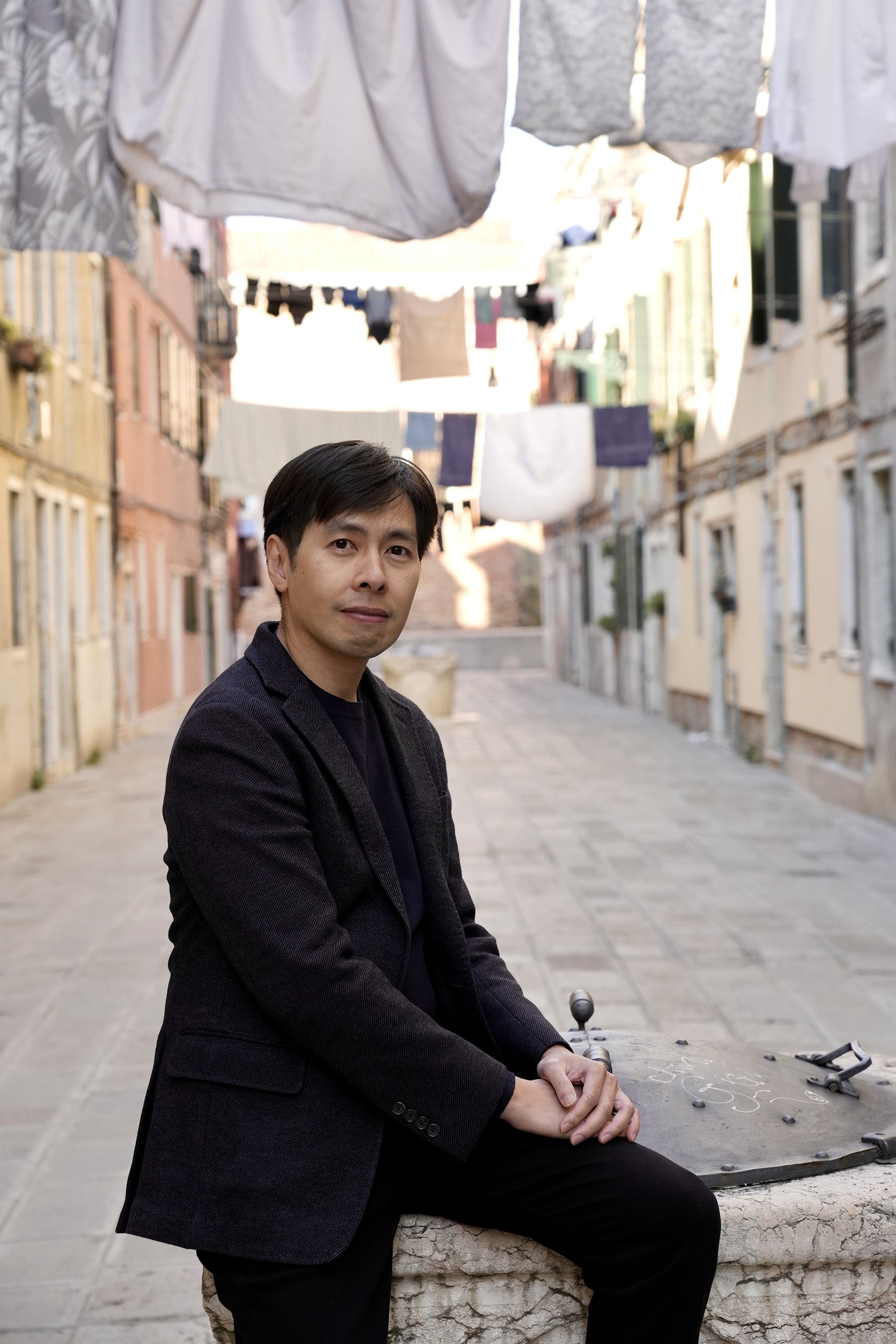
Kingsley Ng — who with Angel Hui is representing Hong Kong at the Venice Biennale 2026 — sounds pleased with having struck a rapport with his Venetian neighbor-onlookers. One of them has certified Fermata — as the Hong Kong exhibition in Venice is titled — as “one of the few Venice Biennale projects to make an effort to respond to the environment he’s living in”.
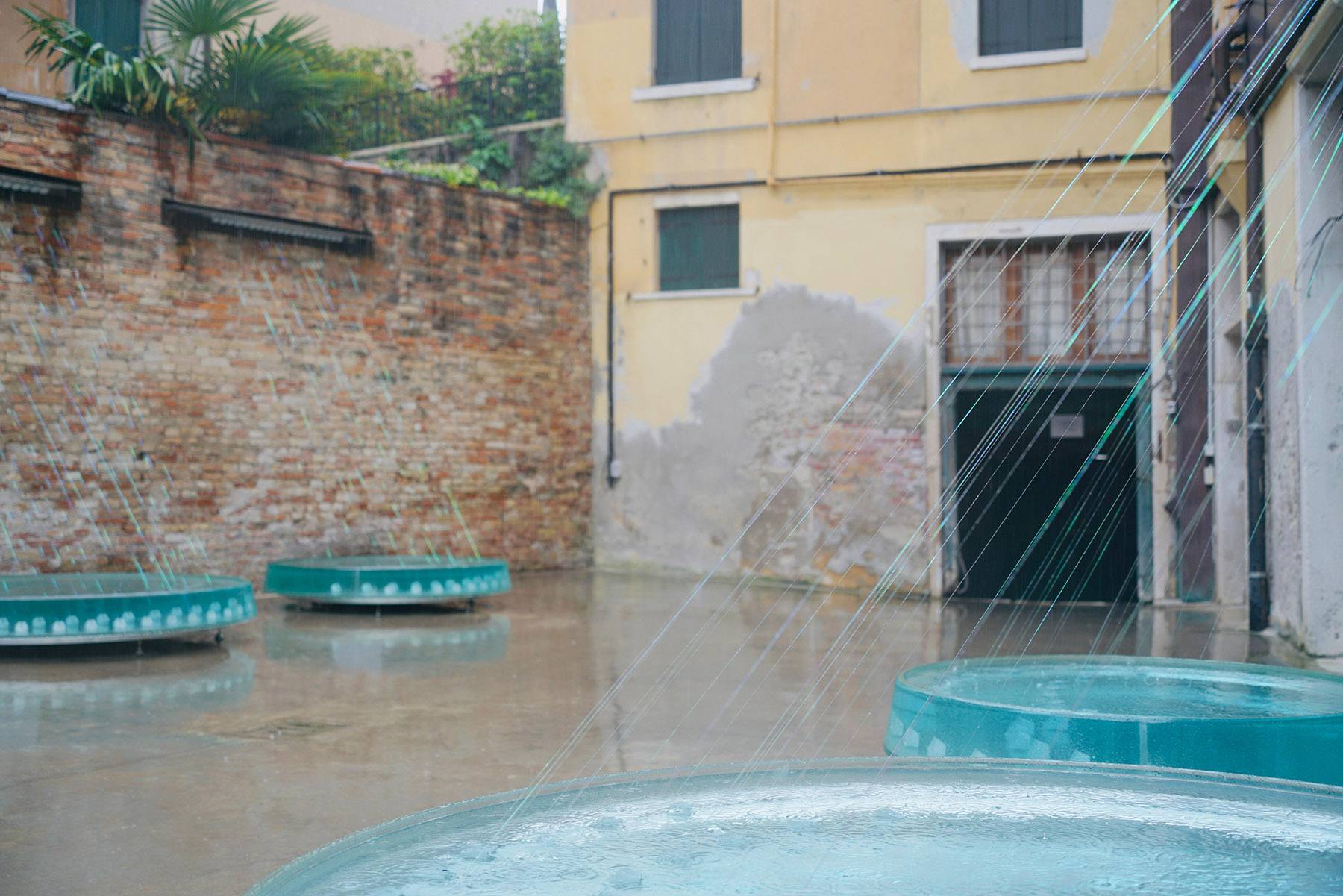
Ng’s courtyard installation, called Sometimes, There are Clouds in Puddles, involves a set of mechanically triggered dichroic ribbons, reflecting moving lights to create the impression of rain falling on five circular translucent turquoise-colored shallow water bowls — or puddles, as imagined by the artist. The piece takes its cue from the poem Midday, Quarry Bay, by Hong Kong poet Leung Ping-kwan (1949-2013). In it, the sight of floating clouds reflected in puddles provides a moment of relief and a spiritual lift, interrupting the stream of mundane, everyday occurrences experienced by the poet-narrator.
Ng had his share of serendipitous moments since the exhibition opened in May. “On a windy day, fluffs from a dandelion plant on a balcony directly above us drifted down onto the water. With reflections of the sky and the surrounding environment, the scene truly looks like clouds drifting across the sky,” the artist says. And when it rains, “the ripples formed on the puddles serve as a poetic counterpoint” to the illusion of rain he has created for the piece.
Emotional appeal
Fermata is an Italian term for a music notation symbol that allows a performer or conductor to prolong a note or rest at their discretion during a performance. The idea chimes in with “In Minor Keys”, the theme of Venice Biennale 2026.
“One of the core ideas of that theme is to reconnect art with its emotional essence,” says Maria Mok, museum director of the Hong Kong Museum of Art, the institution responsible for selecting the artists for Fermata and providing curatorial support. The exhibition invites viewers to slow down and focus on “the emotions, details, and sentiments of everyday life,” she adds.
Quoting the main curator of Venice Biennale 2026 — Koyo Kouoh, who passed away in 2025 but not before outlining her vision for the current edition — Mok stresses the ideas of “rest, contemplation, and deep listening”. And if these ideas seem antithetical to the commonly held image of Hong Kong as a city geared toward materialistic pursuits and hectic lifestyles, Fermata aims to trigger a different set of sensibilities, enabling viewers to find comfort in the familiar and inspiration in the quotidian. As Mok says, “If you pay attention only to the noise, then you’re missing something.”
Play of light and shade
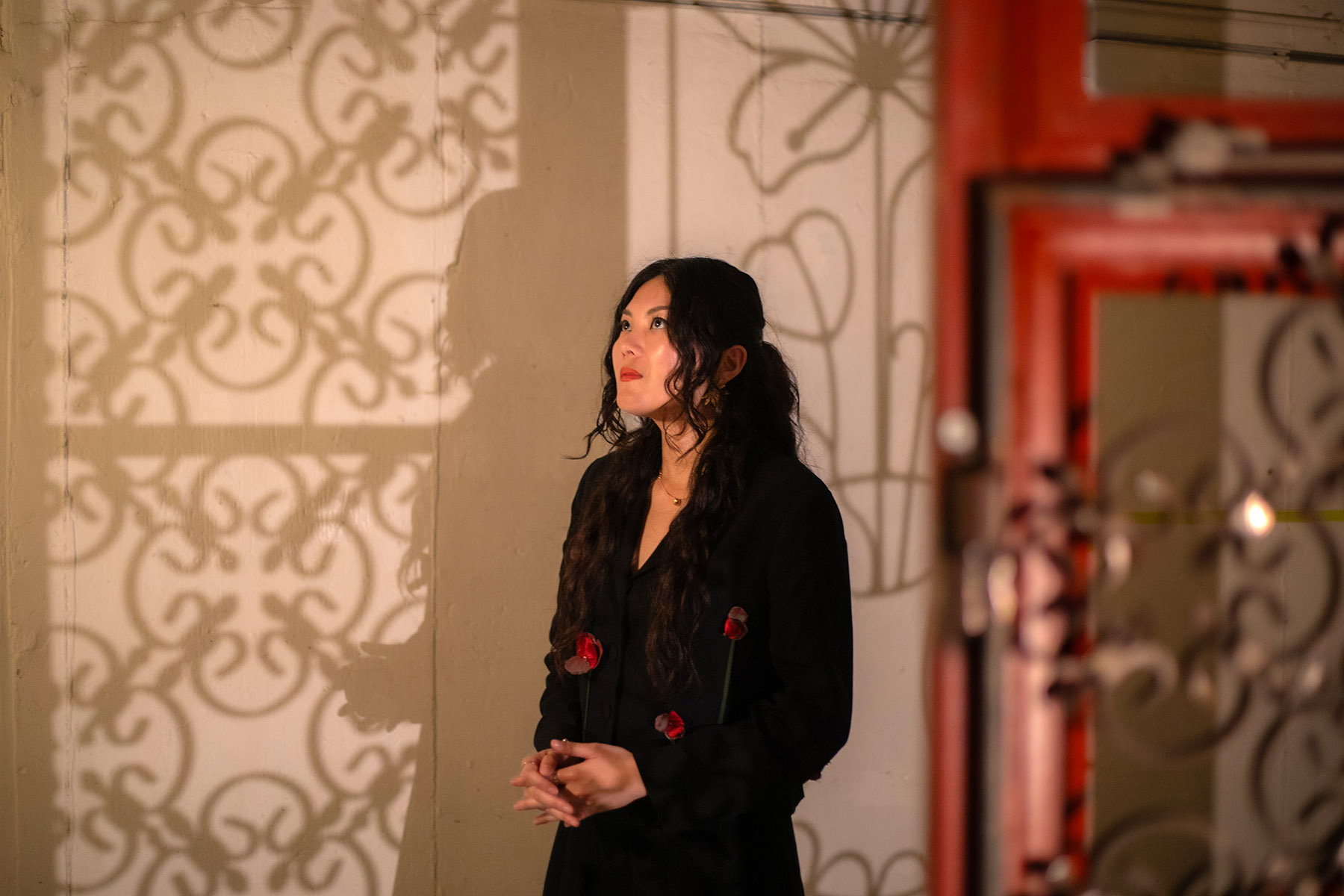
Hui is best known for creating immersive experiences by unleashing a cornucopia of everyday objects made with unconventional material. For instance, the plethora of toothpaste tubes, handbags and dim sum sets in her installations often come with a traditional Chinese blue-glazed porcelain finish.
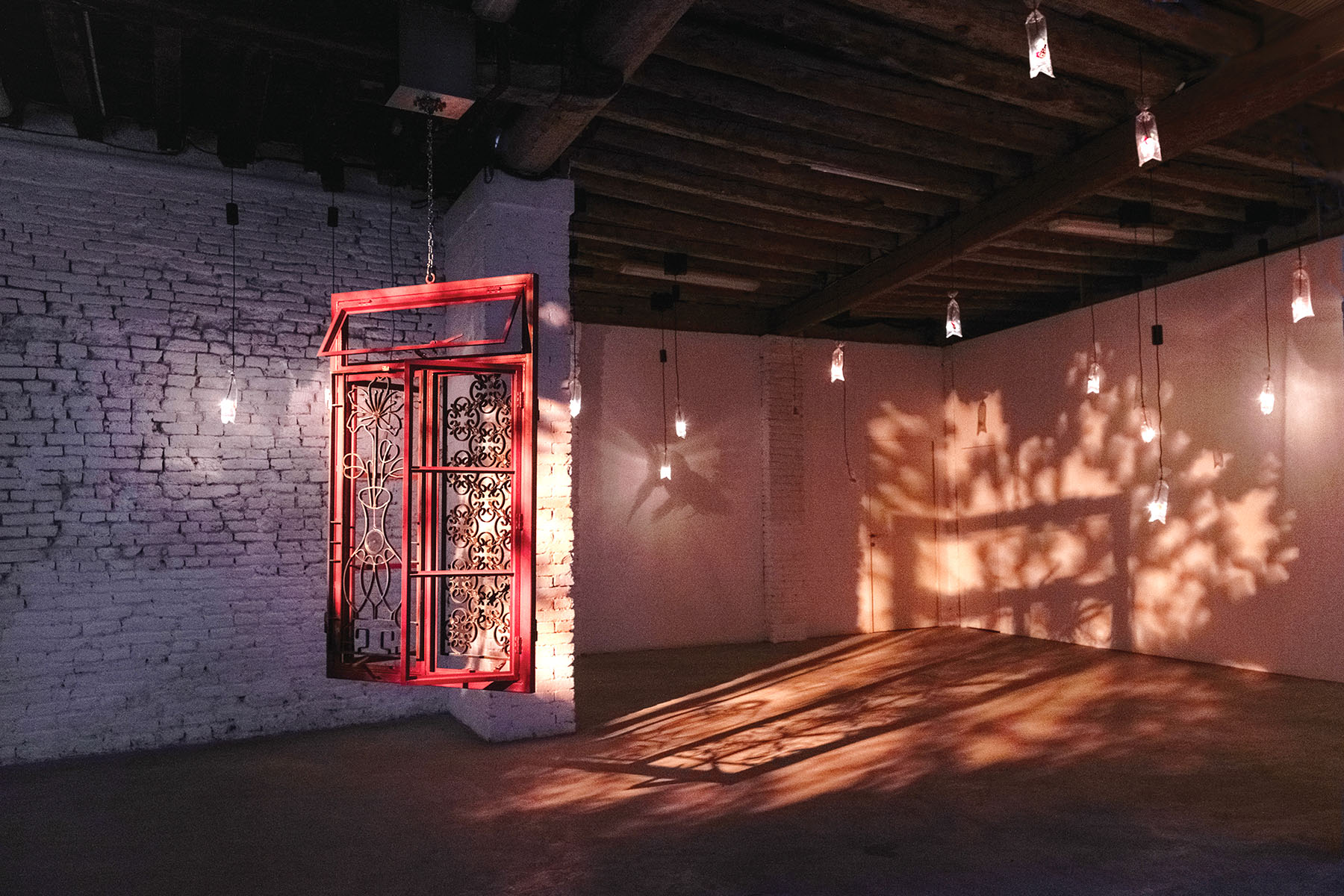
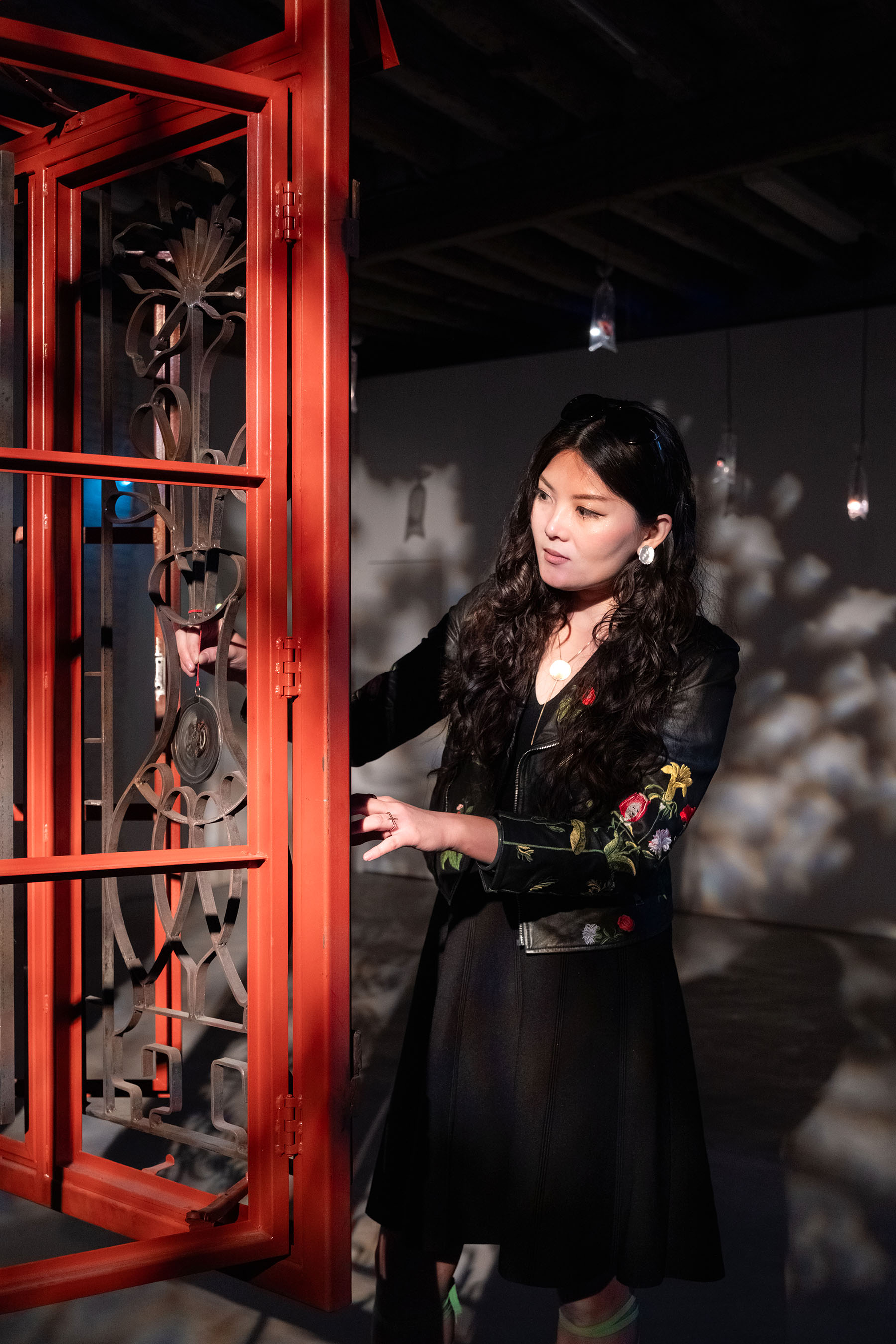
Hui’s installations, placed inside the sprawling, high-ceilinged rooms at the venue, look uncharacteristically spare. There is a forlornness to the suspended, gently rotating window frame. The grill is a diptych — with traditional Venetian quatrefoil pattern on one panel and a flower vase with a single bauhinia and a hint of hexagonal Chinese window grill pattern at the bottom.
Hui enlisted Hong Kong artisans to help make the sculpture, but also used her own hands. “We needed to handcraft very special tools to be able to carve those timeless and delicate patterns,” she says.
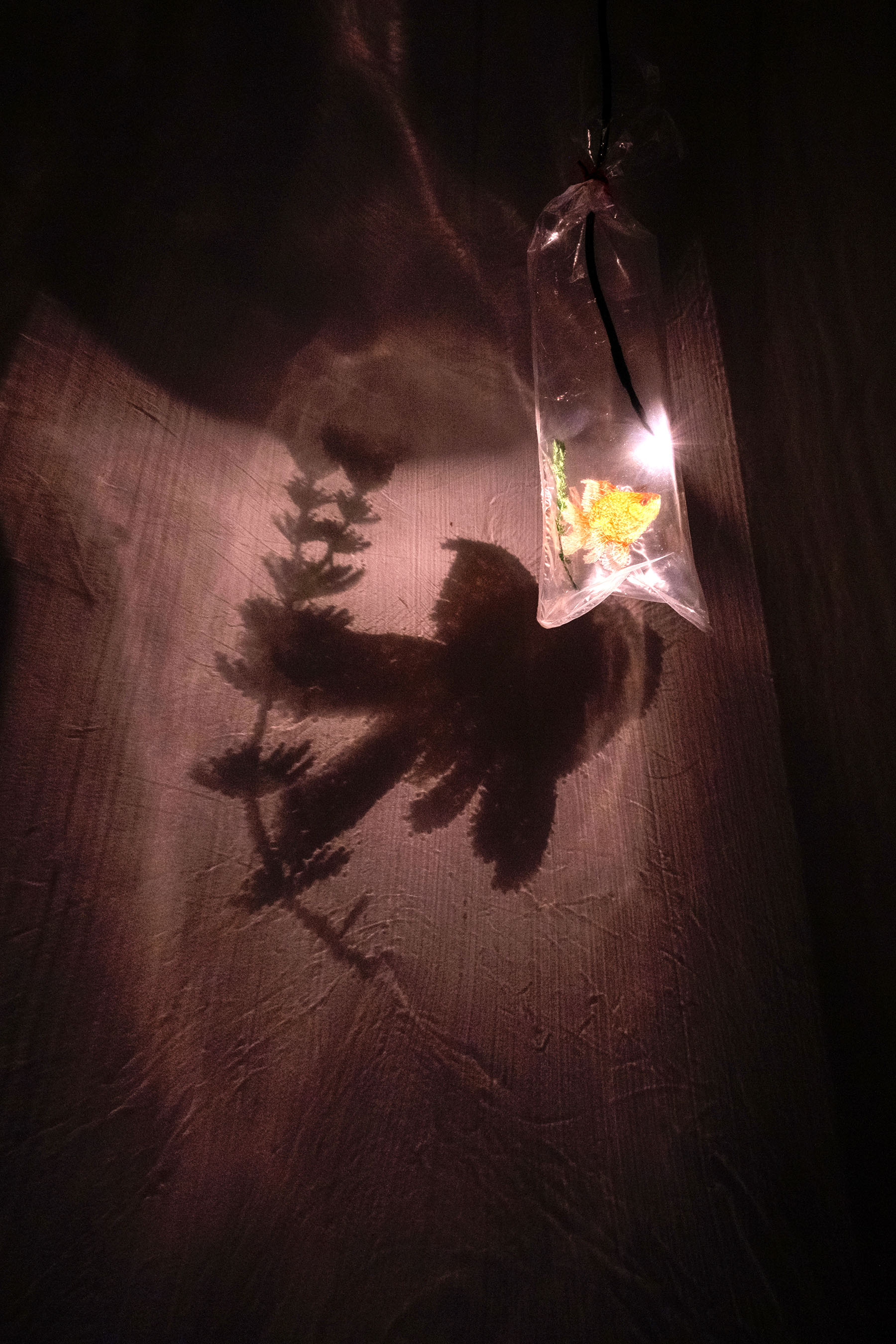
One of her signature leitmotifs, handmade goldfish motifs in suspended, illuminated plastic bags — a nod to a time-tested Hong Kong practice followed by sellers of ornamental fish — also figures in the show. The novelty is in the play of light and shade on the walls and floor, caused by the movement of the suspended pieces, activated by a whiff of breeze or the presence of visitors. The result is an infinite number of ever-changing silhouettes — both geometric and abstract shapes articulating a narrative.
Hui says that the inspiration for the shadow play came during a walk through the streets of Venice at night, and watching the movement of light reflected against the water of the canals make patterns on the walls. She adds that the suspended window might be an architectural representation of the human eye, opening up a vista of an animated, if shadowy, cityscape full of stories, waiting to be discovered.
State of Zen
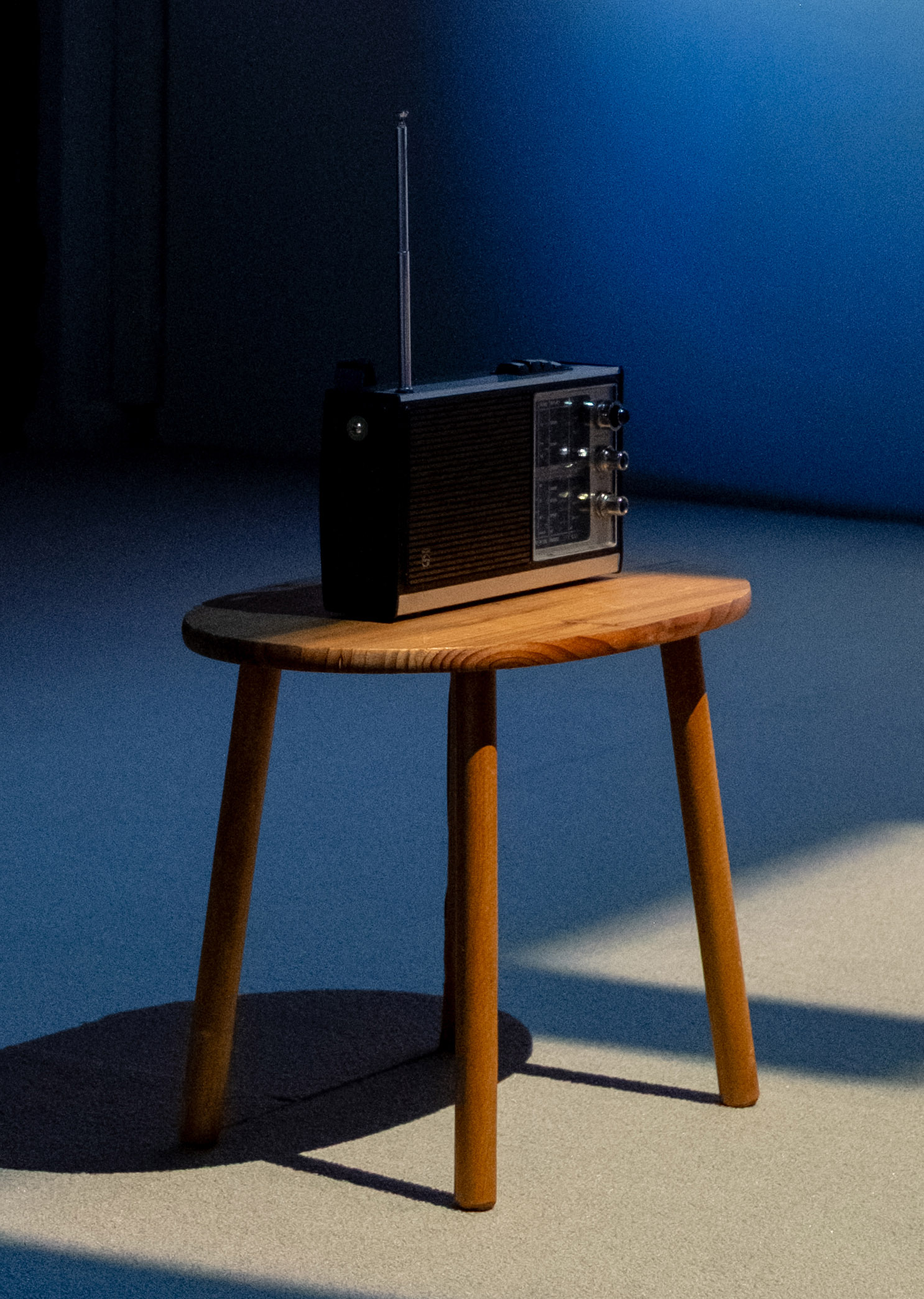
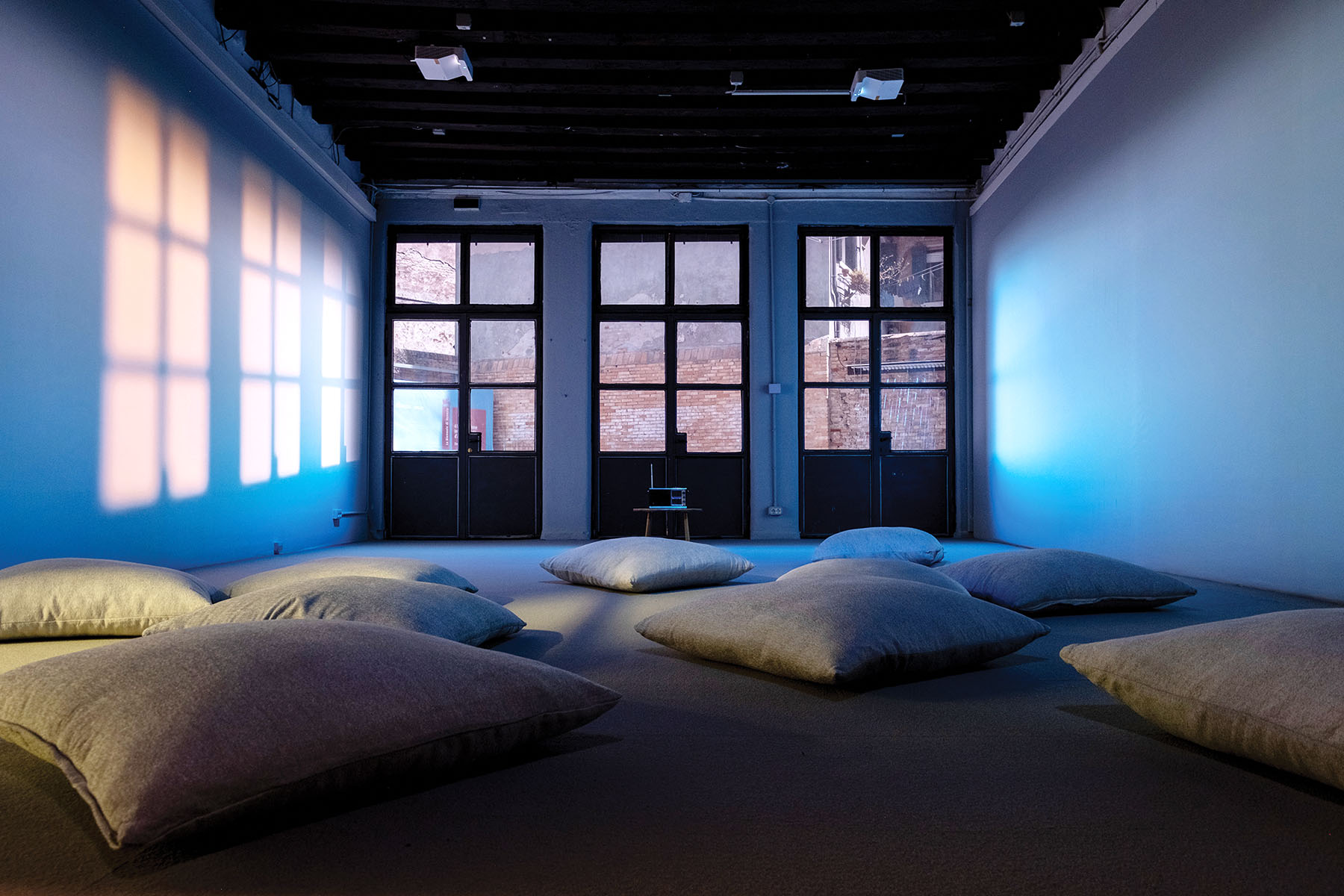
Fermata features two more installations by Ng. The immersive Laundry Nocturne is designed to look like a moonlit room with a scattering of pillows for the visitors to lie down against. A blanket, “gently swinging in the wind, like a shadow passing through light”, appears from time to time. The piece references laundry hung outside windows — images that are part of the visual culture of both Venice and Hong Kong, though nowadays not so common in the latter.
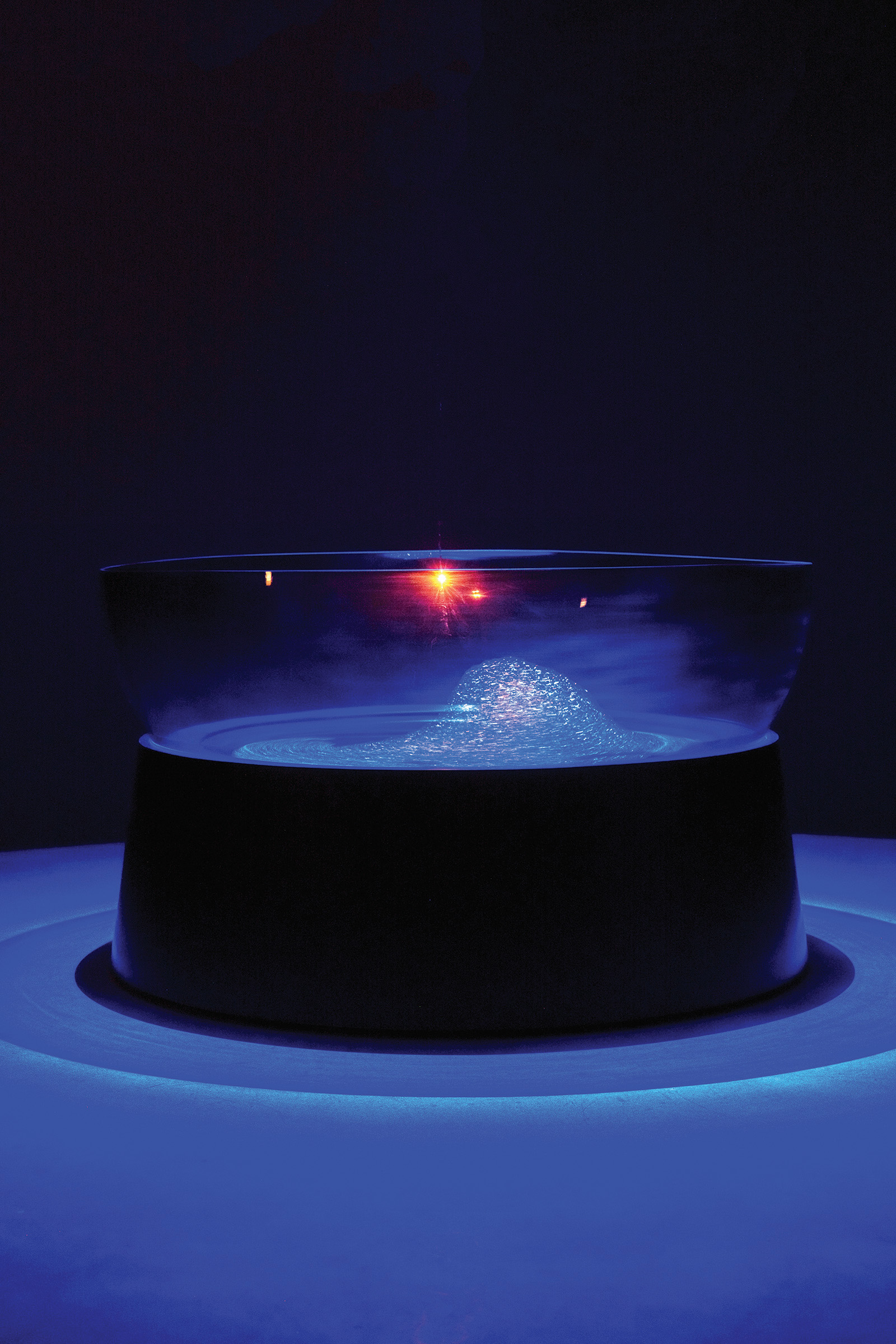
Sky Well, a slow-rotating circular well filled with soap bubbles, invokes both the Venetian wells to store filtered rainwater as well as Hong Kong’s light wells — empty spaces surrounded by high-rises and reaching out to the sky.
“Hovering above the bubbles, a gyrating tungsten light bulb and its illusionary reflection on the concave surface cast illuminated trajectories,” Ng says. “In a 10-minute timed sequence, the evolving scenes might look like the galaxy, an aerial landscape, or an imagery of impermanence. Its meditative character is similar to a dry landscape in a Zen garden, within which people become aware of their mental images.”
Distinctive soundscape
The hissing of winds in the Laundry Nocturne room — where the sounds emanate via a retro-model transistor radio on a tripod — kicks off a sonic journey through a tapestry of sounds recorded at a variety of Hong Kong locations at night. These include sounds of machines printing newspapers and filtration plants processing drainage water before sending it out into the sea.
Ng adds that a discerning ear might even pick up the difference in the screeching sounds made by disposal bags dragged across the floor, before they are loaded onto the trucks, in a mail sorting center, depending on the quality of their material.
It is the synchronized, multichannel soundscape, winding its way across the rooms, that anchors the components of Fermata. “Basically, it’s an atmospheric nocturne, with minimalistic musical elements mixed with field recordings of nighttime Hong Kong,” Ng says. “The sounds include late-night transport, intimate moments of domesticity — our cat drinking water and purring — and workings of the city to prepare it for the day ahead — sewage treatment, postal delivery, and newspaper printing. It is an audio layer to give the exhibition a patient tempo, and a sonic dimension bridging another time zone.”
Contact the writer at basu@chinadailyhk.com
IF YOU GO
Fermata: Hong Kong in Venice
Dates: Through Nov 22
Venue: Campo della Tana, Castello 2126, 30122, Venice
www.labiennale.org/en/art/2026
