

Well-known as a thoroughfare, city upgrades ferry routes, improves historical sites, and clears interrupted views, giving rise to sightseeing and family travel, report Yang Feiyue and Zhou Lihua in Wuhan.
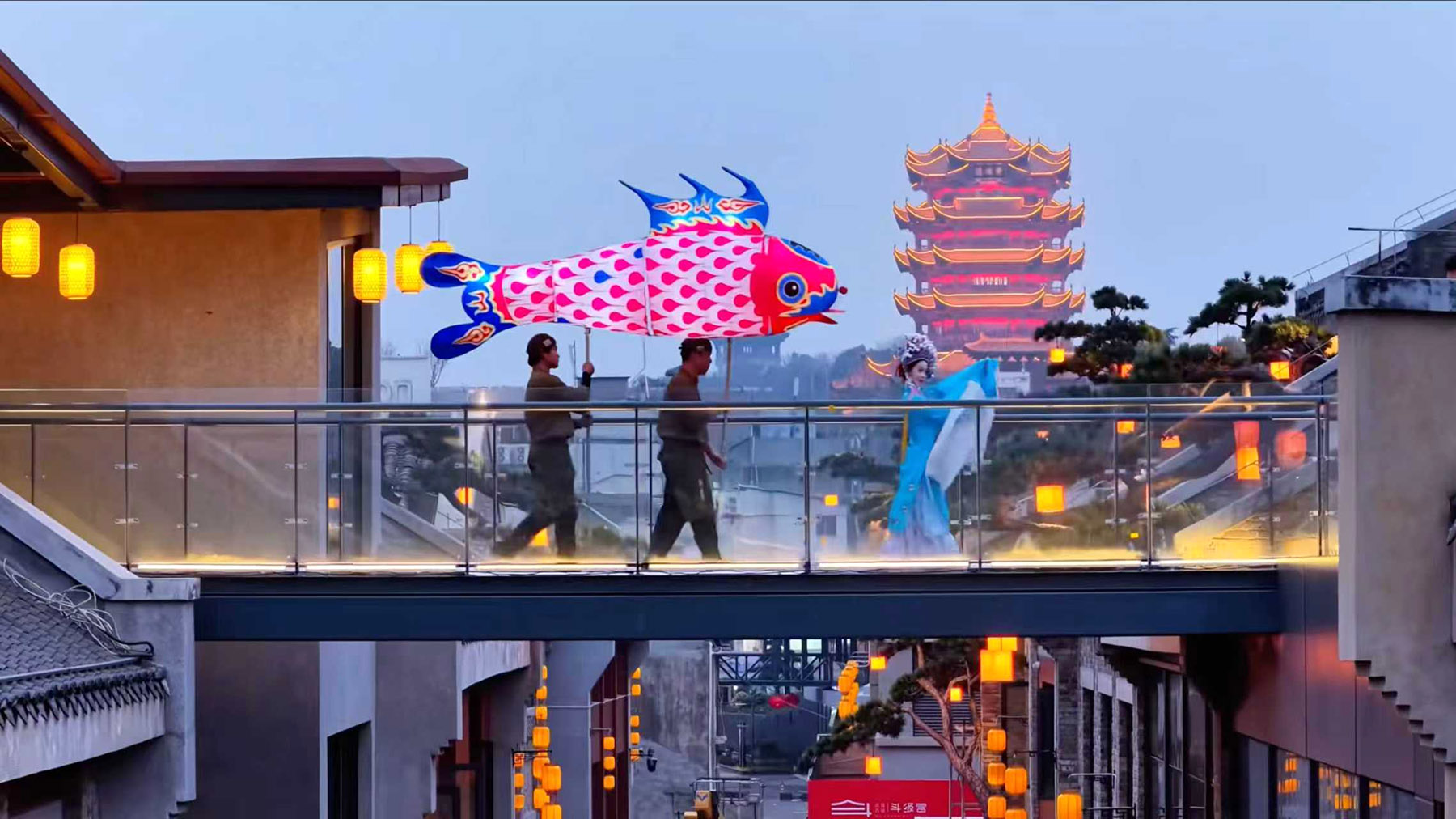
China's river city is transforming itself from a transit hub into a cultural destination through poetry, heritage and the landscapes of the Yangtze.
When the Yangtze River reaches Wuhan, Hubei province, it slows down.
For thousands of kilometers upstream, China's longest river cuts through mountains and gorges. But in Wuhan, in the flat heartland of Central China, the Yangtze broadens into a calmer expanse. Tortoise Hill and Snake Hill rise on opposite banks like half-open gates, framing a stretch of water before the river continues east toward the sea.
Mist lingers above the water in late spring. Across the river, skyscrapers emerge and disappear behind shifting veils of vapor. More than 1,200 years ago, Tang Dynasty (618-907) poet Cui Hao stood on this same stretch of riverbank and wrote the lines that would become inseparable from Wuhan's identity: "Where lies my homeland at sunset? Mist upon the river brings deep sorrow."
The poem survived. And so did the view.
READ MORE: A menu of enchantment
Bridges now span the river, and towers rise where fishing boats once gathered. Yet Wuhan, long known as the "thoroughfare of nine provinces" because nearly every major route in Central China seemed to pass through it, is undergoing a quieter transformation.
For generations, travelers once made transient calls here on their way to somewhere else. Now the city wants them to stay.
Standing at Hanyangmen Wharf in Wuchang district, ferry guide Fan Yunlong points toward the muddy-green waters where the Yangtze and Hanjiang rivers meet.
"That protruding area over there is Nan'an Mouth. That's where the two rivers merge," he says.
Fan grew up along the riverbanks. He speaks about currents and ferry crossings the way other people talk about family history.
"When I was a kid, we didn't have smartphones. No weather forecast either. Every morning, I'd just look at the bridges. Whichever ones I could see clearly were where the weather was good. That's where I'd go to find my schoolmates," he recalls with a laugh.
He gestures toward the water. The bridges arc across the water like a procession. The stately double-deck Wuhan Yangtze River Bridge, gray and unyielding, has been carrying trains and cars since 1957. Farther south, the orange cables of Yingwuzhou Yangtze River Bridge catch the afternoon light like harp strings. Beyond it, the golden towers of the Yangsigang Yangtze River Bridge rise against the hazy sky.
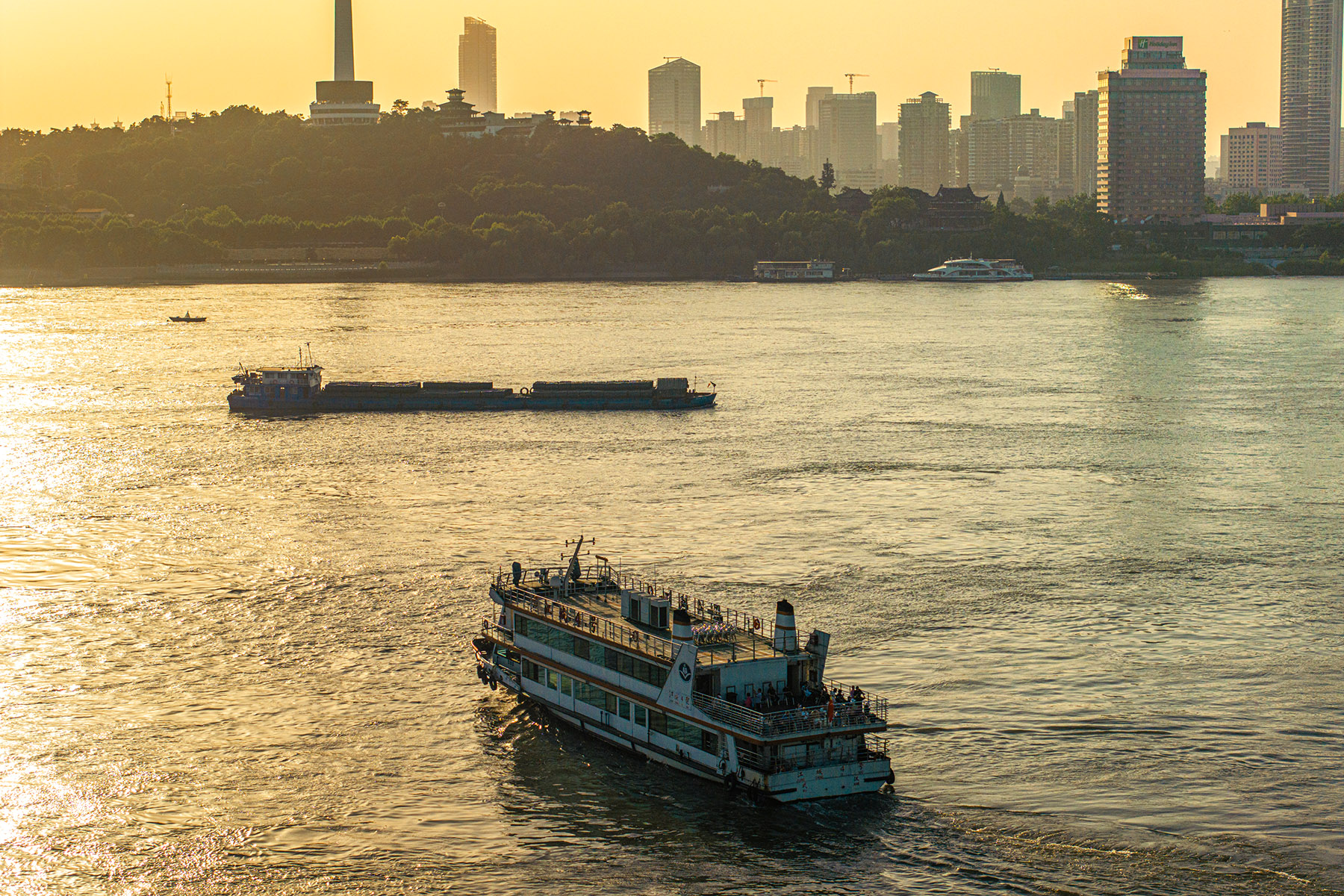
As he speaks, a white ferry slowly approaches through the fog, its hull carrying the words Jianghan Lansheng, roughly translated as "River Confluence Panorama".
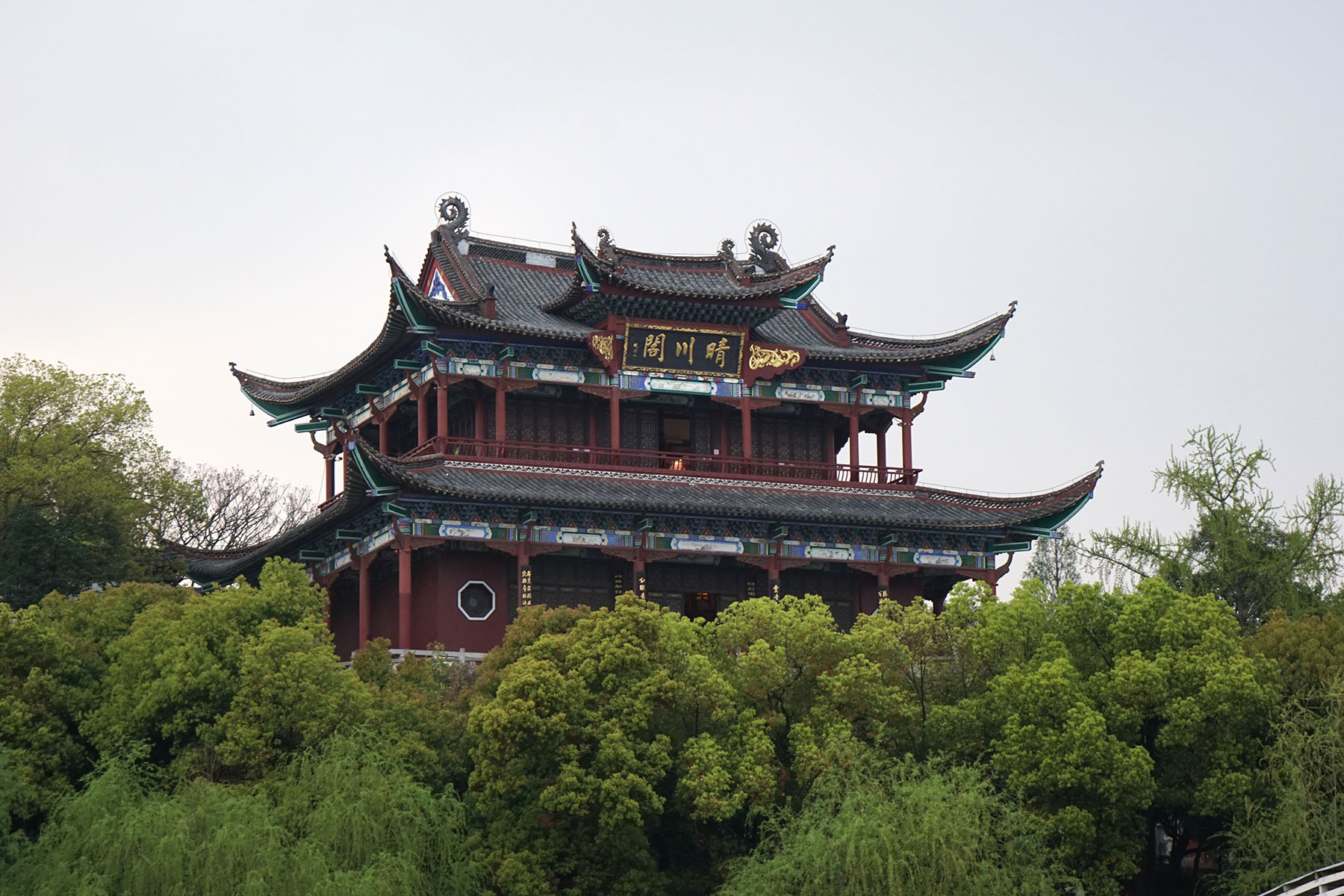
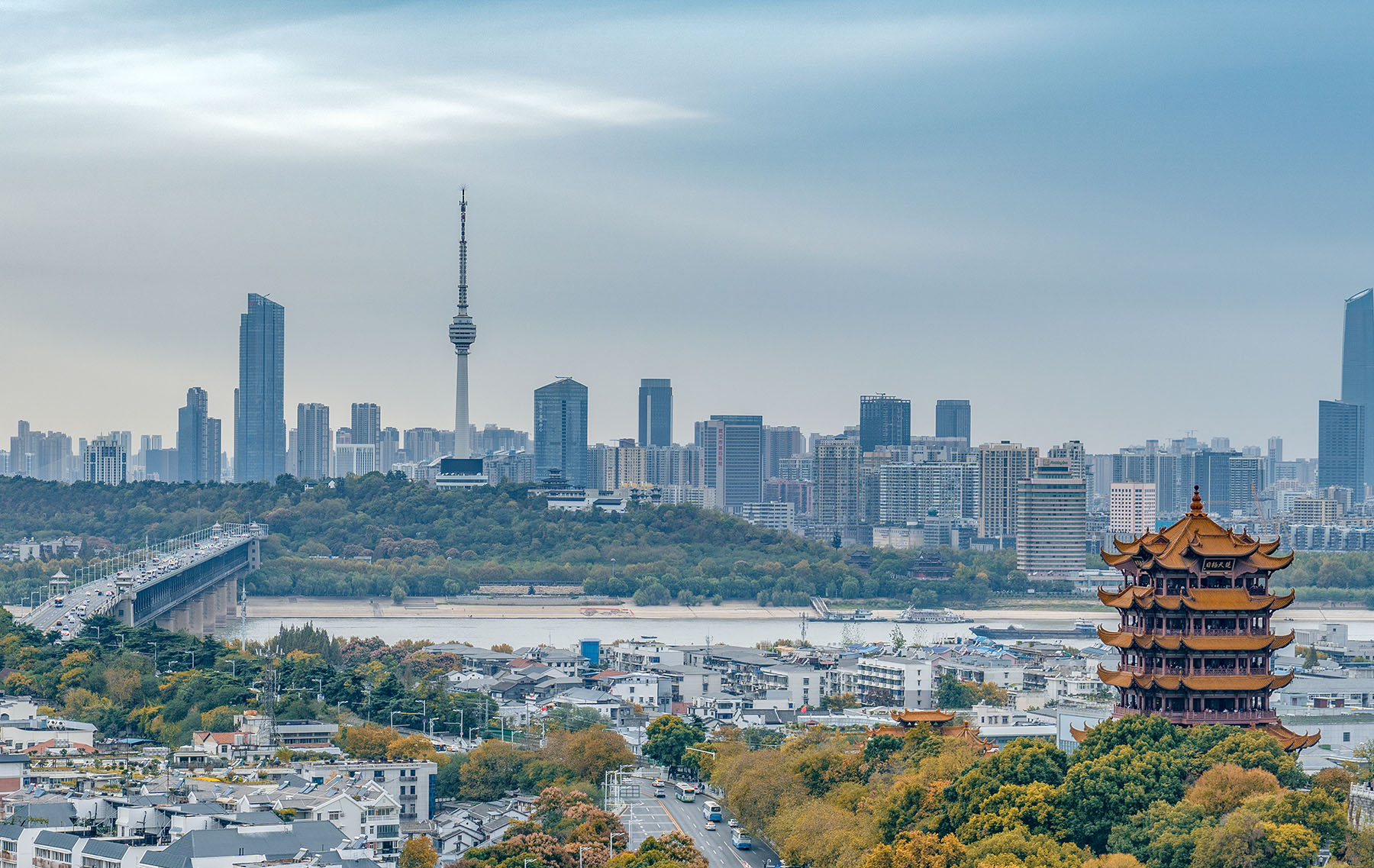
Upgraded in early 2026, the themed ferry route links some of Wuhan's most iconic historical sites — from the famed Yellow Crane Tower on the Wuchang bank to Qingchuan Pavilion on the Hanyang shore, where a two-story Ming-Dynasty (1368-1644) structure with red walls and double-eave roofs keeps watch over the water.
The route doesn't just cross the river, but also connects sightseeing with history and quietly reshapes how visitors experience the city.
The concept has proved popular. During the Spring Festival holiday in February, daily passenger numbers on the route exceeded 4,700 — nearly five times higher than the previous year.
The figure indicates roughly 15-20 full sailings in a single day, near the maximum operational capacity, according to the ferry operator.
For Fan, the attraction lies mostly in the river itself.
The Yangtze appears yellow-brown, carrying heavy sediment from western China. The Hanjiang River, narrower and calmer, looks greener. During flood season, the two currents flow side by side before fully blending together." Like a cocktail," Fan says with a grin.
Written in poetry
For centuries, Wuhan's identity has been inseparable from water.
The city sits at the intersection of the Yangtze and Hanjiang rivers and historically developed as three separate towns divided by waterways: Wuchang, Hankou and Hanyang. Together, they became modern Wuhan.
Here, water is geography, memory and psychology. At Yellow Crane Tower, tour guide Wu Yanan has explained this layered identity to countless visitors beneath the towering eaves for more than two years.
Originally constructed during the Three Kingdoms period (220-280), the tower began as a military watchtower. Over the centuries, however, it evolved into one of China's most celebrated literary landmarks, as generations of poets climbed its upper floors, overlooking the Yangtze.
"It has been destroyed and rebuilt many times," Wu says.
The original structure burned down repeatedly through war and fire. The current tower, completed in 1985, was reconstructed based on Qing Dynasty (1644-1911) architectural designs.
Wu has noticed a shift in visitors' interest from simply climbing its nine stories to its legacy of poetry and culture.
"When I first started, people would rush up, take a picture of the river, and rush down," she says. "Now they ask questions. They want to know about the poems, about the history of the reconstructions, about why this tower matters."
Wu has received a rising number of parents who bring their children specifically to recite poems.
The 2023 film Chang An, which prominently features Yellow Crane Tower, sparked a fresh wave of interest, with young visitors arriving armed with couplets memorized from the screen, she explains.
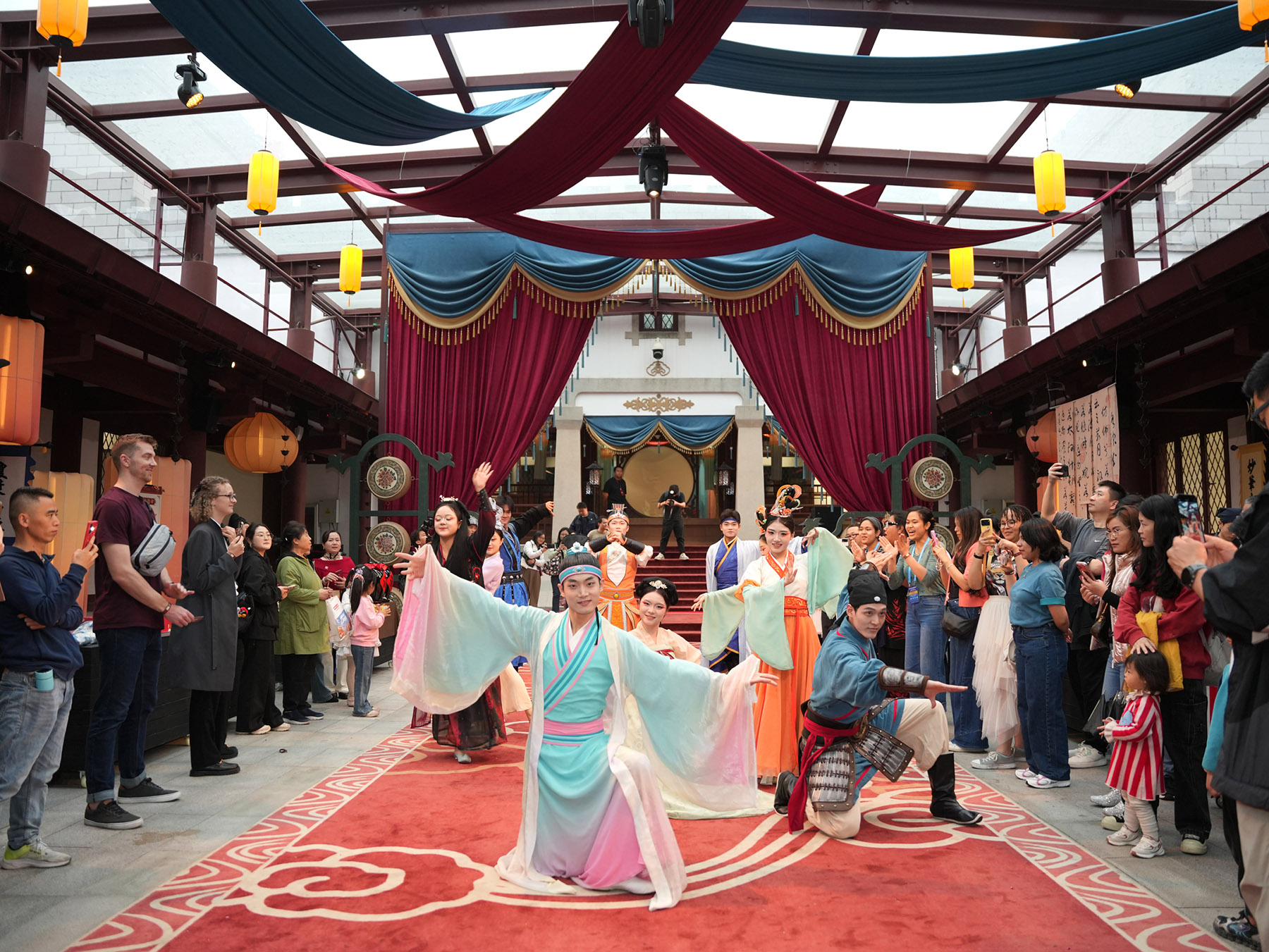
The tower has also adapted to a new generation of visitors. During major holidays, performers dressed in Tang Dynasty costumes staged interactive shows that drew large crowds.
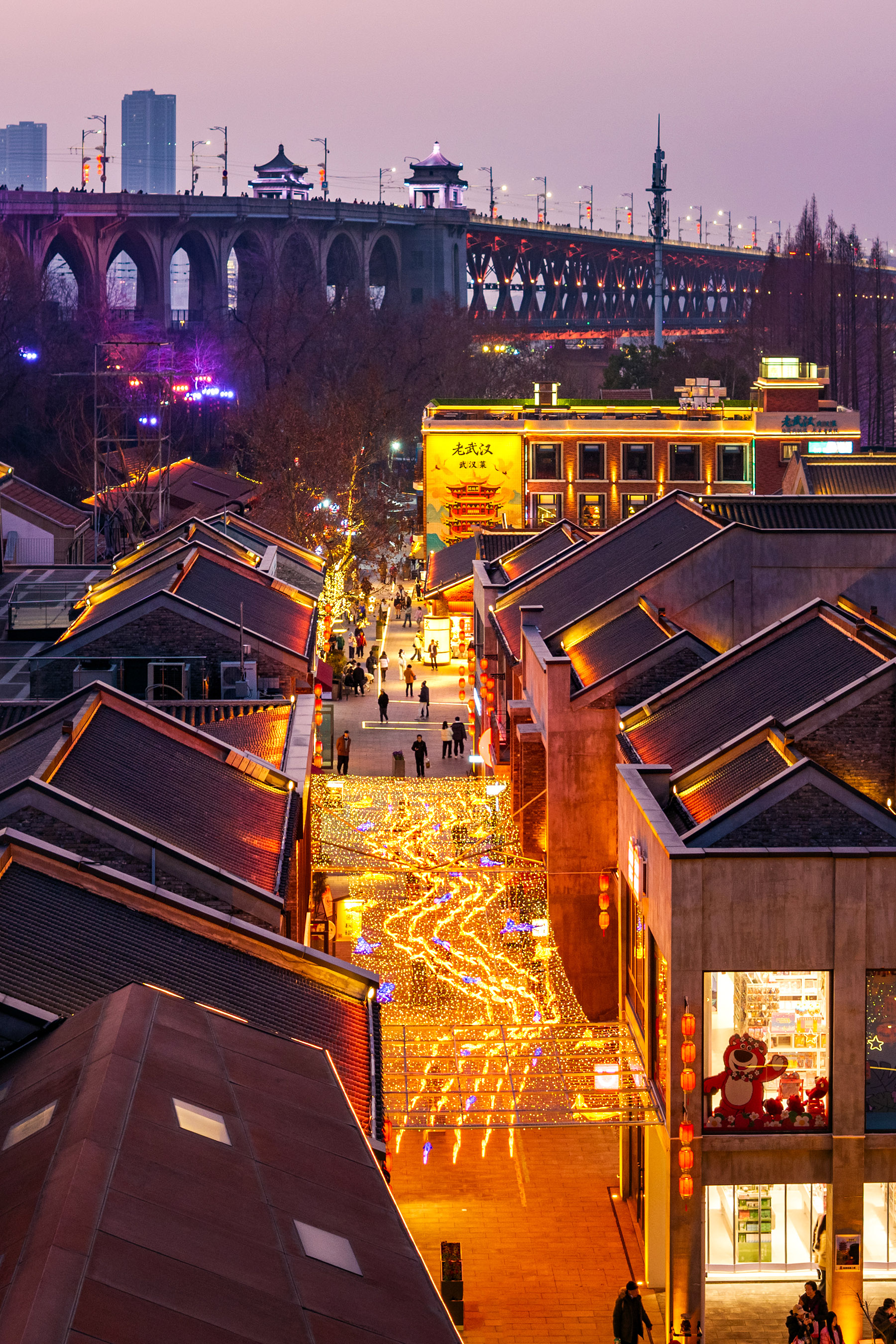
Similar efforts to turn heritage into lived experience can be found nearby in Doujiying, a renovated historical neighborhood less than 500 meters from Yellow Crane Tower.
Doujiying's most striking feature is that the Yellow Crane Tower never disappears from view. No matter where visitors stand inside the narrow lanes, the tower rises above the gray-tiled rooftops.
The uninterrupted view is the result of a carefully planned renovation that adjusted the height of several late-20th-century buildings to preserve sightlines toward the tower.
"One building used to block the view completely," says Xia Qi, who oversees operations in the neighborhood. "So we removed an entire floor and turned it into a viewing platform."
The project reflects a broader shift in Wuhan's urban philosophy.
For decades, Chinese cities often prioritized speed, scale and vertical expansion. In parts of Wuhan today, planners are attempting the reverse: reducing height, restoring historical texture, and allowing older cultural symbols to re-emerge within the modern skyline.
Doujiying itself dates back to the Song Dynasty (960-1279). During the late Qing Dynasty, it served as a military grain distribution area, giving the neighborhood its name. In the early 20th century, some of Hubei province's earliest photography studios and pharmacies appeared here.
Now the district mixes historical preservation with contemporary tourism: poetry-themed bookstores, old-time photography museums, teahouses and immersive cultural spaces occupy restored brick buildings. During the 2026 Spring Festival holiday, nearly 670,000 visits were recorded in the area, according to Xia.
Renovating and adapting
Across the river, on Tortoise Hill, another experiment in cultural reinvention is unfolding.
Zhiyin Hall, a newly renovated performance venue overlooking the confluence of the Yangtze and Hanjiang rivers, stages an immersive dinner theater production inspired by the Three Kingdoms period, the era of warfare and political intrigue that still occupies an enormous place in the Chinese imagination.
The building itself was originally constructed in 1999 as part of a larger "Three Kingdoms City" tourism complex. "When we took over operations, we kept almost everything structurally intact," says Liu Bin, the project manager. "We just adapted the interior and added performance functions."
He describes it as "micro-renovation". The production, A Banquet of Beauties from the Three Kingdoms, combines historical storytelling, dance and regional cuisine. Each course corresponds to a dramatic episode involving legendary female figures from the era.
The venue accommodates around 150 people daily and frequently sells out during weekends and holidays, Liu says.
Yet the site's most popular feature may be its second-floor observation deck that offers access for free. From there, visitors can see six bridges stretching across the rivers on clear days. The Yangtze flows outward in one direction, while the Hanjiang River curves inward from another. Ferries move slowly beneath the skyline.
The view reveals Wuhan's greatest advantage: not individual landmarks, but the relationship between them. Historically, many of the city's tourism resources operated independently — Yellow Crane Tower, Qingchuan Pavilion, the Yangtze light shows, river cruises, museums and historical neighborhoods.
Now officials are attempting to weave them into a single urban narrative centered on water, history and cultural continuity.
The strategy accelerated after 2022, when the city experienced a sharp rise in domestic tourism.
"For a long time, Wuhan was mainly considered a transportation hub," says Su Xing, deputy director of the Wuhan culture and tourism bureau. That perception, he says, has changed dramatically.
Compared with five years ago, the city's visitor numbers and tourism revenue have risen by more than 50 percent. International tourism has also rebounded sharply.
ALSO READ: A timeless journey through Wuhan
During cherry blossom season this year, local authorities report that Tortoise Hill Park received 10 times its previous average daily visitor volume.
The city's tourism campaigns increasingly emphasize experiential imagery rather than traditional sightseeing alone, as evidenced by offerings such as nighttime ferry rides, riverside concerts, historical reenactments, poetry recitals and seasonal flower-viewing.
Fan Yunlong has a simple way of explaining Wuhan.
"Hold out your right hand," he says." The thumb is the Hanjiang River. The four fingers are the Yangtze. Between them is the city."
For centuries, Wuhan's rivers made it one of China's great crossroads — a place people moved through on their way elsewhere.
Now the city is trying to turn those same waterways into reasons to stay.
Contact the writers at yangfeiyue@chinadaily.com.cn
