

Kuwait under attack amid conflicting signals from Washington and Tehran
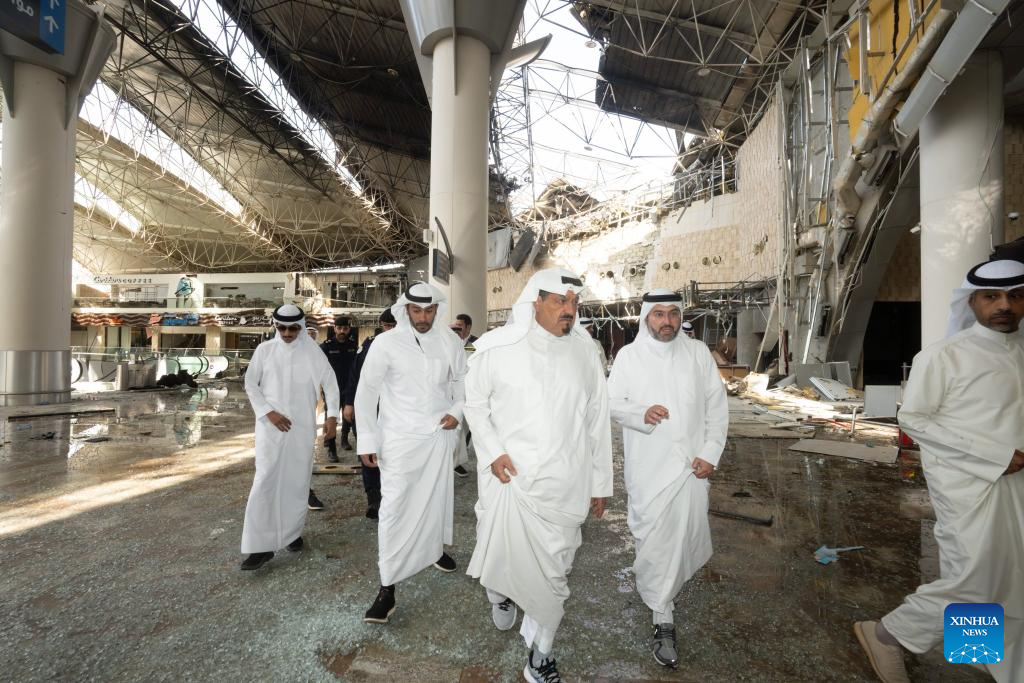
Fresh strikes and diplomatic friction have continued to strain a fragile truce between the United States and Iran, with Tehran confirming no tangible headway has been made in warending talks amid new hostilities.
In contrast to the downbeat Iranian remarks, US President Donald Trump voiced optimism again, telling reporters that "it could happen… over the weekend".
"The talks are going very well actually," he said of the latest bid to end the war, which began on Feb 28.
READ MORE: Trump says he would be open to meeting Iran's supreme leader
However, US lawmakers dealt a political blow to the Republican leader on Wednesday when the House of Representatives passed a resolution directing withdrawal from the war.
The resolution, adopted by a vote of 215 to 208, with four Republican lawmakers siding with Democrats, remains largely symbolic, as Trump retains veto power should the measure clear the Senate.
Iranian Foreign Minister Abbas Araghchi said lines of communication with the US were still open, but warned that any Israeli attack on Lebanon would trigger a "full-scale resumption" of the conflict.
"Any attack on Beirut will have grave consequences and will lead to a full-scale resumption of the war," he told Lebanon's Al Mayadeen TV on Wednesday, while highlighting the combat readiness of the armed forces.
Following a drone attack on Kuwait's international airport, authorities suspended air traffic and diverted arriving planes to other destinations, but later resumed Kuwait Airways flights. The airport, which only fully resumed services on Monday, has been repeatedly targeted throughout the conflict.
Iran's Islamic Revolutionary Guard Corps denied orchestrating the attack, saying it was "an error in the American Patriot systems, which landed on the terminal after failing to intercept Iranian missiles".
The IRGC also accused US troops of provoking escalation by targeting an Iranian tanker and Qeshm Island. The US military rejected the claims, stating that Iranian drones had deliberately targeted Kuwait's airport.
Iran's Supreme Leader Mojtaba Khamenei said in a message on Thursday that Iran has delivered a "decisive blow" to the US and Israel, warning that Tehran's adversaries are now attempting to foment internal divisions after suffering battlefield defeats.
The fresh escalation was one of the sternest tests yet of the April 8 truce that paused more than a month of war sparked by the US-Israeli bombing of Iran, and has largely held despite sporadic exchanges of fire.
Trump played down the renewed hostilities, saying that "in that part of the world, a ceasefire is when you're shooting in a more moderate manner".
Hassan Ahmadian, a professor at the University of Tehran, doubted whether a shaky deal could permanently end Israeli and US military aggression.
"That's why they are resorting to power to make their own guarantees," Ahmadian told Al Jazeera, adding that the Iranian leadership is attempting to show that it is both ready for diplomacy and further military confrontation if necessary.
"If we're attacked, we'll hurt you back — that's the main Iranian message," he said.
Situation in Lebanon
Meanwhile, the path toward a lasting ceasefire between Israel and Lebanese militant group Hezbollah remained unclear as hostilities continued, despite Israel and Lebanon having reached a ceasefire after two days of direct talks.
The two countries agreed to create "pilot zones" in which Lebanese armed forces "will take exclusive control of the territory", barring all nonstate armed actors, a joint statement said. Further talks were planned for the week of June 22 to reach a "comprehensive" agreement.
ALSO READ: Fresh strikes stoke Gulf jitters
Notably, Trump acknowledged having called Israeli Prime Minister Benjamin Netanyahu "crazy" during a reportedly expletive-filled call, saying he was "a little bit perturbed" that Israel's fighting with Hezbollah was hampering talks with Iran.
Contact the writers at cuihaipei@chinadaily.com.cn
