

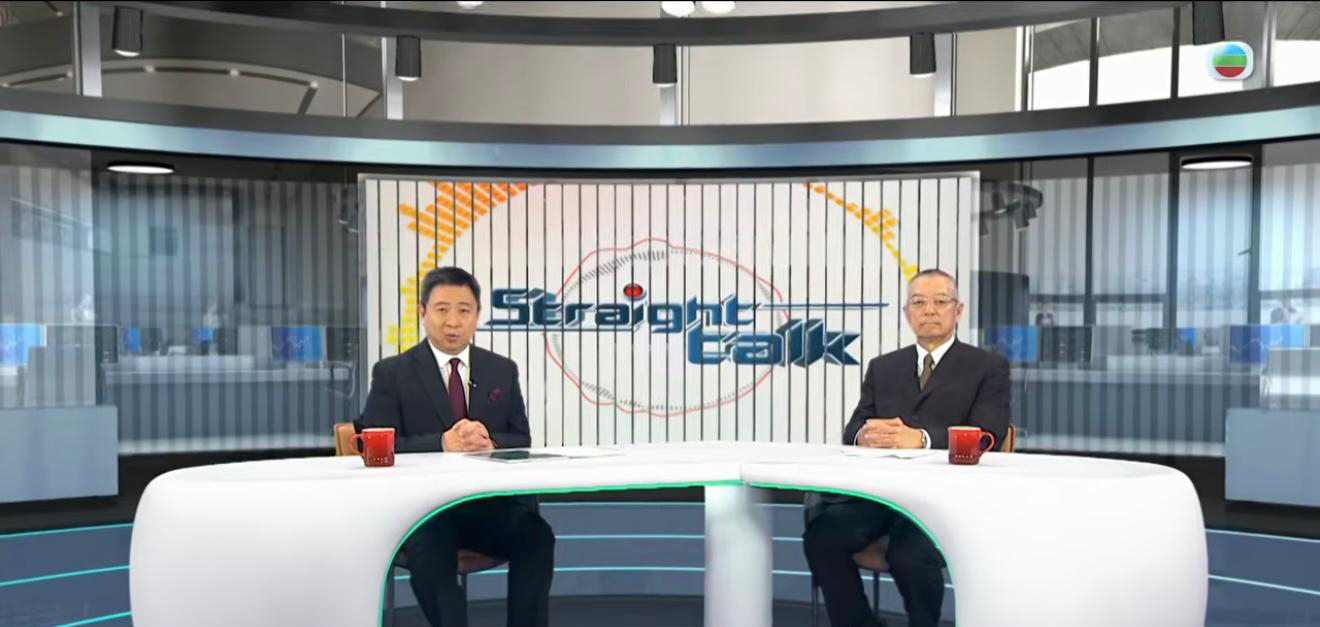
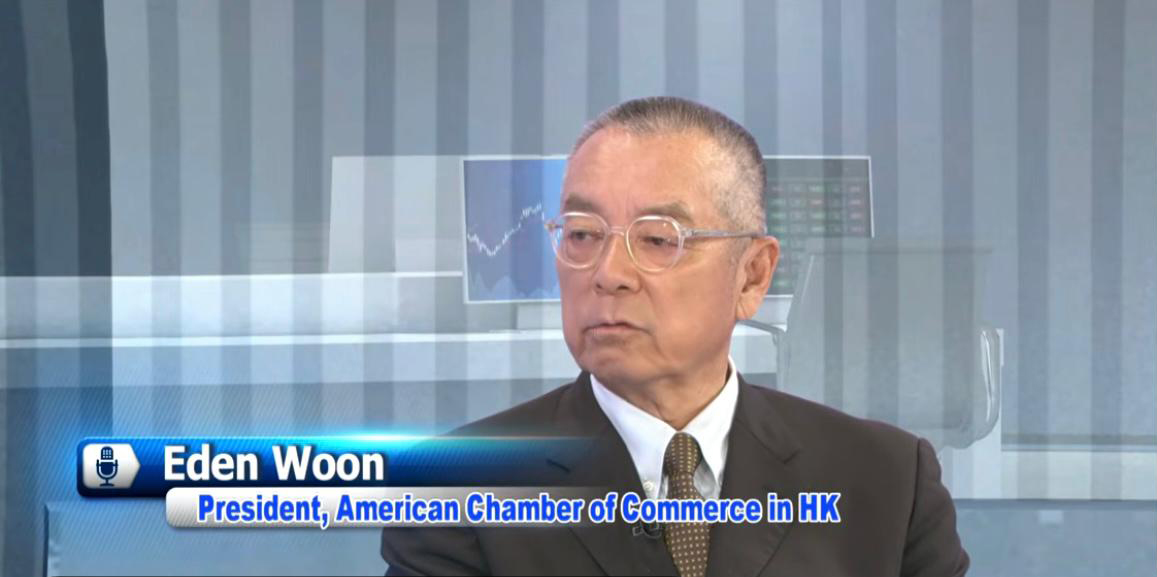
On Straight Talk this week, Eden Woon, president of the American Chamber of Commerce in Hong Kong, is here to talk about US President Trump’s visit to Beijing and its significance to businesses here.
Check out the full transcript of TVB’s Straight Talk host Eugene Chan’s interview with Eden Woon:
Chan: Welcome to Straight Talk. I'm Eugene Chan. With us this evening is Eden Woon, president of the American Chamber of Commerce in Hong Kong. He is an experienced business and academic leader and former military officer. His previous appointments include being the vice president of Starbucks in China, the CEO of the Hong Kong General Chamber of Commerce. Before that, he served in the US Air Force, reaching the rank of colonel, and has acted as China policy advisor to the US Secretary of Defense. Eden, welcome to Straight Talk.
Woon: Yes. How are you?
Chan: Very well, thanks.
Expectations and outcome
Chan: Finally, we have you on the show. I think this is perfect timing to invite you to talk about what happened last week in Beijing, where President Trump visited China. I think he must be the first US leader in nearly a decade. Really, at a time of so-called tension over tariffs, technology and other issues being sort of unresolved, how significant was this summit for the international business community, for Hong Kong, in Beijing?
Woon: Well, it's pretty significant because, you know, there are a lot of summits, although this one has not taken place for 10 years. But basically, the two countries are in a period of deep mistrust and conflicts in many different areas. And so for them to meet at this time is really necessary for both countries and also for the world and for the business community, as you said.
Chan: So, how do you think it has sort of gone overall?
Woon: Well, I think they each entered the summit with expectations. Some of them are the same, and many of them, of course, are different. And I think that you could look at the expectations in two levels. One is a more macro level, and the other one is a more micro level. And on the macro level, I think that China's interest is really mutual respect and mutual recognition of the status in the world. And then, of course, a constructive strategic stability relationship, which President Xi Jinping talked about. And so he did, in his opening remarks, mention that, and that's what he hoped for the two relations to be.
And I think on the other side, actually, President Trump, you know, based on his statements this time and some other statements in the past, he also has the same view. In other words, he feels that many issues cannot be resolved in the world without working with China. That China is very strong, it's a huge player in the world scene, and it's not good to have China on the side in resolving a lot of the, as you know, very, very technical problems and geopolitical problems around the world. And so that's the macro level. On the micro level, of course, China hopes that the tariff situation could be improved, and it hopes that technology exports could be loosened, and it hopes that there will be a possibility of Chinese investments going into the United States.
On the US side, I think that they are certainly interested in having relaxation on the export control of the critical minerals, but they also want, they're interested in the Chinese investment, although right now it's almost down to nothing. And then in addition, they hope that China could play a role in Iran because the Iran conflict is really a nagging issue that is lasting much longer than the US expected. So, these are the micro-wishes, and of course, you know, as usual, buying American products …
Chan: Yes.
Woon: … and including agriculture, airplanes, et cetera. Those are the things that they each brought to the meeting.
Chan: Right, thank you for sort of a concise summary from the macro and micro level. Eden, you have been a person with both cultures. I mean, you've been working in the US, working in Hong Kong, you've even been working with the advisor to the US defense.
How would you suggest, from your point of view, how would both sort of super nations right now, how should we sort of coexist and how should we sort of work together for the common good? Have you seen that sort of signal coming out from this summit in Beijing?
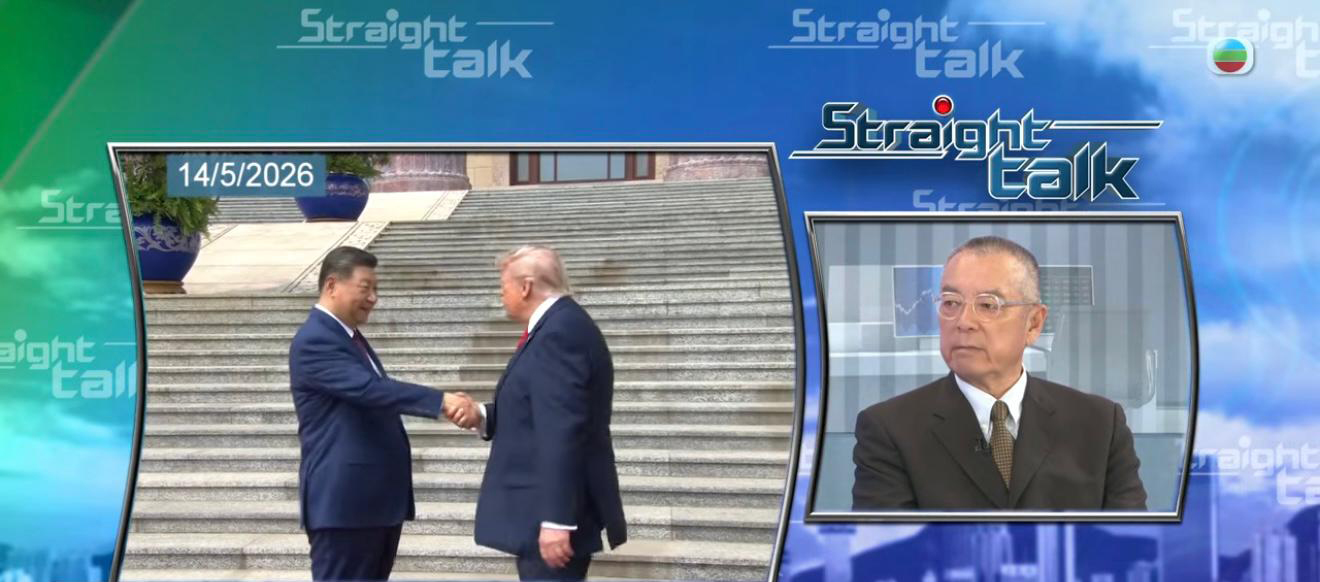
Woon: Well, you would hope that when the two leaders sort of agree on what the strategic vision ought to be, then the whole government of each side will try to implement the policies. Now, it doesn't mean that China doesn't think that the US is problematic and the US thinks that China is problematic. That is not going to go away for a long, long time. But I think that the mutual distrust and also the feelings about both countries can be improved when the leaders are speaking of working together more.
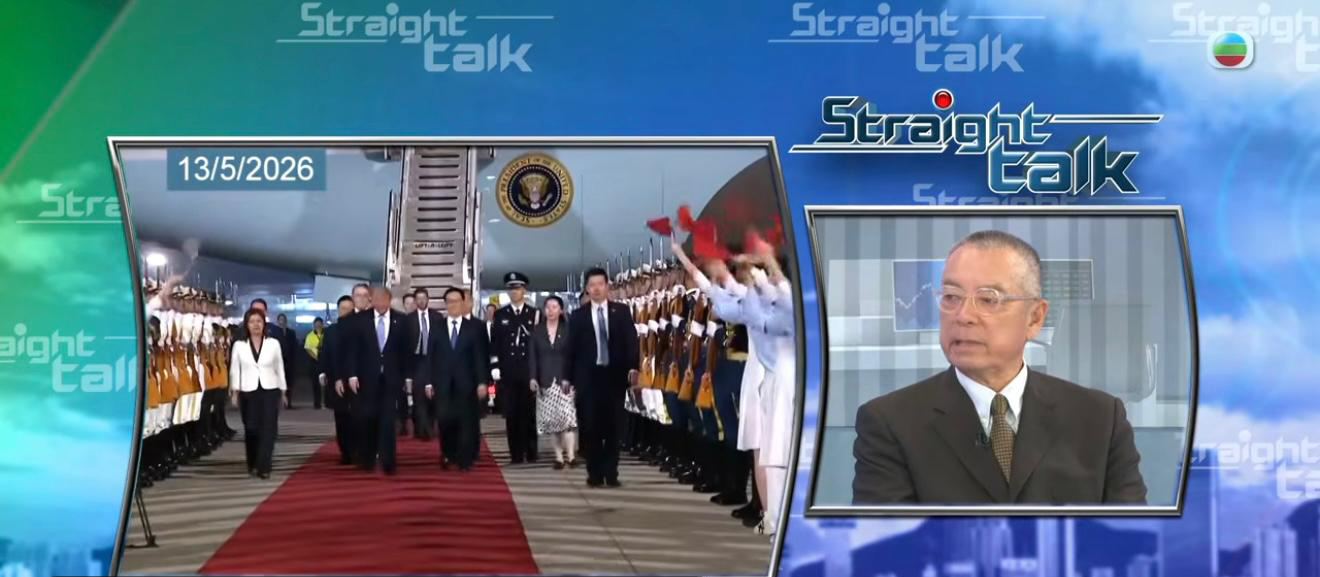
Chan: Right, but I think as a viewer looking at the television or reading newspapers, we see that a lot of goodwill, a lot of effort has been put into the meeting. You see that the US delegates are having some of the ladies wearing Chinese Cheongsam and also on the Chinese side they play even YMCA for President Trump. That's something, would you say, is a kind of goodwill, a good gesture to start off the meeting?
Woon: Well, I think that on the macro level that I mentioned earlier, this summit was a success. I think that China would feel that it has achieved its goal …
Chan: Right.
Woon: … in stating its version of what the relationship should be. And I think that by and large, they see Trump agreeing with this. On the micro level, however, not much has been revealed, frankly. And people who focus on the micro level would say that this summit really didn't accomplish anything. And I think that's a mistake to think that way. Because first of all, some of the micro requests or demands or needs could be satisfied in the coming days and weeks and months.
Chan: Right.
Woon: We already know that China will buy 200 Boeing aircraft and maybe up to 750. And also, I think soybean purchase is probably going to come. And then on the US side, you know, they formed a council for trade and another council for investments. And I think that the fact that these two councils are established will facilitate the discussion on tariffs, the discussion on the critical minerals, and the discussion on restoring Chinese investments into the US.
So we shall see, but those are not announced at this point, except for the councils, of course, they were announced and the Boeing. But there are other things not announced, and I think that we'll see what happens.
Chan: But Eden, I'm going to quote what President Xi spoke about on how to build this relationship. He said, based on a positive, sound, constant, and enduring stability. Does that language … I mean, certainly there's a message to the world. What does that mean in practical terms?
Woon: Well, I think that that's the issue. I think on this level, there seems to be an agreement. But then what happens is that, you know, tactically, on the lower level, meaning the specific levels, then there's great difficulty in, for example, the Iran issue I mentioned, to want China to be really proactive in working with Iran is probably not easy, because that's not the Chinese way in foreign policy to be really proactively trying to mediate. But they can certainly have a lot of influence, Iran, and so we shall see.
Chan: Yeah.
Woon: And the other one, of course, as you know, has been here for decades, is the Taiwan question. And President Xi made it a very clear and forceful statement regarding Taiwan. And so, President Trump knows, and then he didn't really directly address that. But that issue is, of course, still dangling. But I think that if you have the overall sentiment being aligned, that makes solving these problems easier than before.
Chan: Yeah, when you mentioned the Taiwan issue, I kind of remember President Trump saying that he's not keen to send his troops over 9,000 miles for any military conflict, and he doesn't want Taiwan to be independent. I think that's a very strong supporting statement to President Xi's wishes. Would you say that?
Woon: Well, I say that this is going to be a lingering issue because it also involves other people in the US government …
Chan: True.
Woon: … including Congress.
Chan: True.
Woon: So this is not something that the president himself can decide. So, that's why this is very, very complicated.
Chan: Right. And also, one more statement that President Xi emphasized on this mutually beneficial nature of these economic ties is that one’s success is an opportunity for the other. I'm quoting things that he said. What was Trump's response to this? Do you think Trump also welcomed this direction as well?
Woon: Well, I think so. You know, Trump is famous for deal-making. And most deals, for it to be successful, is win-win, not just one-sided wins. And so whatever agreement comes out, hopefully there will be gains on both sides. For example, on technology, the restrictions have hurt China, but on the other hand, it has propelled China into a very, very focused effort to develop its own chips, et cetera.
But on the other hand, restricting means that you can't sell to China, and that's why you have NVIDIA, for example, so eager, because they're gaining a lot of revenue from China. This is what I mean, you've got to work out a solution that could be win-win.
Chan: Right. Eden, let's go for a short break now. We'll be back for more Straight Talk.
Chan: Welcome back to Straight Talk. We are talking to Eden Woon, president of the American Chamber of Commerce in Hong Kong, about President Trump's visit to Beijing and its significance to the businesses here in Hong Kong. So, Eden, thank you very much for sort of analyzing both from a macro and micro level in terms of expectations and what you see and the road sort of forward. You're seeing that we have to iron out a lot of differences in the months to come. I think you have said that very clearly.
Business issues
Chan: Since you mentioned meeting with the UN's business leaders, I think President Xi met Qualcomm and Nvidia. He said that China's door will only open wider, especially with our country beginning with its 15th Five-Year-Plan. How do you think the American investors will sort of interpret that message?
Woon: What President Trump has put as one of his agenda items is to have the market access be wider open in China. And President Xi is saying that, hey, don't worry, we're going to open up the market more. But let's see what happens. And this is where the Trade Council and the Investment Council will help out. Because if there's some hesitancy, then it could be discussed. Whether it's resolved or not, it's not sure, but at least it could be discussed in such a forum.
What’s missing
Chan: Right. Eden, just now you mentioned that from your view, the summit is a success because it definitely gave the two leaders sort of scope to have a lot of strong display of goodwill and positive engagement at the summit. If I have to be on the negative side, is there anything that the business leaders would like to see that hasn't materialized? If I have to ask that question, what would you say?
Woon: Well, if you look at it from the micro point of view and also individual demands, there was really no agreement that came out. There was not any joint statement. There was no joint communique. There were no deals that were signed on the spot. Other than Boeing, it was just a promise of more soybean purchases, you know, and understanding that these are issues that need to be resolved.
And there were probably, I'm sure, in the private meetings. There were a lot of discussions on whether it be critical minerals or technology export, et cetera. But nothing was really publicized. On the geopolitical issue, yes, President Trump said something about Taiwan, and I think that China has made its point about what the red line is on Taiwan.
But whether or not the behavior or anything will happen, including a big arms sales package that is now waiting to be approved by the White House, we shall see. On purchases and deals, et cetera, I think they will flow, but it's not going to be necessarily immediate.
And if you're looking at it from an immediate outcome point of view, you're probably disappointed. But we'll see in the, like I said, in the coming days and weeks and months whether some of those will be signed and actually things will happen on a concrete level.
Implications for HK
Chan: Right. Eden, let's bring the whole picture now back to Hong Kong. I mean, you are the President of the American Chamber of Commerce, and I know that you have recently conducted a survey on your members who are majority or predominantly business corporates in Hong Kong, and it actually shows a rising optimism about Hong Kong's outlook despite all these geopolitical tensions.
Actually, at the highest level in two years in terms of all that. So what is driving this renewed confidence in Hong Kong, do you think, from your members?
Woon: Well, we did the business sentiment survey in December.
Chan: Right.
Woon: So, it's like five, six months ago. And the feeling at that time is that Hong Kong is still a great place to do business. And frankly, the companies that want to leave Hong Kong have already left. And so it's natural that the ones that chose to stay, the ones that are left behind, are more positive about Hong Kong.
And so I think for many different reasons, the geographical position, the other characteristics of Hong Kong that is different from the Chinese mainland, and also the fact that it does have an international character DNA. And also, it's a big number three, I think, international finance center.
Chan: Right.
Woon: So, all those make for a very optimistic view on Hong Kong. However, I have to add that in the survey, and that has been true for the last three years, geopolitical tension is the number one worry of these businesses. They worry about US-China relations. They worry about the tension and the policies that come from each side. And that is the number one worry.
Chan: Right.
Woon: And so this particular visit then, since it has improved the atmosphere, and there's a hope among the members then, that this will spill over to an easier conducting of business here.
Chan: Right, Eden. And also I've noted the recent US legislation targeting Hong Kong's special status, which sort of takes away Hong Kong's unique exemption from the US investment scrutiny. So, how are you advising your members to sort of navigate that? I mean, do you think that will be coming back? Or if it doesn't, how should they do business in Hong Kong?
Woon: Well, I think the businesses now are pretty well adapted to the situation. They hope that, another thing that is a big worry, they hope that Hong Kong's overseas perception improves. That's another big worry that they have in the survey. And that's why we always work with the Hong Kong SAR government to tell them that the international character really needs to be maintained and also promoted.
Chan: Right.
Woon: So, those are the things that the members feel, but still, I think that they're here hunkered down and they know about the (Guangdong-Hong Kong-Macao) Greater Bay Area.
Chan: Yes.
Woon: They know that the Chinese economy at some time is going to rebound. And they know that this is a great access point to both North and Southeast Asia and also to West Asia. So, that's what makes them want to stay here.
Chan: Right, Eden, since you mentioned the people concerned about Hong Kong being sort of international perceptions that Hong Kong becomes less differentiated from mainland cities. There are some people who say that. But we're in Hong Kong, we know that it's not 100 percent true. How would you suggest, how would you advise the government to make sure this perception doesn't go any further?
Woon: Well, I think the government is doing a pretty good job in welcoming international chambers.
Chan: Right.
Woon: You know, there are obviously going to be a few who are hesitant, especially when it comes to the American, when you have the word American in there. But I think that after this meeting, you see that the country's leader is really wanting to have a more open, more proactive, more stable and welcoming relationship with the US. Hopefully the Hong Kong SAR government follows through.
Chan: Right.
Woon: But the general feeling is that this place still has tremendous value and it needs to really continue on that road.
Chan: President, I also read some very positive news from a survey saying that 94 percent of respondents remain very confident in Hong Kong's rule of law, something that we are very proud of. And I'm sure that will be a very good sort of sign for so-called predictability and certainty for doing business here. What do you think of that as well?
Woon: Well, doing business is now going on, according to the members, in a normal way. And so, you know, obviously that has to be watched all the time. But so far, according to the members, they seem to feel that the way business is conducted here can be fairly stable.
Chan: Right. So I'm going to ask you the last question. We know that, I think we both agree, that President Trump's Beijing visit has been successful in sort of stabilizing US-China relations and especially tensions. So, what opportunities do you see for Hong Kong SAR now, being sort of we are part of China, but we have “one country two systems.” How can we sort of … is there anything more that we should do to continue being very relevant in this business world from your point of view?
Woon: Well, Hong Kong SAR's competitiveness really derives from both being part of China and also being an international hub. And the international hub aspect has been under pressure because of the geopolitics. So, with the improvement of US-China relations and also the geopolitical tension lessened, this is bound to be good news for the businesses.
However, I want to mention that the road ahead is not easy. There are many in each government, I'm sure, who are very suspicious of how this can go forward. And so, we're going to have to see in the year, a couple of years ahead, many, many obstacles. But hopefully with the two leaders agreeing, aligning on the general vision, then these obstacles can be overcome one by one.
Chan: I'm afraid we have to leave it there. And thank you very much, Eden, for your wisdom. American companies aren't walking away from Hong Kong. Yes, challenges remain, but when the world's two largest economies keep talking, Hong Kong, with its rule of law, its openness and its unique role, stays in the game.
Have a good evening and see you next week.
