

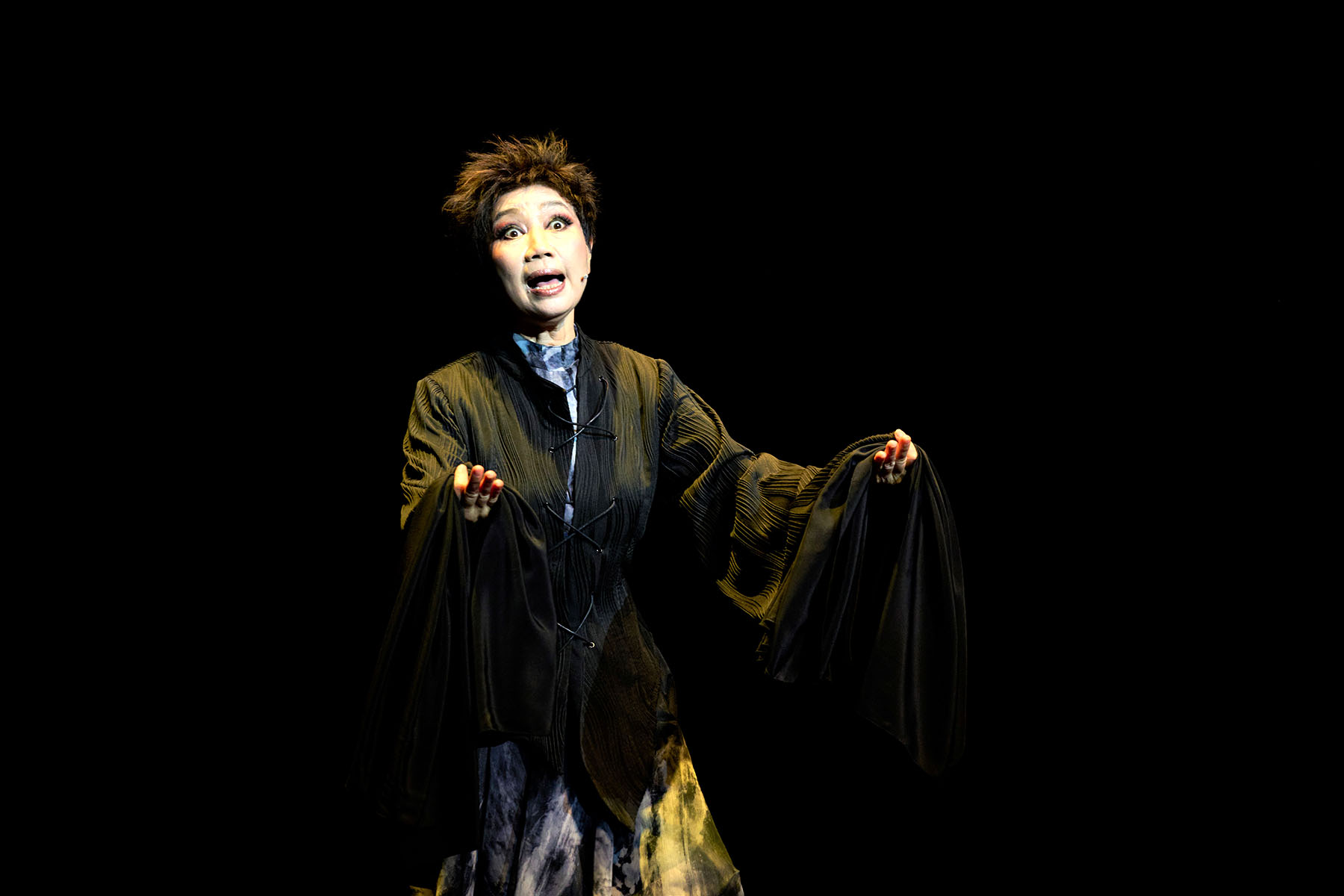
Staged at the Hong Kong Cultural Centre in April, Lady Macbeth ~ Poetry brought together three iconic female artists. Poet Zhai Yongming, Sichuan Opera artist Tian Mansha — a two-time recipient of the China Theatre Plum Blossom Award, considered China’s highest theatrical honor — and guqin player Wu Na joined forces to perform in an art-and-technology theater production based on one of Shakespeare’s most noteworthy female characters, co-directed by Mathias Woo Yan-wai and Tian, and produced by Zuni Icosahedron.
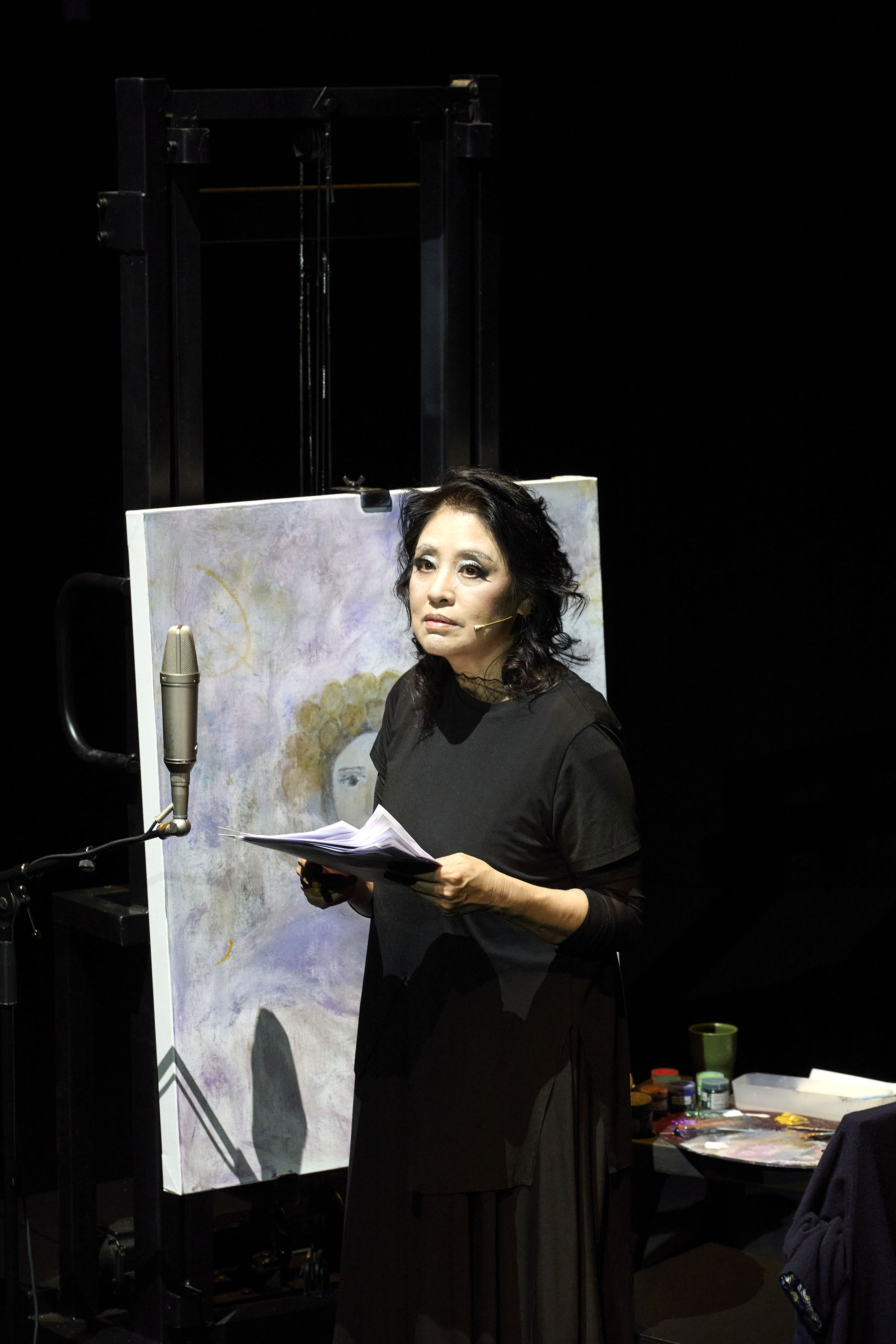
The production revisits Zuni’s 2004 Sichuan Opera-style staging of the story of Lady Macbeth, with Tian in the lead role. The performance had prompted Zhai to write Lady Macbeth — To Tian Mansha, a poem she recites while making a painting on stage. Her rendition of Who is Knocking at the Door is operatic in style, while Wu creates knocking sounds on her guqin. In Chinese culture, hearing unexpected knocks on the door is believed to be a sign of a guilty conscience sounding a note of warning, as indeed is the case in Shakespeare’s Macbeth.
READ MORE: Sweet Bard renew thy force
Tian’s vocalizations and movements — especially the way she wields the 1.6-meter-long water sleeves to suggest unbridled desire — adhere to the traditional Sichuan Opera mode, and yet her performance is not limited to the traditional generic framework.
The first time the murderous thoughts arise in her character’s mind, we also see fear in her eyes — a subtle transformation that is in line with realistic acting.
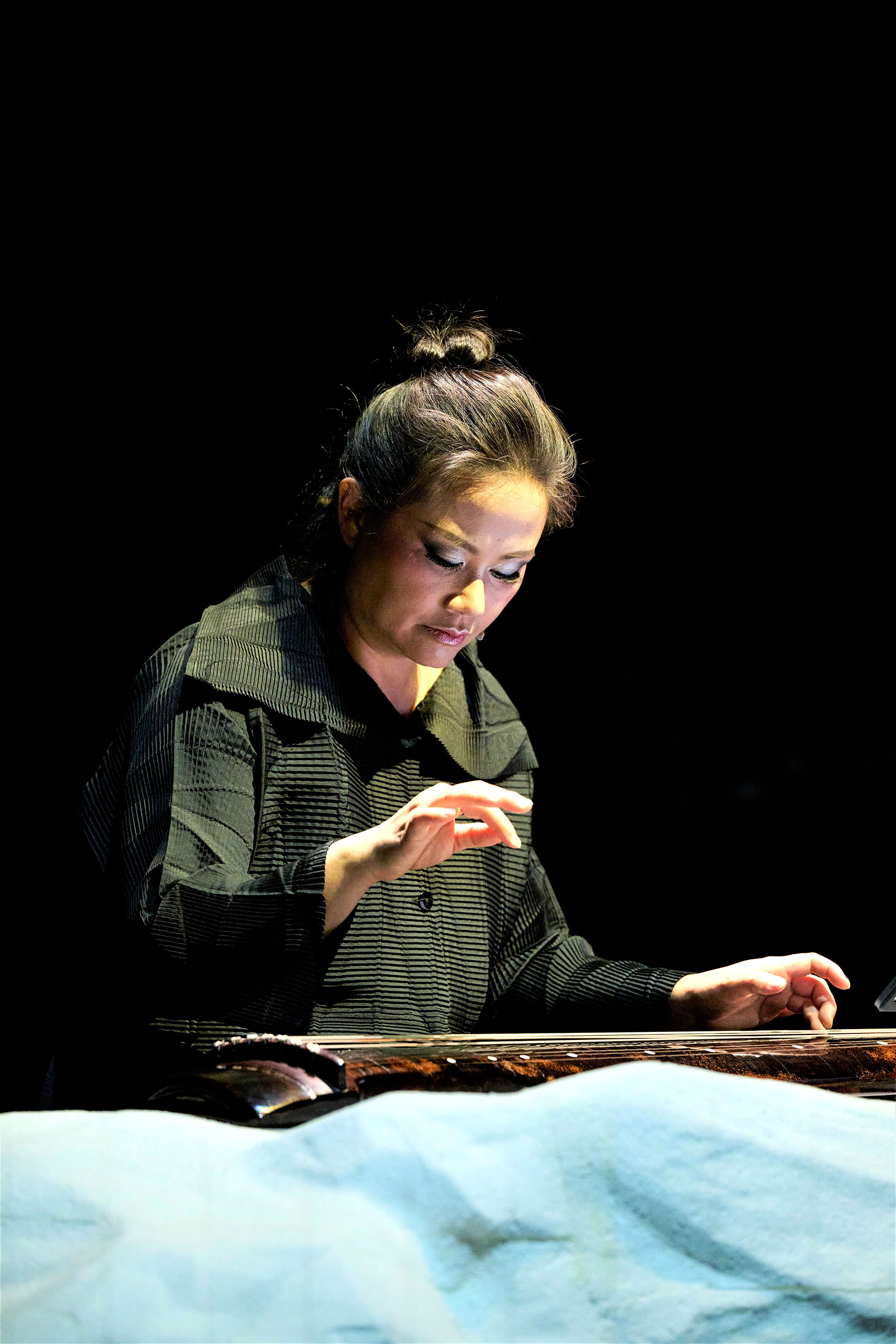
Tian says that it took her four years of rigorous research and honing her craft to be able to achieve the marriage of traditional and contemporary elements that marked the 2004 production, and has become the hallmark of her style today. Having trained in the classical Sichuan Opera tradition, “the process made me realize that art has infinite possibilities”.
Zhai says that when a group of female artists come together, they usually create a supportive environment where collaborations can thrive. “Female artists are becoming more confident about expressing themselves with directness and authenticity,” she says.
Wu points out that Tian’s interpretation of the character of Lady Macbeth is profoundly empathetic, as it invites audience members to consider that faced with similar circumstances, others might not have been able to navigate the landscape of ambition and power with better moral clarity or success.
Essential technology
The application of technology in theater can help connect tradition with present-day life, make Shakespeare more relatable and engaging — especially for younger audiences accustomed to digital experiences.
Woo, who is also the artistic director of Zuni Icosahedron, contends that incorporating technology into traditional Chinese opera is essential rather than optional. He adds that innovation is key when it comes to retaining the appeal of traditional forms of art.
ALSO READ: Boldness be my friend
Woo says that nowadays, the master exponents of Chinese opera are open-minded and enthusiastic about embracing technology and exploring new ideas. He adds that Hong Kong, with its abundant resources and expertise in both technology and theater, is ideally positioned to lead the revolution in making Chinese traditional art forms more relevant to the present-day audience.
Contact the writer at irismuk@chinadailyhk.com
