

Lebanon says Hezbollah, Israel agree on partial ceasefire as stalemate persists
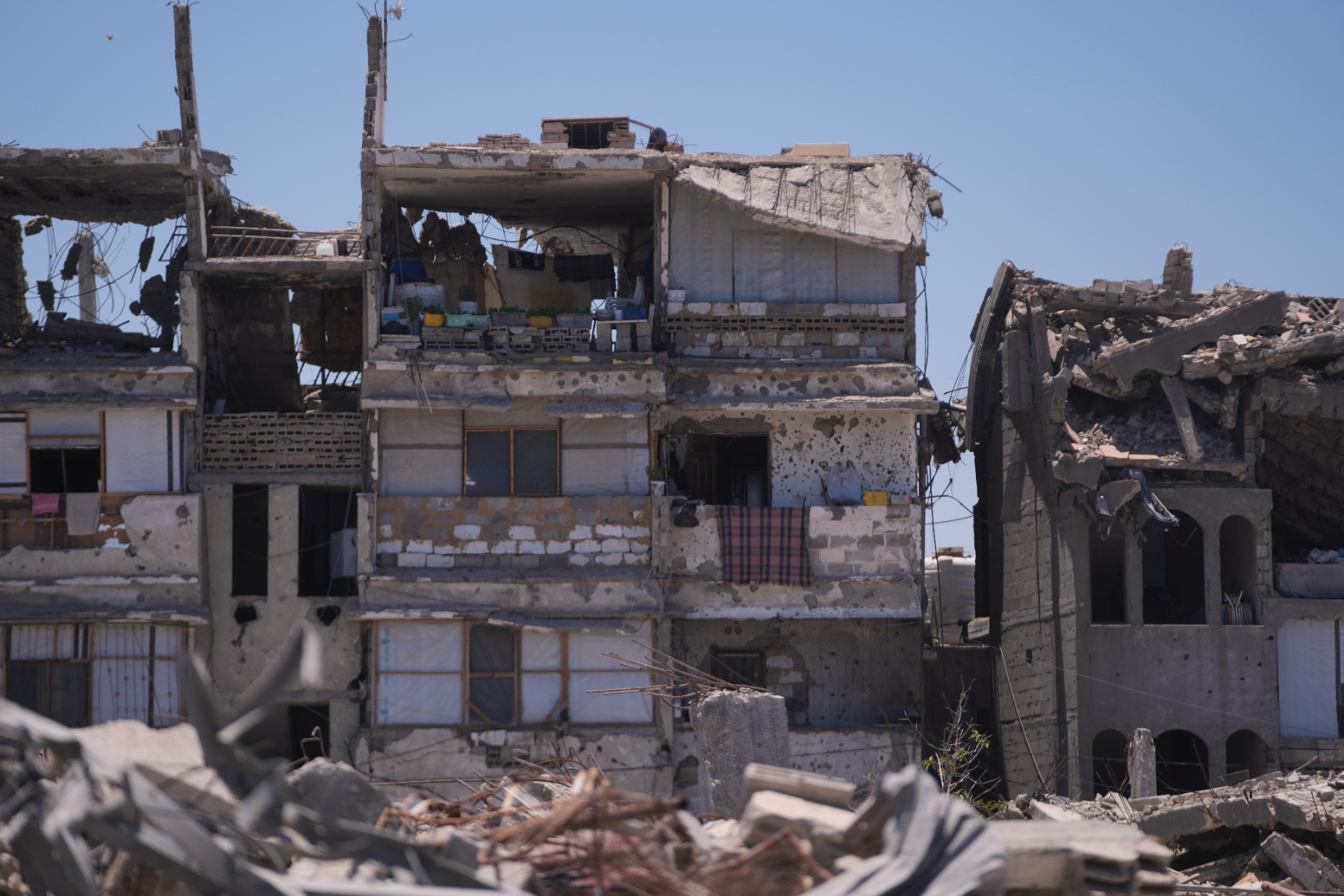
Lebanon has announced a partial ceasefire between Hezbollah and Israel, marking a limited de-escalation in a conflict that has killed thousands. Yet, fighting persists, and the flare-up has complicated the wider standoff between the United States and Iran, whose peace negotiations have remained stalled for weeks.
Hostilities in southern Lebanon, which started in March, continued to rage on Tuesday. Lebanon's National News Agency reported Israeli airstrikes in multiple locations. The Israel Defense Forces also confirmed it had intercepted two projectiles launched from Lebanon into northern Israel.
According to Lebanon's embassy in Washington, Hezbollah has accepted a US-proposed "mutual cessation of hostilities", demanding Israel suspend all strikes targeting Beirut.
READ MORE: Hamas says ready to hand over governance in Gaza
US President Donald Trump, who first unveiled the tentative truce, said Hezbollah had pledged via intermediaries to stop attacking Israel. No sitting US president has ever held direct or mediated talks with Hezbollah, as Washington lists the group as a designated terrorist organization.
He said Israeli Prime Minister Benjamin Netanyahu had agreed to pull back troops poised to attack Beirut. But Netanyahu later backtracked, vowing Israel would resume military operations if Hezbollah failed to halt cross-border assaults.
Israeli National Security Minister Itamar Ben-Gvir also publicly pressed Netanyahu to resist US pressure over the ceasefire in Lebanon. "Time to say no to Trump," he said on X.
At an emergency United Nations Security Council meeting on Monday, all council members except the US urged Israel to withdraw troops from southern Lebanon and avert further escalation, The New York Times reported. A spokesperson for UN Secretary-General Antonio Guterres said, "We are deeply alarmed by the escalation in military activities across southern Lebanon and beyond."
The Israel-Hezbollah conflict erupted on March 2 as a spillover from the broader US-Iran conflict. Iran has demanded an end to Israeli military assaults in Lebanon as a prerequisite for any comprehensive peace accord, while Washington insists the two conflicts should be treated separately.
Lebanon's Ministry of Public Health confirmed Israeli strikes have left 3,433 dead and 10,395 wounded nationwide. Amid the mounting casualties, Iran's Parliament Speaker Mohammad Bagher Ghalibaf warned that continued Israeli "aggression against Lebanon" would prompt Tehran to suspend negotiations with the US and escalate into a direct confrontation.
Iran's Tasnim News Agency reported on Monday that Tehran was putting indirect US peace talks on hold and might end a ceasefire that has largely held since early April, citing Israeli operations in Lebanon.
However, Trump said late on Monday that bilateral negotiations with Iran were advancing at a "rapid pace", predicting a formal accord to prolong the truce and reopen the Strait of Hormuz would be clinched "over the next week".
Strikes condemned
In Washington, US Congresswoman Ilhan Omar condemned Israel's actions in Lebanon and called for an immediate end to US military aid to Israel. "The lesson Israel has learned, time and again, is that it can commit genocide and other atrocities with near-total impunity. Now it's exporting the Gaza playbook to Lebanon," she said in a post on X.
Since mid-March, Trump has repeatedly claimed he was close to finalizing a peace deal without delivering on the pledge. Even with the tentative Lebanese ceasefire in place, Iran and the US have traded tit-for-tat strikes multiple times in the past seven days.
ALSO READ: Iran says it fires missile at ship linked to US, Israel
Meanwhile, Esmaeil Qaani, head of the Quds Force of the Islamic Revolutionary Guard Corps, warned Tehran might extend its Strait of Hormuz blockade to the Bab el-Mandeb Strait, another vital maritime choke point at the Red Sea entrance, Tasnim reported.
Crude oil futures clung to multimonth highs on Tuesday, with US WTI crude hovering around $92 a barrel and global Brent benchmark near $95 per barrel.
"While markets had hoped to shake off uncertainty on the back of prospective peace talks, oil fundamentals remain unchanged as of this morning," Priyanka Sachdeva, senior market analyst at Phillip Nova, told Al Jazeera.
Contact the writers at cuihaipei@chinadaily.com.cn
