

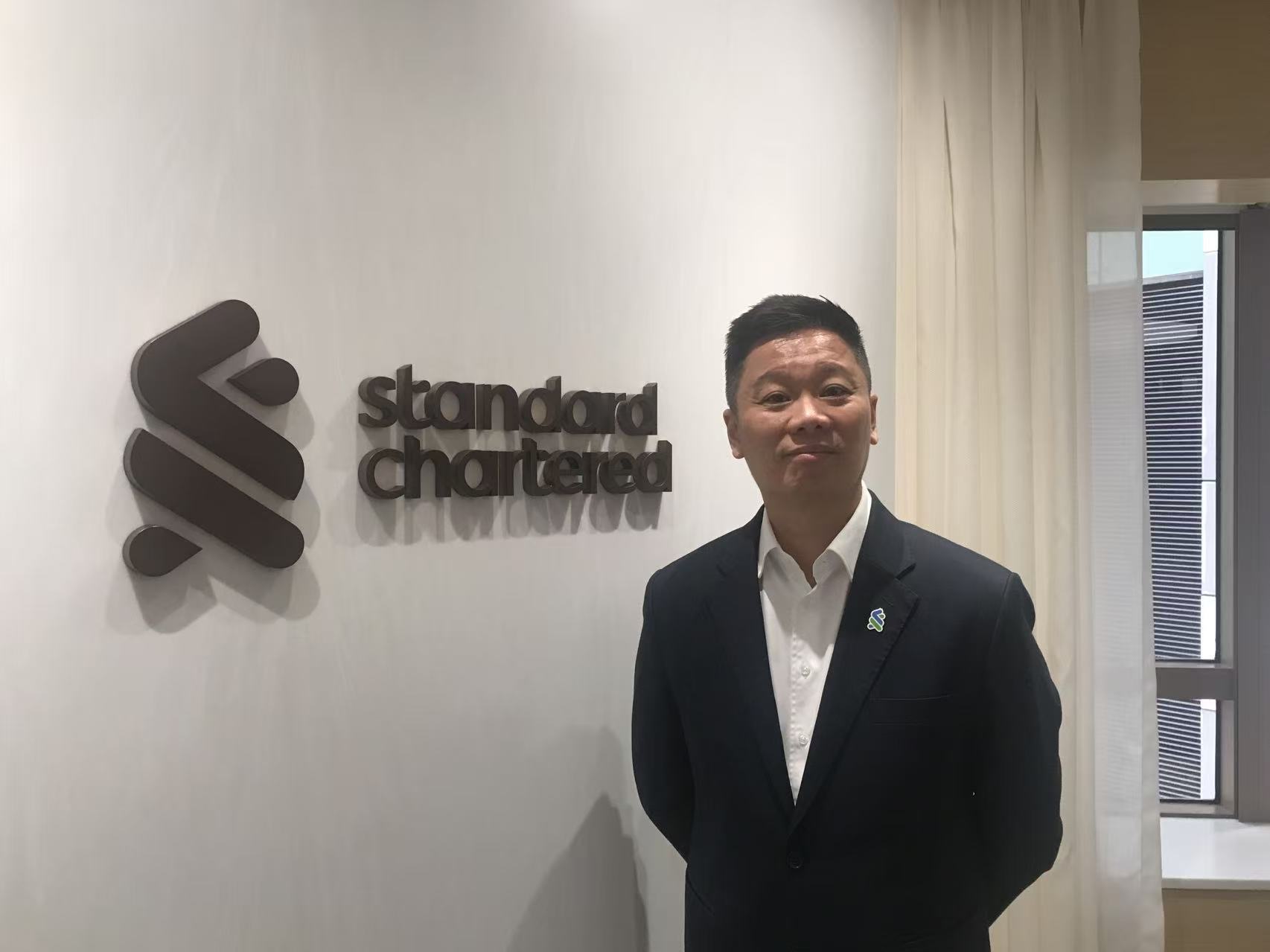
The United Kingdom-based Standard Chartered PLC said it will continue to invest in the Hong Kong Special Administrative Region, while maintaining a strong focus on Asia and other emerging markets.
The multinational financial services group expects Hong Kong to remain the world’s largest cross-border wealth management hub, driven by strong wealth creation momentum across Asia.
“Wealth creation in Asia is so big now,” said Raymond Ang, global head of private banking and affluent clients and head of wealth and retail banking for Greater China and North Asia at Standard Chartered. He cited prominent regions such as the Chinese mainland, the Taiwan region, South Korea, Singapore, Malaysia, and Vietnam.
“Some of the money will become offshore and go to Hong Kong and Singapore. Hong Kong will remain the single largest booking center in the world,” he added.
In 2025, Hong Kong overtook Switzerland as the world’s largest cross-border wealth hub for the first time, fueled by capital inflows from the mainland and a fundraising boom in the city’s equity markets, according to a report by Boston Consulting Group.
“Hong Kong is our largest market, contributing about one-third of the affluent income. The Hong Kong market will continue to be the single largest investment for us,” Ang said.
ALSO READ: StanChart sweeps out nearly 100 software apps as CFO deploys AI
The bank recorded net new money of about $52 billion in its wealth management business for 2025. In the first quarter of this year, it saw around another $18 billion of net new money.
Standard Chartered aims to accelerate net new money inflows to $200 billion by 2028, with 80 percent expected to come from Asia.
The bank also projects that wealth solutions income will achieve double-digit growth from 2026 to 2028. As of December, affluent income, comprising of wealth solutions, deposits, and other products, contributed 70 percent of its wealth and retail banking income, and this ratio is expected to rise to 75 percent in 2028.
“We continue to be very positive about Hong Kong and will continue to invest in Hong Kong, because we have a big customer base and the market is quite stable and active in the last one to two years, fueled by newfound wealth creation in initial public offerings that happened last year and this year,” Ang said.
“With a lot of the clientele and IPOs in Hong Kong, there will be a lot of new money that will unlock liquidity in the market. The financial market in Hong Kong is very robust when IPOs mean big money,” he added.
In 2024, Standard Chartered announced a $1.5 billion plan to accelerate its wealth management business. Ang said that 50 percent of this investment goes to talent acquisition, such as recruiting more relationship managers, investment specialists, marketing professionals, onboarding people, compliance and legal staff. The other 25 percent is allocated toward branding, wealth centers and marketing, and the remaining 25 percent goes to products and innovation.
READ MORE: CEO: Standard Chartered to seek growth in cross-border finance
He added that the bank will hire and train more relationship managers for its wealth management business in Hong Kong. “As we go up that continuum space — from product to advisory — the advisory concept takes training because it is not about selling anymore, but about giving advice to clients based on risk profile and suitability of the clients,” Ang said.
Standard Chartered has three segments of wealth management business: priority banking (assets under management over $100,000), priority private (AUM over $1 million), and private banking (net worth over $10 million).
Ang said professional investors are seeking opportunities in technology “hidden gems”, healthcare companies and sustainable enterprises. They also prefer newly listed stocks from Hong Kong IPOs, and ultra-high-net-worth investors usually favor pre-IPOs.
Regarding asset allocation, Ang suggested allocating 20 percent of capital to cash, 40 percent to bonds, 30 percent to equities, and the remaining 10 percent to commodities like gold and platinum, as well as private markets and pre-IPOs.
On the recent tightening of requirements for mainland clients to clarify sources of funds when opening investment accounts in Hong Kong, Ang said the bank maintains stringent onboarding procedures for private banking and priority private clients, many of whom operate global businesses with offshore assets.
“Client onboarding standards and regulations in the banking sector are generally higher, in line with requirements set by the Hong Kong Monetary Authority. Our business continues as usual, and we will pursue growth in line with our recent investor event guidance and applicable regulatory requirements,” he said.
Contact the writer at oswald@chinadailyhk.com
