

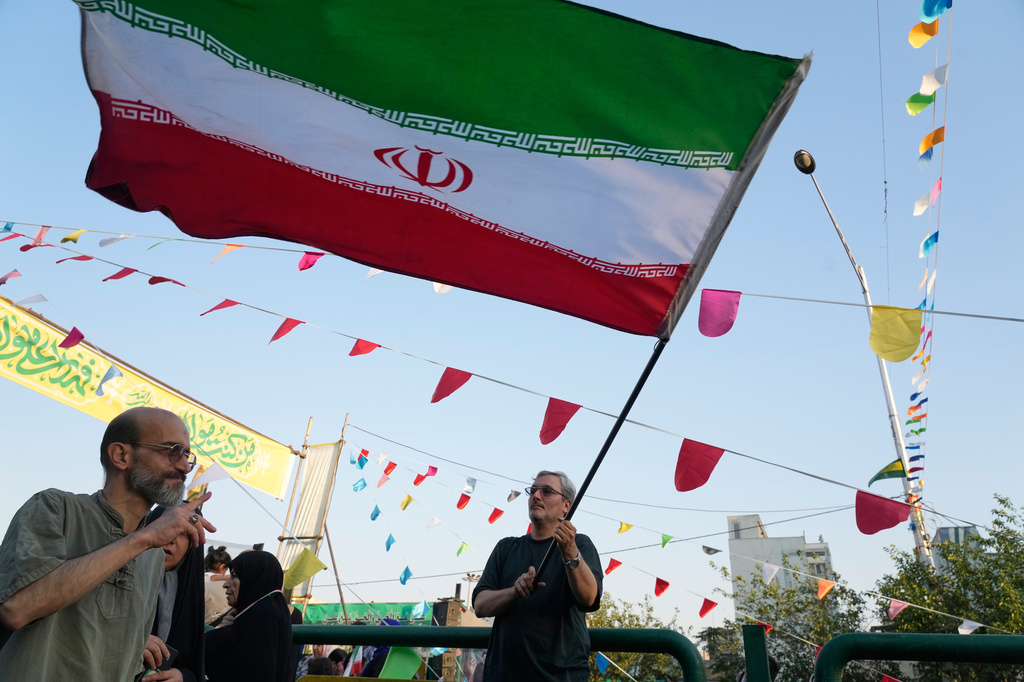
TEHRAN/WASHINGTON/BEIRUT/JERUSALEM/CAIRO - A senior adviser to Iran's supreme leader has called on US President Donald Trump to make decisions independently of Israel, stop the blockade in the Strait of Hormuz, and release Iran's frozen assets.
The negotiations between the two sides "are at a deadlock and Trump must break this deadlock", Mohsen Rezaei, military adviser to Iran's Supreme Leader Mojtaba Khamenei, said in an exclusive interview with CNN on Friday in Tehran.
If Trump wants to reach an agreement with Iran, the release of frozen Iranian assets "is a test that America must pass and the path will be opened", Rezaei said.
Rezaei rejected prospects of a potential meeting between Trump and Khamenei. "This will not happen. Right now, we are in the first stage of negotiations, and Mr. Trump has brought the negotiations to a standstill."
Trump told reporters on Thursday that he would be open to meeting with Khamenei if the two sides reach a peace deal.
Rezaei, former chief commander of Iran's Islamic Revolution Guard Corps (IRGC), told CNN that Iran would "drag the war" beyond the Persian Gulf if Washington resumes the conflict.
Iran dismisses uranium transfer claim
Citing an informed source close to the Iranian negotiating team, Iran's semi-official Fars news agency on Friday rejected a report by Saudi-owned Al Arabiya network that Tehran has agreed to transfer its enriched uranium to a third country.
Fars said nuclear issues were basically not on the current agenda of the talks between Tehran and Washington aimed at ending the conflict, and would only be discussed at later stages.
The denial follows an earlier report that Iran has informed Pakistan of its acceptance to transfer part of its enriched uranium to a third country.
ALSO READ: New clashes strain shaky US-Iran truce
The source stressed that such a transfer is not being discussed, adding that the United States must take "clear and definitive" actions before "final agreements on some fundamental issues" can be reached.
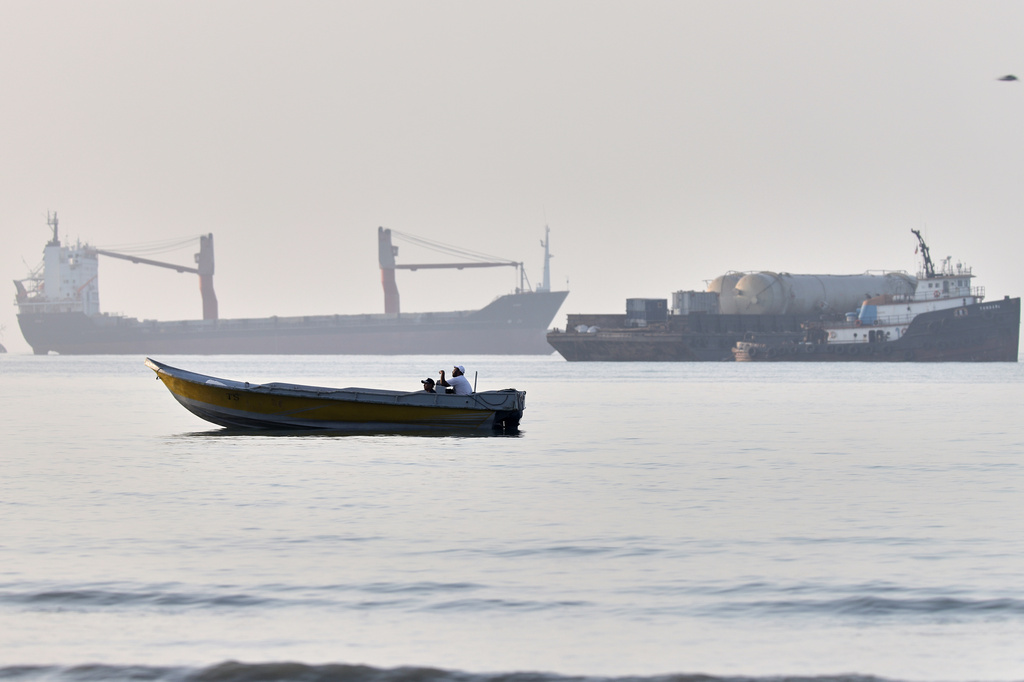
Meanwhile, Iran's army said on Friday that its navy fired warning shots toward two US destroyers, DDG-103 and DDG-87 of the USS George H.W. Bush carrier strike group, in the Gulf of Oman, using "Qadir" cruise missiles and "Shahid Dana" drones.
In a statement on its website, the army said the destroyers subsequently left for the Indian Ocean.
The army described the operation as part of Iran's ongoing campaign to counter "maritime malicious acts and disruptions and the hijacking of commercial vessels and oil tankers by the Navy of the US terrorist army".
The US Central Command (CENTCOM) denied the incident had taken place, saying that Iranian forces did not fire at US Navy warships.
US strikes Iran's radar sites
The CENTCOM also said on X that US forces struck some of Iran's radar sites on Friday.
The move came shortly after the US military shot down four Iranian one-way attack drones that were launched toward the Strait of Hormuz, claiming the drones "posed an immediate threat to regional maritime traffic".
"US forces subsequently struck Iranian coastal surveillance radar sites in Goruk and on Qeshm Island to defend against further attacks," said the command.
Iranian media also reported several explosions were heard in Iran's Sirik near the Strait of Hormuz early Saturday.
US bases in Kuwait, Bahrain
In a statement on its official news outlet Sepah News, Iran's IRGC said on Saturday that it attacked US military bases in Kuwait and Bahrain earlier in the day in retaliation for US attacks on Qeshm Island and Sirik county in southern Iran.
The IRGC identified the targeted US bases as the Ali Al Salem Air Base in Kuwait and the US Fifth Fleet headquarters in Bahrain.
At 1:30 am local time on Saturday (2200 GMT Friday), four oil tankers, guided by the US army, sought to "illegally exit the Strait of Hormuz without coordination and paying attention to the IRGC Navy's frequent warnings", it said.
After the warnings, one of the oil tankers was targeted, and the rest of the "violating" vessels turned back, it said, adding that following the confrontation, US drones attacked communications towers on Qeshm Island and in Sirik County at 2:30 am local time (2300 GMT Friday).
In response, IRGC's aerospace division immediately fired ballistic missiles at the Ali Al Salem Air Base and the remaining important facilities in the US Fifth Fleet headquarters, it said.
Lebanese president criticizes Iran over ceasefire stance
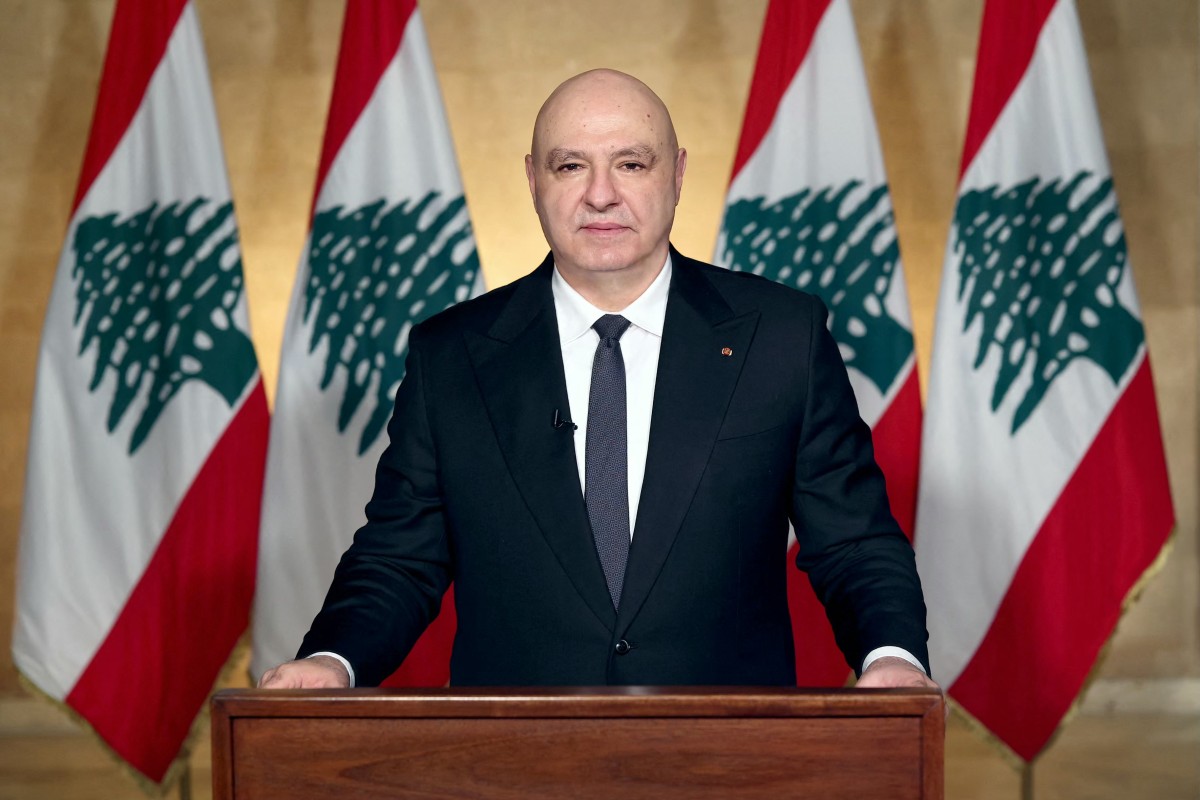
In an interview with CNN chief international anchor Christiane Amanpour, Lebanese President Joseph Aoun slammed Iran for using Lebanon as a bargaining chip in negotiations with the United States.
On Thursday, Iran's Islamic Revolution Guard Corps said in a statement that Iran's primary condition for accepting the April 8 truce with the United States and Israel was a comprehensive ceasefire on all fronts, including Lebanon.
"This is not your country; it is our country," said Aoun in the interview released by the Lebanese Presidency on Friday, noting it was unacceptable for regional powers to use Lebanon to advance their own interests while Lebanese civilians continued to bear the consequences of conflict through deaths, displacement, and destruction.
Lebanon not 'bargaining chip'
In response to the comments by Aoun, Iranian Foreign Minister Seyed Abbas Araghchi said on the social platform X on Saturday that Lebanon is not a "bargaining chip" for Iran.
"Based on Mr. Aoun's comments, one would think it's Iran that has occupied 1/5 of Lebanon, displaced 1/4 of Lebanese and bombing his country on daily basis," Araghchi said.
"Had Lebanon been bargaining chip for Iran, we'd have a deal long ago," he said.
Araghchi called on Aoun to save Lebanon from its "real foe".
Egypt, Qatar, Saudi Arabia discuss situation in Iran
On Friday, Egyptian, Qatari, and Saudi top diplomats held separate phone calls to address rapid developments in the region, focusing on the Iranian crisis and the ongoing conflict in Sudan.
During two separate phone calls with Qatari Prime Minister and Minister of Foreign Affairs Sheikh Mohammed bin Abdulrahman bin Jassim Al Thani and Saudi Foreign Minister Prince Faisal bin Farhan bin Abdullah Al Saud, Egyptian Foreign Minister Badr Abdelatty reviewed the latest developments in the US-Iranian negotiations and diplomatic efforts to reach a consensual settlement that addresses the concerns of all parties, including the Gulf states, while enhancing regional security and stability, according to a statement by the Egyptian Foreign Ministry.
Clemency to over 2,000 convicts
Separately, Iran's Supreme Leader Mojtaba Khamenei has agreed to pardon or commute the sentences of more than 2,000 convicts on the occasion of religious holidays, the Mizan news agency of the Iranian judiciary reported on Friday.
The clemency was granted to mark two major religious holidays of Eid al-Adha and Eid al-Ghadir at the request of Iran's Judiciary Chief Gholamhossein Mohseni-Ejei, who submitted a list of those eligible for receiving it, the report said.
It does not apply to individuals convicted of security crimes, espionage, actions against the country's internal and external security, and individuals who have threatened the society's public security, Mizan quoted Iran's Deputy Judiciary Chief Ali Mozaffari as saying.
READ MORE: Trump says he would be open to meeting Iran's supreme leader
Iran's supreme leader regularly grants clemency to prisoners on special occasions as per a right given to him by the country's constitution.
