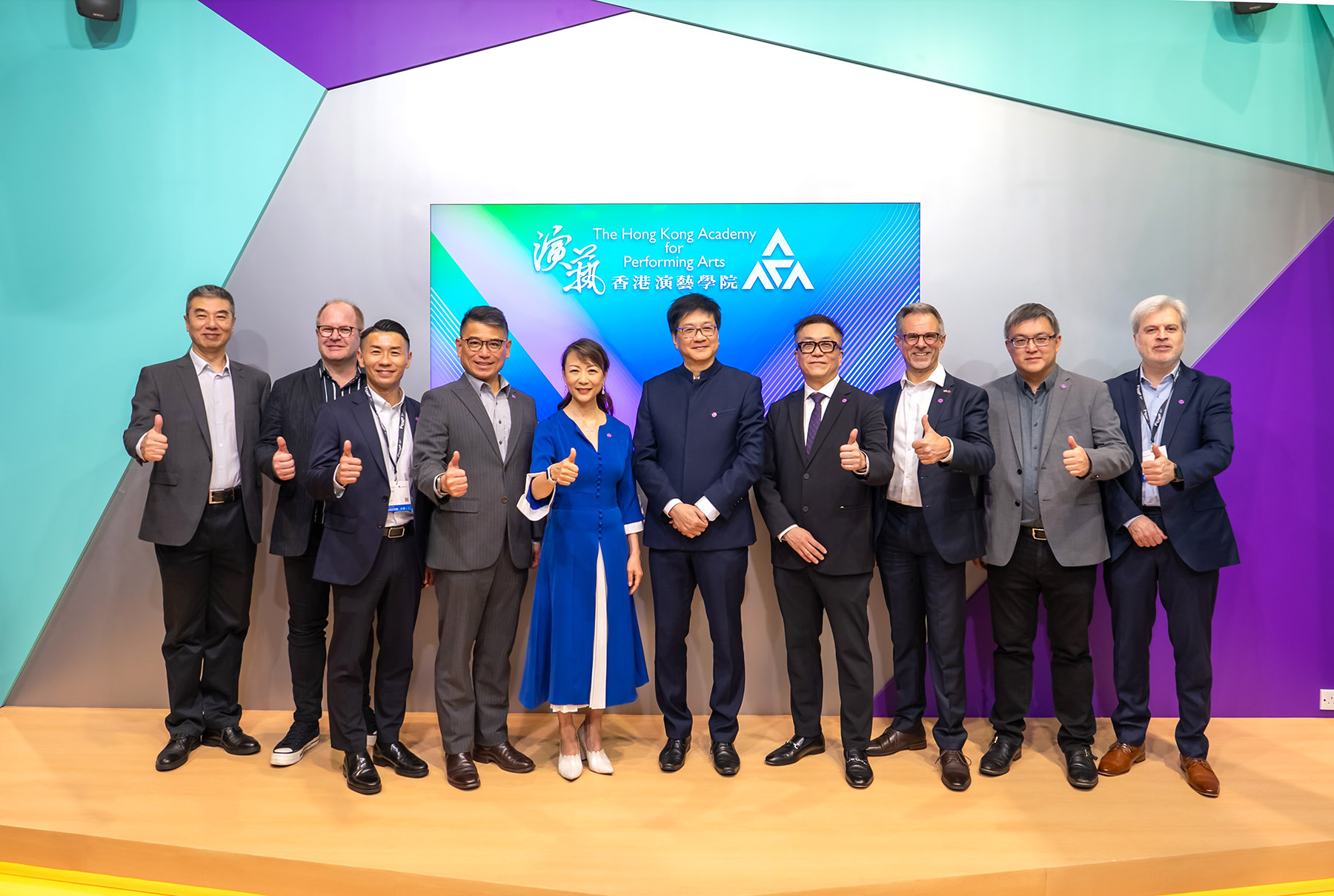
The Hong Kong Academy for Performing Arts — a perennial fixture among the world’s top-ranked performing arts institutions — derives its edge from a rare, comprehensive cross-disciplinary approach to arts education, a teaching-and-research model that mirrors and encourages real-world production, and a strategic outlook fostering East-West arts and cultural exchange.
Anna Chan Chung-ying, director of the academy, made the remarks to China Daily in a recent interview.
Her comments came after the announcement that the academy had once again landed 10th place globally and first in Asia for performing arts in the 2026 QS World University Rankings by Subject from Quacquarelli Symonds, a British higher education benchmarking company.
Symon Wong Yu-wing, HKAPA’s council chairman, said in a written statement shortly after the rankings came out, “The (QS) recognition affirms our long-standing commitment to nurturing the next generation of performing arts talent and reflects the dedication of our entire community.”
Wong also pledged to continue deepening cooperation with all sides to advance “forward-looking” arts education, preserve cultural heritage and cultivate talents who can back Hong Kong’s standing as both a hub for world-class higher education and an East-meets-West center for international cultural exchanges.
Cross-disciplinary programs, technology-powered initiatives and deeper internationalization — those, Chan reaffirmed, are the academy’s future directions. She also disclosed plans to open the HKAPA Innovation Centre in September, and, further down the road, introduce doctoral degrees in performing arts-related fields.
The academy is also set to solidify stakeholder connections across the Guangdong-Hong Kong-Macao Greater Bay Area and the wider Chinese mainland through a planned regional arts incubation-cum-exchange platform at HKAPA’s new campus in the Northern Metropolis, a planned mega-township development that borders Shenzhen.
Excellence fusion
Chan said that what has kept HKAPA’s education rigorous and its graduates in demand is a particular combination: a program roster that covers a wide range of arts disciplines; a global scope rooted in the city’s own international character; a consistent focus on staying in lockstep with the industry’s frontiers; and an emphasis on hands-on creative work.
The academy’s recent “exit reports” — annual tallies of graduate destinations — show that 93 percent of graduates were either employed or enrolled in further studies.
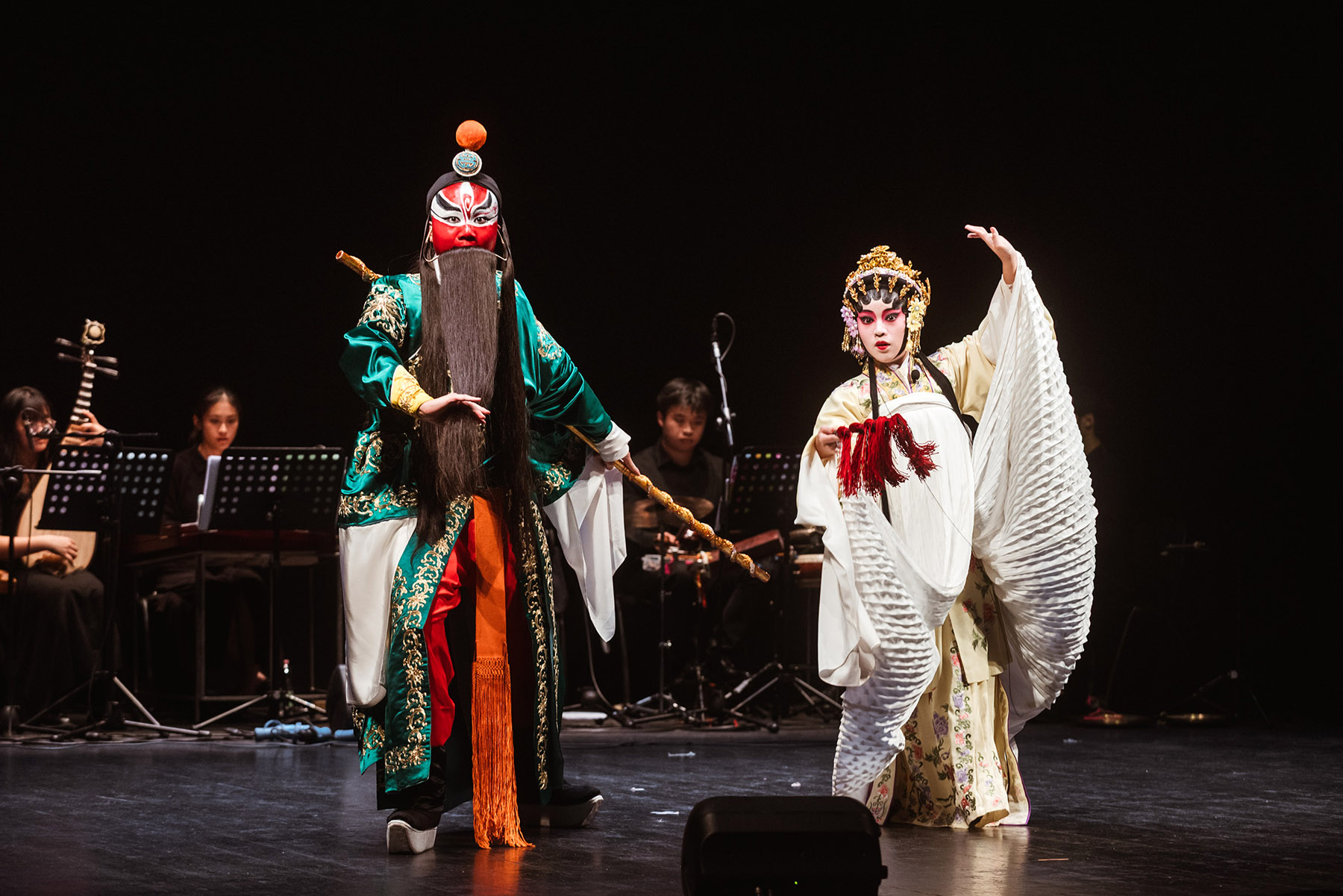
Chinese opera, dance, drama, film and television, music, theater and entertainment arts; the breadth of the academy’s offerings is uncommonly broad and diverse, Chan said. “This is rare anywhere in the world. And because of it, our students can collaborate across disciplines with real ease,” she added.
At the academy, cross-disciplinary collaboration is a daily reality in teaching and learning, research, and creative production.
Cantonese Opera productions often team up with film crews, technical and design teams and the School of Music, and the School of Dance has recently worked with medical professionals and neuroscience researchers on community projects exploring how dance might engage the brain, support cognitive health and wellness, and play a part in arts therapy, Chan said.
HKAPA’s prestige also benefits from where it is, Chan said. As a bridge between the Chinese mainland and the wider world, Hong Kong is organically multicultural, where exchanges unfold not just without obstacles but with multiple levers to pull on.
Chan cited the Special Administrative Region’s official language policy of “biliteracy” and “trilingualism” — English and Chinese in writing; Cantonese, English and Mandarin in speech — as policies that help the school achieve a well-proportioned international mix of faculty and students.
Nonlocal students have made up a steady 25 percent of HKAPA’s student body in recent years. Three of the six school deans — one each from Spain, the United States and the mainland — reflect the faculty’s global reach, as does a team of lecturers drawn from over a dozen countries and regions.
The academy also runs a permanent artist-in-residence program of global magnitude and consistently stages cross-cultural productions that bring arts and creative minds together across national borders.
In November last year, HKAPA sent about 15 Cantonese Opera students to Italy for a weeklong showcase tour. During their stay, the students performed selected Cantonese Opera excerpts and Chinese instrumental solos in Italian theaters and schools, enabling international audiences to encounter and appreciate this distinctive Eastern performing art. In March, the HKAPA Cantonese Opera students and faculty collaborated with an Italian jazz band to create a brand new cross-genre production. It was a contemporary fusion of Cantonese Opera and jazz at the molecular level. Sound, composition, stagecraft, every element bore the imprint of both traditions, yet cohered into a unified performance that was certainly new and gratifying, Chan said. The reviews were enthusiastic, she added.
The same open-mindedness is true of HKAPA’s cultural, creative outlook — to the novel, unique, the still-emerging — which has extended into the architecture of its operations as the academy modernizes.
Chan said HKAPA has put in a widespread effort to stay current and relevant. The academy has added virtual production to its performance and filmmaking curricula, while also updating its course offerings to reflect the rise of short-form dramas and other emerging art forms. It is all in a bid to integrate avant-garde technologies and the latest performance trends into all tiers and sectors of the institution — facilities, teaching, research, and students’ career cultivation alike.
Chan said HKAPA’s global reputation enhances more than just morale and industrial recognition for its graduates. It also feeds into a broader citywide goal to position Hong Kong as a premier education destination under the “Study in Hong Kong” banner.
The brand, revealed in 2024 by Chief Executive John Lee Ka-chiu in that year’s Policy Address, was designed to attract top-tier academics and promising nonlocal students to Hong Kong, making the city a regional launchpad for future leaders.
Northern vision
Chan said that HKAPA’s long-term vision is to hold its worldwide perspective in one hand and a deep focus on national alignment in the other. This is coupled with the country’s strategic agenda — as outlined in the national 15th Five-Year Plan (2026-30) — that prioritizes cultural strength, technological self-reliance, and coordinated regional development, regarding the Greater Bay Area.
Plans are afoot to conceive the academy’s upcoming new campus in the Northern Metropolis in a way that complements its current Wan Chai base in function as a creative research-and-development incubation hub and an industry-oriented engine, she said.
The new campus is preliminarily conceived to feature creative centers, art-tech labs, virtual production studios, and more; facilities essential to support artificial-intelligence-integrated education and cross-disciplinary R&D.
It could also become a regional exchange hub, linking performing arts and creative technology intellectuals and industrial leaders across the GBA, she added.
Chan said the academy has been arranging a permanent institutional foothold in Shenzhen, but that deeper cross-border partnerships will require stakeholders of both sides to help deliver more cooperation mechanisms, such as mutual credential recognition and joint dual-degree programs.
“I very much encourage young people in Hong Kong to look at the mainland for growth”, Chan said.
“A large market, a huge population, many opportunities there. We’re international, but our Chinese cultural grounding is relatively thin in comparison. Going to the mainland is how one can get a deeper insight into Chinese culture,” she added.
Chan said she likewise hopes more mainland students can come to Hong Kong for “new, outside-the-box perspectives”.