

Documentary captures the decades-long search for Longmen fragments scattered overseas after historic looting, Yang Feiyue reports.
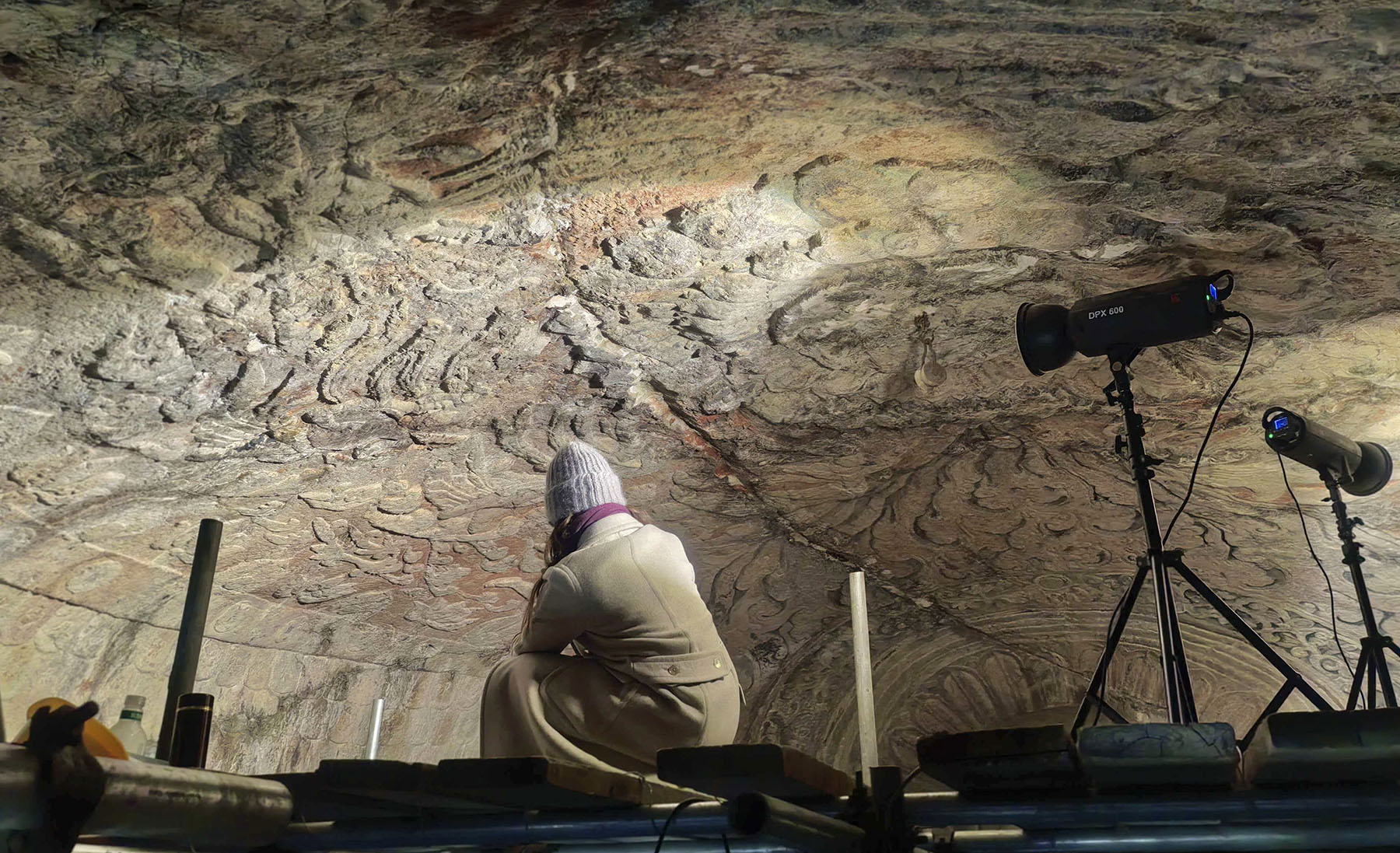
Inside the Binyang Central Cave at the Longmen Grottoes in Central China's Henan province, a researcher from the Longmen Grottoes Research Institute holds a small 3D-printed fragment against a weathered stone wall. For a moment, nothing happens. Then the piece clicks into place, its curve fitting perfectly into a shallow groove carved 15 centuries ago.
The data show a 93.3 percent match.
"It was the most unforgettable moment," recalls Chen Yi, the documentary filmmaker who witnessed the discovery. "Completely unexpected. We found the face of Emperor Xiaowen."
In the past, it could take cultural heritage workers years to relocate a single Buddha head to its original position. This time, the documentary team helped accelerate the process, completing it in just 14 months.
READ MORE: With foot in past, museums eye future
"The key was finding the right method," Chen says.
That breakthrough and the years of detective work behind it lie at the heart of Chen's new documentary, How I Miss "Her", which aired on China Central Television's documentary channel on Sunday.
The film traces the century-long odyssey of the Emperor and Empress Paying Homage to the Buddha, a pair of carved stone reliefs from the Northern Wei Dynasty (386-534), regarded as masterpieces of Chinese Buddhist cave art.
In the 1930s, the reliefs were violently dismantled.
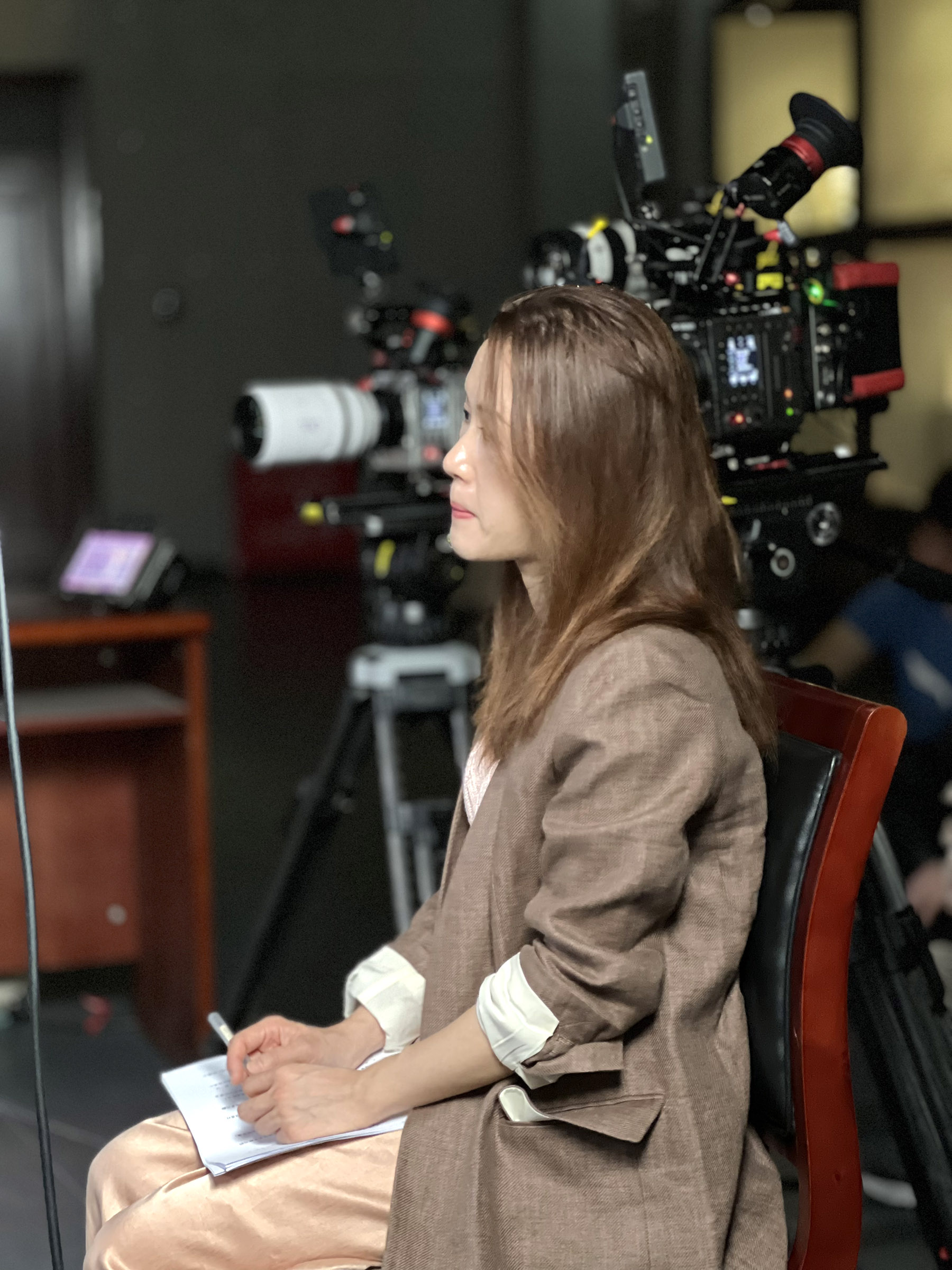
Working on orders from overseas buyers, a Beijing antiquities dealer named Yue Bin organized the systematic chiseling of the two panels into more than 6,000 fragments. Around 4,000 pieces made their way to the United States, split between the Metropolitan Museum of Art in New York and the Nelson-Atkins Museum of Art in Kansas City, Missouri. The remaining 2,300 or so were kept in Longmen's storerooms.
No one could determine with certainty which fragments were authentic. Looters had mixed genuine pieces with fakes to inflate prices, according to historical records of Yue Bin's confession cited in the film.
Abroad, the fragments were also subjected to questionable restoration practices. At the Nelson-Atkins Museum of Art, then-curator Laurence Sickman — whose teacher, Langdon Warner, remains controversial for removing murals from the Dunhuang caves — spent two to three years patching the broken pieces together with plaster. The restored panels, scholars point out, carried the fingerprints of their modern reconstruction as much as their ancient origins. At the Met, when the documentary team requested restoration records, very little was provided.
"The result became a huge mystery in Chinese art history," Chen notes.
The film introduces Wen Yucheng, the 87-year-old honorary director of the Longmen Grottoes Research Institute, who first began sorting the fragments in 1965 shortly after graduating from Peking University's archaeology department. He was on a three-person team investigating the looting.
Six decades later, he appears in Chen's documentary as a living bridge between the original crime and the ongoing effort to repair its damage.
Xiao Guangyi, a documentary studies teacher at Chengdu College of Arts and Sciences in Sichuan province, says she was deeply moved by Wen's lifelong devotion to the Longmen caves.
"Hearing an elderly scholar say that — how he missed the stones when he was away — is deeply moving. We see a tourist site. But generations of people have devoted their lives to protecting our civilization," Xiao says.
For Xiao, the documentary's most powerful moment comes when researchers test the fragment against the cave wall.
"Piece by piece, centimeter by centimeter — until it clicked. Suddenly you feel that all those efforts, all those generations of dedication, have finally found hope."
A chance encounter
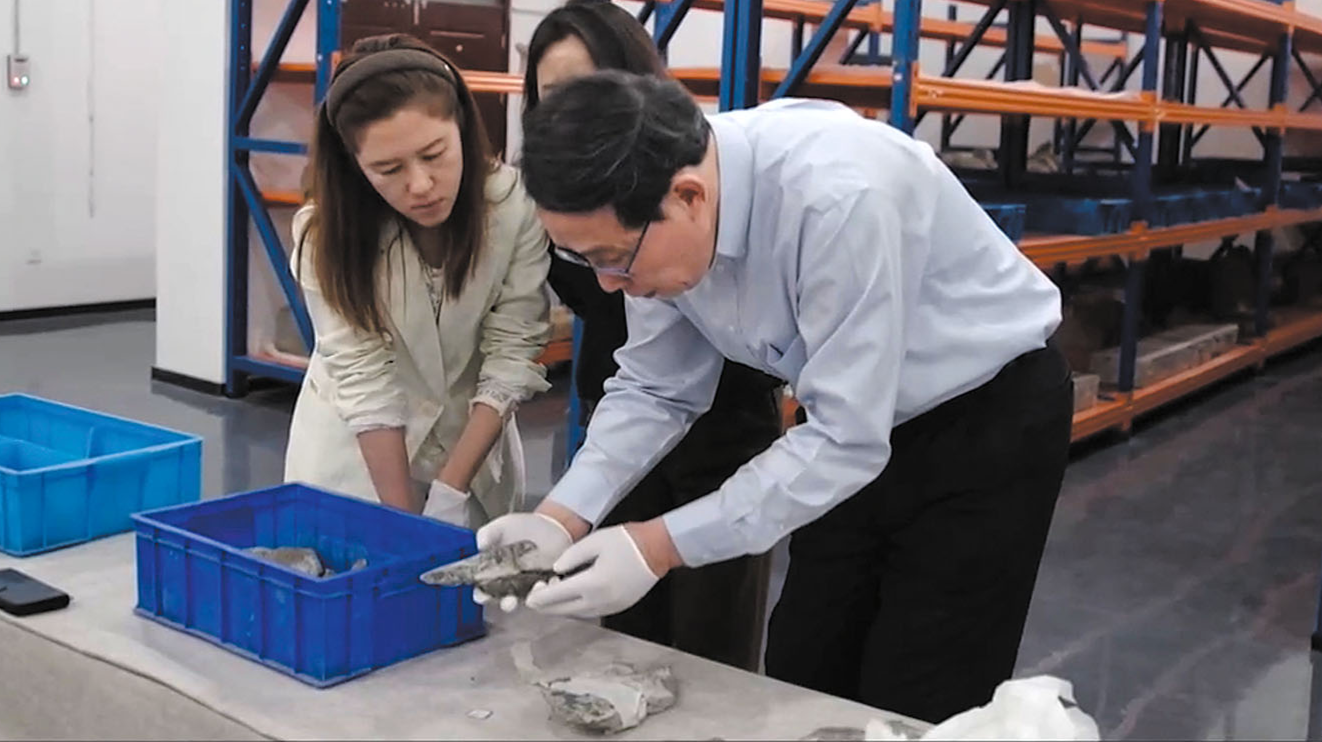
Chen first heard about the project by chance in 2022, while filming at the Yungang Grottoes in North China's Shanxi province for the second season of Hello AI, her documentary series on artificial intelligence and cultural heritage. It is a follow-up to the 2019 film that marked one of the country's first documentaries dedicated entirely to AI.
On set, she ran into an old collaborator, Huang Xianfeng, a remote sensing expert from Wuhan University. They had previously worked together on digital restoration projects at Dunhuang in Gansu province and the Jiankou section of the Great Wall in Beijing.
She asked him whether his work had ever extended to artifacts that had been looted and taken overseas. That was when Huang mentioned the Longmen reliefs.
Chen started digging. What she found was a detective story spanning continents and decades, with smuggling rings and a paper trail buried in archives from New York to Cambridge, Massachusetts. As shown in the film, a key piece emerged from the Harvard University archives — a letter from Sickman to Alan Priest of the Met, accompanied by a sketched male head. The drawing proved that American curators had been searching for the same specific missing piece, providing crucial historical corroboration for fragments later found in Longmen's storeroom.
For years, Chen had worked with two seemingly separate tool kits. Her early career was focused on cultural documentaries, such as The Forbidden City, Kunqu of Six Centenary and Taipei Palace Museum. Later, she directed A Century with Cars, a 12-part series examining Western industrial civilization through what she describes as "the eyes of a Chinese documentary filmmaker".
That was followed by Hello AI, where she learned to visualize invisible algorithms while tackling the challenge of projecting data streams onto server racks and using crosscutting techniques to keep otherwise static code visually alive on-screen.
"One foot in the humanities, one foot in technology. I'd been waiting for a subject that could bring them together," she recalls.
She realized that the emperor and empress reliefs offered exactly that opportunity.
In 2024, the Longmen Grottoes Research Institute launched a full-scale digital restoration project, led by senior researcher Gao Junping. The first challenge was separating authentic fragments from fakes.
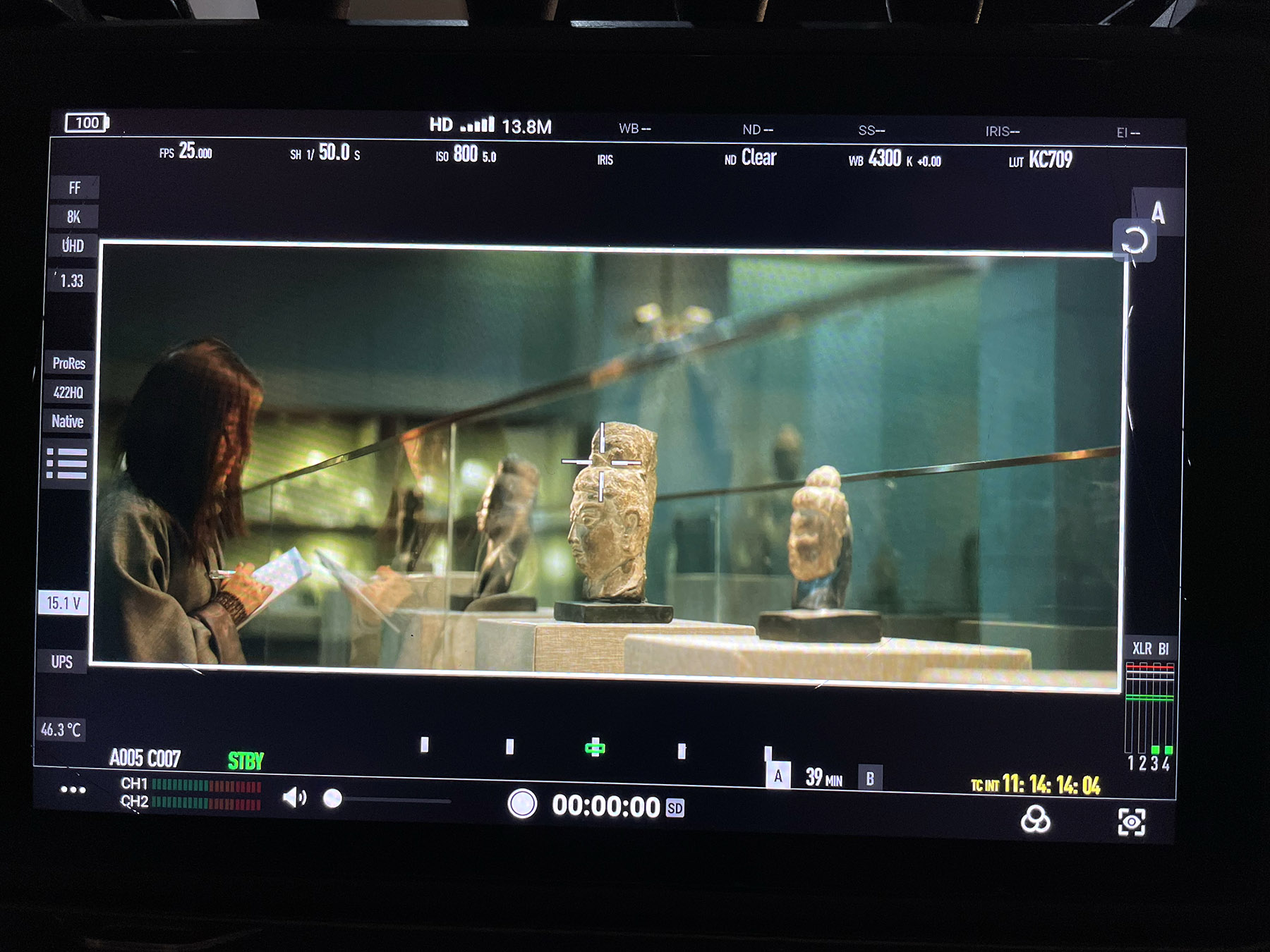
Tian Hengci, a researcher at the Chinese Academy of Sciences who usually analyzes lunar samples, applied nondestructive testing technology to the Longmen fragments. His device can detect trace elements at concentrations as low as one part per million — a geological fingerprint precise enough to distinguish different stone sources.
As documented in the film, of the five candidate pieces, only one cataloged as H05 matched the chemical composition of the original cave wall. The rest were counterfeit.
Yet, finding the correct fragment solved only part of the puzzle. The cave wall stands two meters high and four meters wide. H05 is roughly the size of a palm. Somewhere on that vast, weathered surface, the tiny piece needed to find its home.
The documentary reveals how researchers combined high-precision 3D scanning, AI-assisted surface matching, and what some scholars call "digital reunion": scanning overseas collections and virtually reassembling scattered fragments without physically moving them.
"Academically, 'digital reunion' isn't quite accurate, but it helps people understand what we're trying to do," Chen emphasizes.
Privately, she prefers another phrase: "civilization backup".
"For people 200 years from now, these digital models will be a heritage of their own — a record of how we, in our time, tried to save what we could," she explains.
Xiao sees this fusion of technology and humanity as essential to the documentary's success.
"Hard technology plus soft humanities is the soul of this kind of film, and a growing trend," she says.
"Without technology, Wen Yucheng's regret might have remained just regret. But without humanities, the film becomes a boring engineering log. You need both — technology as the engine, humanities as the heart. Neither works alone," she elaborates.
For Xiao, the idea of "reunion" defines the film.
"It's not only about reassembling broken stones," she says. "It's also about reuniting hearts and reconnecting civilizations." She adds that researchers, scientists, curators and scholars from China and abroad are all participating in an effort to restore a fragmented cultural legacy.
"We're using hands that reached for the moon to touch the missing pieces left behind a thousand years ago," she says.
The film's title How I Miss "Her" comes from a line by early 20th-century poet Liu Bannong. The Chinese character ta (her) was once reserved in Chinese documentary captions for national treasures, a grammatical gesture that imbued stone and bronze with something like soul.
"This film is an innovative work that uses contemporary thinking to question history and technological artistry to empower imagery," says Tan Xue, the film's producer.
In recent years, artificial intelligence has opened new narrative possibilities for cultural heritage, giving rise to many moving stories of "reunion", Tan notes.
The film allows those who have missed "her" to see how cultural heritage researchers, represented by the team at the Longmen Grottoes Research Institute, are using contemporary wisdom to heal the wounds of history, she says.
ALSO READ: Safeguarding the cultural landscape
The title also raises the question: how do you miss something that may never come back?
Chen's answer lies less in sentiment than in action.
"Science and art part ways at the foot of the mountain. But they meet again at the summit," she says.
At the foot of that mountain, a sixth-century artisan carved an emperor's face into stone. At the summit, a laser originally developed for lunar exploration scans a fragment no larger than a hand while algorithms search for patterns invisible to the human eye.
"That's where we are now," Chen says.
"Not because we have all the answers. But because, for the first time, we have a way to ask the right questions."
Contact the writer at yangfeiyue@chinadaily.com.cn
