

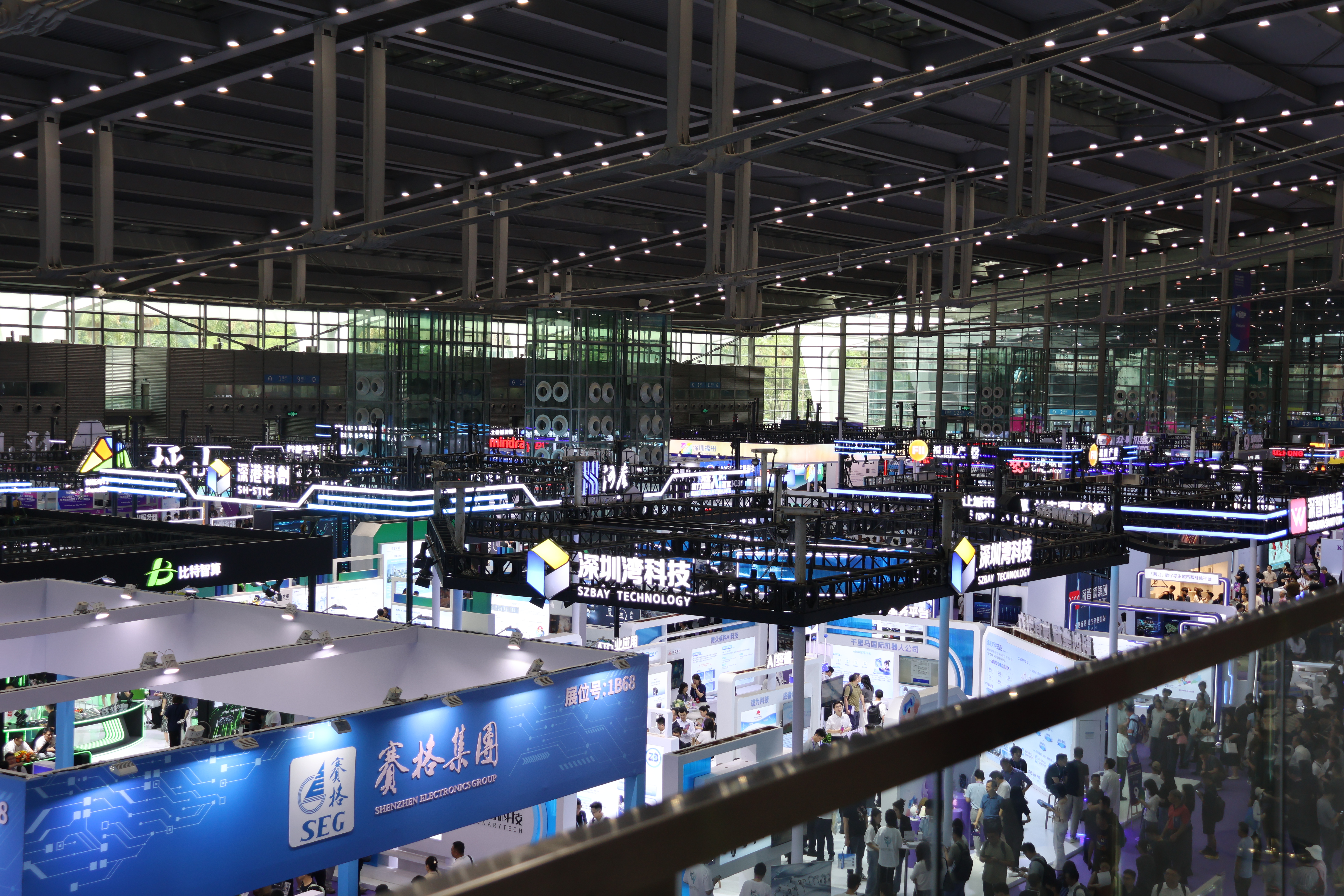
Foreign officials and businesses have voiced strong confidence in China’s artificial intelligence development, pledging to expand cooperation on the cutting-edge technology’s application in new energy, construction, and robotics sectors.
They made the remarks at the World AI Device Expo 2026 & 7th Shenzhen Global AI Expo, which kicked off in Shenzhen on Thursday.
The three-day industry event features six core exhibition areas covering AI terminals, embodied intelligence, and humanoid robots, drawing participation from leading enterprises including Huawei, Tencent and Alibaba. In addition to AI and robotics applications, the exhibition also focuses on related services such as the “token economy”, a digital economic model that charges users based on usage volume.
“I am very excited to participate in the fair. The aim of our trip is to increase partnership between San Marino and China,” said Rossano Fabbri, minister of industry, handicraft and trade, technological research, telecommunications and sport of the Republic of San Marino.
Fabbri said his country has already established some commercial and technological partnerships with Chinese electric car maker BYD and the delegation also participated in the battery fair in Shenzhen the day before with the aim of enhancing similar cooperation, especially in high technology, new energy, and batteries.
Shenzhen is the most important technology hub in China and also the biggest market of interest for AI, he noted.
ALSO READ: Embodied intelligence enters real-world tests
China is a very important partner for the Republic of San Marino and bilateral cooperation will usher in a new chapter for collaboration in AI, he added.
An Australian project manager named Giulio who works in in the construction industry, said it’s his second visit to China and the exhibition was one of the places he wanted to visit.
“I’m very interested in AI technology, both for my company and mostly for personal interest. I’m actually looking for AI-related construction equipment in this exhibition,” he said.
Giulio pointed out that language barrier troubled him while attending the exhibition. “It’s always the language that makes it difficult. These AI merchandise could be more competitive if the translation problem were solved.”
He said he had high expectations for AI business opportunities between Australia and China. “There are not many AI companies in Australia, so everything we buy is from the United States, China or Japan. China seems very open to exporting its technology,” he said.
READ MORE: Firms enlist AI for intelligent appliances
Thomien Leygonie, partner and coordinator of StereoLabs, a French company that focuses on developing camera vision for robots, said his company was attracted to participate in the exhibition because it has witnessed the rapid growth of Chinese robotics market. “It’s way faster than any other region in the world, so we want to be in such a market today, a really good place to be,” he said.
“I was told that ‘If you want to get impact, go to Shenzhen’.”
Leygonie said his company owns advanced technology on stereo vision in robotics and they expect to gain a significant business growth in the Chinese market. “It’s our goal that we can take care of all Chinese robot companies that want to have the best quality images,” he added.
Chen Ziyu contributed to this story.
Contact the writer at sally@chinadailyhk.com
