

Australia has extended an electric vehicle purchase incentive program as it aims to cut dependence on fossil fuels amid the Middle East crisis, a move expected to benefit Chinese automakers that have been gaining ground in the country in recent years.
The federal budget, unveiled by Treasurer Jim Chalmers on Tuesday, keeps in place current tax exemptions for EVs under the Electric Car Discount policy until March next year, before the discounts — which go back to July 2022 — are wound down starting April 2027.
The ongoing support for EVs is part of measures to strengthen "fuel resilience", as the conflict in the Middle East has been "pushing up prices, pushing down growth, and punishing Australians", Chalmers said in his budget speech.
READ MORE: Chinese automakers gain ground in Australia as market share, sales surge
Hussein Dia, a professor of transport technology and sustainability at the Swinburne University of Technology in Melbourne, told China Daily that "one of the clearest signals" of the budget announcement is that "Australia is moving from early EV adoption toward a broader transport system transition".
"The focus is gradually expanding beyond short-term incentives toward longer-term resilience, infrastructure, productivity and energy security," Dia said.
"The continuation, but gradual recalibration, of the Electric Car Discount suggests the government believes the EV market is now maturing. The policy has played an important role in normalizing EVs in Australia and accelerating early uptake," he said.
Recent fuel disruptions and geopolitical uncertainty in global oil markets have also reinforced the importance of reducing dependence on imported liquid fuels, he added.
"In that sense, transport policy is increasingly becoming energy policy. Electrification is now being viewed not only through an environmental lens, but also through economic resilience and national security lenses," he said.
The continuation of the EV discount comes amid record sales, with EVs accounting for 16.4 percent of all new vehicle sales in Australia in April, according to the Federal Chamber of Automotive Industries.
"The Electric Car Discount has provided important stimulus to the market, and its continuation will support the growth of EVs," the chamber's chief executive, Tony Weber, said.
Chinese players' role
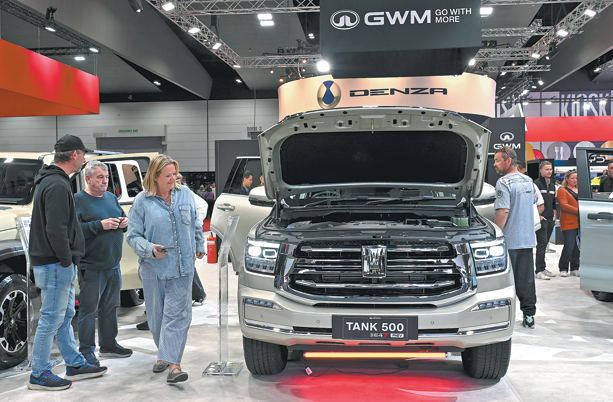
The purchase incentive is expected to benefit Chinese automakers, which made up four of the top 10 selling brands in April, with one of BYD's best-selling EV models alone recording 1,780 units, or an increase of 139.6 percent year-on-year, according to the chamber.
Dia said Chinese EV makers are playing an increasingly important role in the Australian market.
"Brands such as BYD have helped expand the range of more affordable EV models available to Australian consumers, particularly during a cost-of-living period where price remains one of the biggest barriers to adoption," he said.
ALSO READ: Swift actions taken across Asia-Pacific to cushion Mideast energy shocks
"Increased competition is helping make EVs more mainstream and accelerating the transition away from imported fossil fuels."
Aman Gaur, head of legal, policy and advocacy at the Electric Vehicle Council, likewise referred to the growing role of Chinese carmakers in Australia, which has a "competitive automotive market with over 60 brands providing a variety of cars for all lifestyles".
"Chinese manufacturers have added more options for Australians with a great range of electric cars on offer," he said.
Contact the writers at alexishooi@chinadaily.com.cn
