

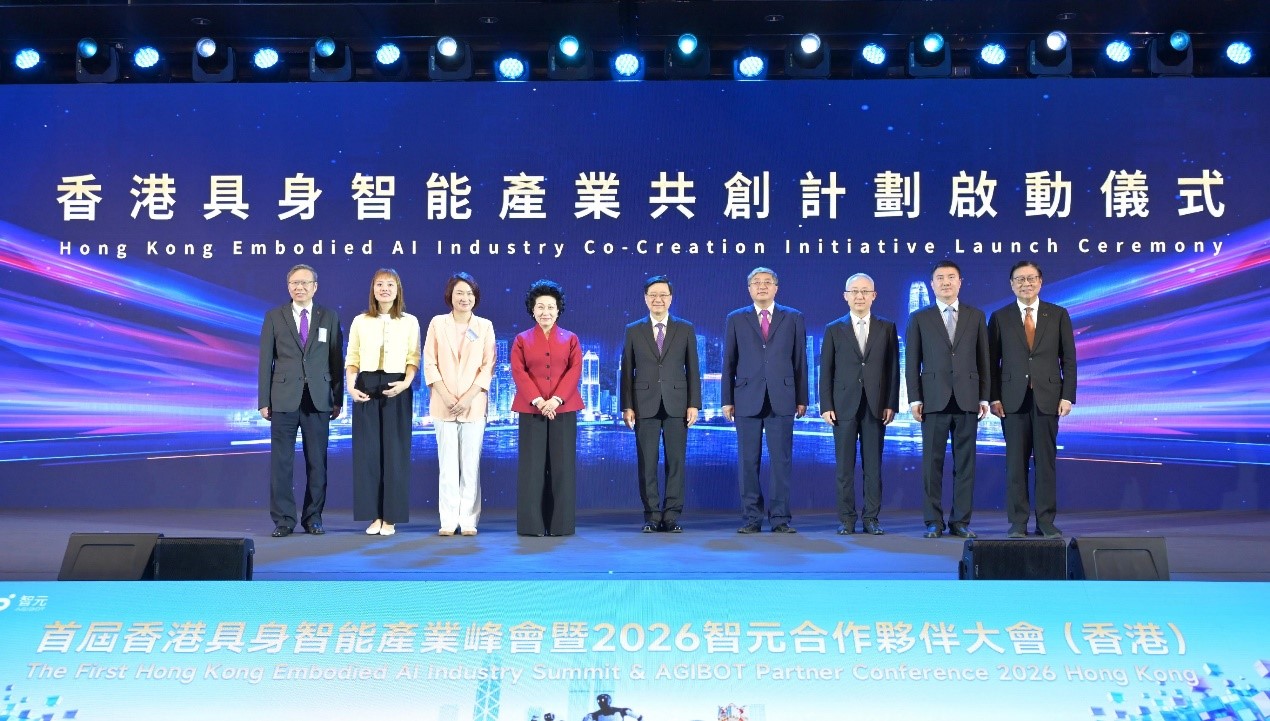
A Chinese mainland robotics firm on Tuesday launched an ecosystem-building program in Hong Kong, which aims to forge hundreds of local partnerships from suppliers to distributors and position the city as a springboard for global expansion.
Under the Hong Kong Embodied AI Industry Co-Creation Initiative unveiled in collaboration with the special administrative region’s government, academic and financial institutions, Shanghai-based AgiBot will establish an international research and development headquarters in Hong Kong. The company will also set up joint laboratories with local universities and research institutes.
In the coming five years, the company plans to support dozens of Hong Kong embodied AI startups through its venture investment program, together with leading global venture capital firms.
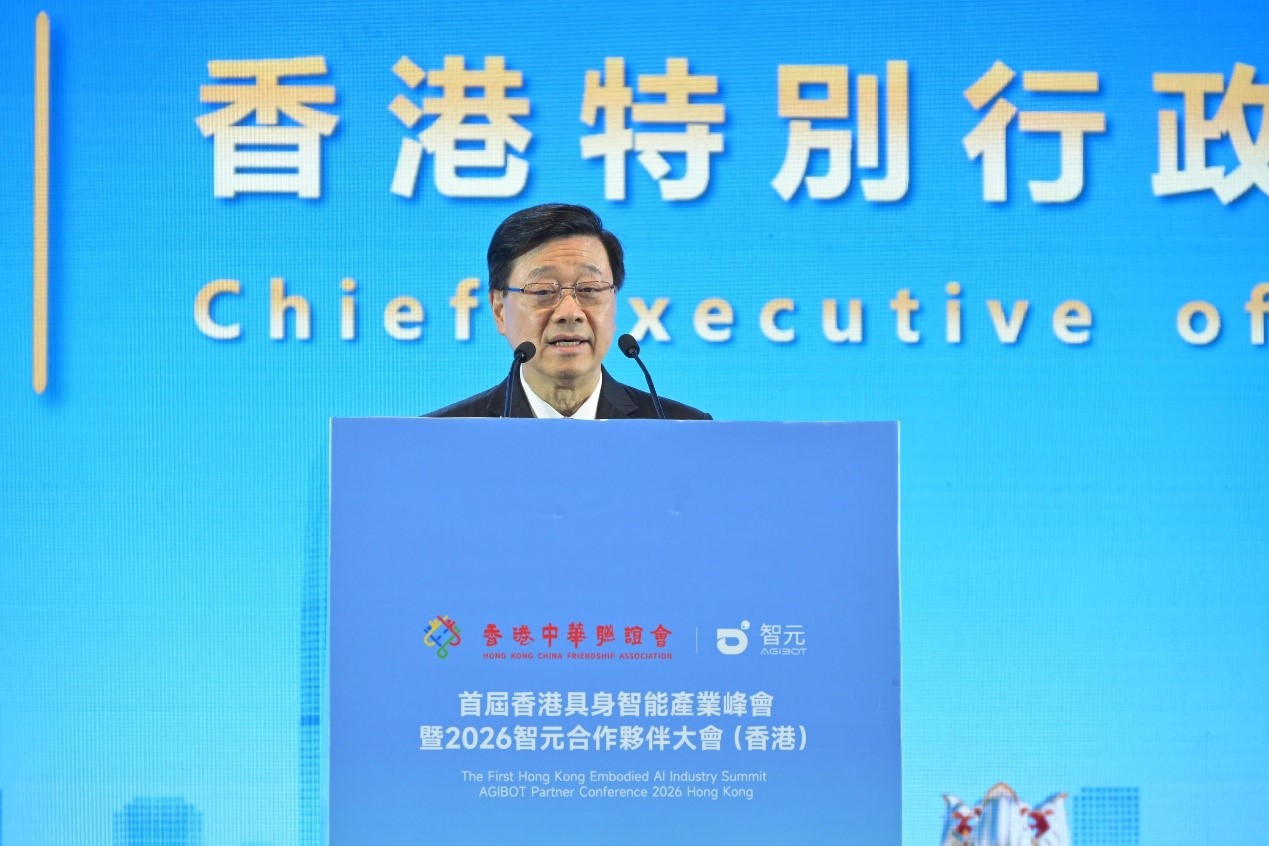
Speaking at the AgiBot Partner Conference 2026 Hong Kong, the company’s founder and chairman Deng Taihua said the initiative aims to generate “hundreds of billions of yuan” in industry revenue for Hong Kong and eventually create a sector with a market value of trillions of yuan.
Deng described 2026 as “the inaugural year” for embodied AI in Hong Kong after the technology was included for the first time in the city’s annual budget in February. The SAR government pledged to promote development of an embodied AI ecosystem and expand related applications.
Deng said AgiBot is shifting from product development to real-world applications, and has launched seven major solutions including systems for logistics sorting and industrial cleaning.
“All of these applications are expected to be deployed in Hong Kong to enhance the city’s productivity”, Deng added.
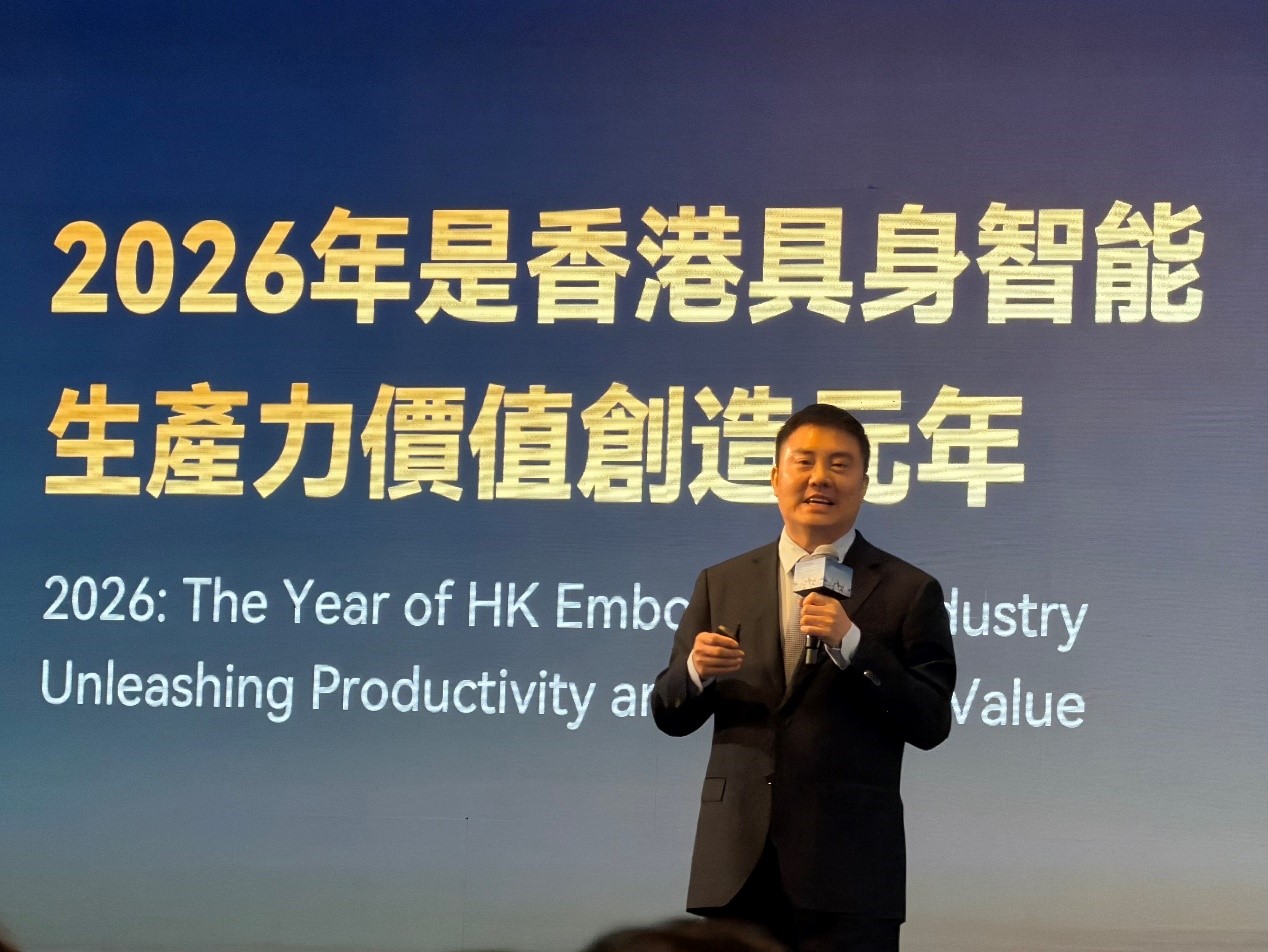
Hong Kong Chief Executive John Lee Ka-chiu, speaking at the first Hong Kong Embodied AI Industry Summit held concurrently with the launch, said that embodied AI, which integrates AI with the physical world, has become a key engine for industrial upgrading and the cultivation of new quality productive forces.
“Hong Kong’s compact, highly international and culturally diverse unban environment provides an ideal testing and application ground for embodied AI,” Lee said.
According to Lee, the government-owned Hong Kong Artificial Intelligence Research and Development Institute will begin operations in the second half of the year, focusing on upstream research, technology transfer and industry adoption.
He said it will also serve as a platform to match AI technology providers with market demand, including embodied AI solutions, with the aim of accelerating commercialization and supporting industrial upgrading.
Since its launch in May 2022, Hong Kong’s R&D hub InnoHK has funded 16 laboratories focused on AI and robotics research, including AI-driven robotic technologies widely applied in healthcare and logistics, Lee said. Cyberport, the city’s digital tech incubator, now supports about 120 companies in areas including humanoid robotics and smart wearable.
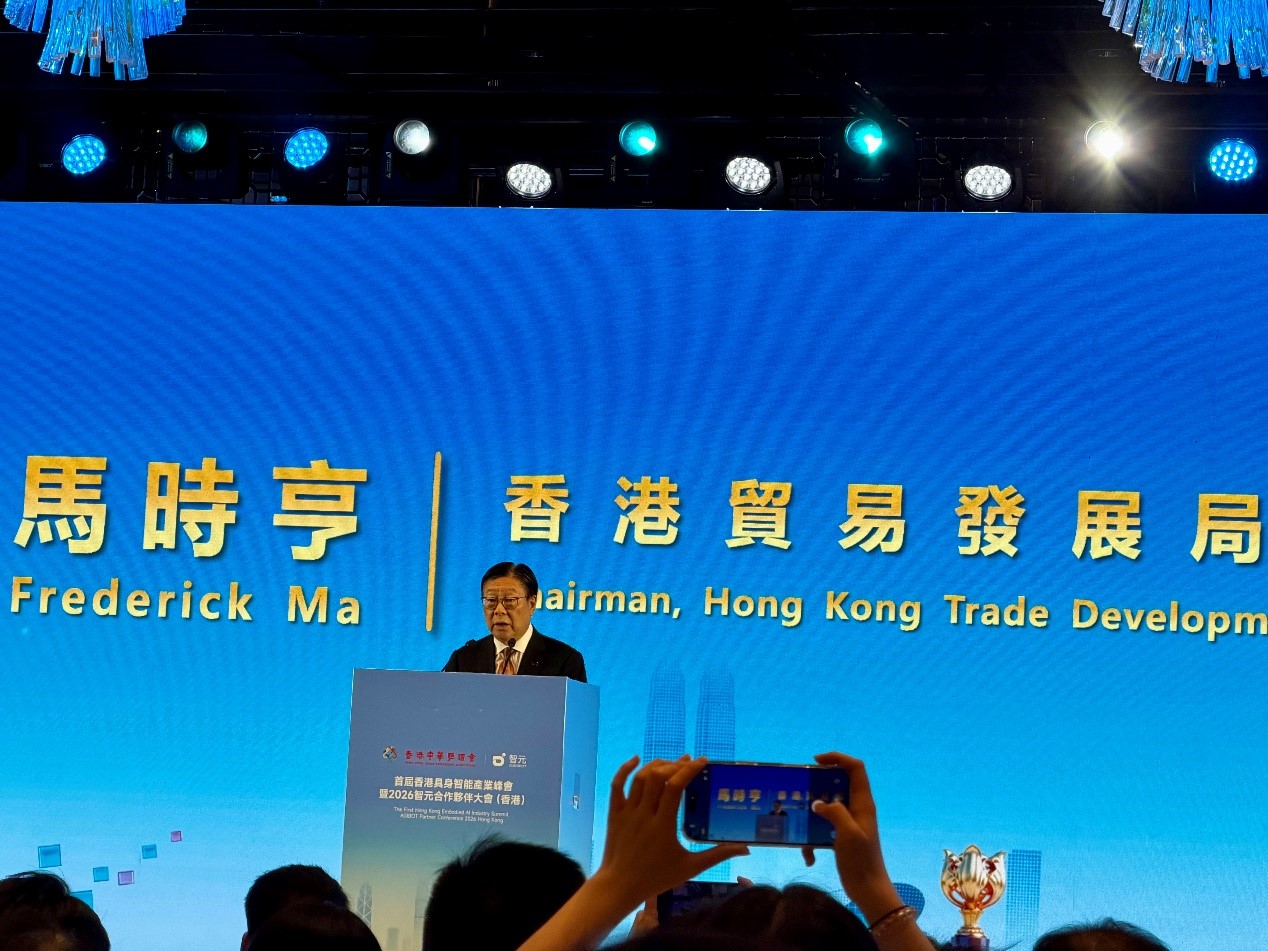
Frederick Ma Si-hang, chairman of the Hong Kong Trade Development Council, cited data from the China Academy of Information and Communications Technology showing that the country had more than 6,000 AI companies by the end of 2025, accounting for 16 percent of the global total. He said the figures underscore the rapid growth of self-dependent innovation in China’s AI sector.
Many of these firms are stepping efforts to expand overseas and build global brands, Ma said, noting that the Hong Kong SAR’s international connectivity and strengths in professional services make it a prime platform for AI firms to go global.
Contact the writer at irisli@chinadailyhk.com
