

French star discusses her love of movies and China, Xu Fan and Shi Futian report.
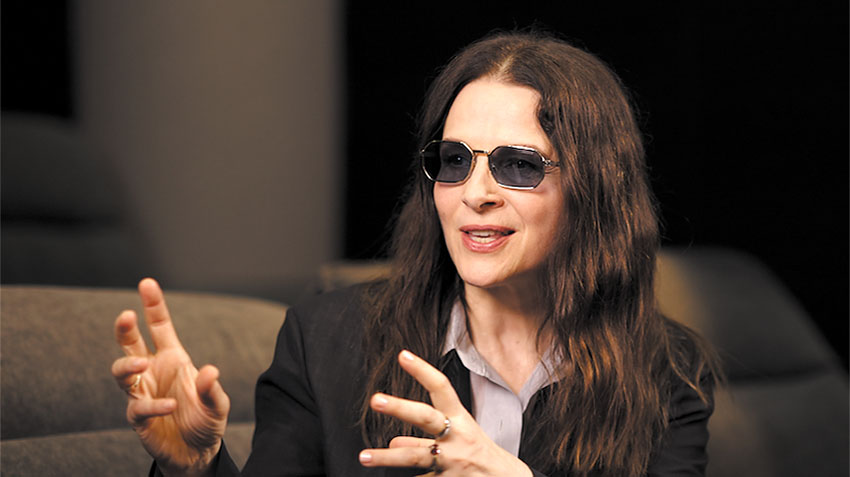
Relaxed, easygoing, and always passionate about cinema — that sums up the first impressions of Juliette Binoche, the French screen legend who recently seized the spotlight in China as jury president of the 16th Beijing International Film Festival's Tiantan Awards.
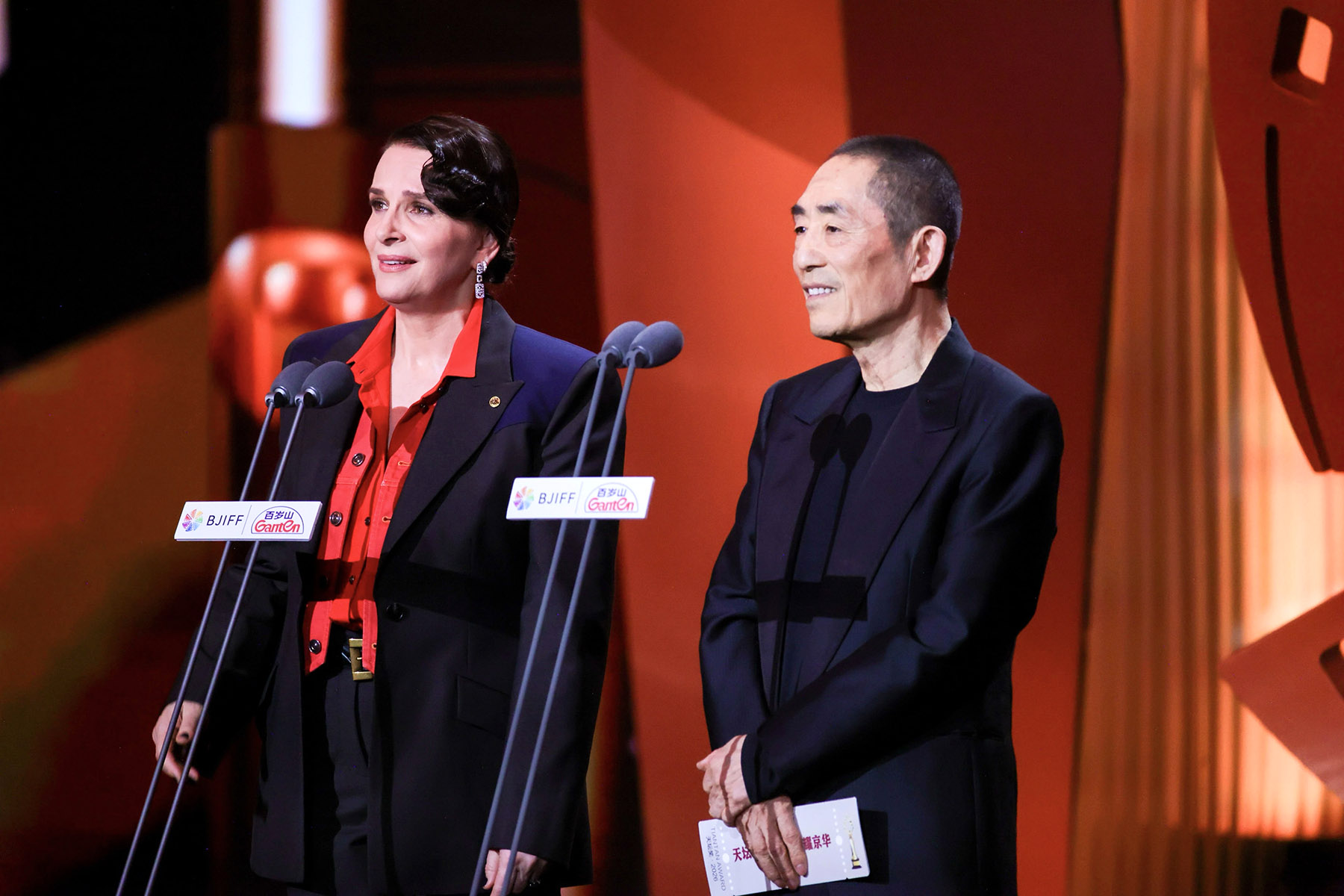
At the climax of the festival's closing ceremony, Binoche walked onstage alongside iconic Chinese director Zhang Yimou to present the Best Feature Film award — one of the biggest Tiantan Awards — to the British film Dragonfly. In a sudden burst of energy, the 62-year-old actress slapped her trouser legs and exclaimed, "Let's find out who the winner is!" — a spontaneous gesture that drew applause from the audience.
After eight days of intense viewing and discussions, she and her six fellow jurors, including French-Vietnamese director Tran Anh Hung and British composer Simon Franglen, voted on 10 awards in total from 16 shortlisted films, selected from a record 1,826 submissions spanning 139 countries and regions.
READ MORE: City rolls out the red carpet
"I felt great. We watched all the films. I almost forgot I was the jury president, because I was so in touch with the films. I forgot myself," Binoche said, describing her experience.
The festival also reflected the industry's growing preoccupation with artificial intelligence, establishing an AIGC Unit — the first of its kind in the world to focus on AI-generated films. This year, the section received nearly 2,840 submissions from 14 countries and regions — an 89 percent increase from the previous year.
Binoche is unworried about the emergence of AI in filmmaking, believing that it is simply a new tool and that plot and characterization are still the most important aspects.
"At the end of the day, AI is a way of telling a story. When you watch a film, it stays in your mind, heart and body somehow. Technique is just there to help the story. You have to go back to the core of making a film."
For Binoche — the first figure in cinema history to have won Best Actress honors at all three major European festivals: Venice, Berlin and Cannes — enthusiasm remains central to her approach to cinema. Fame and success, it seems, have never dulled her curiosity.
In an interview a few days before the closing ceremony, she discussed the jury's task with China Daily."What we're trying to do in the festival is to find a diamond of a film -something that people have never seen before. It can be the story, the way it's done, or the acting — but it's something that is going to enrich the viewers and take them somewhere they've never been before."
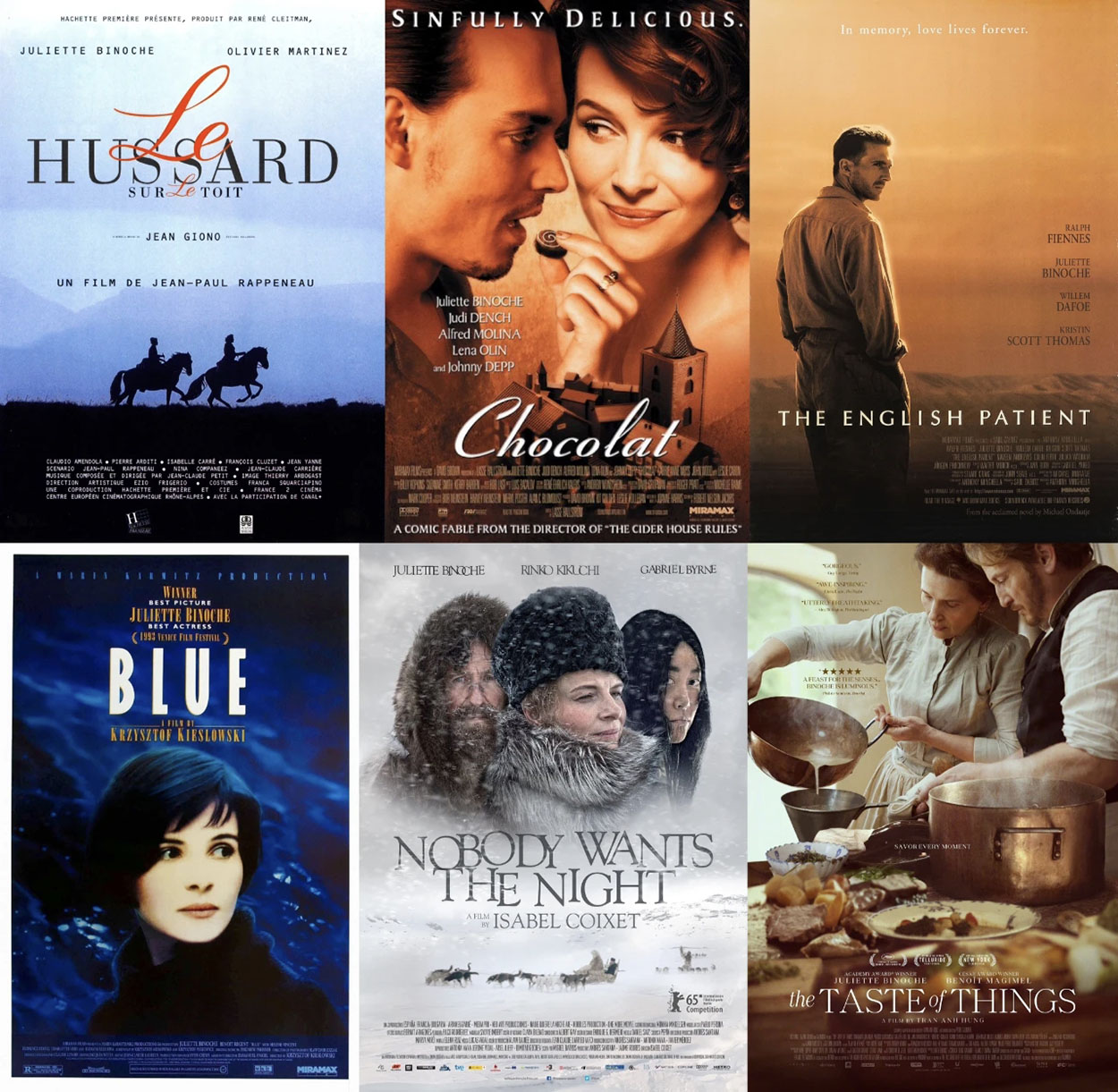
That search for the unfamiliar has guided her through a remarkable range of collaborations over an acting career spanning more than 40 years: Polish director Krzysztof Kieslowski's Three Colors: Blue (1993), in which she played a woman undone by grief; British filmmaker Anthony Minghella's The English Patient (1996), where she portrayed a dynamic army nurse; and Swedish director Lasse Hallstrom's Chocolat (2000), starring her as a single mother skilled at making chocolate.
Binoche also worked with the late director Hou Hsiao-hsien on Flight of the Red Balloon, a 2007 film recounting the story of a French family through the eyes of a Chinese student.
In an attempt to accurately portray the role — a harried single mother who runs a small avant-garde puppet theater and performs all the voices -Binoche devoted a full month to preparation. She took classes at a puppet theater, underwent voice training, and even suggested dyeing her hair blonde.
She recalled that Hou once asked her to bring personal objects from her own home to the set, so that the space would feel lived-in — as if she were staying in her own quarters.
"You just have to dare to open the door to find the magic inside of you," she said, describing her philosophy of performance. "The actor has to believe deeply in their own being and in their heart, gut, cells and mind. There has to be a layer of spirituality."
Binoche has visited China many times since 2009 — attending the Festival Croisements that year, making a guest appearance on Hunan Television's popular variety show Happy Camp in 2018, and sharing insights about her directorial debut, In-I In Motion, during the 2025 Beijing Culture Forum.
Asked what has impressed her most, she replied without hesitation:"Just meeting people. What are their lives and everyday experiences? Basically, there's a story in each of us. I've traveled to different places, and I'm always moved because some places are still unchanged.
"I love seeing villages where there is this sense of kindness and simplicity, and there are also some traditions that I really love in China."
Binoche also talked about the countryside, the mountains and Taoist legends. "For me, it brings so much awareness of why we are here on Earth. It's a way to prolong your thoughts and to connect with nature and the beauty of nature."
She even confessed an unexpected fondness for the Chinese kang — the traditional heated brick platform that serves as a bed, table and social anchor of the northern Chinese home. "I slept in it. I loved it. It was so peculiar and special," she said, recalling her visit to a house that had one.
As an actress with more than 60 films to her name, Binoche has worked with a stellar lineup of international stars, including Ralph Fiennes in The English Patient, Johnny Depp in Chocolat, and Ethan Hawke in The Truth. She has also stepped behind the camera, making her directorial debut with In-I In Motion, distilled from 170 hours of raw and archival footage documenting her dance-theater collaboration with British choreographer Akram Khan.
ALSO READ: 'Dragonfly' soars as biggest winner at 16th Beijing film festival
So what kind of role still draws her- actress or director?
"I have experienced so many. I have been very lucky. I have worked with wonderful directors and actors. As an actor, you have to give a lot of yourself, otherwise nothing will come out," she said.
For all her accolades, Binoche admitted to moments of doubt. Sometimes, she wakes at 6 am and asks herself the same question: "Why did I choose this work?"
The answer, even after all these years, returns with quiet clarity. "At the end of the day, it's worth it because it gives a sense of purpose. It makes you happy and lighter in a way. The lightness comes from being really on your own path and choosing a path that is meaningful to you and to others as well," she says.
Contact the writers at xufan@chinadaily.com.cn
