

Slew of launches and intense price competition cool consumer demand
China's auto market moved through April under a complex mix of multiple car launches, sustained price competition and cautious consumer sentiment. It all resulted in a noticeable slowdown in retail momentum compared with the end of the first quarter.
Analysts say the decline in demand was the result of a combination of factors. These include the Tomb-Sweeping Day holiday and the wait-and-see attitude of consumers following dozens of new model launches around the Beijing auto show in late April.
According to data from the China Passenger Car Association, retail sales from April 1 to 26 reached 1 million units, down 24 percent year-on-year and 19 percent from the same period in March.
READ MORE: Auto sector in structural upgrade
New energy vehicle retail sales totaled 614,000 units, down 11 percent year-on-year, even as penetration rates continued to rise.
SAIC Motor sold 328,000 vehicles in April, retaining its position as China's best-selling automaker for a fourth consecutive month, but it was a 12.66 percent fall year-on-year.
The fall primarily resulted from the performance of its joint ventures: SAIC Volkswagen saw sales fall to 40,000 units in April, half the figure of April 2025. SAIC GM's deliveries also fell 17.3 percent to 34,700 units.
BYD followed SAIC closely with sales of 321,100 vehicles, which was a 15.5 percent slump from a year earlier, although it marked a 7 percent rise from March.
Overseas sales rose 70.9 percent year-on-year to 134,500 units in April, helping offset domestic competition.
BYD nevertheless maintained its dominant position in the NEV sector, selling more than 1.02 million vehicles in the first four months.
Chery posted strong momentum, selling 251,400 vehicles in April, up 25.2 percent year-on-year. Of its sales, 177,600 were exports, up 102.4 percent year-on-year. NEV sales reached roughly 100,000 units, up 63.8 percent.
Geely reported April sales of 235,200 units, a meager 0.4 percent growth year-on-year but a 6 percent rise from March. Its NEVs accounted for 135,600 units, or around 58 percent of total sales.
Exports proved important for Geely as well, which surged 245 percent year-on-year to 83,200 units in April.
Changan delivered 209,500 vehicles in April, up 1.7 percent year-on-year. Its NEV brands, including Deepal and Avatr, continued to act as growth drivers.
Deepal sales reached 33,200 units, up 64.8 percent, while Changan Qiyuan delivered 32,100 units, with its A and Q series surging 159 percent, highlighting a multi-brand NEV strategy across price segments.
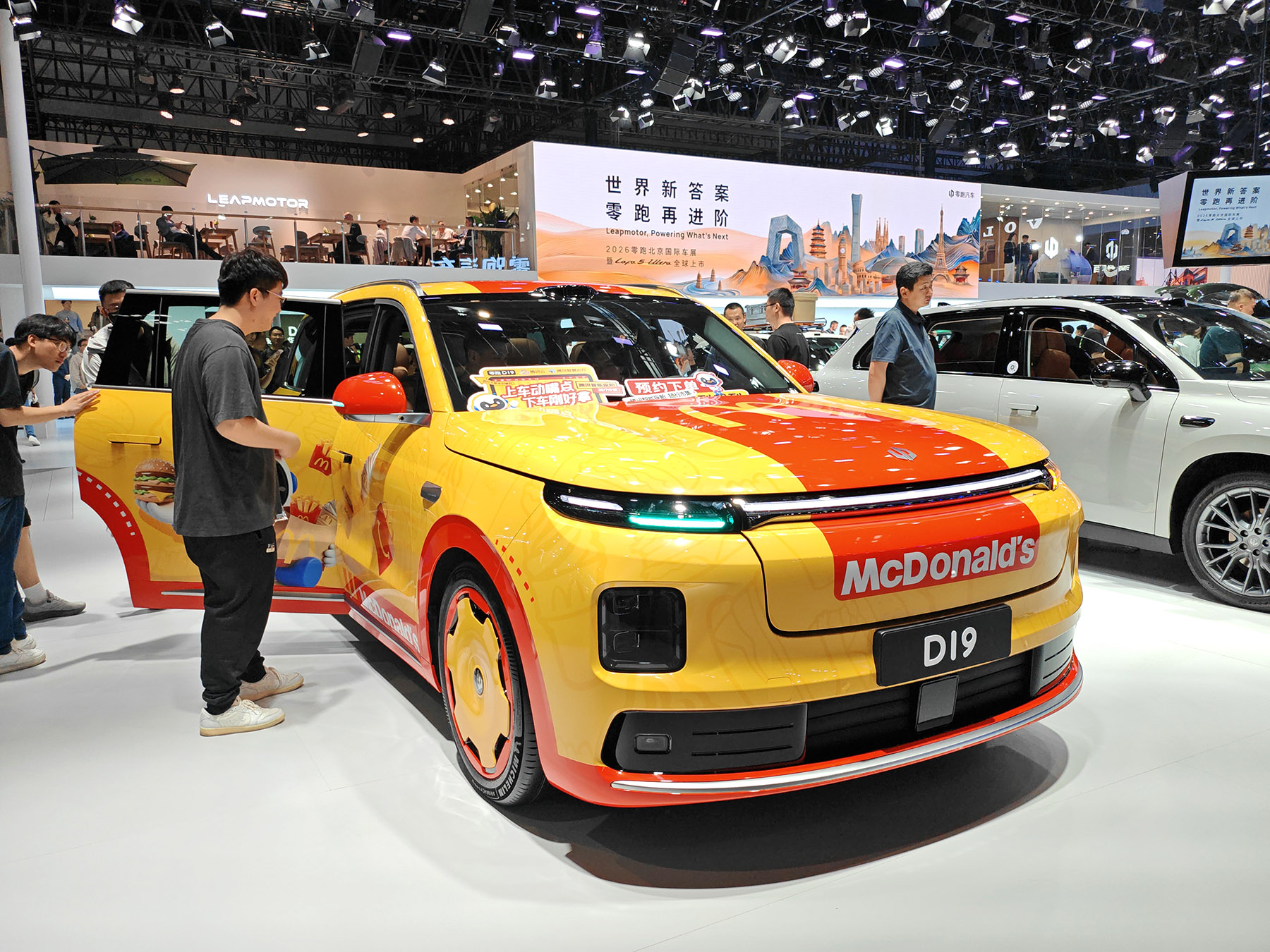
Startups presented a rosier picture than established brands in April. Leapmotor emerged as the top performer, delivering 71,400 vehicles, up 73.9 percent year-on-year and setting a new monthly record. Its volume was nearly double that of its closest competitor Li Auto, driven by strong order intake from new models such as the A10 and D19, which recorded big orders shortly after launch.
Li Auto delivered 34,100 vehicles, broadly flat year-on-year but down around 17 percent from March. The company faced short-term pressure from product transition cycles and intensifying competition in the large SUV and extended-range hybrid segments, where rivals including Huawei-backed brands, Nio, and others have been expanding offerings.
Aito under Huawei's Harmony Intelligent Mobility Alliance delivered 32,800 vehicles, up 18.9 percent year-on-year, supported by refreshed models across its lineup and improving supply consistency following earlier product transition phases.
XPeng delivered 31,000 vehicles, up 13.1 percent month-on-month but down 11.5 percent year-on-year. Its growth was supported by the 2026 Mona M03 sedan, though questions remain over profitability and premium positioning.
ALSO READ: Access to Chinese EVs drives debate in US
Xiaomi delivered more than 30,000 vehicles in April, marking a clear step-up as full-month production of its SU7 sedan contributed to stable output.
However, with cumulative deliveries of around 109,000 units in the first four months, the company still faces significant pressure to scale up in order to meet its full-year target.
Nio delivered 29,400 vehicles in April, up 22.8 percent year-on-year. The company's multi-brand strategy — including Nio, Onvo and Firefly — diversifies its portfolio, though it remains in a transition phase as new models and updates prepare for broader rollout in May.
Contact the writers at lifusheng@chinadaily.com.cn
