

From a historical perspective, formulating the five-year plan for Hong Kong is a groundbreaking initiative and a milestone in Hong Kong’s governance. In the past, Hong Kong had no incentive or experience to undertake comprehensive, long-term planning for its future development. Since the Hong Kong Special Administrative Region government will continue to implement five-year plans in the future, and this work will inevitably be its top priority and a matter of great concern to the central government and all sectors of Hong Kong society, the formulation of five-year plans for Hong Kong will inevitably lead to the advancement of the SAR’s governance effectiveness.
 First, the formulation of Hong Kong’s five-year plan will trigger a shift in the SAR government’s mindset, spurring it to change its approach to governance. During British rule, passive governance concepts such as “laissez-faire”, “positive nonintervention” and “small government, big market” were in vogue and remained fashionable until recently. However, since the handover, Hong Kong has found itself in an increasingly complex, severe, treacherous, and volatile external environment. Factors that contributed to Hong Kong’s past success, such as economic globalization, unimpeded international free trade, cordial Sino-US relations, the friendliness of the US and the West toward Hong Kong, the mainland’s considerable economic dependence on Hong Kong, and Hong Kong’s strong international economic competitiveness have been gradually weakening.
At the same time, Hong Kong is facing a series of challenges: rapid economic development on the mainland and a fundamental transformation of its economic and trade ties with Hong Kong; a growing need for Hong Kong to leverage its economic integration with the mainland to seize development opportunities; increasingly fierce economic competition from both the mainland and overseas; economic headwinds in the US and the West, along with their trade and technological suppression targeting Hong Kong; and a narrowing industrial base. Consequently, the SAR government needs to shift from a passive to a proactive approach in governance and take the lead in promoting economic and social development. The SAR government’s prompt formulation of a five-year plan for Hong Kong is a “crystallization” of these changes, and its governance effectiveness should also improve accordingly.
Second, a five-year plan will help the leadership and senior officials of the SAR government embrace a stronger international and national perspective and place greater emphasis on strategic, long-term, historical, macro-level, and systemic thinking. A people-centered approach and a humble acceptance of oversight from the central government and Hong Kong residents will also be essential to improving the SAR government’s governance effectiveness.
Third, developing a five-year plan will enable the Hong Kong SAR government to strengthen its leadership and control over the entire administrative body. In formulating the five-year plan, top SAR government leadership must lead the design, overall planning, coordination, and supervision of Hong Kong’s future development, including its direction, goals, major policies, key projects, and various deployments. This will ensure that Hong Kong’s five-year plan aligns with the national five-year plan, that Hong Kong can make a unique contribution to national development, that Hong Kong can seize and make good use of the opportunities brought about by national development, that the SAR government’s various policies and work form an organic whole, and that Hong Kong’s five-year plan is successfully implemented and achieves the envisaged results. In other words, Hong Kong’s five-year plan will bring about “centralization” within the SAR government and strengthen the top echelon’s leadership, command, and supervisory functions.
Fourth, the formulation of a five-year plan will ensure the stability and continuity of the SAR government’s major policies. With the central government’s approval, the SAR government will set policies in accordance with the five-year plan, adjusting them only in response to environmental changes or unexpected events. In the future, under the five-year plan, the SAR government’s development strategy and policies will become more stable and predictable.
Fifth, formulating a five-year plan will enhance the cohesion, systemic nature, and effectiveness of the SAR government’s governance. Formulating a five-year plan is a crucial task for the whole government. It requires mobilizing and organizing resources and personnel across the government and demands concerted efforts and close cooperation among all departments. Each department must fully assess whether its policies align with the overall development direction, strategic goals, and major policies of the nation and the SAR government, and whether policies from different departments are mutually reinforcing. Each department will take a more strategic approach to its work and display more willingness to make “partial” sacrifices for the overall interests and needs of Hong Kong and the government.
With the implementation of the “patriots governing Hong Kong” arrangement, the past struggles and confrontations between the executive and legislative branches have given way to positive interaction. This has led to more effective and smoother governance in Hong Kong. Developing a five-year plan will undoubtedly strengthen this positive interaction. There is a widespread expectation that Legislative Council members will strongly support the SAR government in formulating the SAR government’s first five-year plan and in upgrading its governance effectiveness
Sixth, the formulation of a five-year plan will prompt a change in the SAR government’s fiscal thinking. Generally, the government’s budget is an annual document that outlines revenue and expenditures within the coming fiscal year and provides a rough estimate of future revenue and expenditures. However, under a five-year plan, the government will have to adopt a longer-term, more strategic approach to financial management. To better accomplish the tasks outlined in a five-year plan, the government will need to plan its fiscal revenue and expenditures over the next five years to ensure sufficient financial resources to get things done. After the government has prioritized major policies and projects, fiscal resources must first be allocated to them. This means that in the event of fiscal constraints, some existing government policy projects will need to have their funding reduced or even canceled. The need to fund an increasing number of major policies and projects in the five-year plans will result in mounting fiscal pressure on the government. Therefore, Hong Kong must carefully consider how to broaden and stabilize its tax base while maintaining its simple, low-tax system, to ensure that the government’s effectiveness is not compromised.
Seventh, the formulation of a five-year plan will require the government to place greater emphasis on public policy research. Under the impact of dramatic changes in the internal and external environment, especially considering Hong Kong’s need to speed up integrating into the overall development of the nation, explore new international economic space, promote the transformation and upgrading of Hong Kong’s industries, strengthen Hong Kong’s middle class, and alleviate social contradictions, and with the SAR government becoming more proactive, Hong Kong urgently needs more high-quality, forward-looking, and feasible public-policy research capacity.
Eighth, in the past, Hong Kong primarily focused on day-to-day administration, law enforcement, and the maintenance of public order. Development and innovation were not their forte. However, in the present and future, the SAR government’s important task is to promote Hong Kong’s economic and social development in various new ways. To accomplish these “new” tasks effectively, the SAR government urgently needs to train and recruit a large number of talent to support the transformation of its functions. To strengthen the government’s effectiveness, the political accountability system for principal officials, the administrative responsibility system for department heads, and the personnel and disciplinary management system for civil servants all need to be continuously improved through reform and innovation.
Ninth, formulating a five-year plan will strengthen the collaboration between the executive and legislative branches. With the implementation of the “patriots governing Hong Kong” arrangement, the past struggles and confrontations between the executive and legislative branches have given way to positive interaction. This has led to more effective and smoother governance in Hong Kong. Developing a five-year plan will undoubtedly strengthen this positive interaction. There is a widespread expectation that Legislative Council members will strongly support the SAR government in formulating the SAR government’s first five-year plan and in upgrading its governance effectiveness. This collaboration will strengthen mutual trust between the executive and legislative branches and foster more efficient, constructive interactions in the future.
Tenth, formulating a five-year plan will strengthen connections and cooperation between the SAR government and all sectors of society, as this work is not only a government task but also a mission for society. Since the government announced the drafting of Hong Kong’s first five-year plan, the public has reacted enthusiastically, with experts from various sectors actively offering suggestions and ideas on Hong Kong’s future development and the plan’s content. The SAR government will value and encourage society’s initiative and enthusiasm, maintain close contact with elites from all sectors, and listen earnestly and humbly to the opinions and suggestions of experts from all sides. The formulation and implementation of Hong Kong’s five-year plan will necessarily entail some institutional and policy reforms and innovations. They will inevitably touch upon the interests of some vested interests and encounter their resistance. However, with support from all sectors of society, their opposition can be overcome more effectively.
Finally, and most importantly, coordination and interaction between the central government and the SAR government will be further bolstered by the formulation of Hong Kong’s first five-year plan. The plan is not merely a matter for Hong Kong alone; it is an integral part of the national 15th Five-Year Plan (2026-30) and a significant step toward Hong Kong’s integration into the nation’s overall development. As the SAR government formulates its five-year plan, it will receive guidance and advice from the central government, particularly on development direction and strategies. As the SAR government continues to formulate five-year plans, the long-term charting and implementation of Hong Kong’s development strategy will further promote interaction and cooperation between it and the central government. With the central government’s care, support, guidance, and leadership, the SAR government’s effectiveness will inevitably improve.
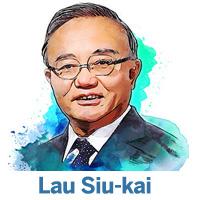
The author is a professor emeritus of sociology, the Chinese University of Hong Kong, and a consultant for the Chinese Association for Hong Kong & Macao Studies.
The views do not necessarily reflect those of China Daily.
