

Hong Kong is playing a key role in making itself a world aviation hub by betting big on generating secondhand aircraft parts for strategic resilience. William Xu reports.
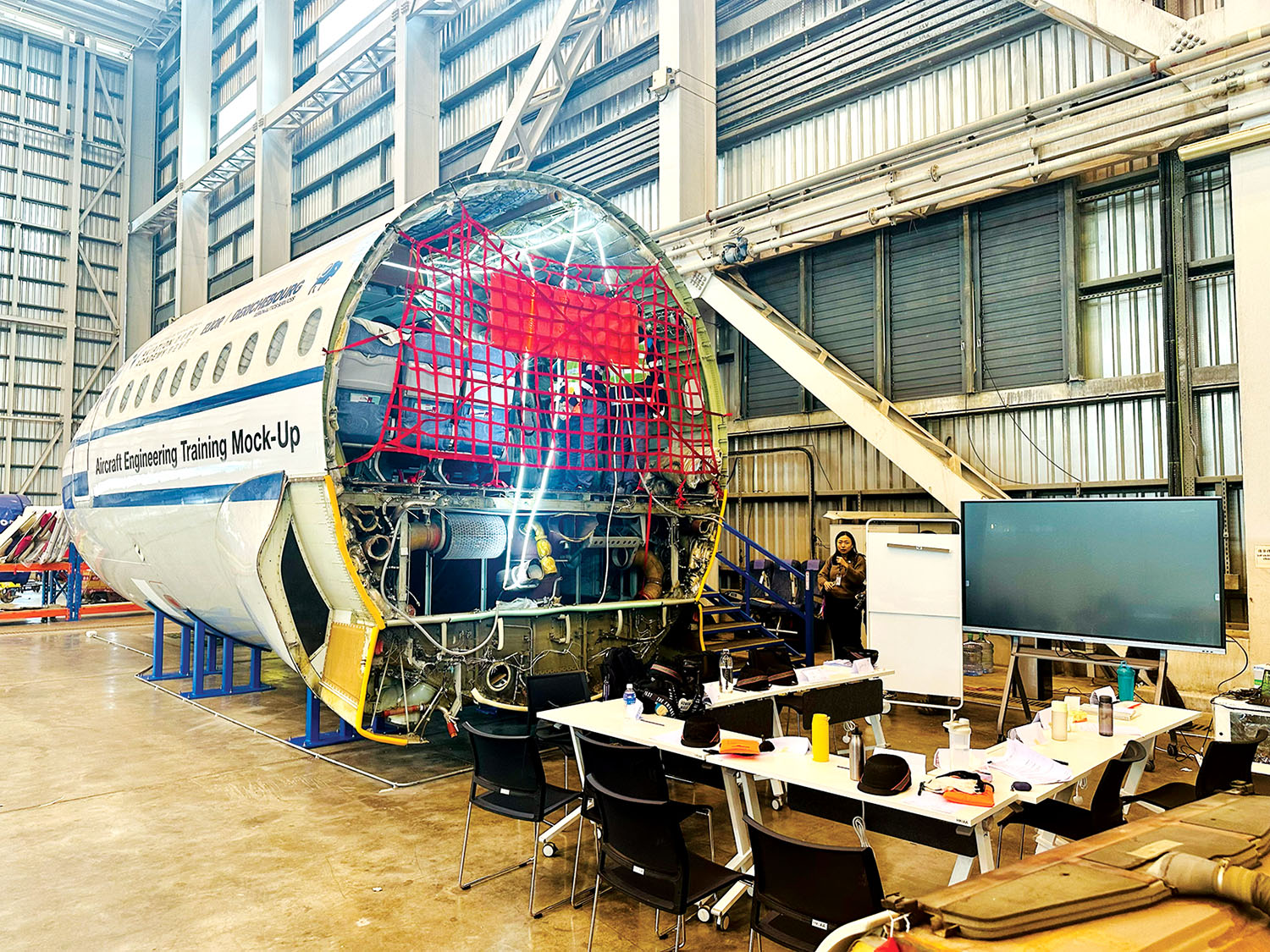
Aviation engineer Martin Law Tat-keung spent 35 years ensuring that planes stayed intact and safe in the air. Today, he teaches a new generation practically the reverse — how to tear them apart.
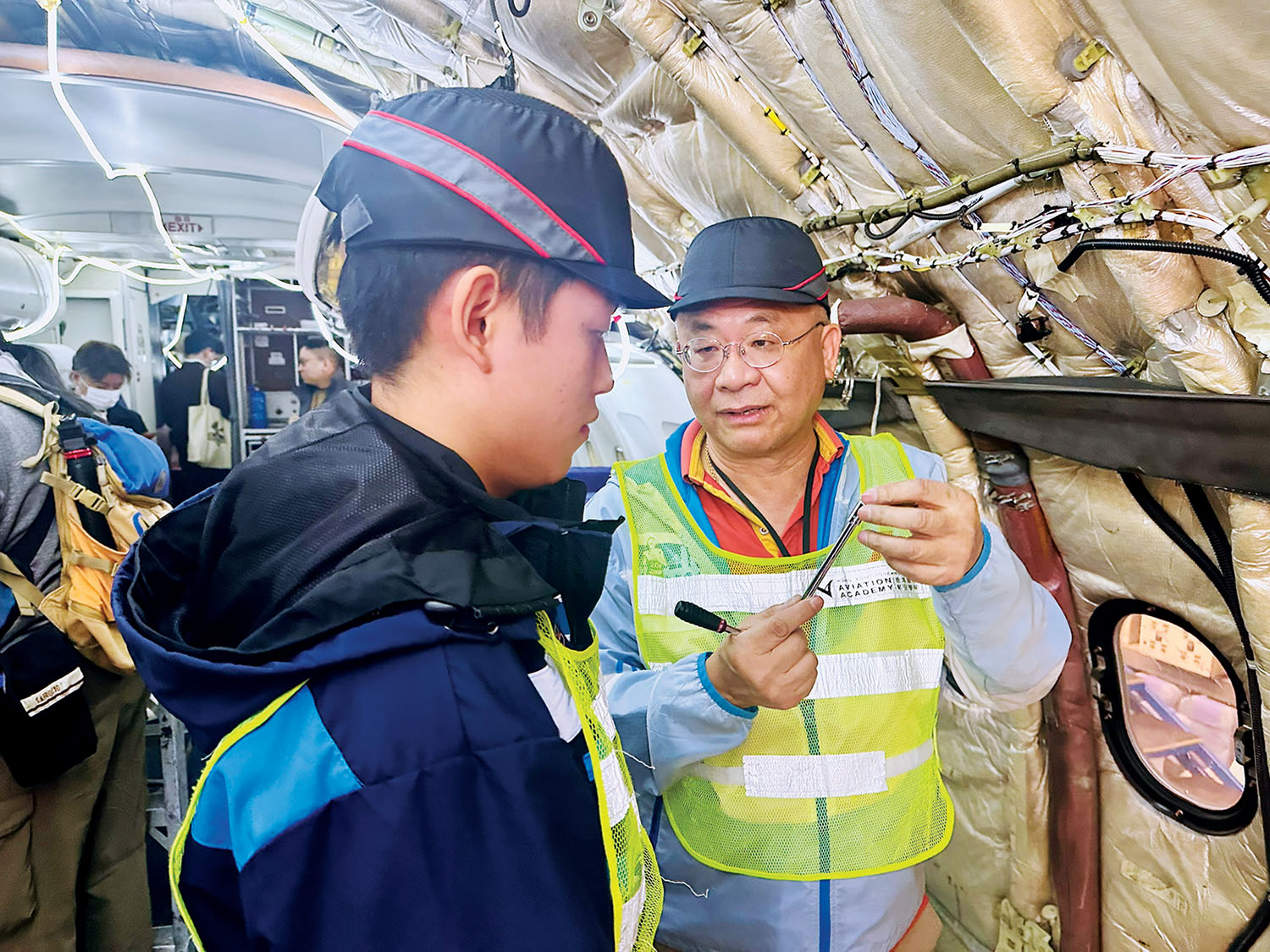
“You’ve to twist it just like that,” he tells a cluster of aspiring young trainees in a hangar on a sunny December morning, holding up a tiny screw he had just removed from the interior wall of an aircraft cabin.
Law’s weathered hands are guiding the hesitant grips of his pupils to remove components from retired jets, and properly process and recertify them for future circulation in a lucrative secondary market — a booming trade that Hong Kong had, until recently, only watched from the sidelines.
Each year, the global aviation sector retires more than 700 aircraft. Decommissioning rarely marks the end of a plane’s economic life. From engines, landing gear and seats to heat exchangers, components on retired planes can often retain years of operational viability. Once salvaged, tested and recertified by sophisticated hands, they are ready to embark on a second flight.
READ MORE: HK boosts aircraft-parts trading via mechanics course
Circulation of used aircraft parts has never been as crucial to global aviation as at present with a systemic supply chain bottleneck, caused by shortages of manpower and stock, and fueled by geopolitical tensions, having significantly impeded the delivery of new aircraft and parts.
According to the International Air Transport Association (IATA), at least 5,300 planes had not been punctually delivered to buyers as of December last year, and the order backlog worldwide had swollen to above 17,000 — equal to almost 60 percent of the world’s active aircraft fleet and needing 12 years of full-capacity production to catch up. It warns that the supply-and-demand gap is unlikely to be solved before the mid-2030s.
Thus, airlines and aviation maintenance companies are forced to rely on used parts to keep their aging jets in the sky. Analysts expect the value of the secondhand aircraft parts market to double from $27.92 billion in 2024 to $56.64 billion by 2035. It is against such a backdrop of compounding vulnerabilities that Hong Kong has entered the fray — a move industry leaders and experts say is not merely an opportunistic grab at a high value-added market, but a strategic investment in global supply-chain resilience.
Partnering with veterans
While Hong Kong boasts a world-class airport and a robust logistics network, the city is a relative newcomer to this highly specialized area. Instead of building from scratch, it has opted to seek help from industry veterans.
In October, Chief Executive John Lee Ka-chiu said the special administrative region would invite Elior Group SA — a leading France-based aeronautic services firm — to develop the local aircraft component recycling and trading business. The European company brings to Hong Kong decades of experience in decommissioning fleets for Airbus — one of the world’s major plane manufacturers — along with an assortment of aviation services.
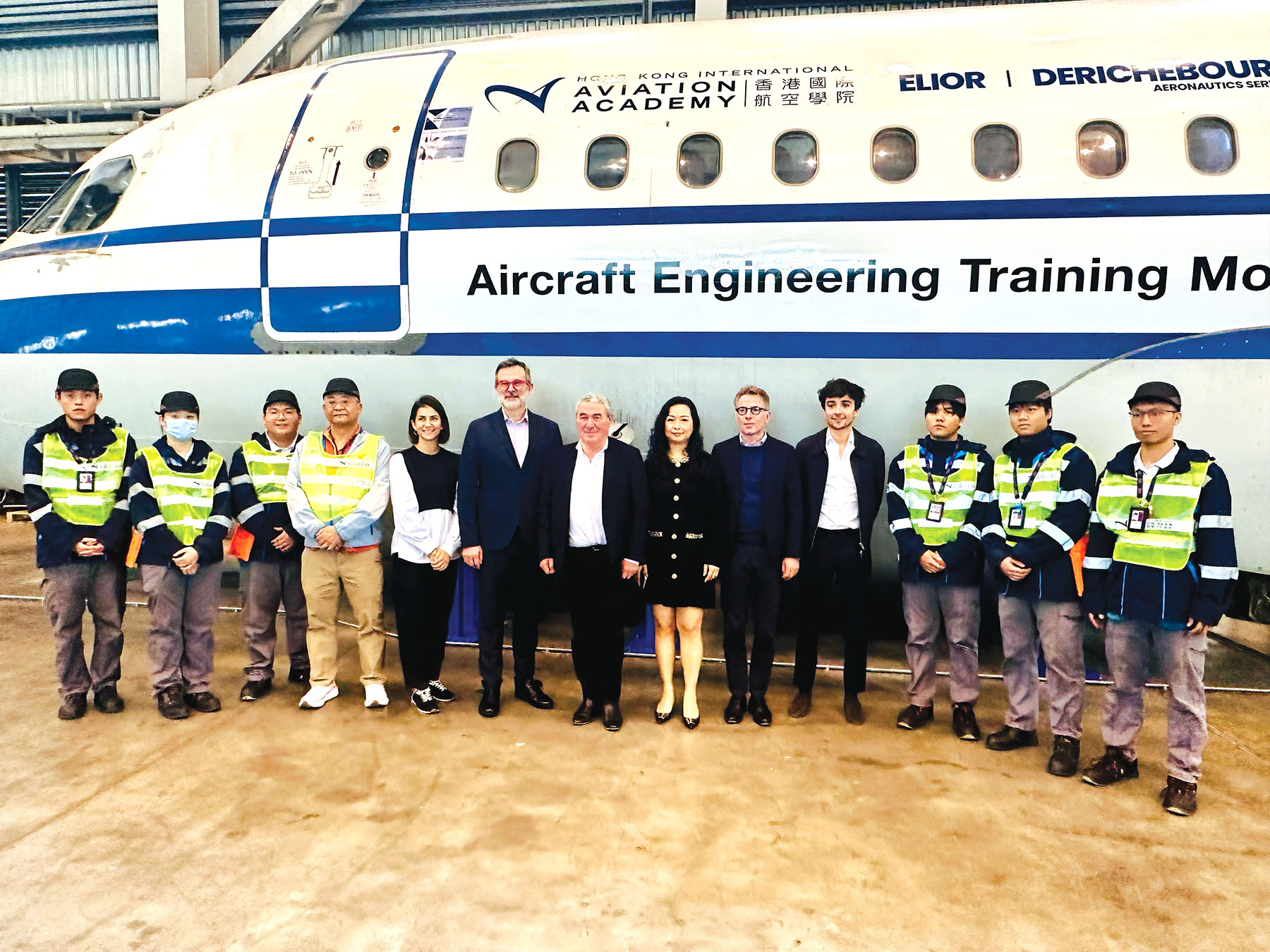
Elior’s deal with the SAR includes setting up its Asia headquarters in the city and working with the Hong Kong International Aviation Academy to offer courses in component dismantling and recertification.
READ MORE: CE: HK sets sights on becoming regional aircraft recycling hub
“Elior will continue to increase its investment in Hong Kong to build a complete ‘aviation trinity’ covering talent training and expanding into aircraft maintenance engineering and parts recycling businesses,” says Daniel Derichebourg, group chairman and chief executive officer of Elior Group SA.
That trinity is taking shape. In March, Elior started a joint venture with a local partner, China Aircraft Services Ltd (CASL), in an alliance allowing the European company to park retired planes at CASL’s hangars to be examined for usable parts.
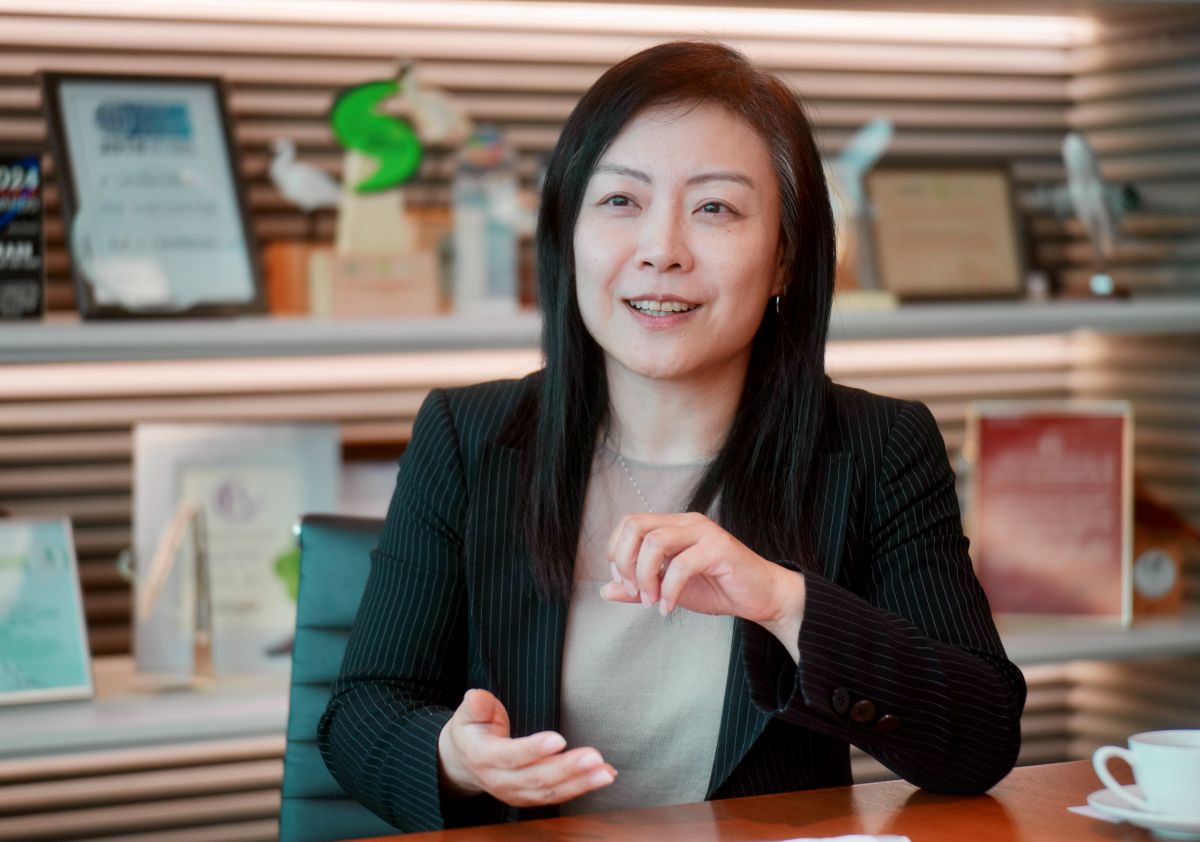
As for physical capacity, Janet Cheung, chief executive officer of Elior Asia, says they are identifying a new land site outside Hong Kong International Airport to build a recycling plant. “We’re discussing the land issue with the government and expect talks to be finalized by the third quarter of 2026 at the latest,” she says, adding that Elior has already received many enquiries for dismantling aircraft in Hong Kong.
Norbert Marx, chief executive officer of CASL, hopes to see the entire recycling process operational before the end of this year.
Lionel Roques, a consultant with Elior, says the secondhand parts market has been fueled by airlines’ rapid upgrading and replacement of their fleets. Aircraft can fly for 30 years with proper maintenance, but they are normally phased out after 15 to 20 years in service. “The cost of aircraft maintenance is going up,” he says, citing higher repair and insurance expenditure.
The time gap between a plane’s projected lifespan and retirement age means that many components are “still very young” when the aircraft is decommissioned, making it highly sought-after in the secondary market, says Roques. “Airlines want younger aircraft. And components from the retired planes may feed the new aircraft they’ve bought. It’s a very good cycle.”
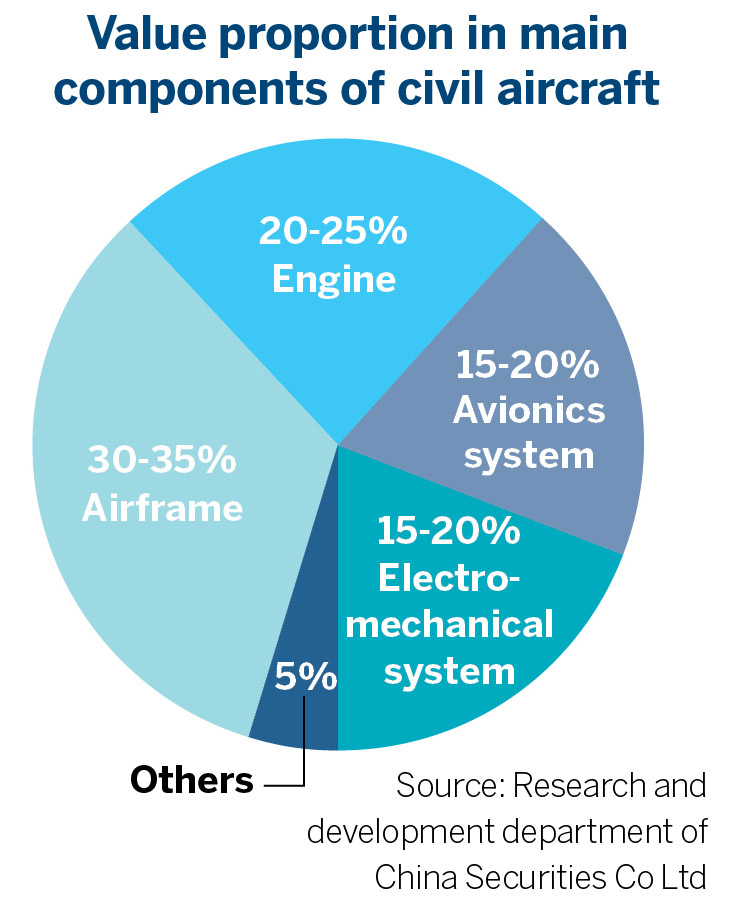
Engines from a retired jet can cost between $5 million and $7 million, and the remaining parts may be worth $2 million to $3 million, depending on what is left, explains Roques. “Landing gear is also highly valuable as are the avionics,” he says. As aircraft in the same family share similar designs, their components are often interchangeable and, therefore, popular in the market.
Such a secondary market, originally developed to help airlines save costs and promote resource recycling, has now become a lifeline for planes that cannot retire on schedule due to manufacturing constraints. With the IATA anticipating a record 5.2 billion passenger trips this year, carriers have been forced to extend the lifespan of aging fleets, pushing the global average fleet age to 15.1 years — up from the pre-pandemic average of 13 years.
“As new aircraft could not be delivered and maintenance of the older aircraft couldn’t be completed, airlines have been struggling, so are aircraft manufacturers and component producers. Nobody in the entire industry is spared by the supply-chain crisis,” says Winnie Liu, president and chief commercial officer of China Aircraft Leasing Group Holdings (CALC).
Beyond its core aircraft leasing and maintenance services, the Hong Kong-based company also trades secondhand aircraft components through two recycling bases in the Chinese mainland and the United States, supplying used serviceable materials (USM) to over 1,000 clients across both markets.
“The smooth flow of USM is crucial for the industry’s supply chain nowadays,” says Liu, adding that Hong Kong’s entry into the parts recycling market precisely aligns with the nation’s 15th Five-Year Plan (2026-30) in which the SAR has been entrusted, for the first time, with establishing a high-value-added, supply-chain service center.
“This positioning is particularly relevant to the global emphasis on supply chain security, and also very suitable for the actual situation of Hong Kong,” says Liu.
Hong Kong is highly suited to serving high-end supply chains in the aviation business, she says. “High-value goods are particularly exposed to tariff changes. Hong Kong’s zero-tariff policy has given the city a unique advantage. And, we are a crucial hub in international aviation. Since you have many planes flying in and out, there will naturally be a flow of aviation materials.”
Leveraging local strengths
As parts recycling and trading involve international business, financial and legal issues, Hong Kong has a comprehensive pool of professionals to help buyers and sellers in different areas, says Liu, adding she believes the emerging industry will see considerable gross domestic product paybacks, as well as huge job opportunities.
Many mature aircraft dismantling and recycling facilities worldwide, such as those in Chengdu, Sichuan province, Tarbes-Lourdes-Pyrénées in France and Mojave in the US, mainly serve domestic markets. Hong Kong itself can draw clients from a broader region thanks to the city’s crucial soft power — regulatory versatility.
Steven Cheung King-lung, chairman of the Hong Kong Professional Airline Pilots Association (HKPAPA), says the SAR boasts a team of veteran mechanics qualified to navigate the complex web of global aviation technical standards. “Whether a plane follows the standards of European Union Aviation Safety Agency (EASA), the Federal Aviation Administration (FAA) of the United States or the Civil Aviation Administration of China (CAAC), we’re qualified to handle it,” he says.
A diverse engineering team is crucial for handling international parts transactions, he says. For instance, removing a component from a plane from Europe may need an engineer with EASA licenses. If the part is to be used in an aircraft owned by a US carrier, it may have to be examined, recertified and installed by mechanics with FAA qualifications.
Many overseas planes hold airworthiness certificates issued by the FAA or EASA. These advantages enable Hong Kong to attract customers from the fast-growing Southeast Asian and South Asian markets — regions that currently lack mature aircraft parts recycling centers and often have to send retired aircraft halfway around the world for processing.
This advantage is amplified by Hong Kong’s strategic location — a flight from the city can reach most areas of these booming regions — including India, the world’s third-largest aviation market — within a six-hour journey.
“(Hong Kong’s entry into the recycling market) is not a short-term speculation, but a wise move under the structural changes in the global aviation supply chain,” Steven Cheung says.
Another of Hong Kong’s definitive strengths he believes is the synergy with other cities in the Guangdong-Hong Kong-Macao Greater Bay Area. “Airports in Guangzhou, Shenzhen, Zhuhai and Macao all have plane maintenance services. Therefore, they demand and supply components, and Hong Kong can become a trading platform to handle fundraising, insurance, certification and other support services,” he says.
In the next decade, the Chinese mainland is expected to retire over 1,000 planes, a window that Hong Kong must seize upon, says Jiang Changmin, associate professor in the Department of Logistics and Maritime Studies at the Hong Kong Polytechnic University.
To Jiang, a local recycling market is a “smart strategic decision” for Hong Kong’s aviation industrial upgrade. “What matters isn’t the disassembly process alone as that would make the picture too small. What matters is the trading,” he says, adding that Hong Kong’s robust financial services — from valuation and financing to loans and insurance — is what the city can really contribute to the supply chain.
Jiang believes that if the city can establish itself as a regional parts trading center, it will not only be able to sell parts from the local and mainland markets, but components from other parts of the world. “I think that’s part of the government’s long-term plan,” he says.
ALSO READ: HK-French joint venture to boost aircraft disassembly industry
However, a major challenge remains — how to lure fresh blood to the business? Hong Kong’s aviation sector is experiencing a severe manpower shortage, with government reports projecting a labor gap of 23,000 people by 2028. “If we want to establish a new industry here, it’s absolutely necessary to start by training talent,” says Elior’s Cheung. She added that Elior is also investigating working with local universities on material science and aviation-related research, hoping to help local graduates find a future related to the industry.
Simon Li — a veteran aviation engineer from the mainland — says cultivating a qualified aircraft engineer would normally take five to 10 years. The tasks of maintenance and disassembly have some similarities. Skilled technicians familiar with aircraft maintenance still have to undertake additional training in order to master the process of disassembling parts, he says.
Jiang believes young Hong Kong people are enthusiastic about the aviation industry. However, in the past, the lack of career branches in the sector had discouraged them from taking up aircraft engineering.
But, as the industry moves towards higher value-added directions, Jiang believes more aviation-related posts will be up for grabs in other industries like finance, providing engineers with more diverse career development paths.
For those enterprising trainees listening assiduously to Martin Law, learning how to tear a plane apart is not just a maintenance chore any longer — it is the first step in building a more resilient global supply chain and seeking a new career path for themselves.
Contact the writer at williamxu@chinadailyhk.com
