

Livestreaming, buyer guarantees, bonded zones open trade channels
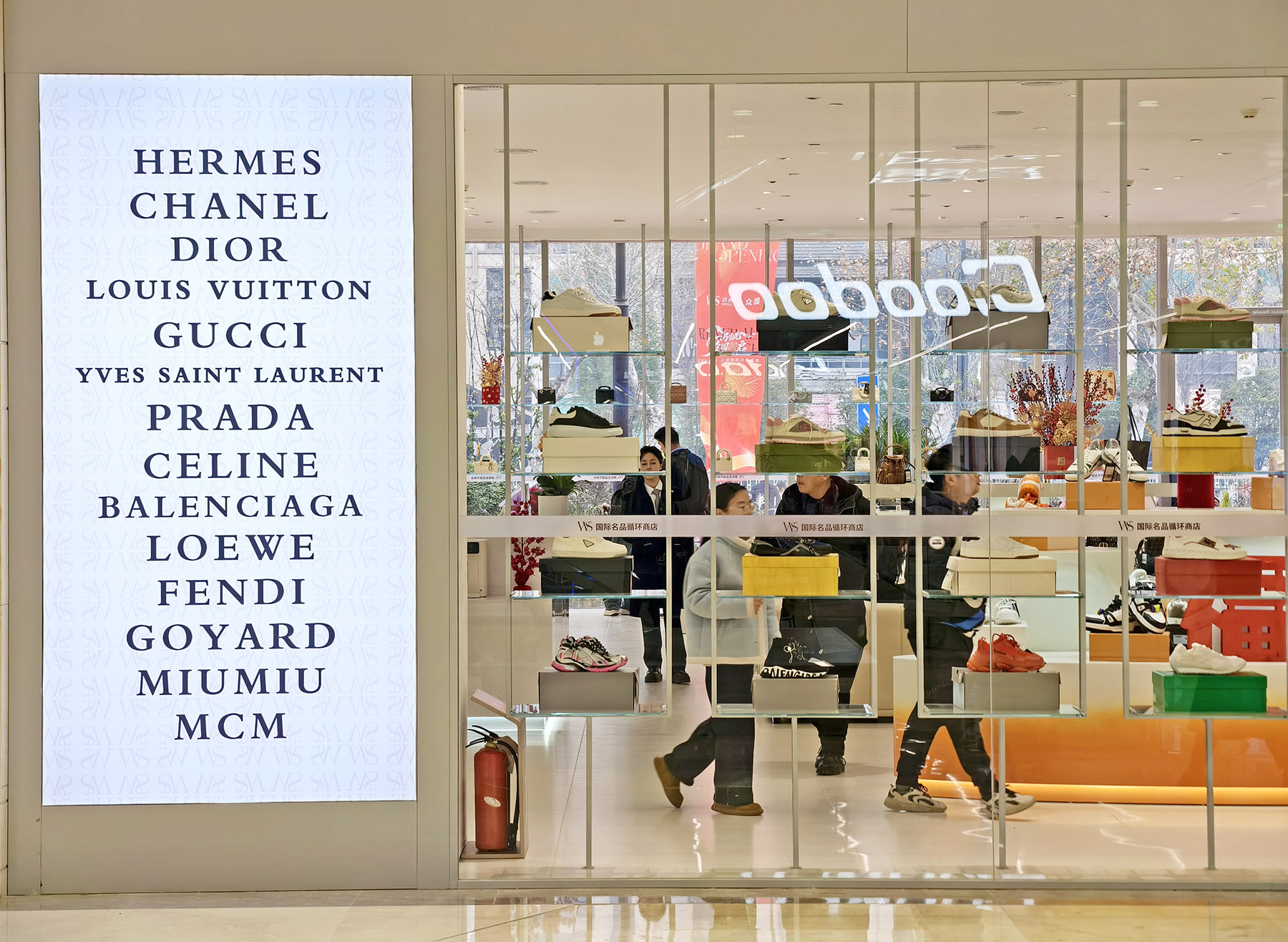
Sarah Johnson, a schoolteacher from Los Angeles, the United States, thought the $1,290 retail price of a Louis Vuitton bag was too much for her on a teacher's salary. In September 2024, she found a Shanghai-based seller on eBay offering the same bag for $780. Though hesitant at first, eBay's authenticity guarantee gave her confidence.
The seller shipped the bag to eBay's verification center, which confirmed it was authentic within 48 hours, then forwarded it to her with a tamper-evident tag and a digital certificate, she said.
"The bag itself looked even better than the photos — just some very light wear on the handles. I've been using it every day since," Johnson said. "Now I actually search for Chinese sellers specifically. Their prices are usually more competitive and they have a great selection."
The schoolteacher is not the only overseas buyer to purchase secondhand luxury goods from China.
READ MORE: Secondhand economy a win-win scenario
Emma Richardson, a digital marketing specialist from Manchester in the United Kingdom, came across a livestream from a Hangzhou Sheng Tang Luxury Goods seller when scrolling through TikTok late last year.
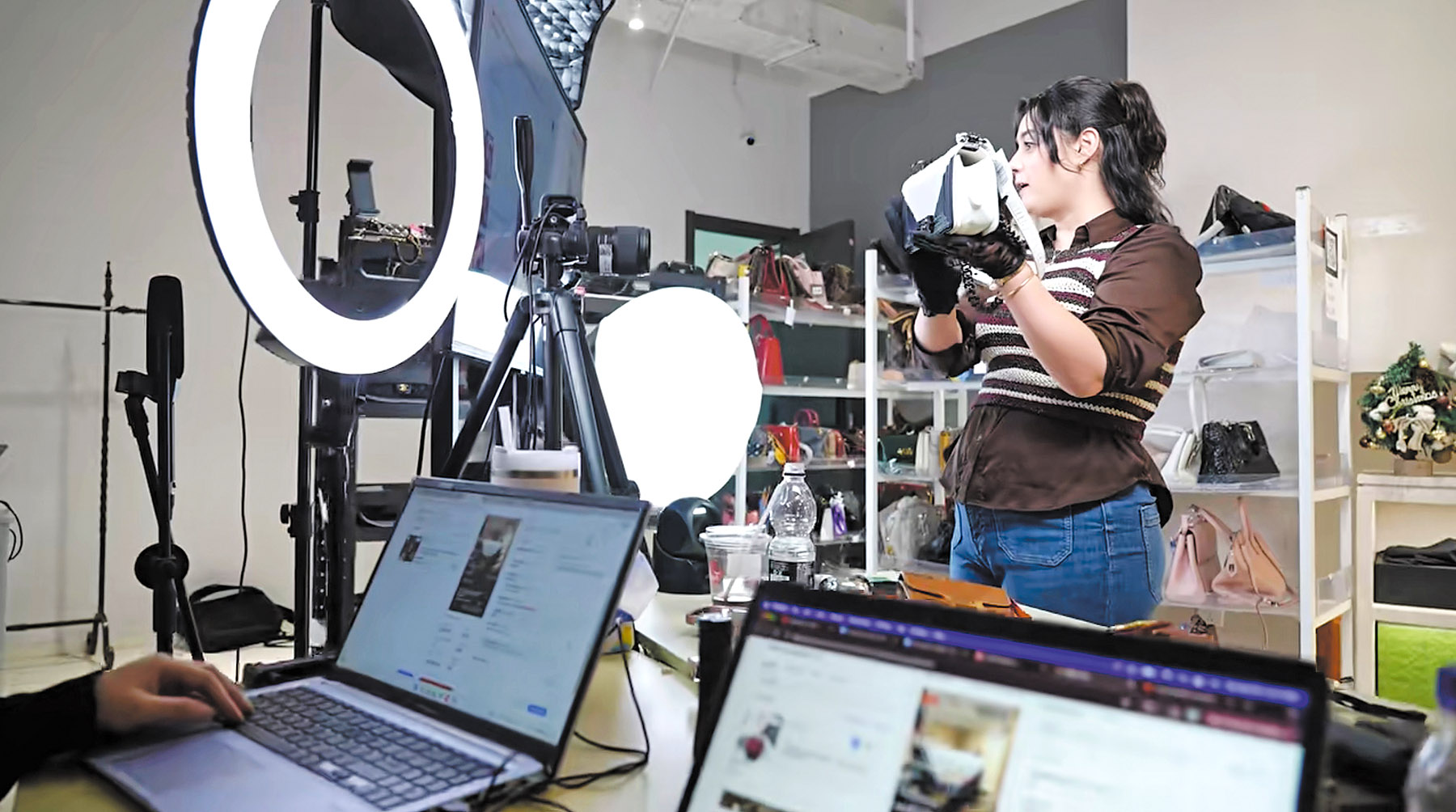
The livestreamer was showing a Gucci bag in detail, displaying its inside, outside, stitching, and even shining a UV light on the leather. The price was 380 pounds ($516), compared with 1,150 pounds at a UK boutique.
"I was nervous because it was my first time buying from China, but the livestream made me feel like I could see everything clearly. The bag arrived in 12 days with a Chinese authentication certificate and an English condition report. The hardware had a tiny bit of oxidation, but otherwise it was perfect. I took it to work and my colleagues thought it was new," she said.
"Now I follow three more Chinese secondhand luxury livestreamers. I watch them every week like it's a TV series," she added.
Jiang Min, founder and CEO of Hangzhou Sheng Tang Luxury Goods, said livestreaming was "a game changer".
"The last two years have been the prime period for Chinese secondhand luxury sellers and buyers to tap into the overseas market," she said.
Livestreaming serves as a major engine. "It allows sellers to interact with customers, show the condition of a bag … and answer questions instantly. That lowers the barriers for cross-border transactions," said Jiang.
Although China's domestic secondhand luxury goods market contributed less than 10 percent of annual total luxury sales revenue last year, it expanded by 15 to 20 percent, according to Bain & Company's 2025 Chinese Personal Luxury Goods Market report. This growth rate was especially noticeable as the country's luxury market contracted by nearly 5 percent last year.
China's secondhand luxury goods market is also seeing an overall maturity in the supply, demand and distribution sides, according to Bain & Company global partner Yang Yue.
High net-worth individuals and the middle class now treat luxury handbags, watches and jewelry as transferable assets. Meanwhile, younger buyers, particularly millennials and Gen Z, prioritize value for money and sustainability over the prestige of buying new, she said.
Improved margins
A structural shift in distribution channels has fueled the growth of the secondhand luxury goods market in China.
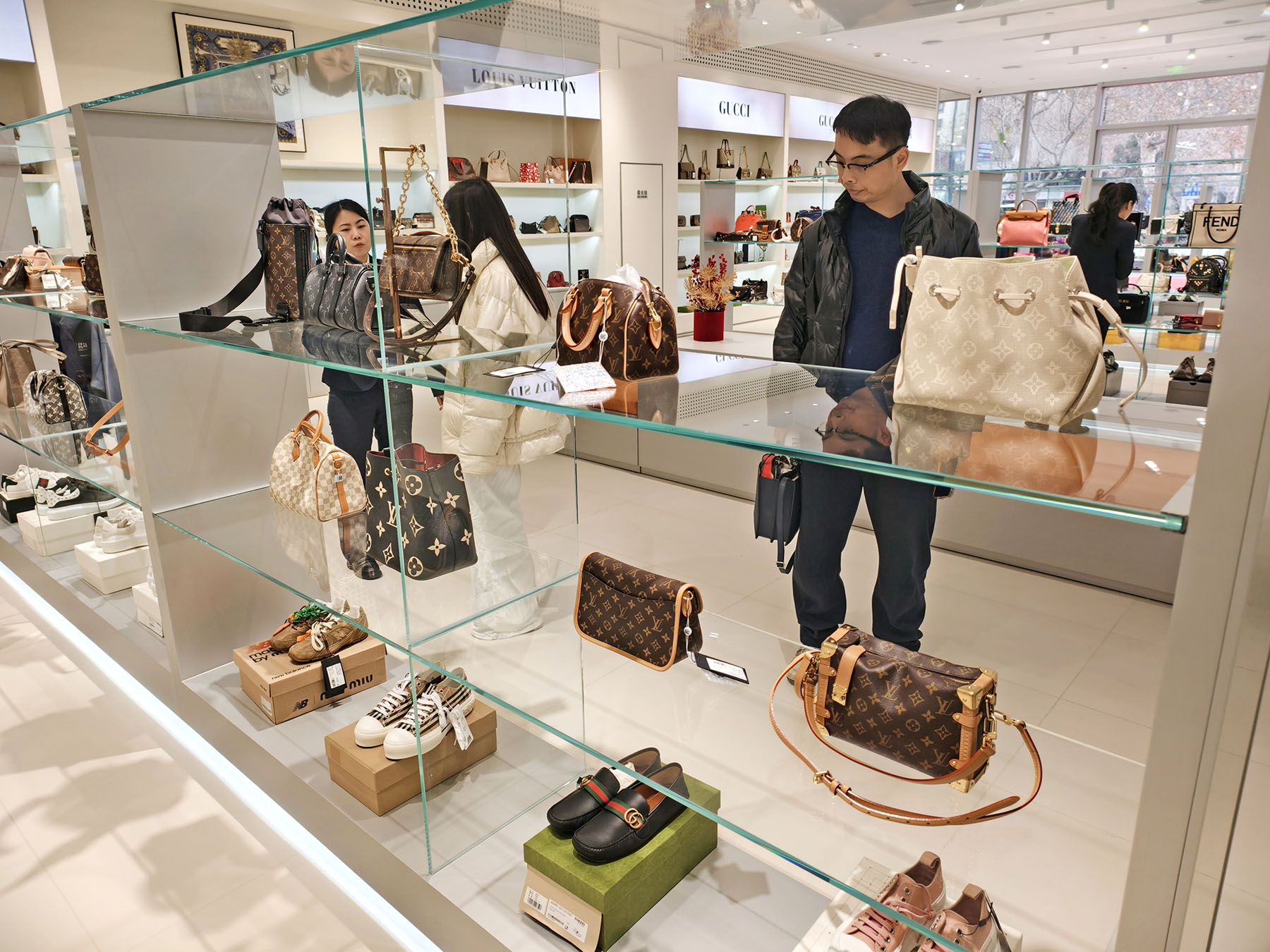
Livestreaming e-commerce, in particular, has allowed buyers from around the world to see product details in real time and helped build trust in product authentication, said Yang.
Secondhand luxury goods company Senza Group was established in 2022. Company co-founder Liang Guanrong said the lucrative overseas market helped its overseas business surge past 50 percent in 2025, and the growth rate is expected to remain at around 30 percent this year.
In the past, they only made 50 yuan profit on a bag sold for 5,000 yuan, he said.
However, overseas markets offer significantly higher margins. For example, a Louis Vuitton Speedy 25 handbag, a signature piece of the French brand, can be sourced in China for 6,000 to 8,000 yuan depending on its condition, and sold in the US for about $1,500, or approximately 10,230 yuan.
The same bag typically retails for $1,700 to $1,800 in the US secondhand market. Even after accounting for tariffs (around 15 percent for the US) and logistics costs, the arbitrage remains profitable, Liang said.
Simeon Siegel, an analyst at BMO Capital Markets, said major overseas secondhand luxury goods platforms like The RealReal and Vestiaire Collective will be at a cost disadvantage if they cannot effectively tap into China's supply side.
"China's secondhand luxury (goods) supply is becoming a major variable in the global market," he said.
Vast stocks
The success of Chinese secondhand luxury goods companies is in line with the global trend of the sector.
Pang Tao, general manager of sales and category management at eBay Greater China, said secondhand luxury goods are gaining more attention from consumers.
"For the past three years, the circular economy has grown rapidly on eBay, and secondhand luxury goods are a key part of that. Since 2024, preowned and refurbished products have accounted for more than 40 percent of eBay's gross merchandise value. Globally, 89 percent of consumers plan to continue, or increase, their purchases of secondhand goods, with Gen Z and millennials driving the trend," he said.
Luckily, China has a rich reserve of secondhand luxury products due to the country's rapid economic development in recent decades and people's increasing wealth.
According to the China Used Goods Association, secondhand luxury goods accounted for more than one-fourth of the country's 1.23-trillion-yuan secondhand goods transactions in 2023.
"China has been the world's largest primary luxury consumer market for years, accumulating a vast stock of pre-owned goods, many of which are in near-mint condition," said Pang.
Jane Hali, a retail analyst at Jane Hali & Associates, said that The RealReal's primary supply source remains the United States. But China has "an enormous and price-competitive inventory of secondhand luxury goods", she said.
Chinese companies' high level of digitalization has also made them stand out from their overseas peers.
A large number of Chinese sellers have fully digitalized their operations, including procurement, authentication, warehousing, maintenance and compliance, by using enterprise resource planning and inventory management systems, Pang said.
"For major sellers in China, everything runs on IT systems. But sellers in neighboring countries are still using pen and paper to track inventory. That efficiency gap directly translates into cost and speed advantages," he said.
Customer guarantees
For trading pricey goods like luxury handbags, trust has long been the biggest barrier to cross-border secondhand luxury goods' transactions. International buyers may be skeptical of goods shipped from China, fearing counterfeits or misrepresentation.
"Previously, there was no way to guarantee that the buyer and seller would not end up in a dispute. There is no way to guarantee the authenticity and quality of every item and that made platforms cautious about the category," said Jiang from Sheng Tang.
But eBay has tackled the issue with its "authenticity guarantee" program. Sellers send items to eBay's verification centers for authentication before they are shipped to buyers. Each item receives a tamper-evident tag and a digital certificate. If an item is returned it is sent back to eBay's center for re-verification, protecting both the buyer and seller.
Sheng Tang started selling items on eBay last year. The platform's guarantee system helped the company quickly win the trust of overseas buyers. Combined with livestreaming, the store's sales quickly surged, said Jiang.
The Senza Group, which joined eBay in May last year, had a similar experience, and positive results followed immediately, said Liang. The company's monthly sales exceeded $1 million within three months.
"We can see that eBay has invested many resources in the secondhand luxury category, not only supporting us in terms of traffic but also providing client managers to optimize our listings and better understand overseas consumers' preferences. But most importantly, the platform's endorsement helps Chinese sellers alleviate trust issues," he said.
Bonded zones
As vibrant as the sector seems, transactions involving secondhand luxury goods are never easy to conduct.
For a very long time, various challenges had to be overcome including tariffs, customs clearance, foreign exchange settlement and intellectual property protection, according to Chen Wei, founder of Twelve Scales (Shanghai) International Trade Co, a service provider for major circular economy platforms.
Chen recalled a recent case where a Hermes bag exported to the US was misclassified by US Customs, resulting in an additional $3,000 Section 301 tariff.
Twelve Scales filed an appeal with complete documentation and authentication certificates. After more than 150 days, US Customs corrected the country of origin information and refunded the duty. "That case shows why full-chain compliance is essential. Companies of our kind are needed to solve these supervision problems," said Chen.
The government has acted quickly to address these supervision challenges.
In May last year, a shipment of 6,000 rare trading cards valued at 20 million yuan was exported from the Caohejing comprehensive bonded zone in Shanghai under the 1210 bonded e-commerce model.
This marked the first large-scale and compliant export of secondhand luxury goods from China through the new mechanism.
The 1210 model was introduced by the General Administration of Customs in 2014 to facilitate the development of cross-border e-commerce, and has been promoted in 87 Chinese cities and all of Hainan Island.
Under the mechanism, goods can complete their customs declaration through a bonded zone to avoid being classified as "smuggled goods". Meanwhile, goods can be stored in the bonded warehouses and shipped overseas as orders arrive, improving delivery efficiency. Unsold or returned items can be brought back duty-free.
"It is like adding a stabilizer and accelerator to secondhand exports," Chen said.
Expansion nationwide
Several free trade zones have begun building industrial parks for secondhand products and exploring smoother customs procedures for pre-owned goods.
Shenzhen Qianhai Comprehensive Bonded Zone in Guangdong province released a three-year action plan in September 2025, expressing its support for the export of secondhand goods.
With a rich reserve of luxury goods and vibrant purchases among local consumers, Chengdu in Sichuan province is promoting the export of secondhand luxury goods as a new driver of foreign trade.
As a pioneer of cross-border e-commerce, Hangzhou in Zhejiang province has already built a complete e-commerce ecosystem.
At the end of last year, Hangzhou Comprehensive Bonded Zone announced it will build an industrial park for the export of secondhand goods. As the first of its kind in Zhejiang, the new facility will mainly serve the export of secondhand luxury goods, used cellphones and secondhand home appliances, according to the local administrative committee.
"The government has attached greater importance to the secondhand luxury goods industry since 2025. A large number of bonded zones have set up such industrial parks to provide complete infrastructure and policy support," said Sheng Tang's CEO Jiang.
With the joint efforts of the government and service providers, industry experts anticipate more room for the growth of China's secondhand luxury goods industry.
ALSO READ: Leading luxury goods group sees signs of recovery in China
"The huge growth potential of the overseas market, the development of a circular economy and the maturity of the cross-border e-commerce ecosystem both make us optimistic about the secondhand luxury goods market in the next three to five years," said Senza Group's Liang.
"China is still in the early stages of its secondhand luxury market compared to mature markets like the US and Japan. That gives us a late-mover advantage in terms of service capability, authentication quality, product depth and brand richness," said Pang of eBay.
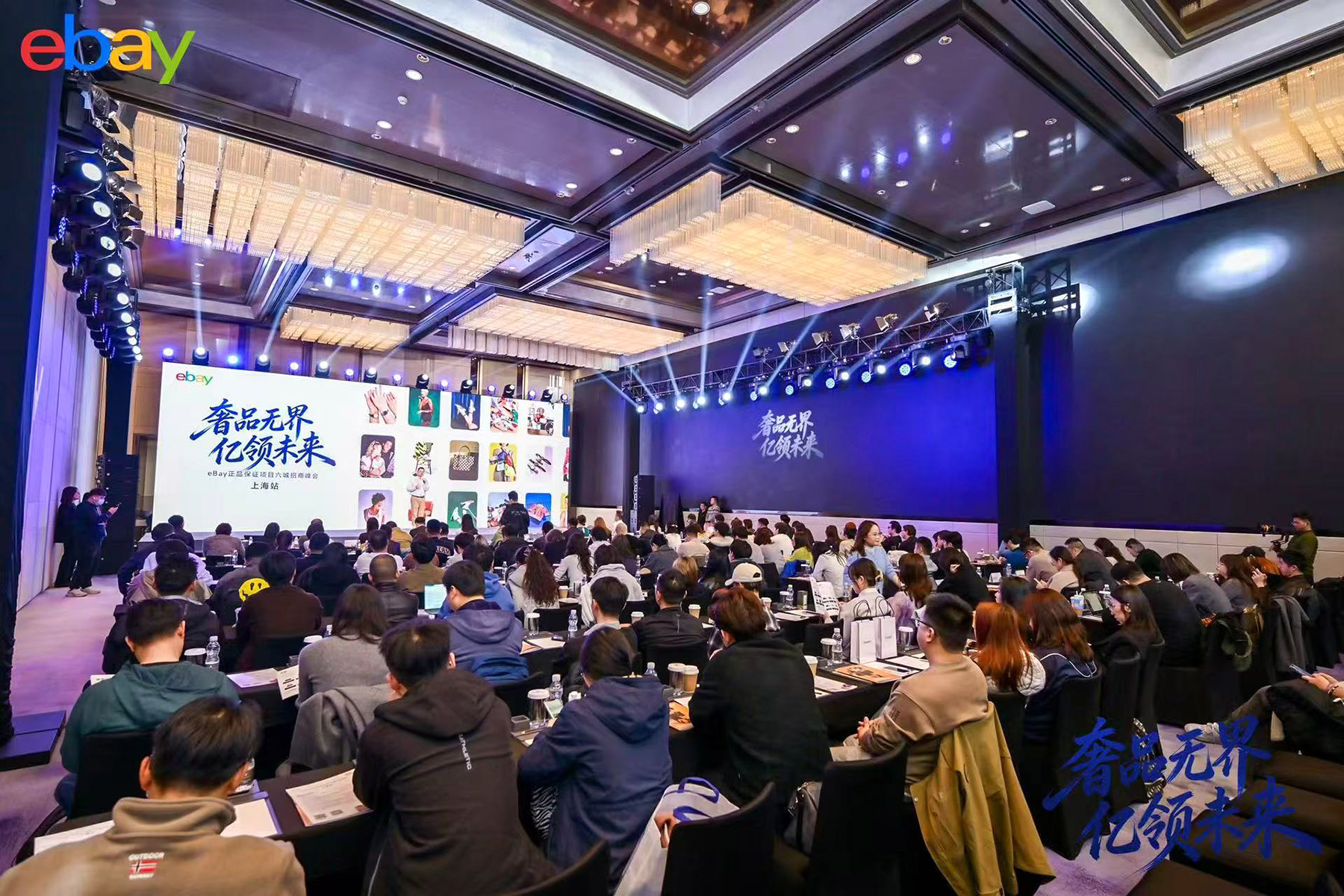
To better ride the tide, eBay earlier this year launched a recruitment drive for secondhand luxury sellers in Shanghai, Hangzhou, Nanjing and Suzhou in Jiangsu province, and Beijing.
"The primary market for luxury goods in China has contracted and undergone much volatility over the past few years," said Bain & Company's Yang.
"But the secondhand market has matured at the supply, demand and channel ends. It is by no means a short-term fluctuation, but rather, an increasingly unavoidable second growth curve."
Contact the writers at shijing@chinadaily.com.cn
