

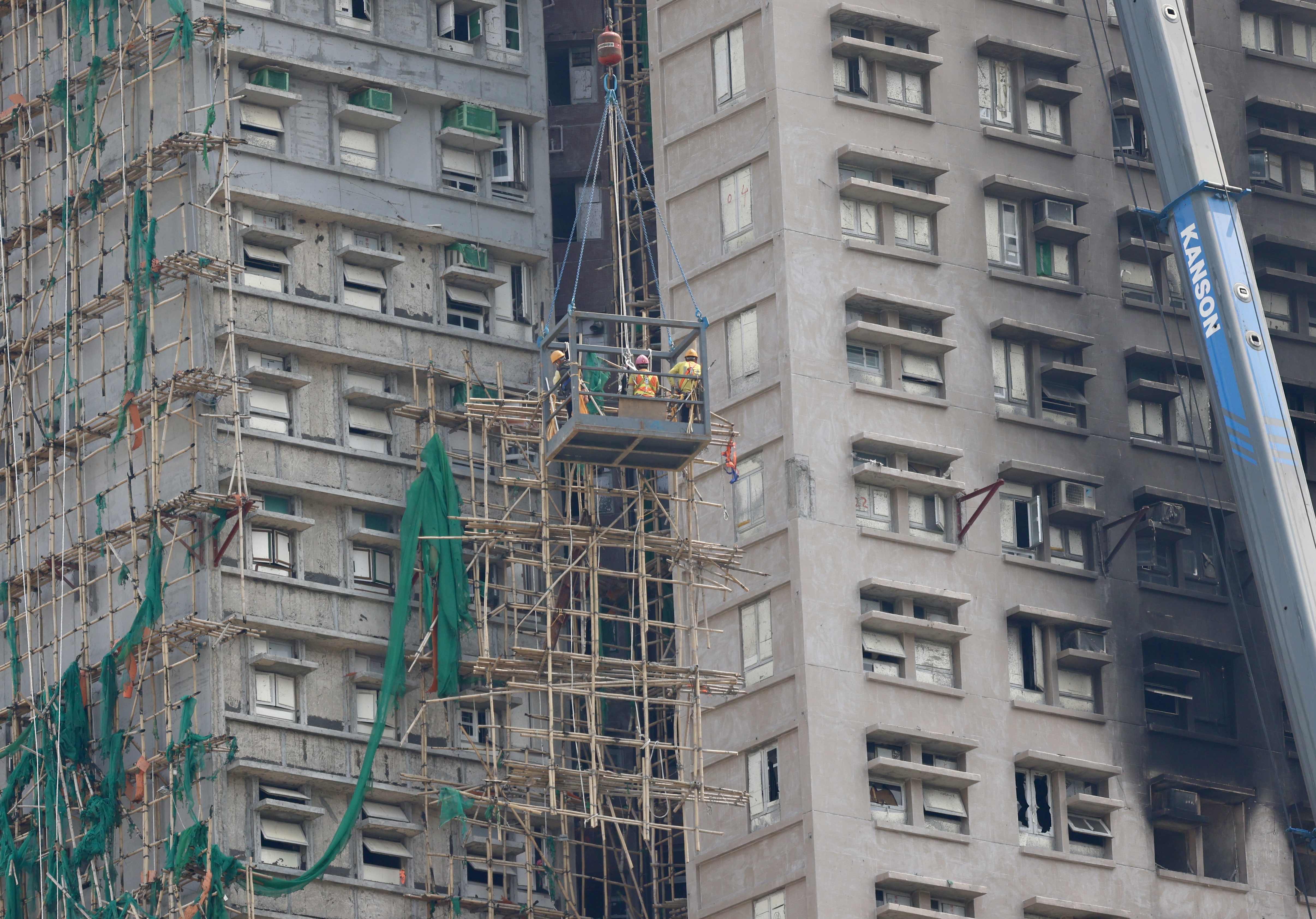
Senior officials from the Fire Services Department (FSD) on Wednesday acknowledged past shortcomings in how the department handled complaints before November’s fatal Tai Po fire.
Their admission came during the 17th hearing of a judge-led independent investigation into the tragedy, after the committee suggested that local authorities lacked clear standards for assigning responsibility when residents reported fire-safety hazards. Officials said the problem had persisted for months before the fire broke out on Nov 26 at Wang Fuk Court, claiming 168 lives.
SPECIAL PAGE: Tai Po fire inquiry hearings
Michael Yung Kam-hung, FSD assistant director (fire safety), told the inquiry that complaints about site smoking should fall under the Labour Department’s jurisdiction, while issues such as blocked escape routes, scaffolding netting, and polystyrene boards should be handled by the Independent Checking Unit (ICU) under the Housing Bureau. Officials from these two departments had testified earlier about alleged mistakes.
Yung said that the FSD’s responsibilities cover “active” fire systems — including alarm systems, automatic sprinklers, extinguishers and hose reels — while the management of “passive” installations such as fire doors, escape staircases, and fire-retardant partitions generally falls under the Buildings Department or the Housing Bureau.
“It seems that none of the fire-risk concerns raised by residents fall within your purview,” said Victor Dawes, the committee’s leading counsel. “Yes, that’s correct,” Yung replied.
However, Yung acknowledged that it was still “not ideal” for the department not to handle these complaints.
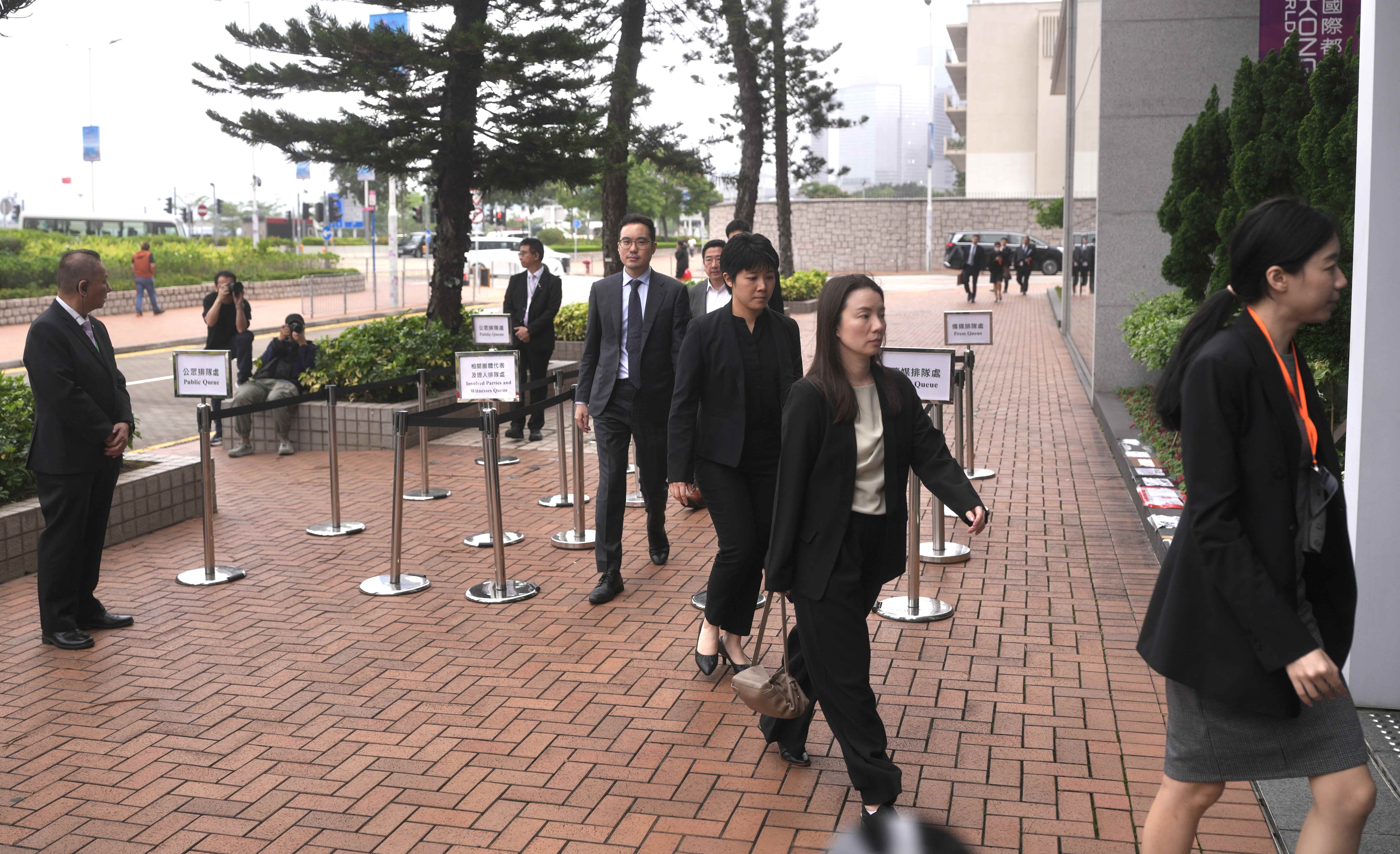
A recording presented at the hearing showed that in September 2024, a resident of Wang Fuk Court complained about construction workers sealing windows with polystyrene, a highly combustible material.
An FSD staff member said that the department had no specific regulations for such cases, and did not refer the matter to other authorities. In other complaints, employees similarly advised residents to contact other authorities on their own.
Another complaint, recorded in July 2024, involved workers smoking at the site. The FSD initially responded that the matter was outside its scope, but the Labour Department later said that such actions violated the Fire Services Ordinance and referred the complaint back.
Previously, an ICU surveyor said that the unit lacked prosecution powers on the polystyrene case because polystyrene is a temporary protective material. Dawes said that there appeared to be a clear and serious regulatory vacuum. Yung said he disagreed, adding that he believed the ICU would have taken action and that it was inappropriate for him to comment on the ICU’s handling of the case.
RELATED ARTICLES:
- Govt to sum up Wang Fuk Court owners’ buyback choices by Aug
- Tai Po fire hearing identifies areas for improvement in safety, regulations
- Tai Po fire inquiry learns Owners' Corporation 'ill-equipped' for large projects
- Wang Fuk Court residents return to retrieve belongings
- Owners' Corp, contract violations among reasons for Tai Po blaze
- Fire commanders admit to evacuation gaps with inactive alarms
- Time gap revealed in Wang Fuk Court fire safety system oversight
Committee Chairman David Lok Kai-hong also said that the use of polystyrene “falls into a gray area” of oversight, an issue fully exposed by the fire. He urged better communication with other departments.
Yung agreed that poor communication and inconsistent interpretations of legal responsibilities contributed to systemic failures. He cited the “division of labor” among departments, but added that handling complaints has been generally guided by customary cooperation and expertise, rather than written standards.
Yung said the department plans to improve its protocol by helping to refer complaints to authorities with the callers’ consent and tracking case progress. If no suitable department follows up on the more-complex matters, the department’s deputy directors will handle them through interdepartmental consultation.
The testimony also revealed a disconnection within the FSD.
Ng Wing-kwong, senior station officer of the Tai Po Fire Station, said that the department had previously confirmed a fire-system shutdown at Wang Fuk Court and recommended remedial measures, including fire extinguishers.
Regarding a leak in a water tank reserved for firefighting, Ng acknowledged that the FSD relied solely on information from the contractor and property management company and had conducted no direct inspections.
Fok Chun-ming, deputy chief fire officer in charge of corporate strategy, who led the central response during the rescue operation, said he was unaware of the estate’s fire-system failure until front-line units reported difficulties. He later confirmed the malfunction through the FSD’s computer system.
Contact the writer at amberwu@chinadailyhk.com
