

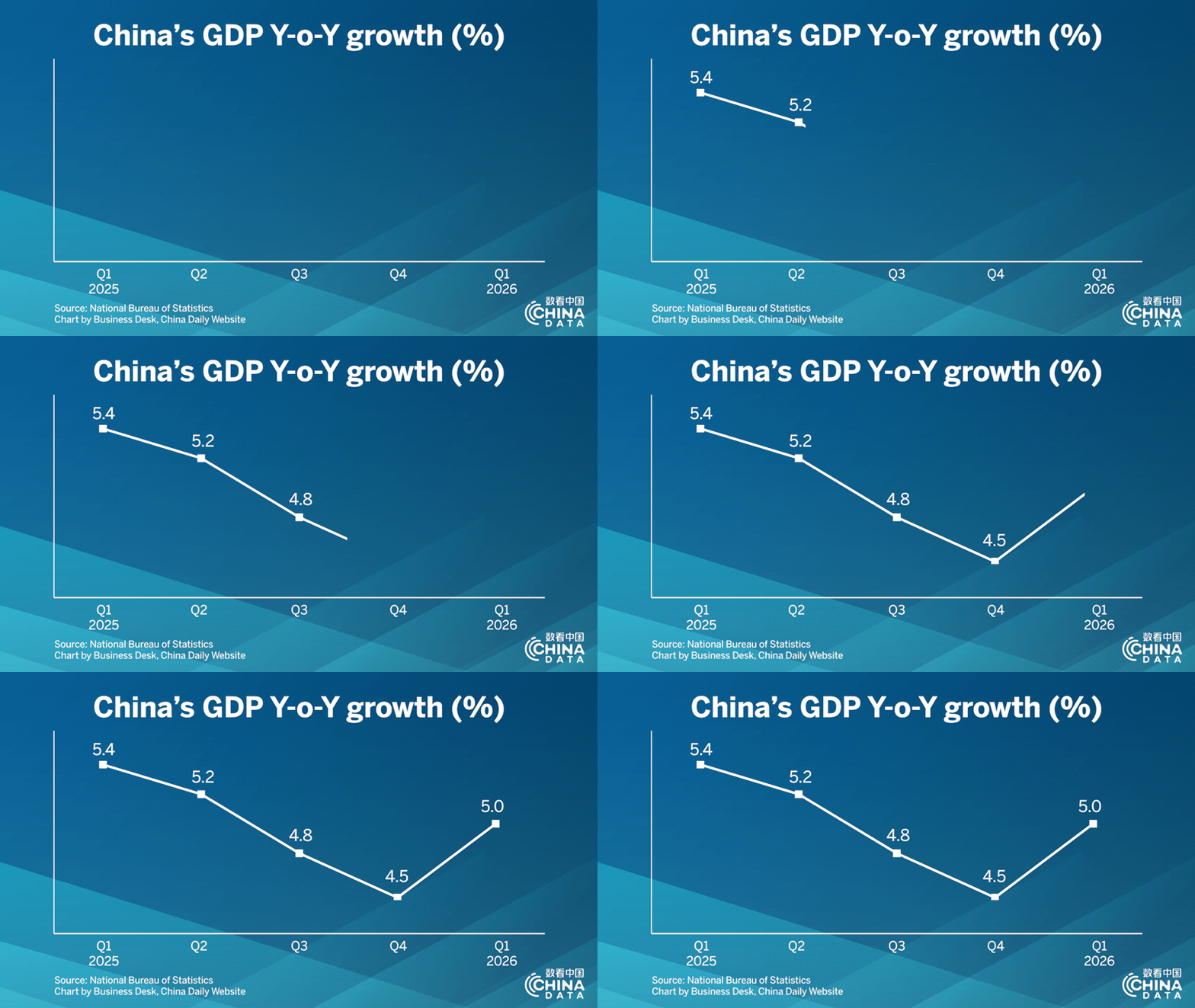
BEIJING - China's economy grew 5 percent in the first quarter of 2026, outpacing expectations of some foreign institutions and reinforcing the country's role as a stabilizing force in an increasingly volatile global economy.
The world's second-largest economy generated 33.4 trillion yuan ($4.87 trillion) in output during the period, accelerating by 0.5 percentage points from the fourth quarter of 2025, data from the National Bureau of Statistics (NBS) showed Thursday. The result marks a strong opening to China's 15th Five-Year Plan period (2026-2030).
In the first quarter, "the growth of production and supply accelerated, market demand continued to improve, employment was generally stable, market prices picked up moderately, and high-quality development advanced with new and positive momentum," the NBS said in a statement. "The national economy got off to a good start with the development showing greater resilience and vitality."
China's GDP grew 5 percent year-on-year last year. The country has targeted 2026 growth at 4.5 to 5 percent and will strive for better in practice.
"China's economic performance in the first quarter was remarkable, fully demonstrating the strong resilience of the national economy," said Mao Shengyong, deputy head of the NBS, during a press conference on Thursday.
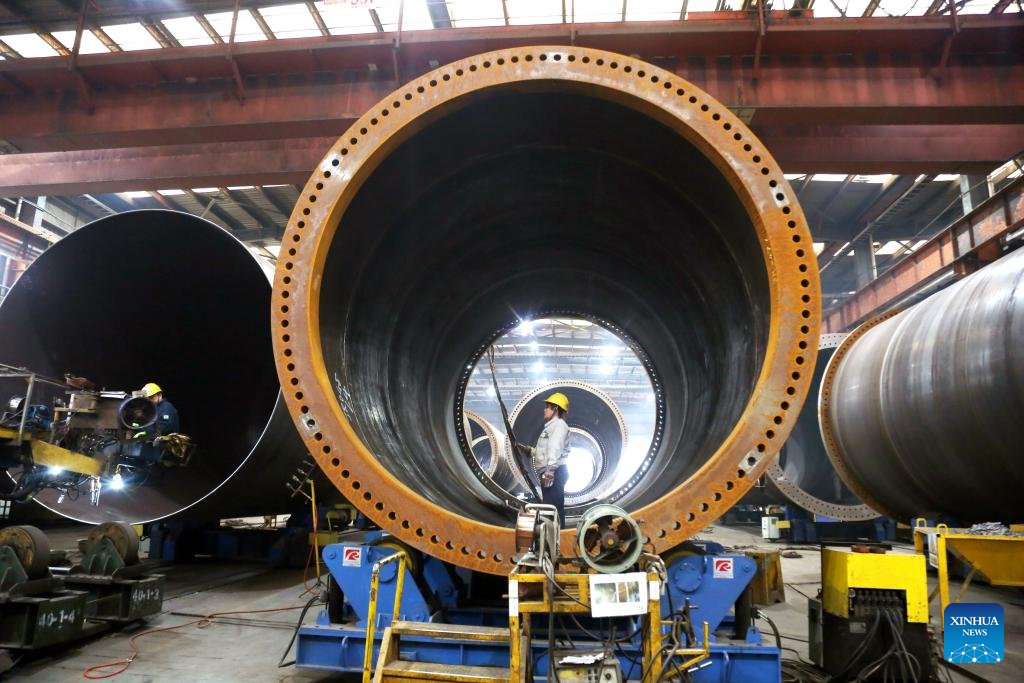
According to Mao, the data reflects a marked improvement across both supply and demand. On the supply side, agricultural production remained favorable, while industrial output grew at a faster pace compared with the fourth quarter last year, with sustained rapid growth in the service sector.
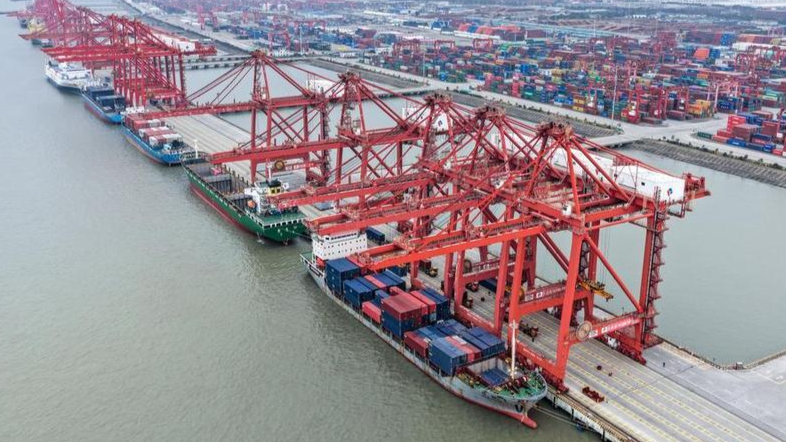
On the demand side, the growth rate of retail sales of consumer goods quickened by 0.7 percentage points compared to the last three months of 2025. Fixed-asset investment swung back to growth, rising 1.7 percent, and foreign trade in goods registered the fastest quarterly growth rate in five years.
Mao emphasized that achieving such a solid start is particularly significant given the high base of the first quarter last year and the increasingly complex and challenging external environment this year.

Over the 14th Five-Year Plan period (2021-2025), China saw its economy grow at an average annual rate of 5.4 percent, well above the global average, and accounted for around 30 percent of global growth.
"However, we should be aware that the external environment is becoming more complex and volatile, the imbalance between strong supply and weak demand is still acute, and the foundation for economic growth is yet to be consolidated," Mao said.
While ongoing geopolitical conflicts have sent international energy prices soaring, triggering fuel shortages and disrupting production and life in many nations, China has remained largely unaffected by these shocks, Mao said.
He attributed this stability to China's sustained efforts to develop the new energy sector in a forward-looking manner and diversify its energy mix. Oil accounts for less than 20 percent of China's total energy consumption, limiting the economy's exposure to global price swings.
Economists and industry experts view the Q1 performance as a strong reaffirmation of China as a safe haven amid heightened geopolitical tensions, and of its status as a premier engine of global growth, which has become even more pronounced.
"China is now being redefined as an asset class with a 'safety premium,'" said Song Xuetao, chief economist at Sinolink Securities, underlining the greater resilience of China's energy structure and industrial chains than that of other major manufacturer economies.
"China not only possesses the capacity to withstand shocks but also the agility to convert challenges into opportunities," Song observed. Advances in coal-to-chemicals technology allow domestic substitution of certain petrochemical products, while the mass adoption of new energy vehicles reduces household dependence on fossil fuel.
He said economies maintaining production continuity and boasting energy substitution deserve a higher valuation premium, with Chinese assets standing as the "most representative beneficiaries of this logic."

Industrial output
The NBS data also showed China's value-added industrial output expanded 6.1 percent year-on-year in the first quarter of 2026, 1.1 percentage points faster than the previous quarter.
On a monthly basis, industrial output grew 0.28 percent in March.
The industrial output is used to measure the activity of large enterprises, each with an annual main business turnover of at least 20 million yuan.
A breakdown of the data showed that the mining sector's value-added output increased by 6 percent year-on-year in the first quarter, while the manufacturing sector's grew by 6.4 percent. The value-added output of the electricity, heat, gas and water production and supply sectors rose by 4.3 percent.
Value-added output for high-tech manufacturing surged 12.5 percent during the first quarter. This sector's share of total industrial value-added reached 16.9 percent, driving overall growth by two percentage points.
ALSO READ: China’s economy shifting gears
Notably, the value-added output of the aerospace vehicle and equipment manufacturing industry grew by 17.7 percent, while that of aircraft manufacturing grew by 27.3 percent, according to Mao, deputy head of the NBS.
The rapid development of artificial intelligence has fueled growth across related sectors. In the first quarter, the manufacturing of specialized electronic materials and integrated circuits, both directly linked to AI production and application, saw their value-added output surge by 32.5 percent and 49.4 percent, respectively.
This AI-driven momentum has further extended upstream into the chemical and power industries, which provide essential raw materials and energy, demonstrating a continuous ripple effect on the broader economy, Mao said at a press conference

Retail sales
The bureau's data also showed China's retail sales of consumer goods, a major indicator of the country's consumption strength, expanded 2.4 percent year on year in the first quarter.
The pace is 0.7 percentage points faster than the growth in the fourth quarter of 2025, according to the NBS.
Total retail sales of consumer goods reached 12.77 trillion yuan in the January-March period. By category, retail sales of goods increased 2.2 percent to 11.31 trillion yuan, while catering revenue climbed 4.2 percent to 1.46 trillion yuan.
Service consumption continued to outperform, with service retail sales expanding 5.5 percent year on year in the first quarter, unchanged from the full-year pace in 2025. Notably, communication and information services, tourism-related leasing and consulting, as well as cultural and recreational services, recorded faster growth.
Online consumption remained a key pillar. Total online retail sales of goods and services rose 8 percent year on year to 4.98 trillion yuan. Within this, online goods sales increased 7.5 percent to 3.16 trillion yuan, accounting for 24.8 percent of total retail sales, while online services sales grew 8.8 percent to 1.82 trillion yuan.
In March alone, the retail sales of consumer goods rose 1.7 percent year on year, the data showed.
China has implemented a wide range of special initiatives to boost consumption this year, accelerating the development of new growth drivers in service consumption and promoting the steady improvement of the consumer market.
While acknowledging the effects of the policies at a press conference, the deputy head of the NBS Mao also noted that residents' consumption capacity and willingness need further enhancement, and the supply of high-quality goods and services still cannot fully meet the diversified consumption demands.
In the next phase, efforts should focus on building a strong domestic market, further stabilizing employment, promoting income growth, optimizing the consumption environment, and continuously unlocking consumption potential to drive sustained, stable and healthy economic development, Mao said.
Fixed-asset investment
Meanwhile, China's fixed-asset investment went up 1.7 percent year-on-year in the first quarter, reversing the 3.8-percent decline recorded for the whole of last year, according to the official data.
The investment totaled 10.27 trillion yuan during the period, the NBS said.
Investment in infrastructure construction rose 8.9 percent from a year ago during the period, and manufacturing investment increased 4.1 percent, according to the NBS.
Excluding the property sector, the country's fixed-asset investment rose 4.8 percent in the first three months. Investment in property development fell 11.2 percent year-on-year during the period.

Property investment
The NBS also said China's investment in property development decreased in the first quarter, down 11.2 percent year-on-year.
The floor space of newly-built commercial buildings sold was 195.25 million square meters, down by 10.4 percent year-on-year. The total sales of newly-built commercial buildings were 1.7262 trillion yuan, down by 16.7 percent.
Housing price in first-tier cities
In March, the home prices rose in China's four first-tier cities - Beijing, Shanghai, Guangzhou and Shenzhen - from the previous month, the official data showed.
Urban unemployment
On China's labor market, the surveyed urban unemployment rate averaged 5.3 percent in the first quarter, maintaining the same level as that of the same period last year, according to the data.
In March alone, the surveyed urban unemployment rate stood at 5.4 percent, 0.1 percentage point higher than the previous month, according to the NBS.
China has set a target of a surveyed urban unemployment rate of around 5.5 percent in 2026 and aims to create over 12 million new urban jobs within the year.
