

In Hong Kong, a new generation of specialized art logistics facilities is redefining the infrastructure that ensures the global circulation of art.
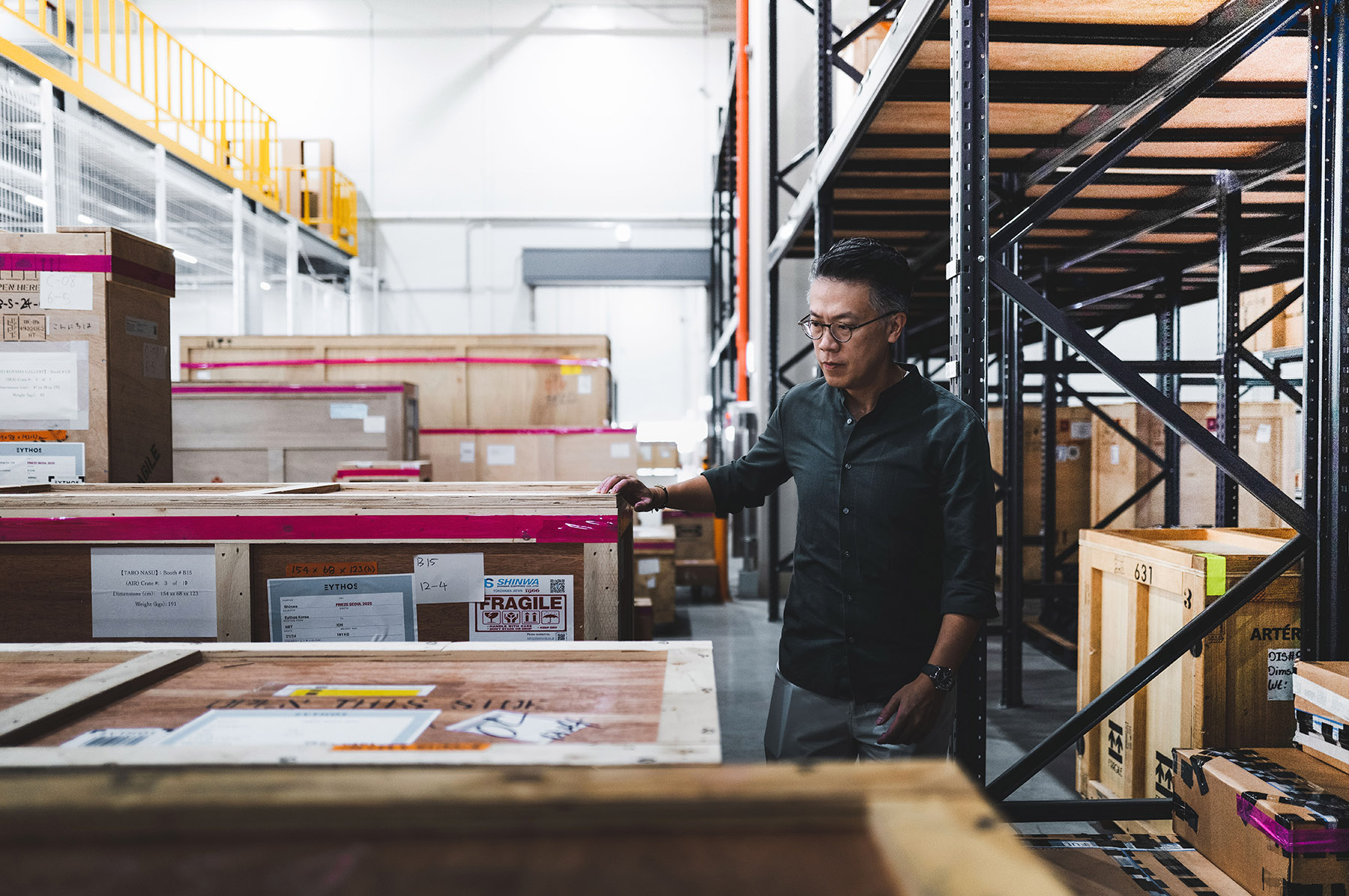
Eythos, one of the newer players, launched at Frieze Seoul in 2024 and opened its Hong Kong facility in 2025. The 6,400-square-meter Tsing Yi site features dedicated temperature and humidity-controlled rooms designed to store artworks spanning a range of media — photographs, films, paintings and sculptures. Eythos is the official shipper of Art Basel Hong Kong 2026.
The company’s founder, Lewis Cheng, says that as an art collector, he had “a particular vantage point,” on how the region’s art logistics infrastructure could be improved. “You see very quickly how much the market has matured, the quality of what’s being acquired, and the seriousness of the collectors, and yet the infrastructure supporting all of that hasn’t kept pace.”
READ MORE: Machines like me
He says Asia’s expanding base of collectors and institutions has created a demand for facilities designed specifically for artworks as opposed to those adapted from regular storage. “Nowadays, collectors and institutions in Hong Kong expect the same standards they would find in London or New York.”

In December, art logistics firm Crozier opened a new 47,000-square-foot (4,366.4-square-meter) facility in Kwai Chung, bringing its total storage capacity in the city to 95,000 square feet. The space offers museum-grade climate control, high-security systems, and private viewing rooms designed for collectors and galleries.
Such developments reflect the increasing trend of high-value artworks travelling around the world. Auction houses, which regularly move museum-quality artworks across continents, rely heavily on the infrastructure of destination cities.
“Connecting artworks and luxury objects with collectors around the world is central to Christie’s mission, and Hong Kong plays an important role in that global movement of works,” says Audrey Shum, managing director and general counsel for Christie’s Asia Pacific. The city’s efficient import and export procedures allow works to be transported quickly between international salerooms and local galleries, ensuring collectors can experience them in person, she adds.
For galleries, the evolution of art logistics has proved to be transformative. Pascal de Sarthe, founder of De Sarthe gallery — which has outposts in Scottsdale, Arizona; and Hong Kong — recalls a time when inadequate storage conditions put artworks at risk.
“When I opened in Hong Kong in 2010, the state of art storage was dangerously poor,” he says. Paintings would catch mold from improper humidity control. Nonprofessional handlers caused damage to the artworks. “Today, the quality has improved so dramatically that some local facilities are actually rivaling their Western counterparts.
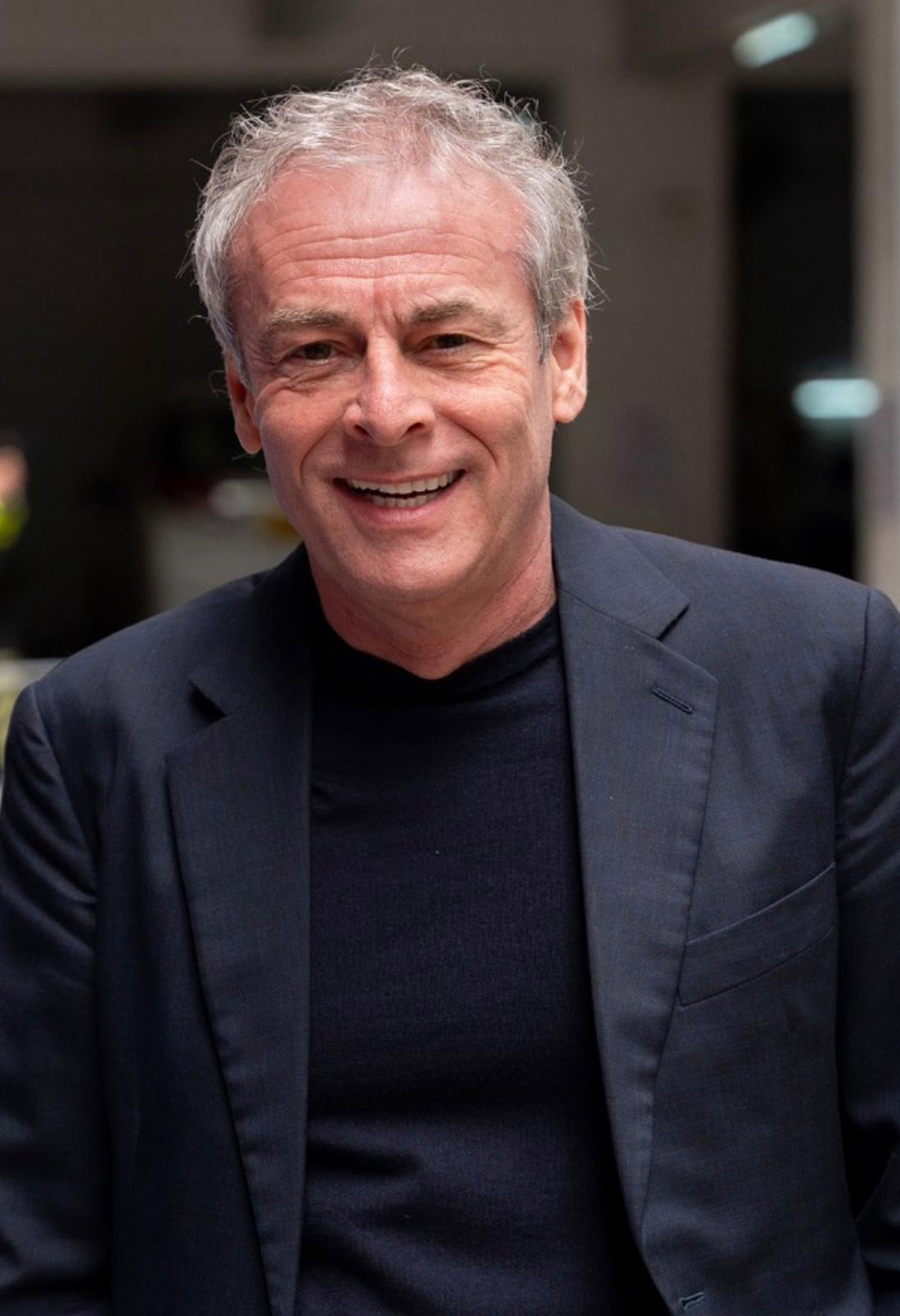
“We are seeing a parallel boom in demand for storage,” de Sarthe adds.
With Hong Kong Chief Executive John Lee Ka-chiu reiterating his commitment to developing Hong Kong as a premium art-trading hub in his 2025 Policy Address, the city’s logistical backbone may prove just as crucial as its museums and galleries.
“Unequivocally, Hong Kong retains its leading role in Asia,” says de Sarthe. “Other cities in the region are vibrant and important, but none of them can rival Hong Kong’s combination of market depth, infrastructure, and institutional trust yet. It remains the indispensable gateway for international art trade.”
ALSO READ: Exploring Asia's art scene and beyond
Cheng draws attention to the government plan to develop a dedicated arts ecosystem around the Hong Kong airport, “bringing art creation, appreciation and trade together in one place”.
“It signals that Hong Kong is thinking about its art market infrastructure in a comprehensive way, not just relying on the advantages it already has.”
The writer is a freelance contributor to China Daily.
