

Art Basel Hong Kong 2026 debuts Zero 10, a new sector in which artists working with emerging technologies imagine the shape of things to come, while interrogating their relationships with the tools they use. Chitralekha Basu reports.
Zero 10, a new exhibition sector dedicated to “the art of the digital era”, is debuting at Art Basel Hong Kong 2026 at a time when the market for digital and new-media art is on a downward slide. Per artprice.com’s Art Market in 2025 report, released earlier this month, the nonfungible-token (NFT) market has declined significantly since 2021, when it generated $232 million across 274 artworks sold, and is projected to reach a stagnation of $1.83 million, i.e., 0.02 percent of global fine art auction sales.
However, Eli Scheinman — who curated Zero 10, and had a chance to test-drive the model at the international art fair’s Miami Beach edition in December —argues that the market for digital art and NFTs has in fact rationalized, as opposed to an initial phase of wild speculation.
READ MORE: Journeys within
What we are seeing now “is a very healthy posthype rebalancing of the market that is increasingly focused on quality and market stability,” he says. “The top end of this market is extremely strong at the moment,” Scheinman adds, citing the examples of Zero 10 artists Robert Alice (exhibited by Onkaos) and Kim Asendorf (Nguyen Wahed) for both of whom the ABHK show comes on the back of big-time commercial successes.
“Earlier in March, 256 of Kim’s artworks in a series that is a precursor to his ABHK offering, PXL Duo Pod, sold out over the course of around 24 hours, the total sales worth around $700,000,” Scheinman says. “He has brought a follow-on complementary set of his wholly digital browser-based works from this same interrogation of the pixel to Hong Kong.”
Medium as message
What Asendorf shares with the anonymous artificial intelligence (AI) collaborator who goes by Claire Silver (Plan X) and Sougwen Chung (Fellowship and ArtXCode) — the only two artists in ABHK Zero 10 to have made it to artprice.com’s global top 20 makers of NFT and generative art 2025 list in terms of market value — is that all three draw attention to the tools, processes and the logic of the spaces in which they operate. Sometimes the process itself is the art, or as equally integral to the viewer experience as the artwork.
ALSO READ: A feast for the senses
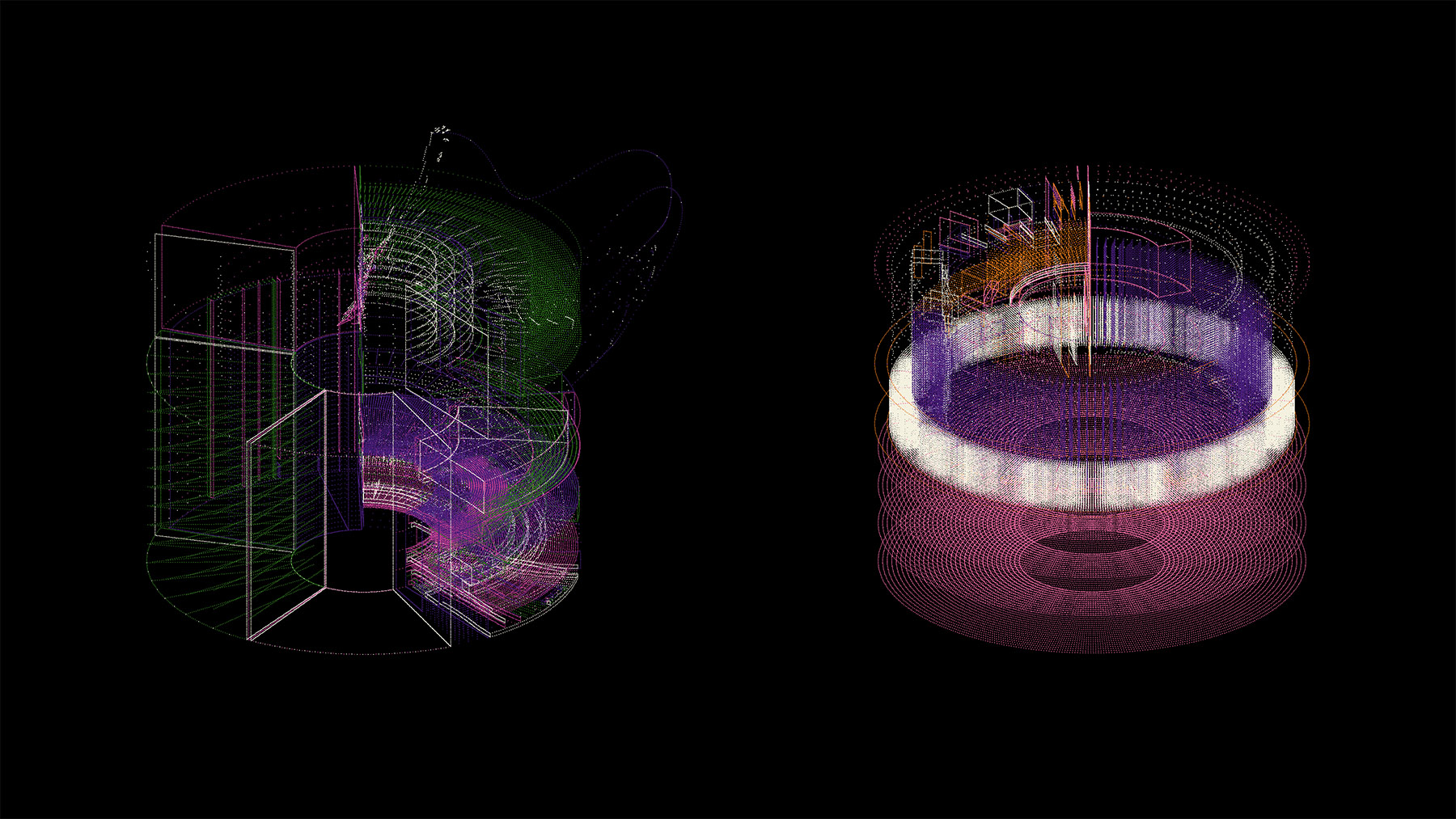
Asendorf’s Zero 10 piece celebrates the pixel. The hundreds of thousands of pixels arranged in the form of two slow-rotating cylinders on a large digital screen, PXL Duo Pod, are in fact cryptocurrency tokens. The mesmerizing range of rainbow colors they take on by turns are determined by the choices the owners of those tokens make, underscoring the decentralized nature of making art in the digital environment that the arrival of Web3 technologies and social media have made possible.
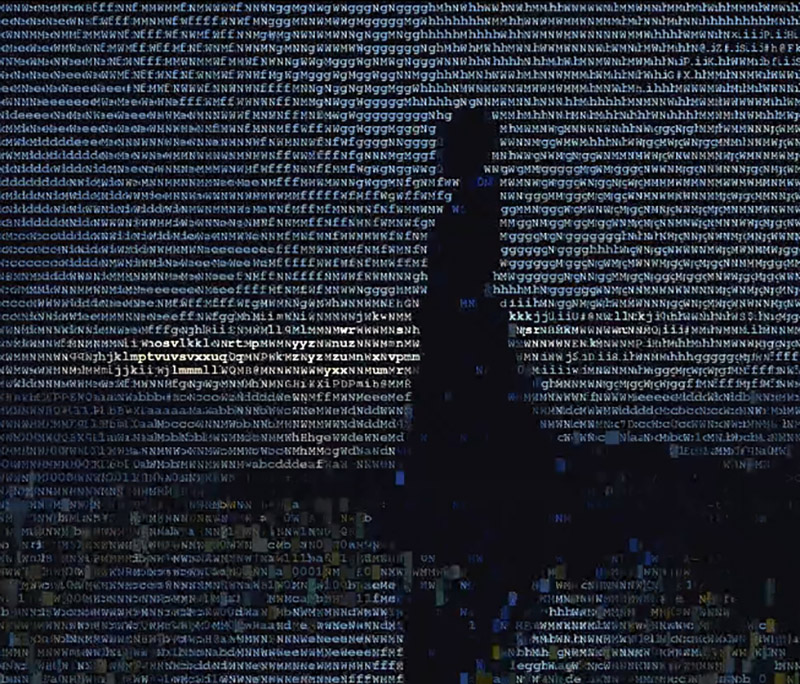
Similar in ethos to Asendorf’s piece, in Silver’s Mary’s Room series of generative blockchain artworks, minuscule twinkling digital units alternatively reveal and obfuscate a mysterious figure standing on a mound by the sea. On close inspection, these light sources turn out to be a million repetitions of the ASCII code “010”, which is of critical importance to computing, and also a nod to the exhibition sector’s title. The figure in the image is of course yet another proxy for the artist who has talked in previous interviews about standing on a cliff edge and feeling connected to the space-time continuum.
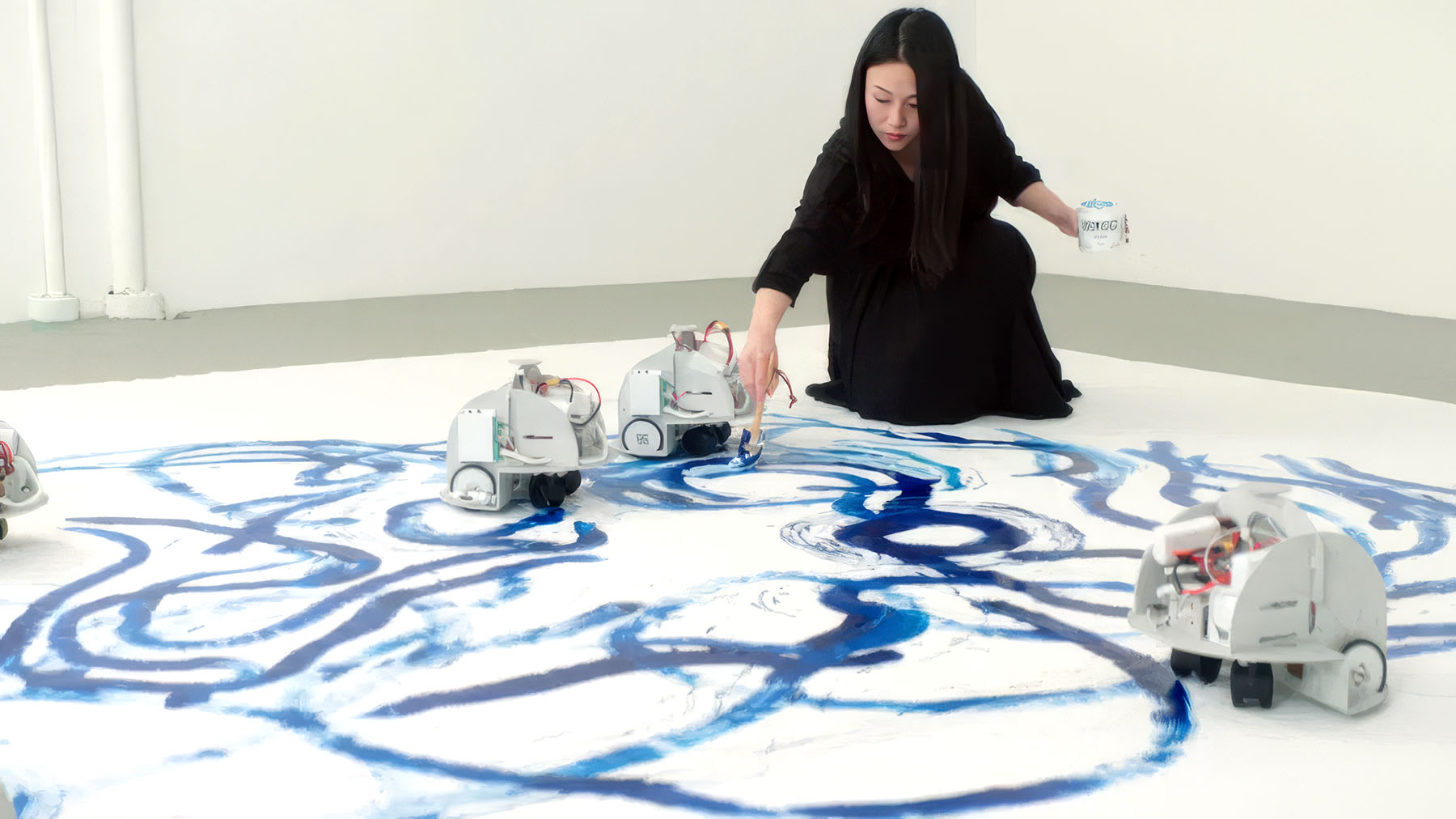
Chung turns her negotiations with AI tools into a live performance. The highlight of her ABHK showcase, titled Recursions, is live painting sessions — a visual dialogue between Chung and a kinetic robotic system trained on decades of her gestural data responding to each other by making marks on a scroll, a bit like two musicians engaged in creative jamming.
“There are a number of artists across the Zero 10 sector commenting on the relationship between artificial intelligence and human agency and then going on to peel back layers to reveal what that means for artists, and for the arts more broadly, … asking, ‘How do we mediate and how do we explore those relationships?’ ” Scheinman says. “Chung, whose works ask similar questions, and very overtly connects her own physiology to robotics, mediates that relationship through AI models to express what’s going through her mind.”
The value of art
Jack Butcher’s (Silk Art House) new piece, Work, Luck, Play, offers his take on the idea of art as commodity in the form of a game. The premise is similar to his Self Checkout piece, presented at Art Basel Miami Beach in December. Self Checkout turns the notion of value for money on its head — the more a viewer chooses to pay to print an artwork, the longer the size of the receipt. With Work, Luck, Play, they might have to work a bit harder.
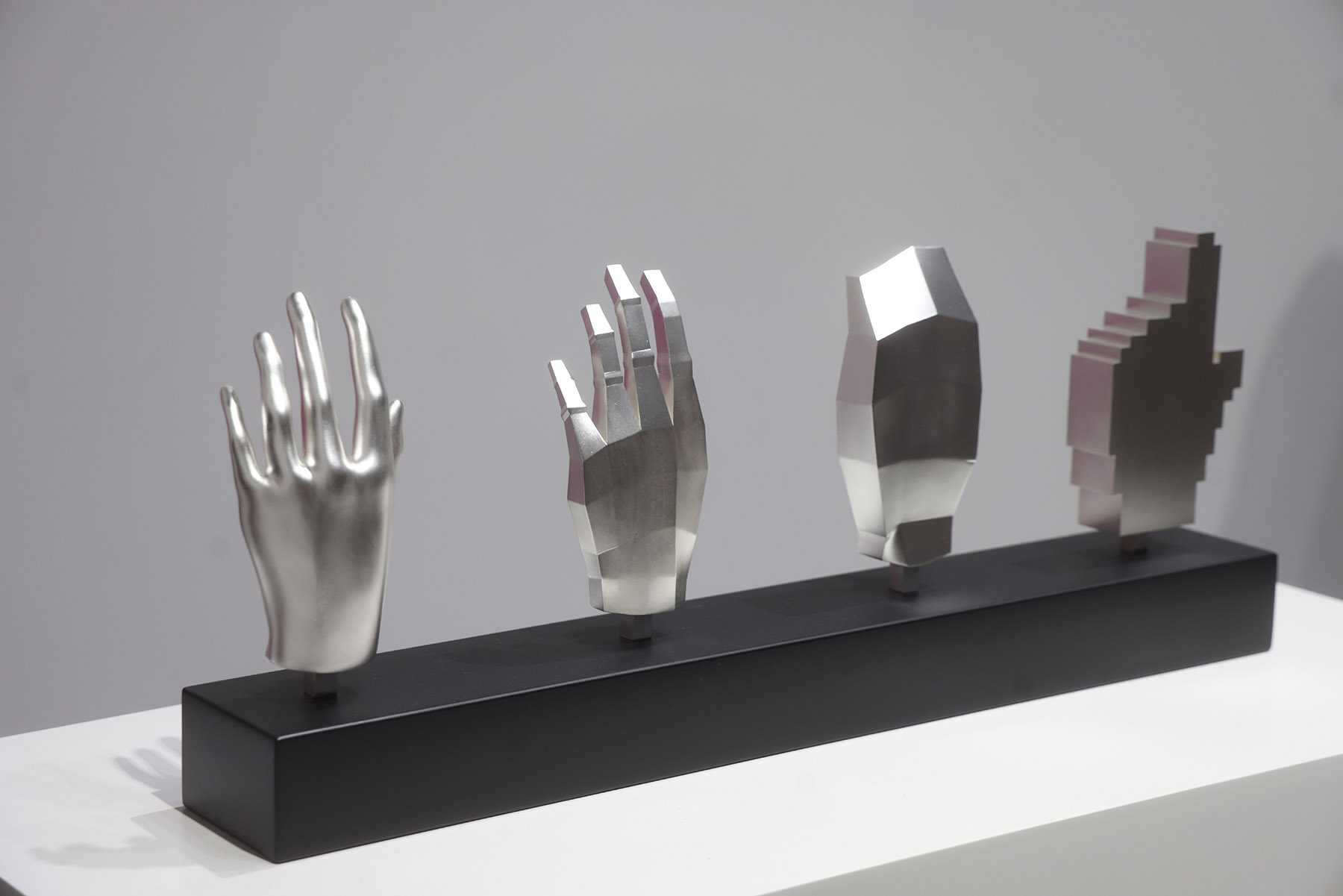
Work is a set of four hand-shaped sculptures, made of sterling silver, showing a progression from the human hand to the digital cursor. It is the artist’s attempt to apotheosize the role of human labor at a time when it is increasingly being replaced by technology — make the systems supporting the migration of work from the body to the screen visible in the form of sculptures representing different stages of this journey.
Butcher admits that his claim of making the system “visible” does not necessarily imply transparency. “A lot of systems today are technically transparent but functionally invisible. Nobody reads the terms. Nobody inspects the contract. Work is about visibility, not transparency. Transparency is an invitation to verify. Visibility is a refusal to be overlooked.”
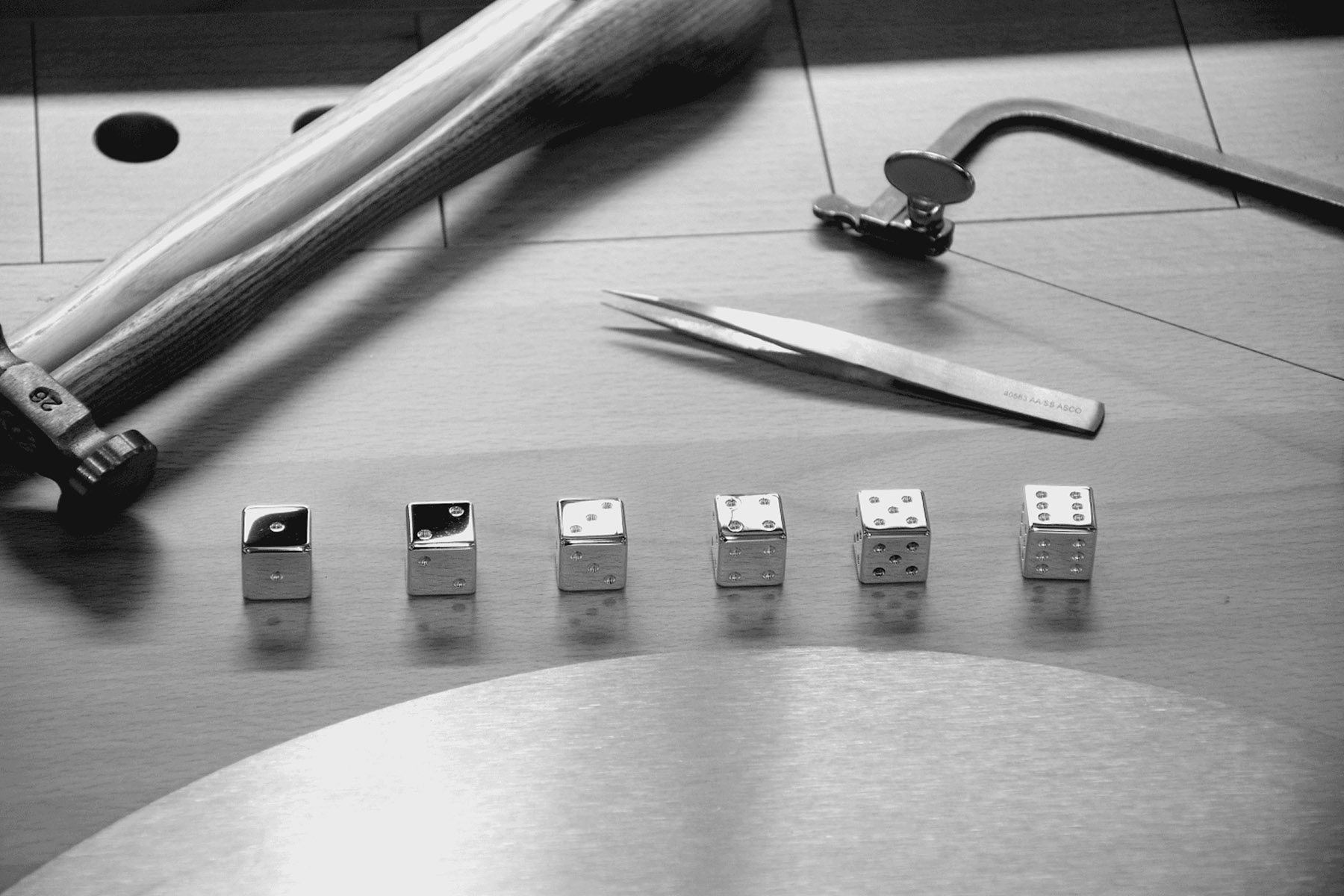
Luck comprises a silver dice set of six, each with the same number of dots on every face, while Play invites viewers to roll them, receive a random set of transparent resin replicas, and trade the duplicates with strangers to complete the sequence of one through six.
“The whole premise of Luck is that outcomes attributed to chance are actually structured in advance,” Butcher explains. “You need what someone else has. Scarcity creates exchange, exchange creates price, and price creates hierarchy. The only difference is that here the system is legible. … It might actually be more honest than most markets.”
Reimagining tradition
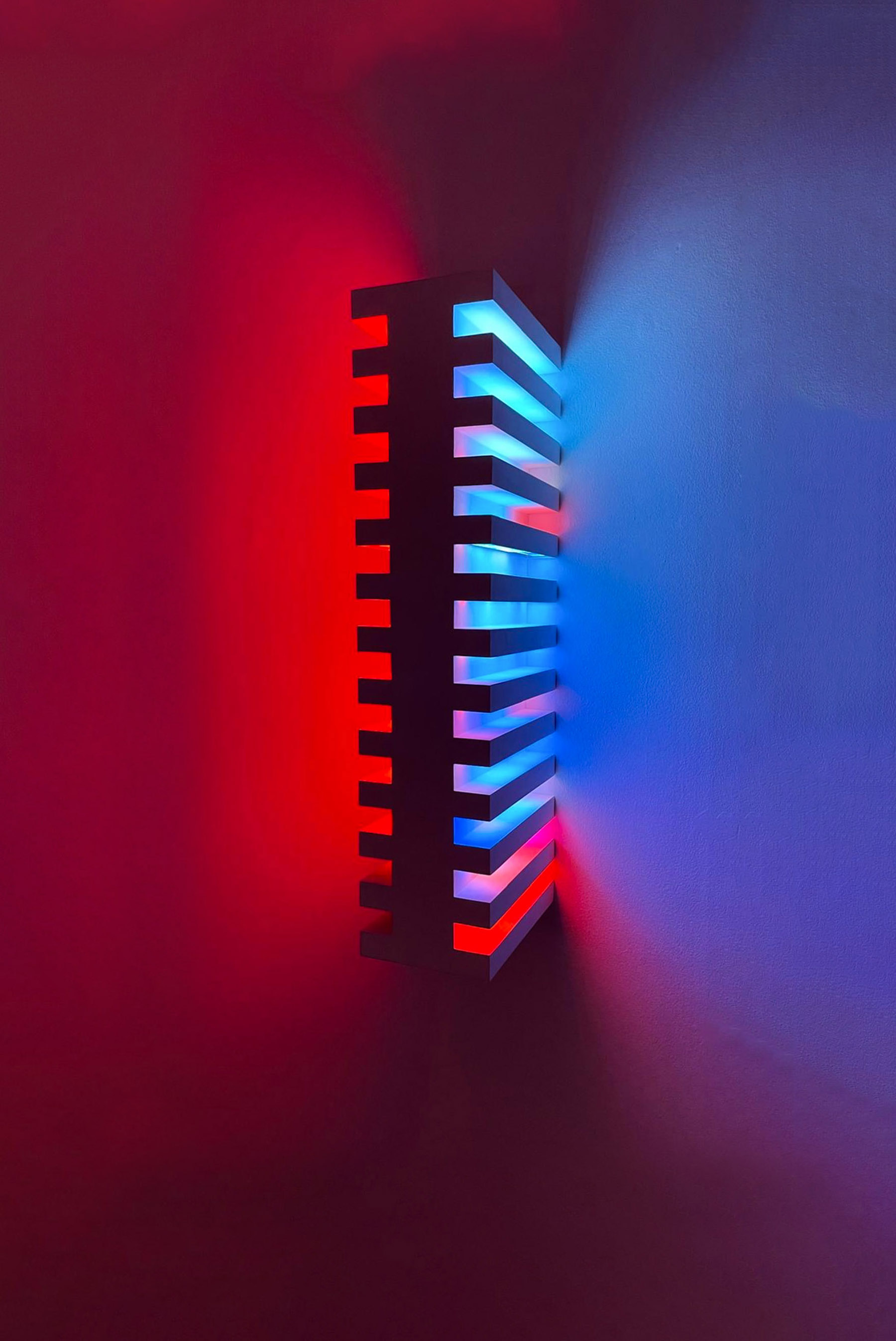
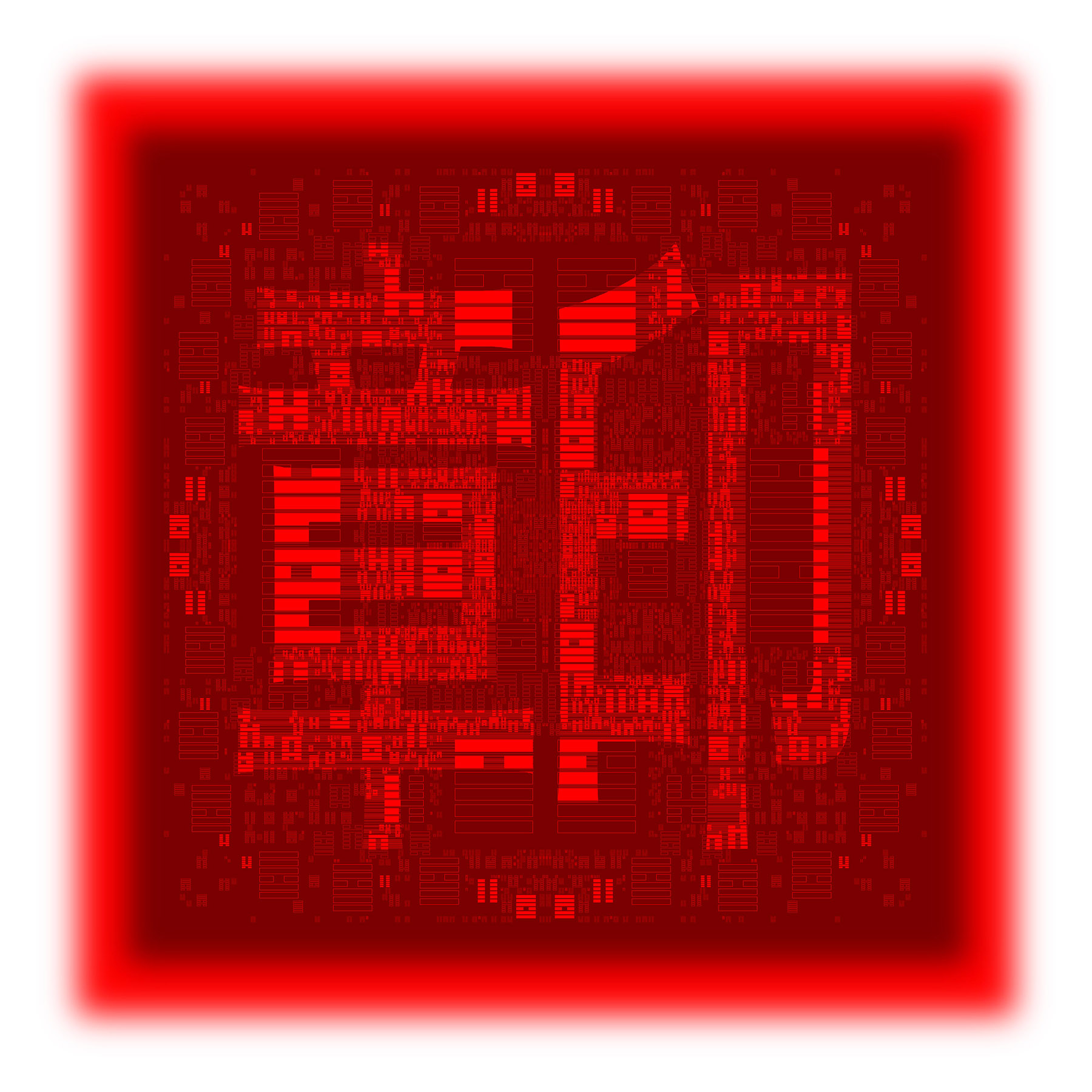
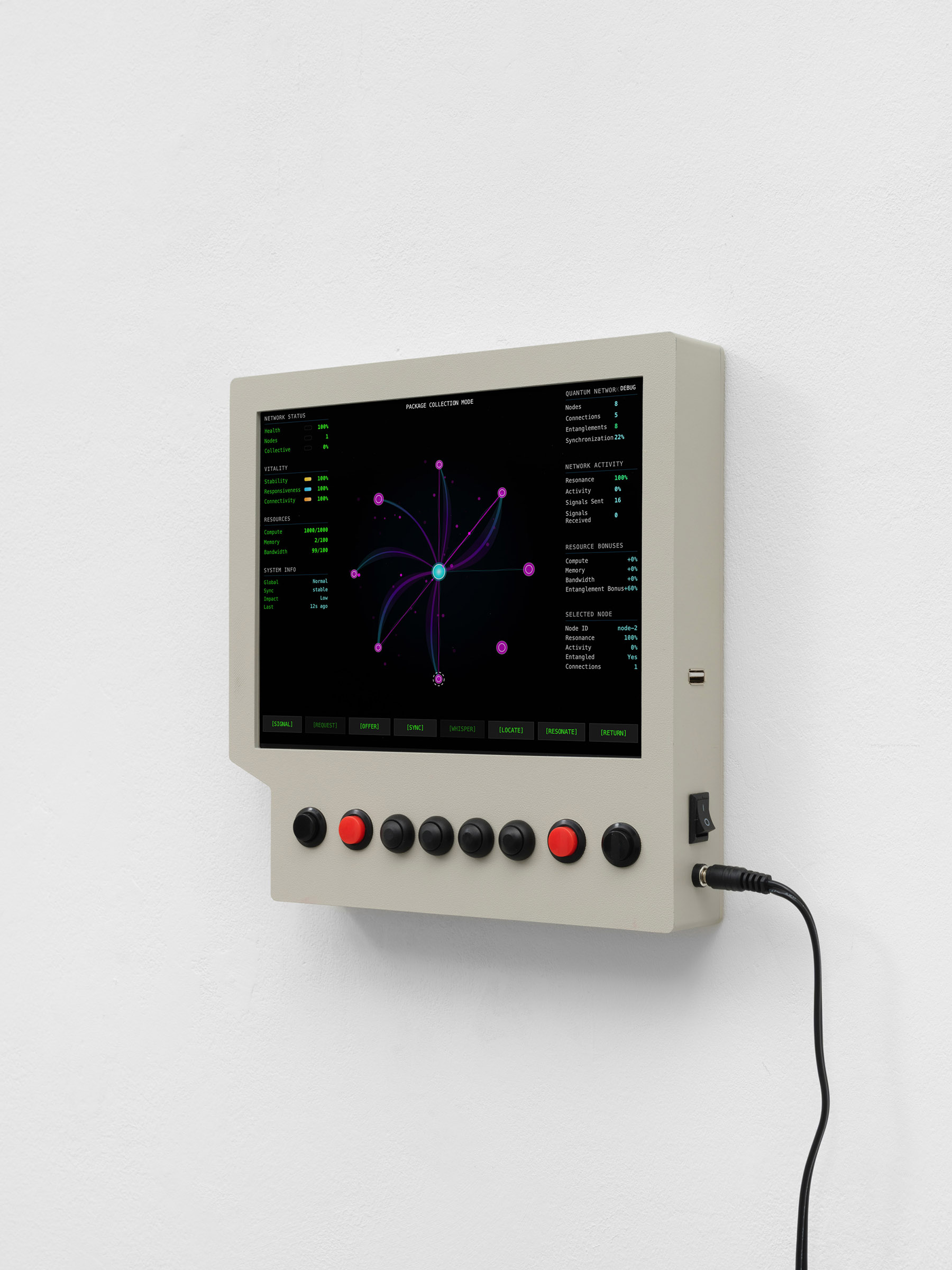
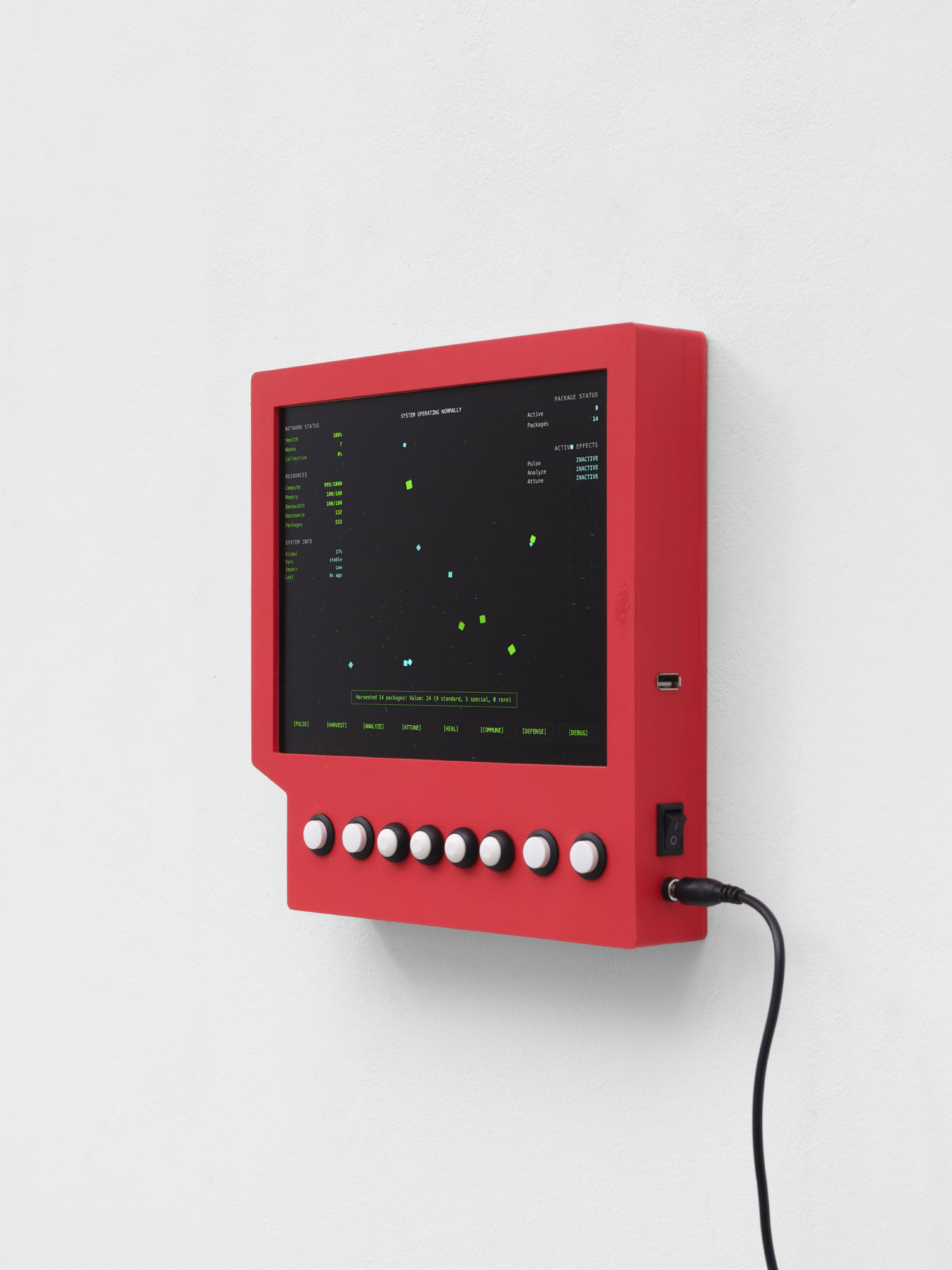
A number of works in Zero 10 are about revisiting and/or reinventing objects, themes and ideas from the past — both ancient times and the predigital era. Daniel Canogar’s (Bitforms Gallery) illuminated panels — a homage to traditional diorama showcases — are in fact generative sculptures fed on environmental and climatic data. The wall-mounted flat-screen monitors with dark screens and words written in eight-bit pixelated-style fonts in Jonas Lund’s (Office Impart) Network Maintenance bring to mind an earlier generation of personal computers. Robert Alice’s Seal draws attention to the fundamental similarity of intent and purpose between ancient Chinese seals and NFTs — both being incontrovertible indicators of ownership — by inviting collectors to generate personalized cryptographic seals.
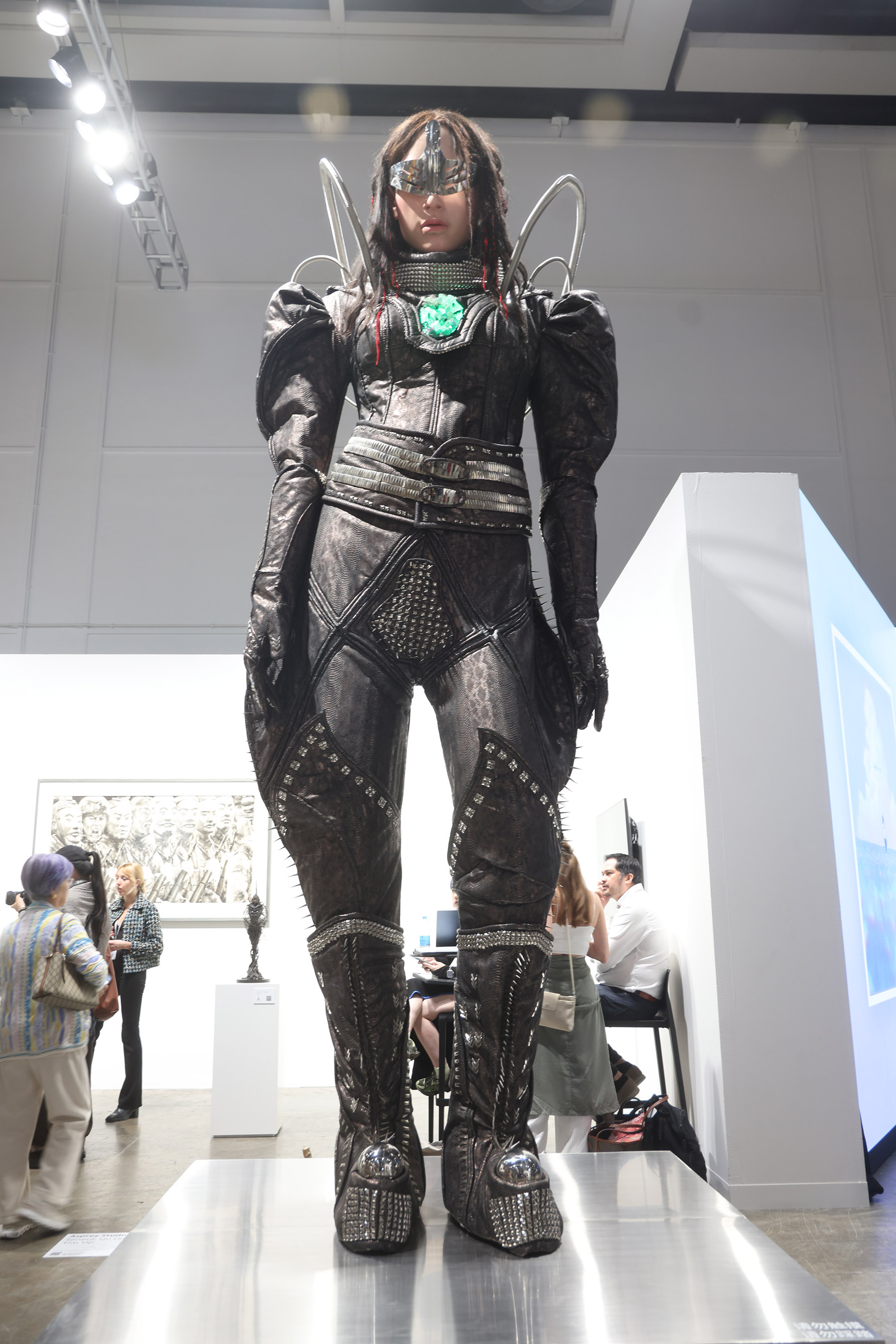
One of the most striking pieces in Zero 10 is Tim Yip’s (Asprey Studio) Lili, a 4.5-meter-high sculpture of a woman who appears to have landed on Earth from a different realm.
ALSO READ: Exploring Asia's art scene and beyond
The artist says he used leather sourced from space to craft Lili’s astronaut suit. “Everything Lili needs is self-sufficiently provided within the garment itself. The most crucial element is the light emitting from the gemstone on her chest. This crystalline jewel can gather the mind’s messages and transmit them throughout the spaceship, becoming a language through which intention can reshape reality.”
Yip sounds confident about the impact of the spectacle he has created. For him, the sculpture embodies “a juxtaposition of the logics of two distinct worlds in the same. The contrast hints at the myriad possibilities awaiting us in the future.”
Contact the writer at basu@chinadailyhk.com
