

Smashed gemstones, Nordic buildings and a snow-monster pave the way for cultural experiences along Five-Hundred Li Folk Street and beyond, Erik Nilsson reports in Altay.
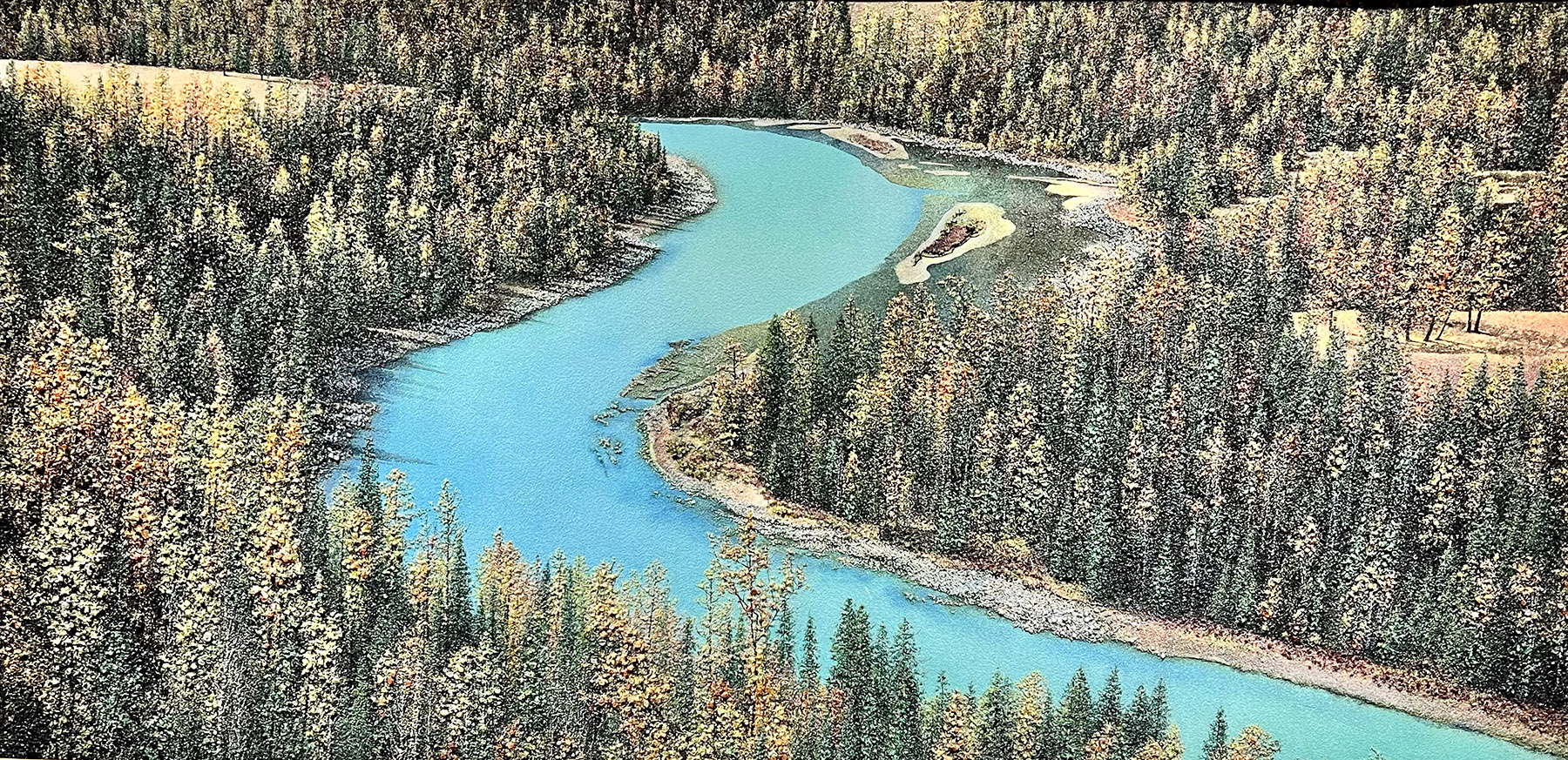
Altay's landscapes aren't just likened to gems and artworks — they are them.
On the city's Five-Hundred Li Folk Street, they're rendered as "gemstone paintings", their shapes and colors excavated from locally mined minerals ground to a fine dust or crushed into coarse crumbs.
Indeed, the city's very name derives from the old Turkic root word for gold, its meaning echoed in the Uygur, Kazakh, and Mongolian languages spoken in the region — a testament to its legacy as a land of riches mined in its mountains since time immemorial.
This terrain's treasured bond with precious minerals has alchemized its natural scenery into a cultural tableau, in which soil shapes images of Earth and stone illustrates the very ground from which it was taken. Powdered mountains are transformed into mirrors that reflect themselves and the world that shines beyond their peaks.
In the avenue's crown jewel, the Zhenyu Tang Gemstone Painting Studio, luminary artist Liu Quanxia deconstructs and re-creates the surrounding world. She uses granulated minerals dug from the very lands she depicts. She engineers Altay's geological DNA into new protein guises, collapsing its double helix into 2D interpretations to develop a new species of "painting".
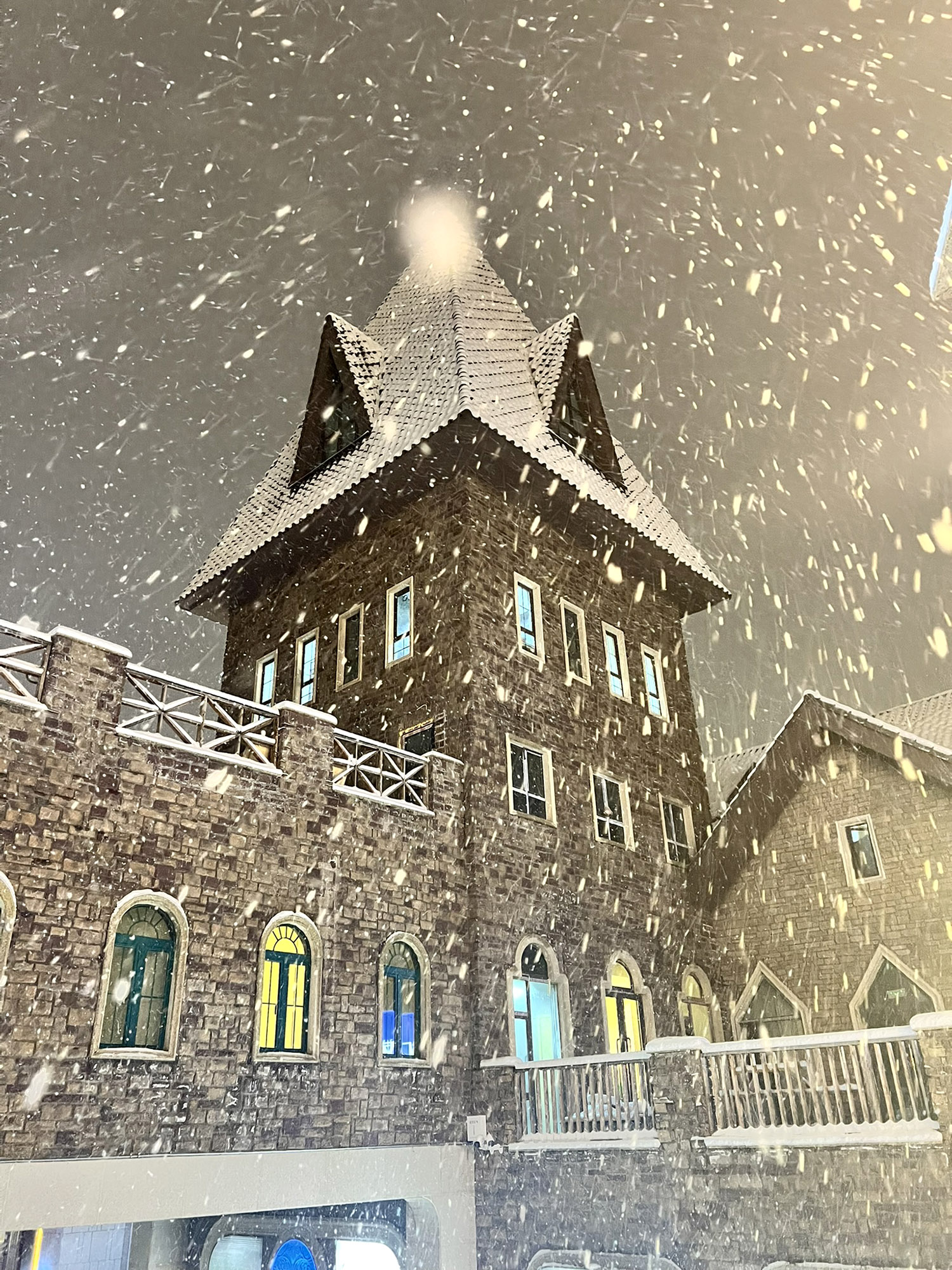
Liu deploys techniques such as wire inlay, embedding, adhesion, layering, stacking, relief and carving to form mosaics from olivine, garnet, quartz, topaz, agate, malachite, aquamarine, gold-silk jade, epidote, schorl, lapis lazuli, jet stone, cinnabar, gold and tourmaline.
One of her works even depicts an iron mine using minerals — but not iron.
Her motifs include such icons of Altay as Kanas Lake's bays, birch trees and eagles; Chinese subjects like the creation goddess, Nyuwa, and Shanxi province's ancient architecture; and globally recognized symbology, like a re-creation of Jacques-Louis David's Napoleon Crossing the Alps. These take months or years to finish, but offer endless hours of appreciation for countless viewers.
Likewise, the whole of the kilometer-long Five-Hundred Li Folk Street is akin to walking through a vast, open-air gallery where the exhibits are life itself. It is Altay, rendered in miniature and then magnified, like a snow globe.
In winter, the glow of Kazakh weddings and bonfires "the size of pine trees" transmit warmth and light into long nights, sometimes beneath the shimmer of the aurora borealis. Summer brings the eyebrow-raising, jaw-dropping spectacle of dawazi — Uygur acrobatics featuring stunts like unicycle rides on tightropes — alongside handicraft markets. Lantern riddles add an air of mystery to the 15th day of the Chinese New Year.
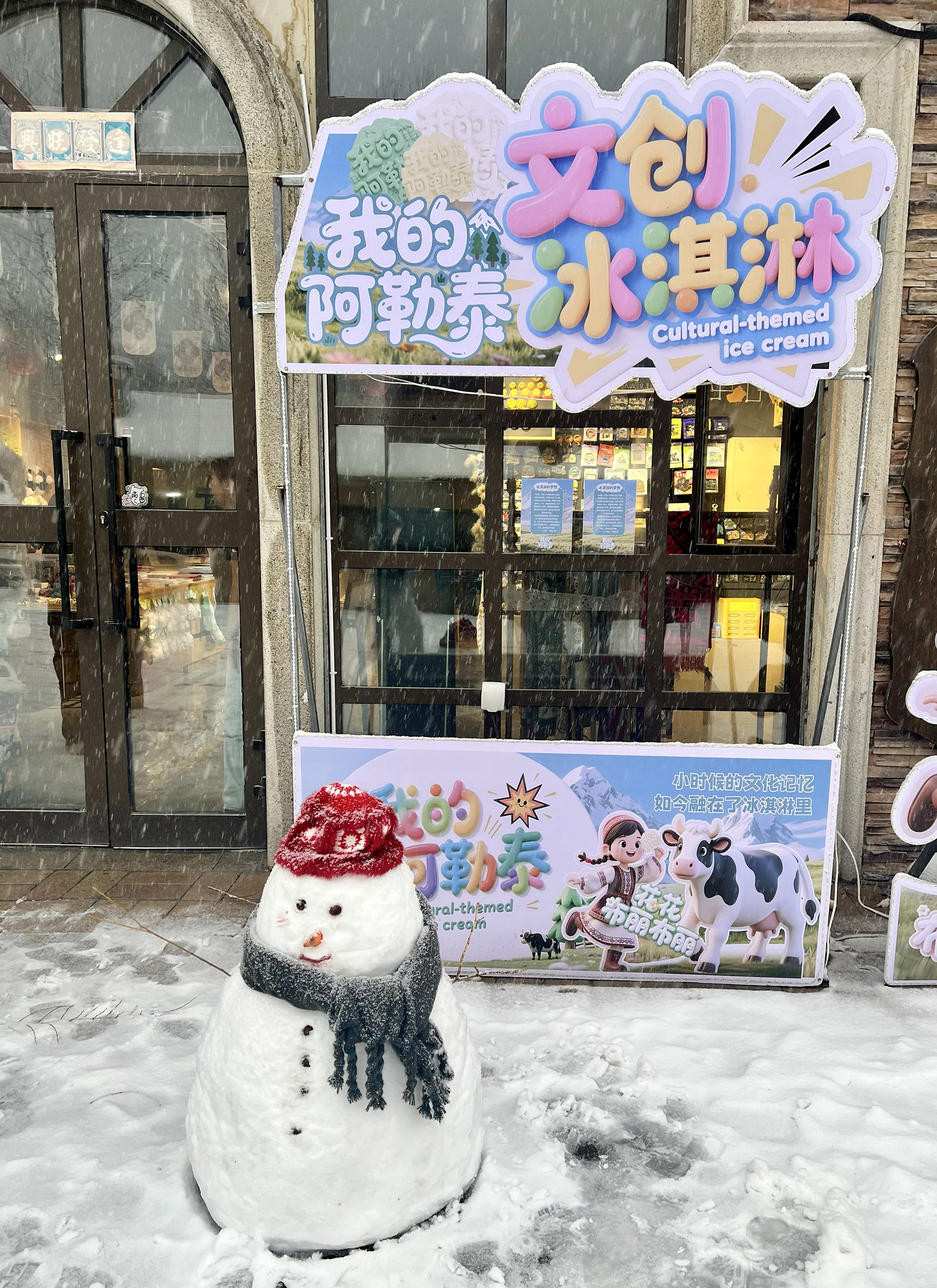
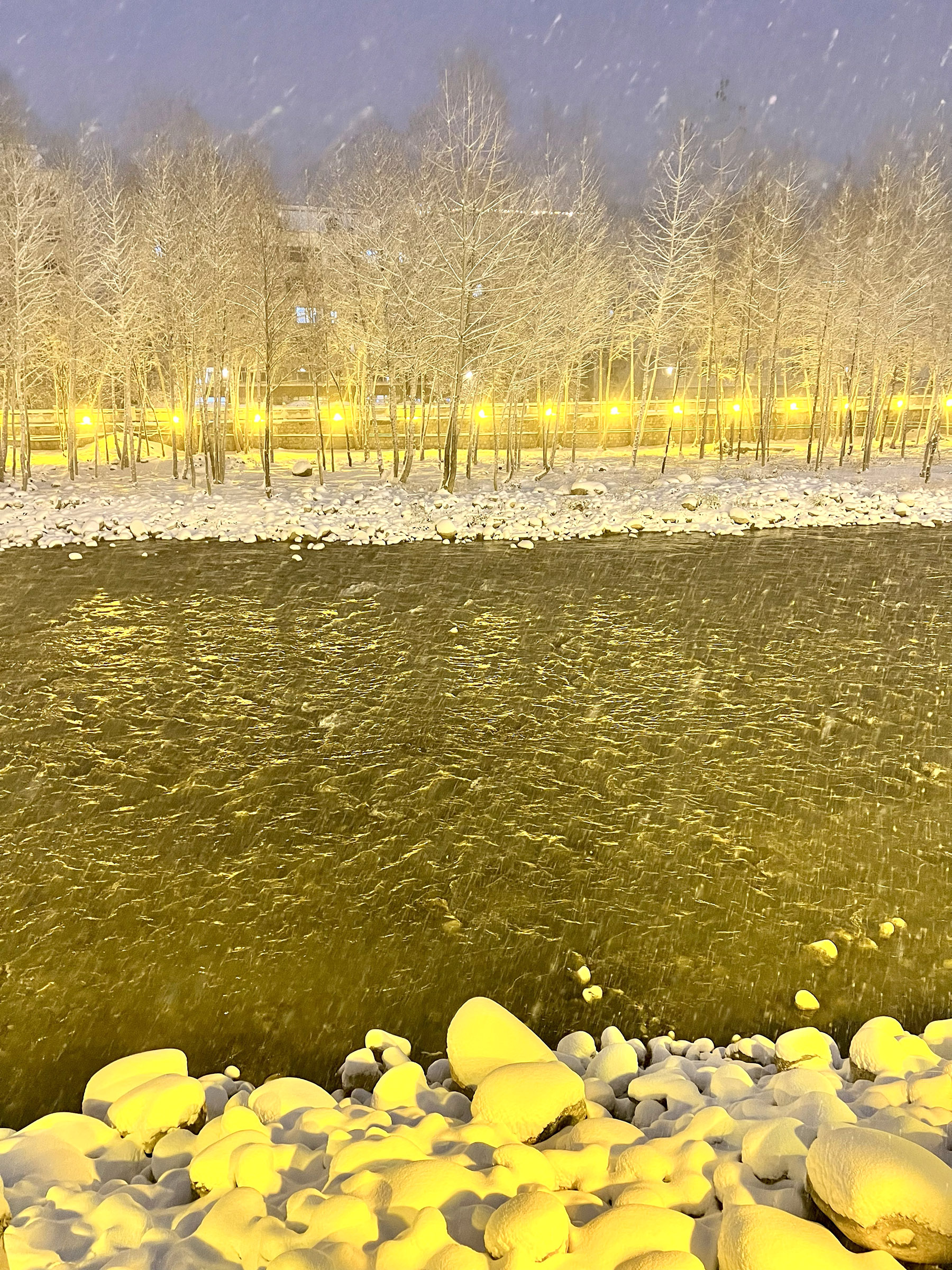
The street's architecture appears Nordic by necessity, not novelty. Its sheer steeples are designed to shed avalanches of snow that would crush flatter roofs. These sharp spires pierce the sky above stout yurts and rows of birch that lean over the Irtysh River, China's only waterway that flows north toward the Arctic Ocean.
The Folk Street draws its poetic name from the first 500 li (about 250 kilometers) of the Irtysh. The river drifts alongside the street, tickling the foot of Mount Jiangjun, or General Mountain — so named for the legend of an ancient martial commander buried within its slopes and some also say because its contours trace his silhouette. Visitors often spend the day skiing Jiangjun's slopes and the evening wandering Five-Hundred Li's boulevard.
On the other side of the street rises Camel Mountain, its twin humps offering a panoramic perch from which to view the city below.
The snow globe scene that is Five-Hundred Li Street is inhabited by a cast of fanciful characters, who are especially at home in this wintry cityscape. Snowmen wave twig arms outside shops. Human-sized nutcrackers gawk inside cafes. And semi-feral cats prowl their adoptive homes since it's a local custom to take in strays.
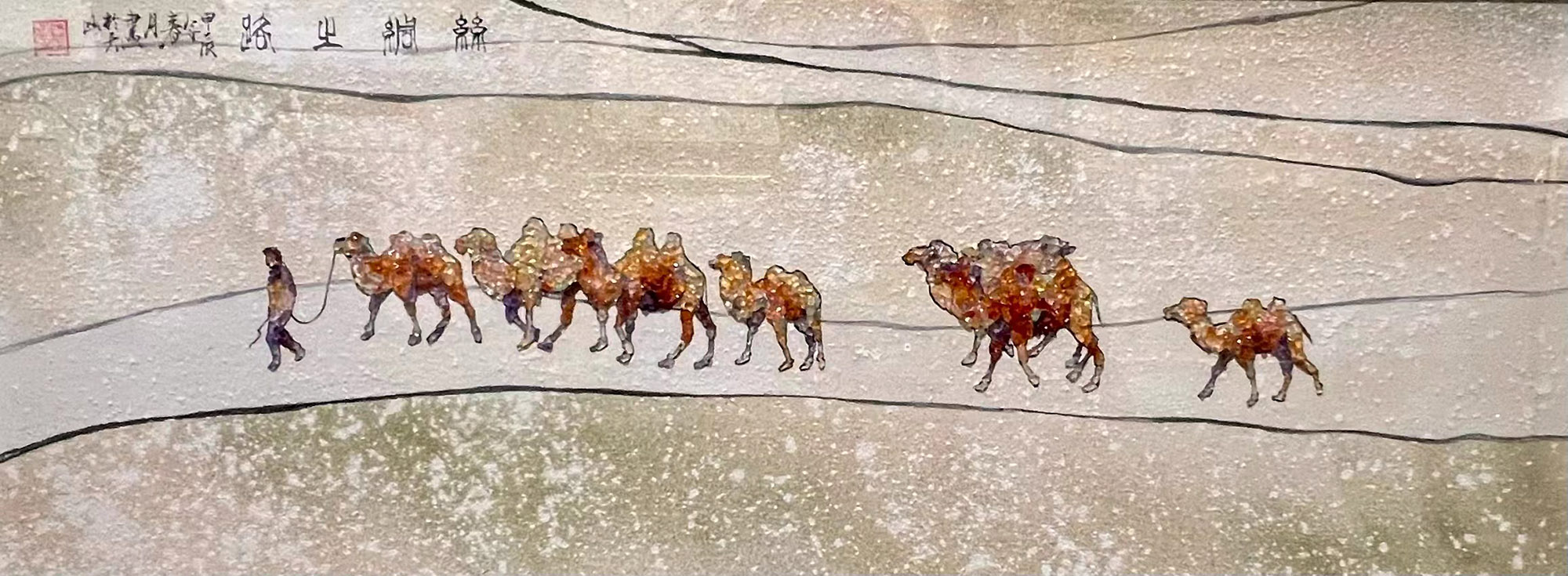
But the most prevalent nonhuman being is the most local. Altay's mascot, Ale, is a cute chimera of Kanas' mythical white bear and rabbit, who wears an ethnic Kazakh herder boy's smile. This playful snow-monster child travels by gliding atop the fur skis featured in the region's ancient petroglyphs, which many scholars argue offer humankind's first records of skiing.
Ale inhabits the folk street not only as an embodied symbol of the region — he also stands at its location as an intersection of ancient iconography and modern creativity.
His statue greets visitors to the Travel Book Club, a trendy shop selling whimsical items bearing his likeness and other local imagery, so visitors can take a piece of Altay's culture home with them.
Innovation is writing tradition's new chapters in this boutique store, which takes its alternative appellation, Altay Corner, from celebrated author Li Juan's eponymous biographical-essay collection.
This store's main allure goes beyond the printed word to a purveyor of creative cultural products that blend Altay's age-old motifs with newfangled approaches.
Birch bark — emblematic of the region's flora — covers notebooks. Cartoonish portrayals of Altay large-tail sheep's jiggling rumps appear on everything from statuettes to night-lights to augmented-reality fridge magnets with moving parts. These local livestock store fat in their hyper-inflated rears to survive the mountains' merciless winters, and their extravagantly bouncy behinds have become a beloved symbol of Altay.
Travelers also buy neck pillows that look like loaves of naan, bookmarks featuring the area's prehistoric petroglyphs that seem to uncannily depict flying saucers — replete with cockpits, portholes and tractor beams — and plushies of Ale.
Ultimately, Five-Hundred Li Folk Street not only presents, but is itself, art. It dazzles like the gems found in meticulously crafted mosaics that adorn its studios' walls and the surrounding mountain wilderness in which their raw forms lie buried.
To stroll along this walkway is to travel between these representations — refined and rough, micro and macro, seasonal and everlasting — that don't just portray but manifest Altay.
It's like a snow globe that you can walk into and, in doing so, become part of its glittering suspension, seen not behind glass but underfoot and overhead.
It's where a place named for gold reveals that its true wealth isn't extracted from ore but from the land experiencing itself through you.
Contact the writer at erik_nilsson@chinadaily.com.cn
