

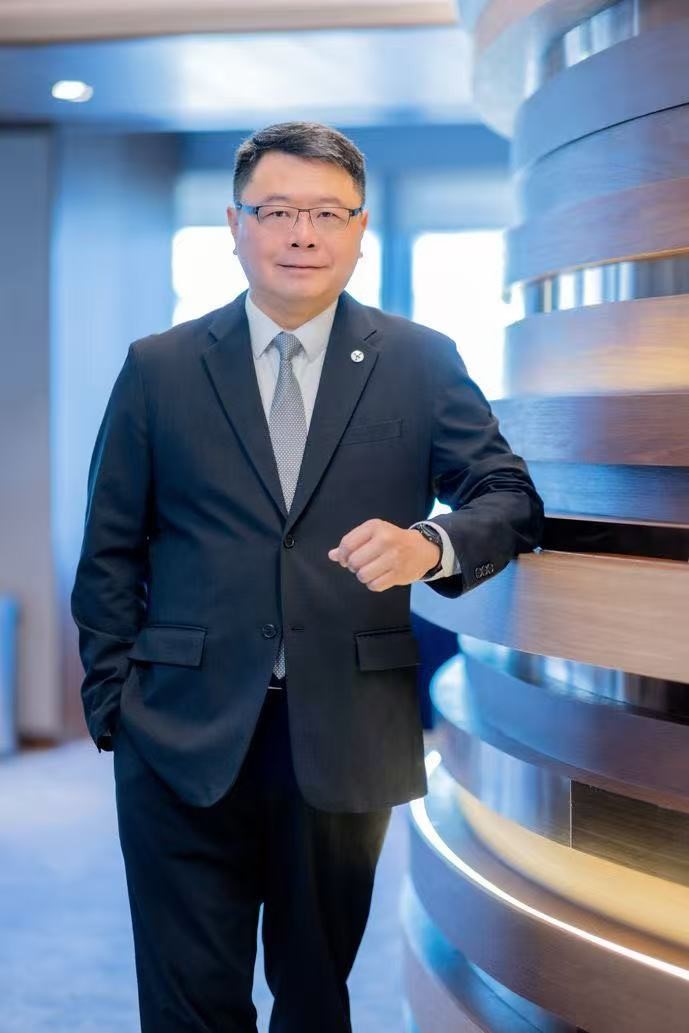
Hong Kong’s years-long efforts to build itself into an innovation and technology hub is beginning to show tangible results, with a more mature ecosystem taking shape and a growing number of leading companies clustering in areas such as life sciences and advanced manufacturing, a national political adviser said.
Sunny Chai Ngai-chiu, a member of the National Committee of the Chinese People’s Political Consultative Conference (CPPCC), made the remarks in an exclusive interview with China Daily during the fourth session of the 14th CPPCC National Committee, which concluded on Wednesday.
“With the Hong Kong Special Administrative Region government having invested more than HK$200 billion ($25.6 billion) in innovation and technology over the past five to six years, Hong Kong’s innovation ecosystem is steadily taking shape,” said Chai, who is also chairman of the Hong Kong Science & Technology Parks Corporation (HKSTP).
Companies including electric-vehicle battery giant CATL and autonomous truck manufacturer Westwell have established headquarters and research and development centers at Hong Kong Science Park, instead of just sales offices.
ALSO READ: CPPCC member highlights Hong Kong’s role as financing hub
“Hong Kong is no longer merely a market for applying technology. It is increasingly capable of exporting core patents, technical standards and business models to the Chinese mainland and overseas markets,” Chai said.
At the national level, the 15th Five-Year Plan (2026-30), approved at the fourth session of the 14th National People’s Congress that ended on Thursday, sets a target of annual growth of more than 7 percent in R&D spending.
Chai said he expects actual growth to surpass the target, as it did during the 14th Five-Year Plan period, with more businesses and investors understanding that “investing in technology is investing in the future”. He added that R&D expenditure as a share of gross domestic product is also expected to rise steadily.
The latest plan places renewed emphasis on achieving greater self-reliance in science and technology, stressing the importance of driving advances in original innovation and breakthroughs in core technologies. Chai said this sets “a clear direction” for the development of innovation and technology in Hong Kong.
READ MORE: Shift to ‘smart customs’ a priority for HKSAR
“With its robust upstream research capabilities, the city must translate its strong foundation in basic research into a driving force for industrial upgrading in the Guangdong-Hong Kong-Macao Greater Bay Area and beyond.”
In the life sciences sector, Hong Kong’s third medical school, to be established by the Hong Kong University of Science and Technology, aims to admit its first students in 2028.
Chai said the new institution would adopt a distinct positioning to complement existing schools and act as a pioneer in life sciences, accelerating the application of new technologies, equipment, and therapies.
Its graduates, Chai noted, would not only train as doctors but also help supply talent to the life sciences industry.
For advanced manufacturing, Chai said the Northern Metropolis, a large-scale development project covering about one-third of Hong Kong’s land area, should be built into a hub to attract Chinese mainland advanced manufacturing enterprises and help them expand into international markets.
READ MORE: Hong Kong CPPCC members share expectations for 15th Five-Year Plan
The Northern Metropolis is included in the 15th Five-Year Plan after the Hong Kong SAR government set up a dedicated steering committee last year to speed up development of the innovation-focused new town.
Chai called for “bolder and more pioneering” investment promotion policies, including adopting a “pre-investment engagement” approach rather than the traditional model of “build first, attract investment later”.
Early consultation with enterprises will enable planners to better understand their requirements for plant design and supporting infrastructures, he said, reducing mismatches between facilities and companies’ needs and fostering a more business-friendly environment.
In the Northern Metropolis, the Hetao Shenzhen-Hong Kong Science and Technology Innovation Cooperation Zone is designed as a hub for basic research and technological breakthroughs, while the nearby San Tin Technopole will commercialize Hetao’s research outcomes and advance industrialization.
With “AI+” at its core, Innopole, a 20-hectare innovation site in the San Tin Technopole and developed by HKSTP, will combine digital innovation with Hong Kong’s established strengths to foster new quality productive forces. “AI is a key engine for the future and a new track in the global race for technological leadership,” Chai said.
