

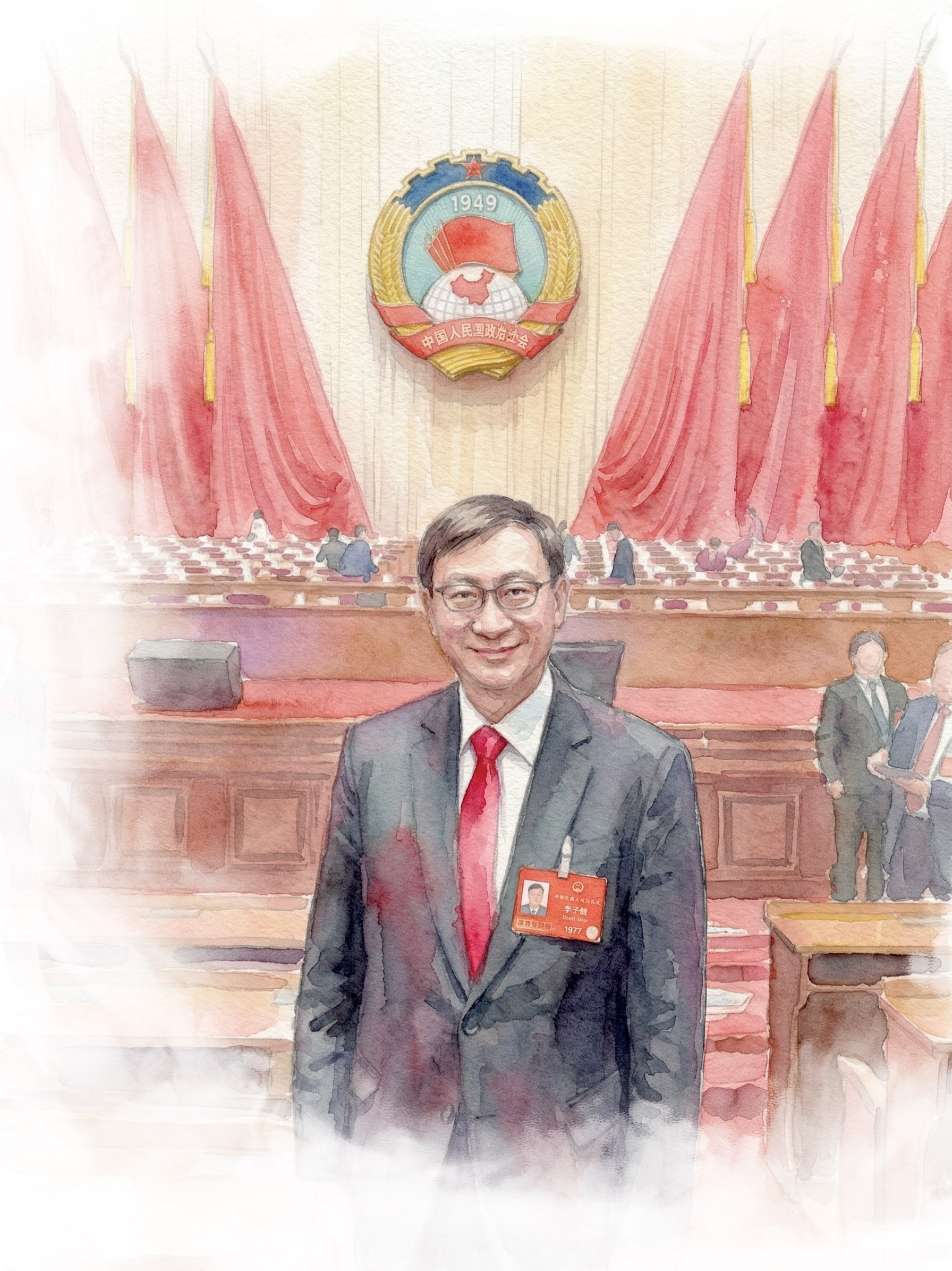
John Lee Chi-kin, a Hong Kong member of the Chinese People’s Political Consultative Conference National Committee, tells Stacy Shi that the current geopolitical climate is a chance for the city to expand its international vision beyond traditional Western partners.
The timing for Hong Kong to make itself a global hub of great talent and meet the nation’s aspirations can never be better than at present with the start of the 15th Five-Year Plan (2026-30).
John Lee Chi-kin — a Hong Kong Special Administrative Region member of the National Committee of the Chinese People’s Political Consultative Conference — believes these developments offer increased opportunities for the SAR to realize its goals and meet China’s needs.
Lee, who attended the two sessions in Beijing — the annual meetings of the National People’s Congress, the nation’s top legislature, and the CPPCC, the top political advisory body — is among Hong Kong delegates who have aligned their proposals for discussions on a draft outline of the 15th Five-Year Plan, and to get actively engaged in the national dialogue.
READ MORE: John Lee Chi-kin: HK has great potential to develop into an intl education hub
The blueprint affirms support for Hong Kong in consolidating and beefing up its competitive advantages, and better integrating into the national development landscape. This extends beyond the financial sector, with particular emphasis on Hong Kong becoming a world pivot for high-caliber talent, and boosting exchanges with the Chinese mainland.
In an exclusive interview with China Daily, Lee, who is also president of the Education University of Hong Kong, sees the current geopolitical climate as a chance for the city to expand its international vision beyond traditional Western partners to embrace broader horizons, including the Global South.
Hong Kong’s unique advantages, he says, lies in it being a global metropolis where East meets West, backed by the motherland and linked to the world through projects like the Belt and Road Initiative. “As some countries become less welcoming, Hong Kong can attract its own students and seize the chance to broaden its international engagement.”
Edu-hub-building proposals
Lee’s views feature prominently in proposals he raised at the two sessions, focusing on developing the SAR into an international education hub and building up the “Study in Hong Kong” brand.
Besides attracting students to study in Hong Kong, his plans touch on ways of improving the support system for newly arrived talents, helping them to better integrate into the local community. “We need to think of how students can be made to remain in Hong Kong to develop their careers, help them understand our unique characteristics, and eventually contribute to the nation or other regions.”
Lee says that some overseas students encounter problems integrating into campus life in Hong Kong, such as students from Belt and Road countries often have specific dietary practices.
Organizing cultural activities on the campus would help them better appreciate these differences and foster a multicultural learning environment grounded in mutual respect, he says.
“If universities can encourage diverse interactions among faculties and students, everyone would understand that every culture has its unique strengths and deserves respect. Only then can a true sense of community take root.”
Lee also highlighted early childhood education, quoting an old Chinese saying — “3 years old fixes 80” — as the early years, particularly before the age of three, are critically formative. “Providing quality early childhood services and nurturing care at this stage can have a profoundly positive impact on a child’s long-term development.”
Guided by its pivotal plan, EdUHK has positioned itself not only as an institution that responds to local needs, but also as an active bridge connecting the SAR with the mainland and luring global talent.
In Lee’s view, an education-focused institution must align with the national emphasis on integrated development of “education, technology and talent”. “The teachers we cultivate are those who will enable our society to meet the future. They must be equipped with technological proficiency, possess a spirit of patriotism and love for Hong Kong.”
University’s action plan
EdUHK will soon unveil a new curriculum framework and related initiatives on artificial intelligence to prepare for the future.
Integrating with the country’s overall development is also the cornerstone of the institution’s strategy. The university has teamed up with mainland institutions, and is building a research institute in Shenzhen to train teachers and foster regional cooperation.
ALSO READ: EduHK’s Care Humanities Initiatives fuel sustainable societal growth
As a “cradle to nurture engineers of the human soul”, EdUHK’s mission extends beyond imparting professional knowledge to include cultivating a strong sense of national identity. This is achieved through detailed patriotic education initiatives, including experiential study tours featuring carefully curated visits to historical and cultural sites that provide deep, contextual learning.
The university is also pursuing “going global to attract talent” strategies, such as active overseas promotions, hosting and expanding international programs, and systematically internationalizing curricula and campus composition.
EdUHK aims to build up foundational disciplines, while pioneering new fields like AI through new master’s programs, Lee says.
Contact the writer at stacyshi@chinadailyhk.com
