

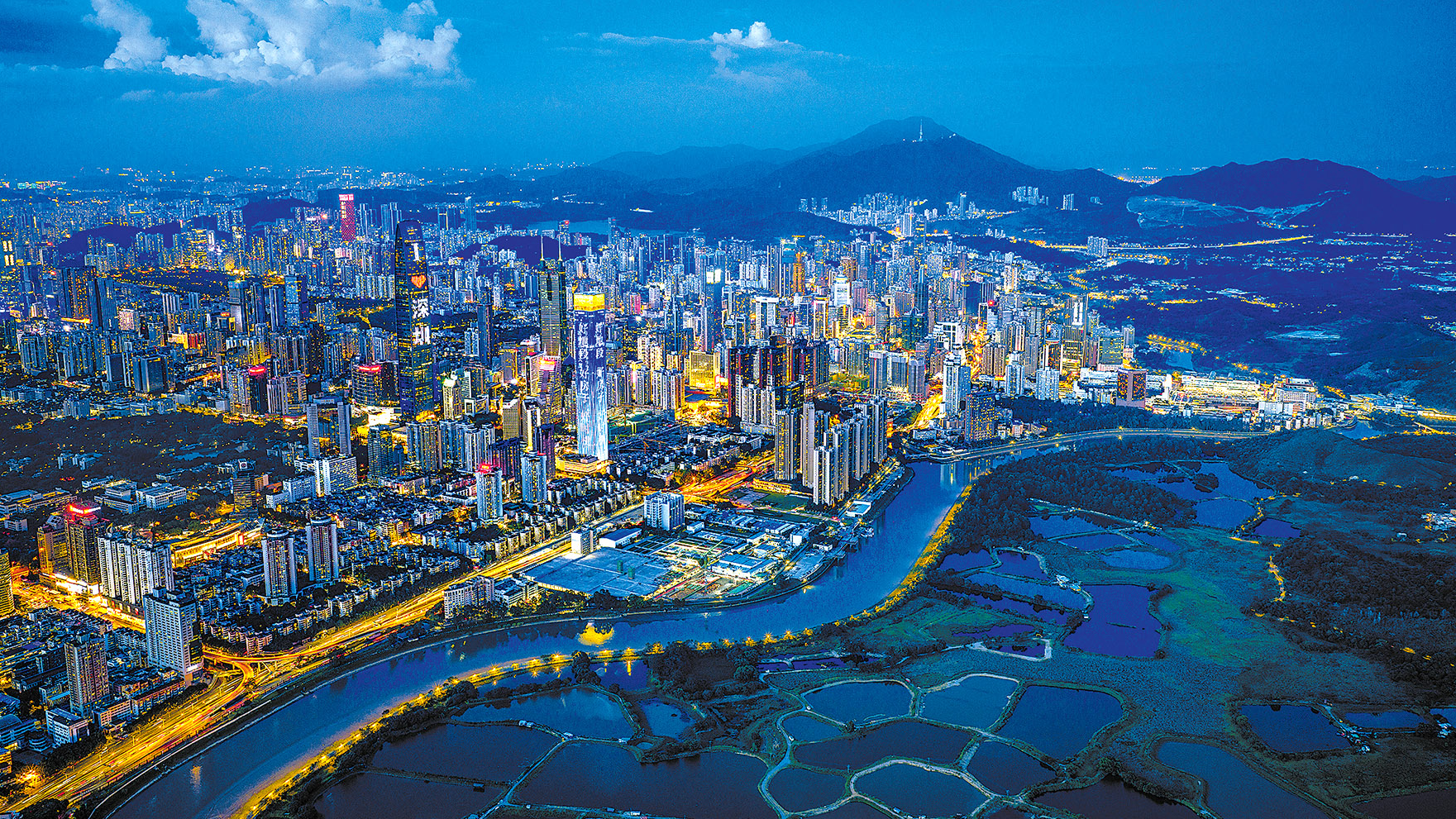
National legislators and political advisers in Hong Kong have called for Hetao cooperation zone - an area bordering Hong Kong and Shenzhen – to be made a regulatory sandbox for institutional innovation to realize the free flow of capital, data, talent and particular innovation factors.
The Hetao Shenzhen-Hong Kong Science and Technology Innovation Co-operation Zone - an area of 387 hectares comprising twin parks - is viewed as a major initiative to drive regional synthesis and the city’s integration into national development, especially between 2026 and 2030, the period of the country’s 15th Five-Year plan.
The Hong Kong park of the Hetao zone is also part of the developing Northern Metropolis project, which takes up a third of the city’s land and is set to house one third of its population.
Weighing in on the topic of aligning the city’s development with the upcoming national plan, William Wong Kam-fai, a Hong Kong Special Administrative Region member of the National Committee of the Chinese People's Political Consultative Conference and a lawmaker, said the Hetao cooperation zone could also serve as a regulatory sandbox for institutional innovation.
He described the zone as a key platform backed by the central government to support Hong Kong in evolving into an international inno-tech hub, as well as a strategic node for the coordinated development of the Greater Bay Area.
Wong said while Shenzhen and Hong Kong have reached a preliminary consensus on space planning and industrial direction, shortcomings remain in areas like institutional alignment, infrastructure, and policy coordination, which hinder the efficient flow of innovation factors between the two cities.
He suggested establishing a tripartite task force under the central authorities’ coordination to improve governance and explore a unified development model for the cross-border zone. He also proposed extending the zone's functions to the San Tin Technopole, another inno-tech development project spanning 210 hectares near the city’s border with Shenzhen, thus creating a larger-scale cross-border innovation corridor.
He called for authorities to collectively promote the digital alignment of government across the boundary, facilitate business and research operations and reduce institutional costs.
ALSO READ: New service platform launched in Hetao to boost technological innovation
HKSAR deputy to the National People's Congress (NPC) Maggie Chan Man-ki, concurred, saying the goal is to establish a “high ground” for future industries in the zone.
Chan, who is also a lawmaker and a seasoned solicitor, said that as the 15th Five-Year Plan period approaches, Hong Kong must actively leverage its strengths to serve national strategies.
Underscoring the need to deepen development of the Guangdong-Hong Kong-Macao Greater Bay Area and forge closer integration of the two parks within the Hetao zone, Chan proposed establishing a cross-border data compliance and flow center within the cooperation zone to strengthen Hong Kong's bio-data management.
Calling for dedicated legislation for the zone to facilitate the flow of capital, data, and talent, Chan also suggested using the zone as a launchpad for a series of industries including cross-border low-altitude flights, Shenzhen-Hong Kong intellectual property cooperation, and gold storage and trading in the Greater Bay Area.
In addition, Chan urged closer collaboration between credit insurance authorities on the Chinese mainland and in Hong Kong to explore commercial data assetization.
READ MORE: Shenzhen prioritizes Hetao and Qianhai for Hong Kong collaboration
Hong Kong deputies to the NPC and members of the CPPCC National Committee from the Democratic Alliance for the Betterment and Progress of Hong Kong, the city's largest political party, plan to submit over 20 proposals and suggestions this year, focusing on leveraging Hong Kong's strengths to align with the country's 15th Five-Year Plan.
Among them, Brave Chan Yung, an NPC deputy and Hong Kong lawmaker, called for accelerating and upgrading the development of the Northern Metropolis. Judging from the number of companies securing contracts in the area, the investment volume involved and the sectors covered, he believes the new town will become a "powerful engine" driving growth for the entire Greater Bay Area and fueling Hong Kong's economic expansion.
To support the new town’s growth, he proposed establishing an integrated energy system combining electricity, carbon management, and computing power as energy security is fundamental to the new innotech-centered township and could even “determine its success or failure”, particularly as large-scale data operations require substantial electricity.
Contact the writer at amberwu@chinadailyhk.com
