

Industry expecting limited solid-state batteries adoption by 2027, mass production by 2030
Solid-state batteries are moving from the lab to real-world applications, with automakers and battery makers revealing pilot production lines and technical breakthroughs. Yet experts caution that large-scale adoption still faces material, cost and supply-chain challenges, meaning full commercialization is still years away.
China's first standard for solidstate batteries, which will take effect in July 2026, classifies batteries by electrolyte content, defining those with 5-10 percent liquid electrolyte as hybrid solid-liquid batteries, once called semi-solid-state batteries. The standard is expected to standardize the market and support orderly development.
A clearer timeline has emerged among global automakers with an industry consensus expecting limited vehicle adoption by 2027 and mass production by 2030.
READ MORE: NEV sector surging full steam ahead
According to GAC, the technology's high energy density and safety address the limitations of conventional liquid batteries, improving electric vehicles' range and safety. Liquid batteries are the most mainstream type of lithium batteries currently used in EVs.
GAC plans small-batch vehicle trials in 2026, with deliveries as early as the end of the year, starting with its premium Hyptec models before a wider rollout over 2027-30.
German automaker BMW is partnering with US-based Solid Power for mass production in 2028, while Volkswagen has invested in QuantumScape targeting commercialization in 2029.
Hybrid solid-liquid batteries are seeing faster developments. By combining solid electrolytes for safety with a small amount of liquid for conductivity, they balance performance and safety. Such batteries can also integrate smoothly with current production lines, cutting investment costs to just 30-40 percent of building a new solid-state battery facility, according to experts.
Chery's hybrid solid-liquid batteries have passed real-world vehicle adaptation and extreme environment testing earlier this year, demonstrating impressive range retention in temperatures as low as minus 20 degrees Celsius. These batteries also feature a five-minute charging capability and a 500-kilometer range, with plans for official delivery in the second quarter of 2026.
Dongfeng has developed a new generation of hybrid solid-liquid cells with a high energy density of 350 watt-hours per kilogram. After completing material and electrochemical system verification, the medium-scale production line is operational. Vehicles equipped with these cells can achieve up to 1,000 km of range, with commercial rollout on its EV brands slated for 2026.
Nio, partnering with Beijing Welion New Energy Technology, will adopt 360 Wh/kg hybrid solid-liquid batteries for its ET9 sedan in the second quarter of 2026, delivering over 1,000 km of range while remaining compatible with its battery-swapping network.
Battery provider Svolt Energy has finished testing a 2.3 gigawatt-hour hybrid solid-liquid battery production line and plans mass production in late 2026, securing orders from overseas luxury brands and domestic carmakers.
Hybrid solid-liquid batteries are set to lead the premium EV market in 2026-27 while fully solid-state versions are expected to scale after 2028, reaching cost parity with liquid batteries around 2030 and becoming mainstream, experts predicted.
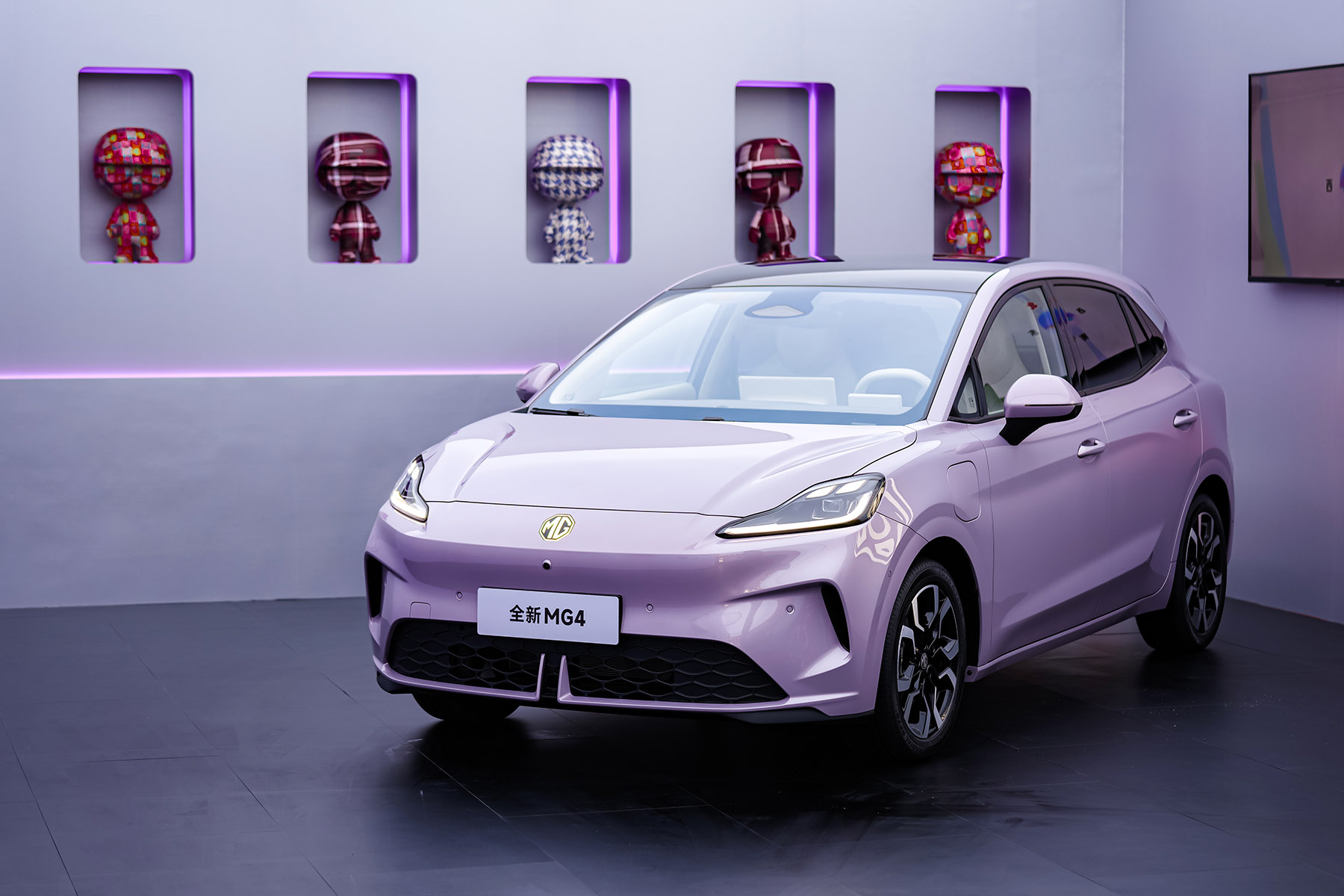
SAIC's MG brand started to deliver the variant of the MG4 hatchback with a hybrid solid-liquid battery in December, which is the world's first and only mass-produced vehicle of its kind.
Consultancy McKinsey forecasts around 30 percent annual growth for the solid-state market over the next decade. By 2035, the global battery market could hit 500 GWh, with fully solid-state batteries at 41 percent and hybrid types at 33 percent.
Despite good prospects, scaling solid-state batteries from laboratory prototypes to widespread vehicle installations has challenges.
A Dongfeng representative noted that the industry is exploring multiple technical pathways for solid electrolytes, the core component of such batteries, without a unified solution yet. Among the three major approaches — polymer, oxide and sulfide — each carries its own features.
Sulfide systems, supported by Toyota and Solid Power, offer high conductivity similar to liquid electrolytes but lack stability and degrade in moisture. Oxide systems excel in safety and stability, selected by CATL and QuantumScape. Polymer types are flexible and easy to process, favored by European companies.
BYD said it is exploring multiple pathways in solid-state batteries. Sulfide-based solid-state batteries are expected to achieve breakthroughs in areas such as service life and fast charging, representing the company's primary focus. Pilot production for these batteries is scheduled for 2027.
High cost is another bottleneck for solid-state battery development. A report from Huayuan Securities indicates that solid-state batteries are more expensive than traditional lithium-ion batteries. A sulfide-based solid-state battery with a graphite anode costs approximately $158.8 per kilowatt-hour, compared to $118.7/kWh for a traditional graphite-anode lithium-ion battery. The lower yield rates of solid-state products exacerbate overall costs.
ALSO READ: Major battery breakthrough paving way for EV upgrade
Li Zikun, director of the research institute at BTR new materials company, said cost control is the top challenge for solid-state batteries, requiring material-level reductions and systematic optimization in cell design and manufacturing.
The company has integrated AI tools into solid-state material development to aid breakthroughs in technology and cost optimization.
Hu Song, a senior expert at the data center of China Automotive Technology and Research Center Co, warned companies to distinguish between pilot production and stable vehicle application, which demands fine-tuned processes and strict automotive validation. Rushing to market without sufficient preparation could lead to setbacks, Hu said.
Contact the writers at caoyingying@chinadaily.com.cn
