

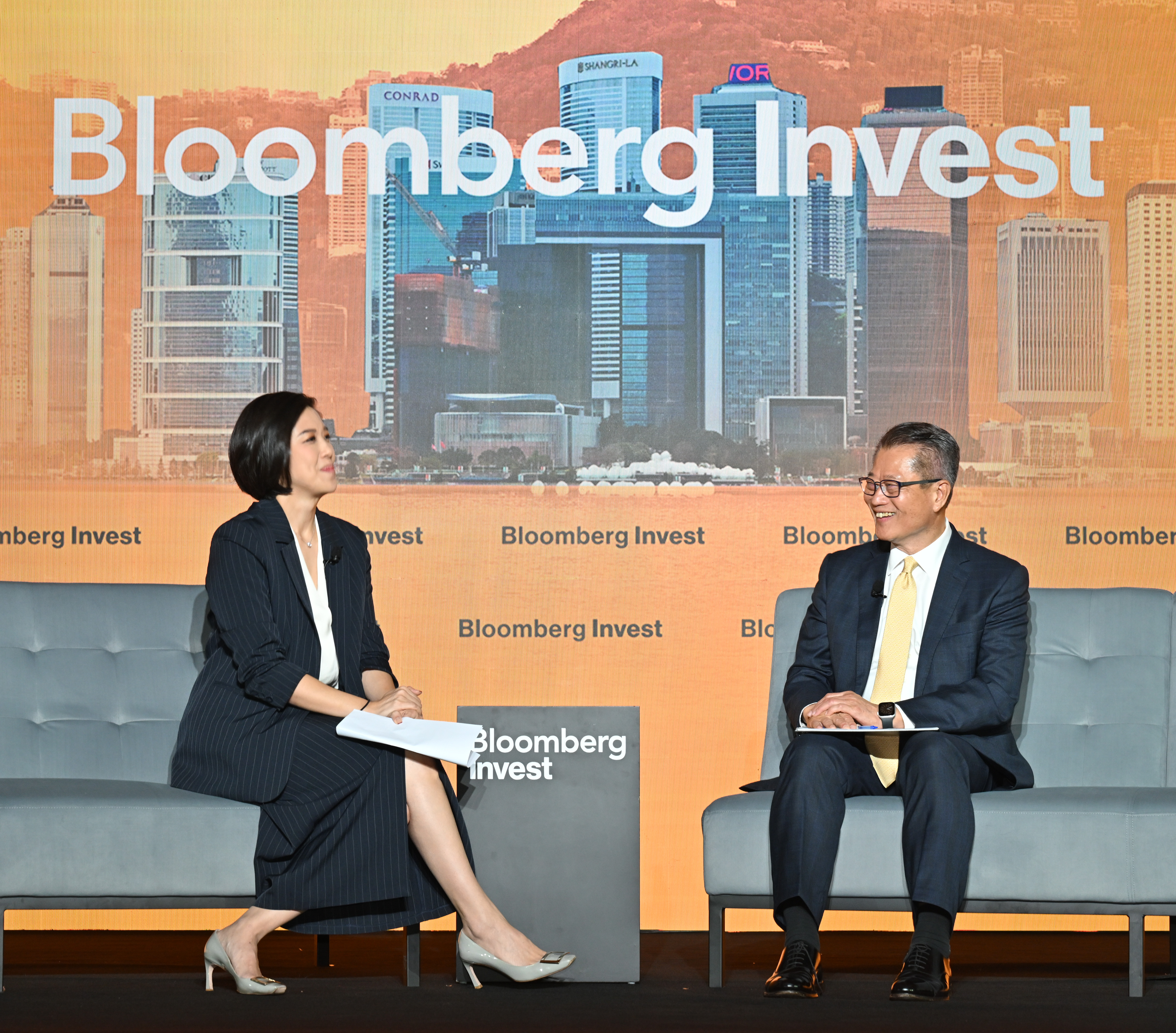
The Hong Kong Special Administrative Region’s first five-year plan will help build social consensus, pool resources, and strengthen development momentum, supporting the business community and residents from all walks of life in better charting the future, the city’s Financial Secretary Paul Chan Mo-po said on Sunday.
“The plan aims not only to drive economic growth and advance the application of technology, but also to promote more inclusive and equitable social development, create more quality jobs, and enhance residents’ quality of life,” Chan wrote in his weekly blog.
The HKSAR government will launch a two-month, citywide public consultation exercise on the blueprint today.
Chan said the authorities hope that through dialogues and discussions, it will spark reflection and generate fresh perspectives, enabling Hong Kong to fully leverage its advantages and achieve further progress.
The nation’s 15th Five-Year Plan (2026-30) outlines several directions for the HKSAR, including reinforcing the city’s role as an international financial, shipping, and trade center, and developing it into an international innovation and technology hub.
ALSO READ: Hong Kong’s first five-year plan set for possible release in Q3
“While these directions provide a strategic roadmap for Hong Kong, the key during the consultations will be how to align them with the city’s strengths and unique characteristics, address existing shortcomings, identify the implementation pathways, and maximize development benefits,” Chan said.
Noting that industrial development, economic upgrading and transformation are key priorities for the SAR’s five-year plan, the finance chief said the SAR government will accelerate development of the Northern Metropolis, positioning it as a physical platform for emerging and future industries.
Hong Kong has made notable progress in attracting investment and cutting-edge technology firms in recent years, while laying a solid foundation for the integration of artificial intelligence across industries.
“The next question is how to ensure these technologies and investments take deeper root, scale up, and create more high-quality jobs in Hong Kong … and how to further enhance public artificial intelligence literacy so people are better equipped to use and embrace AI,” Chan said. “Addressing these challenges requires listening to the views of industry, the investment community, research institutions, academia and other stakeholders.”
He added that Hong Kong must build on its existing strengths in finance and trade, while exploring new markets and creating fresh growth drivers.
READ MORE: Expert: CE’s Central Asia trip to help construct SAR’s five-year plan
Fostering coordinated development with other regions across the country is another critical pillar of the city’s five-year blueprint.
Citing the Guangdong-Hong Kong-Macao Greater Bay Area as a unique cluster that combines strengths in AI, advanced manufacturing, application scenarios and an international financial center, he said Hong Kong must “further promote the alignment of rules and mechanisms within the region, as well as the more efficient flow of various factors of production”.
The HKSAR also aims to step up collaboration with other major economic regions on the Chinese mainland, including the Yangtze River Delta and the Beijing-Tianjin-Hebei regions.
Chan will visit Shanghai this week to attend the Lujiazui Forum and visit I&T companies in Nanjing, Jiangsu province, with the aim of deepening financial cooperation and innovation exchanges between Hong Kong and the two mainland cities.
Contact the writer at gabylin@chinadailyhk.com
